Plaid provides a vital link between the traditional financial services industry and new financial technology (fintech) apps. When you open a new fintech app account, like Venmo, Acorns, Betterment, or Chime, you'll likely use Plaid's technology to link your bank account to the app. The platform supports over 12,000 financial institutions and 8,000 digital financial services.
Visa (V +0.33%) validated Plaid's technology in 2020 when the credit card giant agreed to buy the fintech start-up for more than $5 billion. However, anticompetitive concerns caused Visa to abandon the deal. Undaunted, Plaid has continued growing on its own.

Plaid's growing importance in the financial sector has many investors eagerly anticipating its initial public offering (IPO). Here's everything you need to know about the company and alternative options to consider in the fintech sector while you await Plaid's IPO.
IPO
Is Plaid publicly traded?
Plaid is not a publicly traded company. The private company was founded by Zach Perret and William Hockey in 2013.
Since its founding, it has raised money from several venture capital funds, including Goldman Sachs (GS +0.17%) Investment Partners and Andreessen Horowitz. Credit card giants Visa and Mastercard (MA +1.00%) have also invested in the company.
When will Plaid IPO?
Plaid didn't have an IPO on the calendar as of late 2025. After a $575 million funding round in mid-2025 that valued the company at $6 billion, Perret said, "An IPO is absolutely on our path for the coming years. We haven’t assigned a specific timeline to it." So an IPO is likely in the cards, but not happening any time soon.
Is Plaid profitable?
Plaid does not publicly report its financial results since it's a private company, so there isn't much publicly available information about its profitability. However, like many other fintech start-ups, Plaid likely isn't yet profitable.
According to an article by Forbes in late 2024, the company wasn't profitable yet. However, it has been reducing its losses, which reportedly fell from $70 million to $50 million from the year before.
Given the relatively unknown state of Plaid's profitability, investors should take a close look at its financial statements ahead of any potential IPO. Ideally, they will at least show that the company is continuing to narrow its losses, putting it on the road to profitability.
Alternatives to Plaid
Most investors can't buy shares of Plaid because it hasn't completed an IPO. However, some secondary platforms, like EquityZen and Forge Global (FRGE -0.13%), enable accredited investors (i.e., high-net-worth individuals or those with a high income) to buy shares of pre-IPO companies like Plaid.
Non-accredited investors will need to wait for Plaid's IPO to buy shares. In the meantime, they can consider investing in an alternative to Plaid. Here are three alternative fintech stocks to consider:
Visa
Visa tried to buy Plaid for $5.3 billion in 2020, hoping Plaid would enhance its growth by improving its fintech capabilities. However, the U.S. Justice Department blocked that deal on anticompetitive concerns.
Monopoly
While Visa viewed Plaid's capabilities as complementary and not competitive, the regulatory opposition suggests Visa is making great strides in expanding its fintech capabilities. The company believes it can continue growing briskly as it focuses on accelerating its business through its three growth drivers: consumer payments, new flows, and value-added services.
Mastercard
Mastercard is a leading technology company in the global payments sector. The company has issued 3.6 billion Mastercard and Maestro-branded cards as of the third quarter of 2025, a 6.3% year-over-year increase.
Despite already being a leading card company, it's growing briskly. The company expects these trends to persist, which should enable it to continue growing at a healthy clip.
PayPal
PayPal (PYPL +2.25%) is one of the many companies that benefit from Plaid's technology. It lets consumers easily link their bank accounts to apps like PayPal's Venmo. Plaid can enhance the growth of a client like PayPal by making it easier for new customers to open an account and start sending money.
Meanwhile, PayPal continues to invest in innovations to drive its growth. It has launched several in recent years aimed at revolutionizing commerce, including speeding up the customer checkout process.
How to buy stocks similar to Plaid
Investors interested in one of these alternatives to Plaid can buy shares in any brokerage account. Here's a step-by-step guide on how to invest in stocks like Plaid.
- Open your brokerage account: Log in to your brokerage account where you handle your investments.
- Search for the stock: Enter the ticker or company name into the search bar to bring up the stock's trading page.
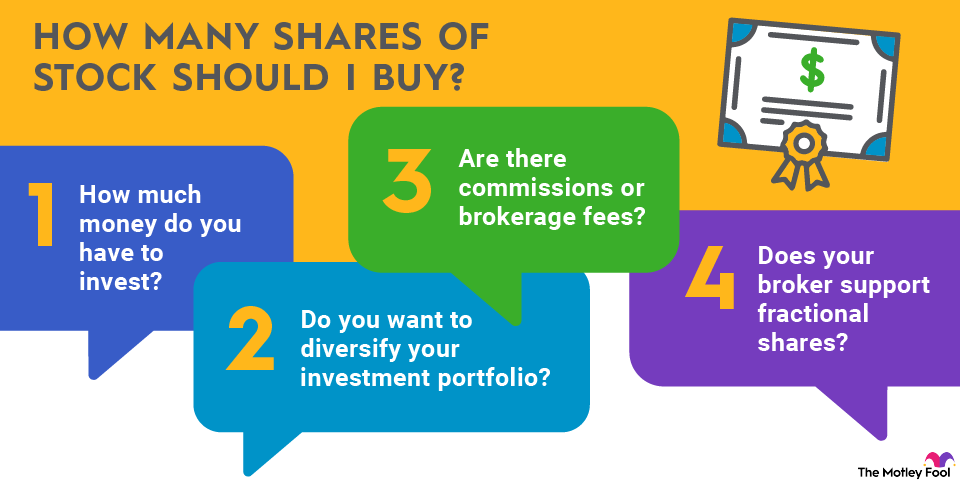
- Decide how many shares to buy: Consider your investment goals and how much of your portfolio you want to allocate to this stock.
- Select order type: Choose between a market order to buy at the current price or a limit order to specify the maximum price you're willing to pay.
- Submit your order: Confirm the details and submit your buy order.
- Review your purchase: Check your portfolio to ensure your order was filled as expected and adjust your investment strategy accordingly.
ETFs with exposure to Plaid
Since Plaid isn't a publicly traded company yet, you can't get passive exposure to its stock through an exchange-traded fund (ETF). However, you can still use ETFs to invest in trends like fintech stocks.
Exchange-Traded Fund (ETF)
Here are a couple of notable fintech ETFs to consider.
- Ark Fintech Innovation ETF (ARKF +0.87%): Cathie Wood manages this ETF focused on innovative companies in the fintech sector. It typically holds between 35 and 55 stocks and has a 0.75% ETF expense ratio. Notable holdings as of late 2025 were Block (NYSE:SQ), Shopify (NYSE:SHOP), and SoFi Technologies (SOFI +1.75%).
- Global X FinTech ETF (FINX +1.47%): This ETF focuses on companies in the emerging financial technology sector. It held shares of more than 60 companies in early 2025, including Block and PayPal, which are in the top 10. The ETF had a 0.68% total expense ratio.
Related investing topics
The bottom line on Plaid
Plaid provides a vital link between traditional financial institutions and fintech apps. Plaid's usage (and revenue) will grow as more consumers use fintech apps, which should benefit its investors over the long term. While most people can't invest in its stock yet, the company is open to going public when the time is right. That makes it an interesting pre-IPO stock to watch.
FAQs
Investing in Plaid FAQs
About the Author