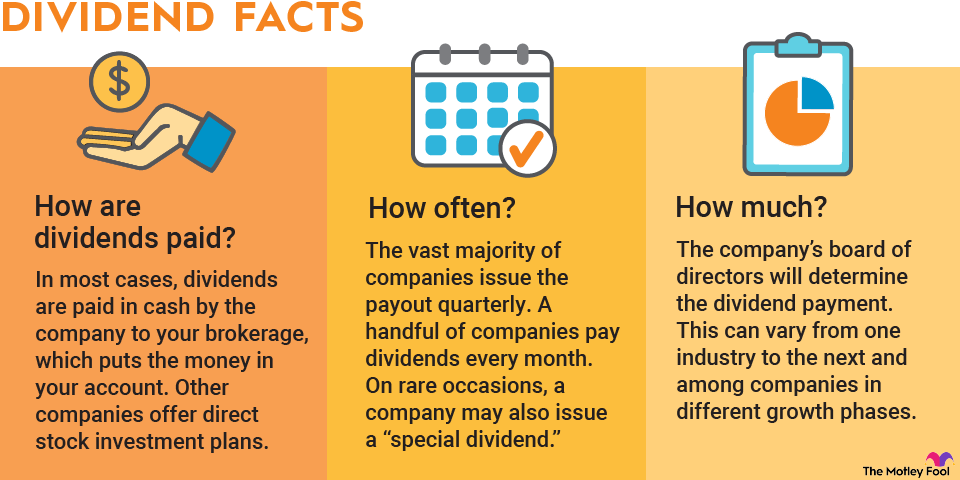
If you're investing in dividend stocks, understanding payment timing and mechanics is essential for managing your income expectations and portfolio strategy. Here's what you need to know about when and how you'll get paid.
Loading image...
Loading paragraph...
Loading paragraph...
Loading paragraph...
Related investing topics
Loading hub_pages...
FAQ
Loading faq...
About the Author

Jason Hall is a contributing Motley Fool stock market analyst with more than a decade of experience writing about dividend stocks and long-term investing. He has been with the company since 2012 and previously spent over 10 years in technical sales in the printing and information services industry. Jason also founded and operated a small food manufacturing business.
Jason Hall has positions in Realty Income. The Motley Fool has positions in and recommends Apple, Costco Wholesale, and Realty Income. The Motley Fool has a disclosure policy.