

For many years, Berkshire Hathaway (BRK.A 1.16%)(BRK.B 1.02%) Chief Executive Officer Warren Buffett was a dedicated financial industry bull. Berkshire resolutely held on to stakes in top sector companies in its equity portfolio, in some instances for decades.
One of the more recent Berkshire plays in the sector was its acquisition of Bank of America stock, an eventful tale I'll only touch on briefly here. The executive summary is that Berkshire started selling off this considerable holding in 2024. Meanwhile, one of the few companies Berkshire has bought during the past few months is a far more low-key company that pays a surprisingly generous dividend.
A series of sell-offs
In 2011, Berkshire piled into Bank of America in a splashy deal that saw it obtain big stacks of the lender's preferred stock and warrants. Before long, those warrants converted into Bank of America common shares, the securities Berkshire has been unloading for more than a year now.
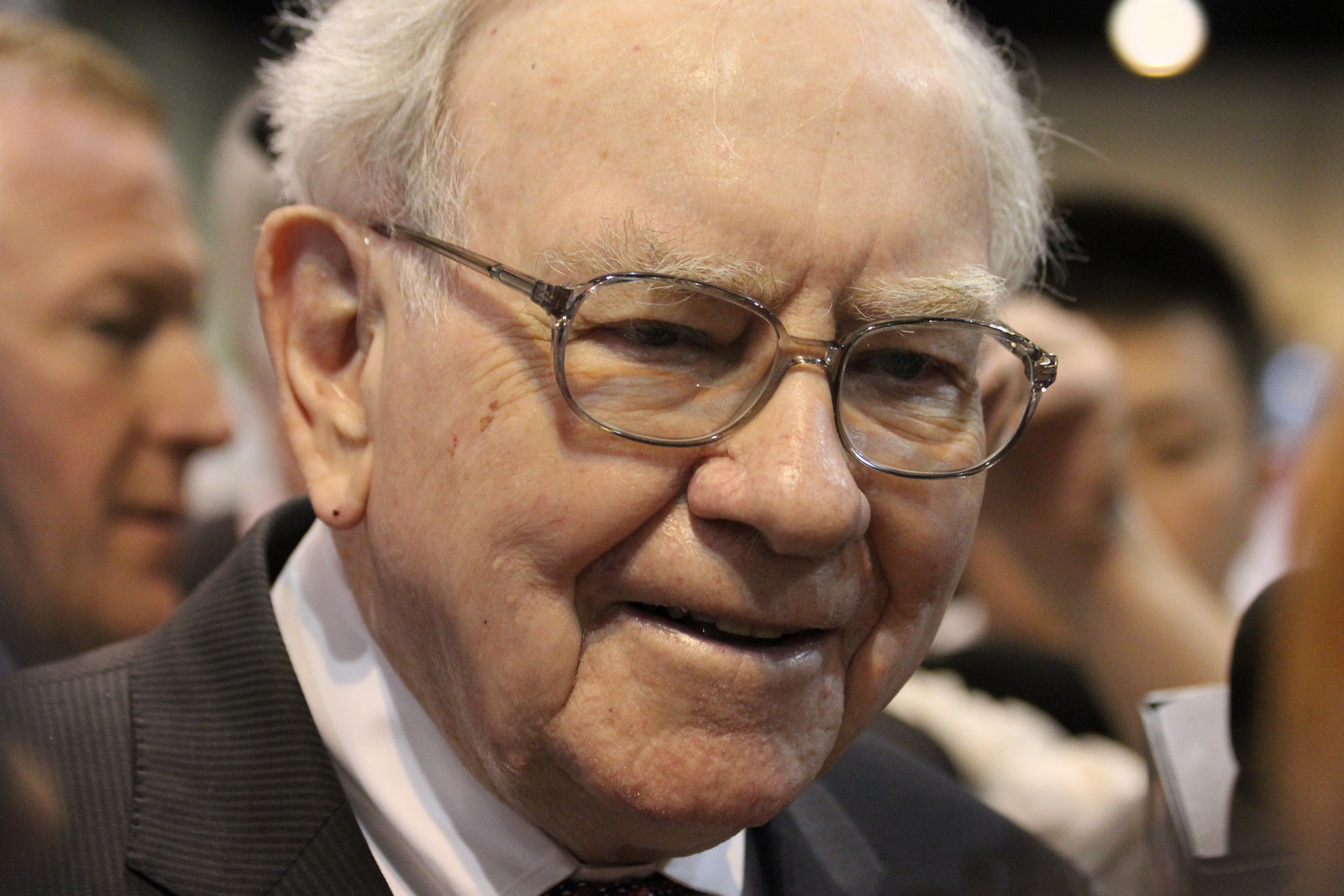
Image source: The Motley Fool.
At the end of the second quarter of 2024, Berkshire owned a little more than 1.03 billion shares of the lender's common stock. That number fell in every subsequent frame, to the point where, by the end of Q3 2025, it stood at about 568 million shares.
For a company so closely identified with one of the world's most renowned stock buyers, Berkshire didn't actually take on too many new equity positions as it sold the bank's shares.
One of those uncharacteristic fresh buys was that of Lamar Advertising (LAMR +0.14%). This was a new position in the second quarter, with nearly 1.17 million shares purchased. As of this writing, that stake is worth more than $159 million.
While Lamar isn't exactly an obscure company, it sure doesn't have the broad recognition of Bank of America (or Berkshire Hathaway, for that matter). Let's take a closer look to see if we can determine why Buffett and his team might have wanted to own it, and whether investors should consider buying shares, too.
Out of home, and in the money
Lamar is an out-of-home (OOH) advertising company that specializes in billboards, as well as surfaces on public transportation systems and street furniture. All told, according to Lamar, it has roughly 363,000 of these spaces throughout the U.S. and Canada.
If you cruise along a U.S. highway, there's a good chance the billboards outside your window are Lamar's. The company has said its OOH market share is about 25%. This gives Lamar something of a moat, a feature that always appeals to Buffett and the Berkshire folks.
Lamar is structured as a real estate investment trust (REIT), making it both the only advertising company and the sole REIT in Berkshire's stock portfolio as of the end of Q3.
The fact that it has such a structure is probably also a major part of its appeal to the wise investor's crew. To maintain their status as REITs, Lamar and its peers are required to distribute at least 90% of their taxable income in the form of shareholder dividends. Like many individual and institutional investors, Berkshire sure likes a high-yield dividend. This one pays out at 4.7% these days.

NASDAQ: LAMR
Key Data Points
But is it a good investment?
While the number of people who travel on North American highways and ride public transport can ebb and flow, we can safely say these areas will always handle masses of traffic. Given that, demand should continue to be fairly robust from advertisers, who always have a vested interest in getting their spots in front of as many eyeballs as possible.
Lamar is a veteran company in this business -- it was founded in 1902 -- so it knows OOH advertising cold and is very secure in its market position. And that market is growing; according to the Out of Home Advertising Association of America, the industry's revenue reached an all-time high of more than $9.1 billion in 2024.
Lamar's overall take is consistently on the rise. From 2020 to 2024, its annual revenue increased every year, rising from $1.57 billion to $2.21 billion across that span.
Drilling down into its latest reported quarter, Lamar's top line grew by almost 4% year over year to nearly $586 million. The company's adjusted funds from operations (AFFO), considered a more accurate gauge of profitability for REITs than net income, increased by nearly 3% to more than $219 million.
Now, these aren't high percentages, and we're not dealing with a growth stock here. However, Lamar is a unique REIT and, at the same time, a formidable and steady operator in its niche industry.
So, I imagine the company will continue to increase those fundamentals, if not spectacularly, and continue to pay that high-yield dividend. As such, I think Buffett and Berkshire made a good move buying the company's stock, and any investor who likes a reliably chunky payout should consider doing so, too.
