|
Do you really believe that? Many of those under the age of 50 do, and the
younger the age, the more prevalent that belief. We Fools don't think so
-- we know who votes and that our fearless leaders can count. We accept the
fact that Social Security is here to stay, but we also recognize that the
system will almost assuredly give future recipients less than it does today.
Therefore, because it will continue to play an important part in how we plan
for retirement, we seek to understand today's system and will closely watch
how it evolves in the future. By doing so, we know we can plan for retirement
with more precision than we could by ignoring it.
With few exceptions, wage earners today see a payroll deduction for FICA
(Federal Insurance Contributions Act) that reduces each paycheck by 7.65%.
Those who are self-employed see twice that shrinkage from their gross pay.
These involuntary "contributions" are really taxes that go toward Social
Security (6.2%) and Medicare (1.45%). We'll look at Medicare in
Step 12. For now, let's
concentrate on that part of your earnings that goes to Social Security. What
does this "contribution" get you?
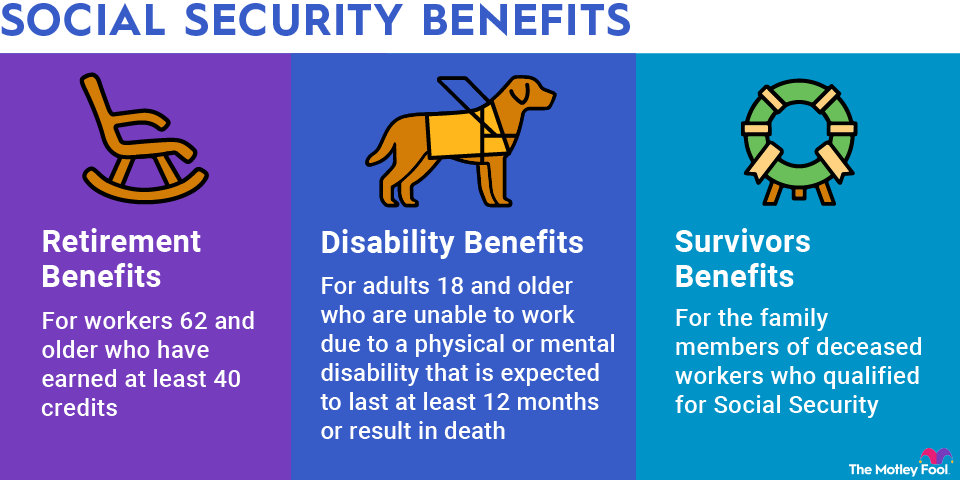
Basically, the taxes you pay for Social Security buy you three things: income
in retirement, income for survivors, and income in case you become disabled
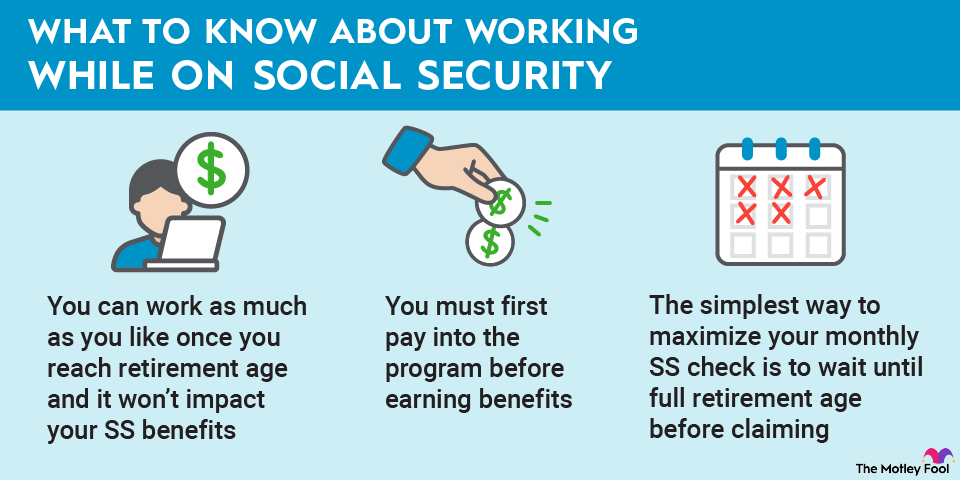
before you are eligible to retire. You must work and pay into the system
to be eligible to receive these benefits. Generally, to qualify for full
benefits you need to work at least ten years. The size of the benefit is
based on your earnings and the number of years you have paid into the system.
You may receive retirement benefits on or after age 62, and the longer you
wait to do so, the higher that income will be. Your spouse and, in some cases,
your dependent children may also receive a benefit when you retire. If you
die before or after retirement, a survivor's benefit may provide income to
your spouse and dependent children depending on their age and work status.
Become disabled and you, your spouse, and your dependent children may receive
disability income based on your work record up to the point of disability.
In and of themselves, each of these benefits is a valuable asset to us all.
They provide income protection to the family during and after our working
careers. But do you know how much protection? Not unless you ask. And you
should do so at least every three years. If you do, you will receive something
called a Social Security Statement (SSS), which
is a great tool in helping you determine how much you need to set aside today
to supplement Social Security in retirement. Remember, the system was designed
to provide for minimum income needs in retirement, not all. Your own savings
must add to that income so you can retire with the living standard you desire.
If you don't know how much you can expect from Social Security, you may
devote more than you need to retirement savings, thus needlessly decreasing
amounts available for other areas of your life today. The SSS will show you
how much you can expect to receive if you elect to retire at age 62, your
normal retirement age (65 or older depending on birth date), or 70.
Additionally, it will show you the earnings credited to your Social Security
account for each year you have paid into the system; how much you would
receive if you became disabled; and how much survivors would receive if you
died. All that information is very Foolish data indeed on which to base your
plans.
How do you get this data? Call the Social Security Administration at (800)
772-1213 and ask for Form SSA-7004, Request for Social Security Statement. When you get it in the mail, fill it out and return
it. In about four weeks, you will have your SSS for review. In a hurry,
you say? Then visit The Social Security Administration and
make your request online. Either way, just do it. Then, when it arrives,
look at the statement closely. See an error in your reported earnings? It happens,
and it could affect your benefit. If there is an error, contact the SSA
immediately to see how it can be corrected. Often, all that's required is
for you to send in a copy of the Form W-2 you received for the year in question
to get the error fixed. Sometimes it takes more effort to fix the mistake.
Regardless, you want to ensure all data is correct, and the only way to do
so is to take action now.
So remember: Smart Fools request SSS. Why not you, too? Now head to our
Seventh Step of Foolish retirement
planning.
Next: A Second Career »
|
|