Current Assets
|
How to Value Stocks
|
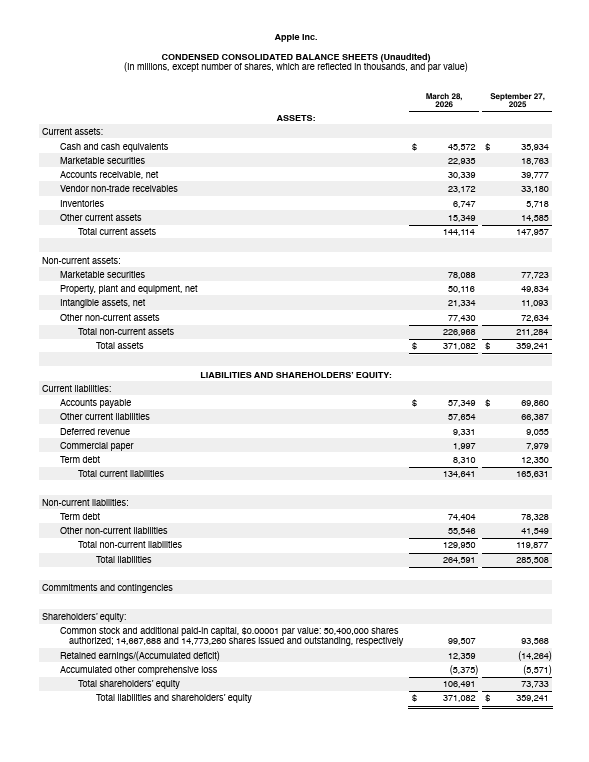
The first major component of the balance sheet is Current Assets, which are assets that a company has at its disposal that can be easily converted into cash within one operating cycle. An operating cycle is the time that it takes to sell a product and collect cash from the sale. It can last anywhere from 60 to 180 days. Current assets are important because it is from current assets that a company funds its ongoing, day-to-day operations. If there is a shortfall in current assets, then the company is going to have to dig around to find some other form of short-term funding, which normally results in interest payments or dilution of shareholder value through the issuance of more shares of stock. There are five main kinds of current assets -- Cash & Equivalents, Short- and Long-Term Investments, Accounts Receivable, Inventories and Prepaid Expenses.
Cash & Equivalents are assets that are money in the bank, literally cold, hard cash or something equivalent, like bearer bonds, money market funds, or vintage comic books. All right, it does not include vintage comic books. Cash and equivalents are completely liquid assets, and thus should get special respect from shareholders. This is the money that a company could immediately mail to you in the form of a fat dividend if it had nothing better to do with it. This is the money that the company could use to buy back stock, and thus enhance the value of the shares that you own.
Short-Term Investments are a step above cash and equivalents. These normally come into play when a company has so much cash on hand that it can afford to tie some of it up in bonds with durations of less than one year. This money cannot be immediately liquefied without some effort, but it does earn a higher return than cash by itself. It is cash and investments that give shares immediate value and could be distributed to shareholders with minimal effort.
Accounts Receivable, normally abbreviated as A/R, is the money that is currently owed to a company by its customers. The reason why the customers owe money is that the product has been delivered but has not been paid for yet. Companies routinely buy goods and services from other companies using credit. Although typically A/R is almost always turned into cash within a short amount of time, there are instances where a company will be forced to take a write-off for bad accounts receivable if it has given credit to someone who cannot or will not pay. This is why you will see something called allowance for bad debt in parentheses beside the accounts receivable number.
The allowance for bad debt is the money set aside to cover the potential for bad customers, based on the kind of receivables problems the company may or may not have had in the past. However, even given this allowance, sometimes a company will be forced to take a write-down for accounts receivable or convert a portion of it into a loan if a big customer gets in real trouble. Looking at the growth in accounts receivable relative to the growth in revenues is important -- if receivables are up more than revenues, you know that a lot of the sales for that particular quarter have not been paid for yet. We will look at accounts receivable turnover and days sales outstanding later in this series as another way to measure accounts receivable.
Inventories are the components and finished products that a company has currently stockpiled to sell to customers. Not all companies have inventories, particularly if they are involved in advertising, consulting, services or information industries. For those that do, however, inventories are extremely important. Inventories should be viewed somewhat skeptically by investors as an asset. First, because of various accounting systems like FIFO (first in, first out) and LIFO (last in, first out) as well as real liquidation compared to accounting value, the value of inventories is often overstated on the balance sheet. Second, inventories tie up capital. Money that it is sitting in inventories cannot be used to sell it. Companies that have inventories growing faster than revenues or that are unable to move their inventories fast enough are sometimes disasters waiting to happen. We will look at inventory turnover later as another way to measure inventory.
Finally, Prepaid Expenses are expenditures that the company has already paid to its suppliers. This can be a lump sum given to an advertising agency or a credit for some bad merchandise issued by a supplier. Although this is not liquid in the sense that the company does not have it in the bank, having bills already paid is a definite plus. It means that these bills will not have to be paid in the future, and more of the revenues for that particular quarter will flow to the bottom line and become liquid assets.
RSS Headlines
Fool UK