How to Read a Balance Sheet: Working Capital

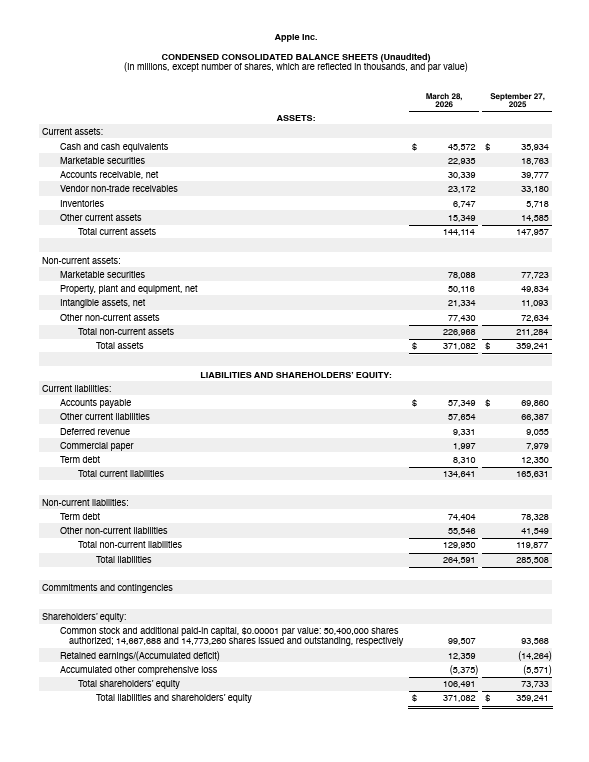
Working capital is simply current assets minus current liabilities. It's the best way to judge how much a company has in liquid assets to build its business, fund its growth, and produce shareholder value.

If a company has ample positive working capital, it's is in good shape, with plenty of cash on hand to pay for everything it might need to buy. But negative working capital means that the company's current liabilities exceed its current assets, removing its ability to spend as aggressively as a working-capital-positive peer. All other things being equal, a company with positive working capital will always outperform a company without it.

Working capital is the absolute lifeblood of a company. For most companies, acquiring working capital was 99% of the reason they went public in the first place, whether they wanted to build their businesses, fund acquisitions, or develop new products. Anything good that comes from a company springs from working capital. And if a company runs out of working capital, but still has bills to pay and products to develop, it's got big problems.

A key comparison
You can discover some pretty cool things by comparing working capital to a company's current market capitalization. Market cap equals the value of currently outstanding shares of stock, plus any long-term debt or preferred shares (a special form of debt). You add in those last two factors because anyone buying the company would not only have to pay the current market price, but also incur responsibility for all its debts.

To compare the two metrics, divide working capital by market cap. Let's use Joe's Bar and Grill for another example. We know that Joe's has $10 million in current assets and $5 million in current liabilities. If you also know that Joe's Bar and Grill has no debt, and 1 million shares outstanding at $10 a pop, you can figure out the working capital-to-market capitalization ratio

            (Current assets - Current liabilities) / ((Shares outstanding * Share price) + Debt)

Now let's plug in those numbers from Joe's:

            ($10 million - $5 million) / ((1 million * $10) + 0) = 0.5 = 50%

All that math tells you that working capital backs up 50% of the market's valuation of Joe's Bar and Grill. Theoretically, if you liquidated Joe's tomorrow, you'd get $0.50 on the dollar from working capital alone. This is a tremendous amount of money to have at your disposal, and a huge plus for Joe's. Basically, if you see working capital-to-market cap ratios of 50% or higher, your company's looking good.

(For retailers and clothing manufacturers in particular, you might want to subtract inventories from working capital before you check that percentage, just to make sure the resulting number's not too different.)

Even though working capital is nifty, simply comparing a company's cash hoard to its market capitalization can also be pretty enlightening. Simply divide the company's cash and equivalents by its market capitalization. If 10% or more of your company's capitalization is backed up with cold, hard cash, you know it has ample funds to keep itself going. 

For more lessons on reading a balance sheet, follow the links at the bottom of our introductory article.

Comment (0)
Recommended (0)

Comments from our Foolish Readers

Help us keep this a respectfully Foolish area! This is a place for our readers to discuss, debate, and learn more about the Foolish investing topic you read about above. Help us keep it clean and safe. If you believe a comment is abusive or otherwise violates our Fool's Rules, please report it via the Report this Comment Report this Comment icon found on every comment.

Be the first one to comment on this article.

Report This Comment

Use this area to report a comment that you believe is in violation of the community guidelines. Our team will review the entry and take any appropriate action.

Sending report...

Compare Brokers

TD AMERITRADE
more info
ShareBuilder
more info
Power E*Trade

more info
Scottrade
more info
Fool Disclosure

DocumentId: 651808, ~/articles/articlehandler.aspx, 10/13/2008 3:34:34 AM,

Sign up for FREE Motley Fool site access!

Already registered? Login Here

It’s FREE! Enter your email address, and we’ll rush you to the article you're looking for right now.

Privacy / Legal Information

We will use your email address only to keep you informed about updates to our web site and about other products and services that we think might interest you. The Motley Fool respects your privacy. Please read our Privacy Statement

.

Major Indices

S&P 500899.22 -1.18%
DJIA8,451.19 -1.49%
NASD1,649.51+0.27%
Updated: 4:09:31 PM
Sponsored by:

The Motley Poll

What do you think will be the best performing sector over the next six months?

Sponsored by: