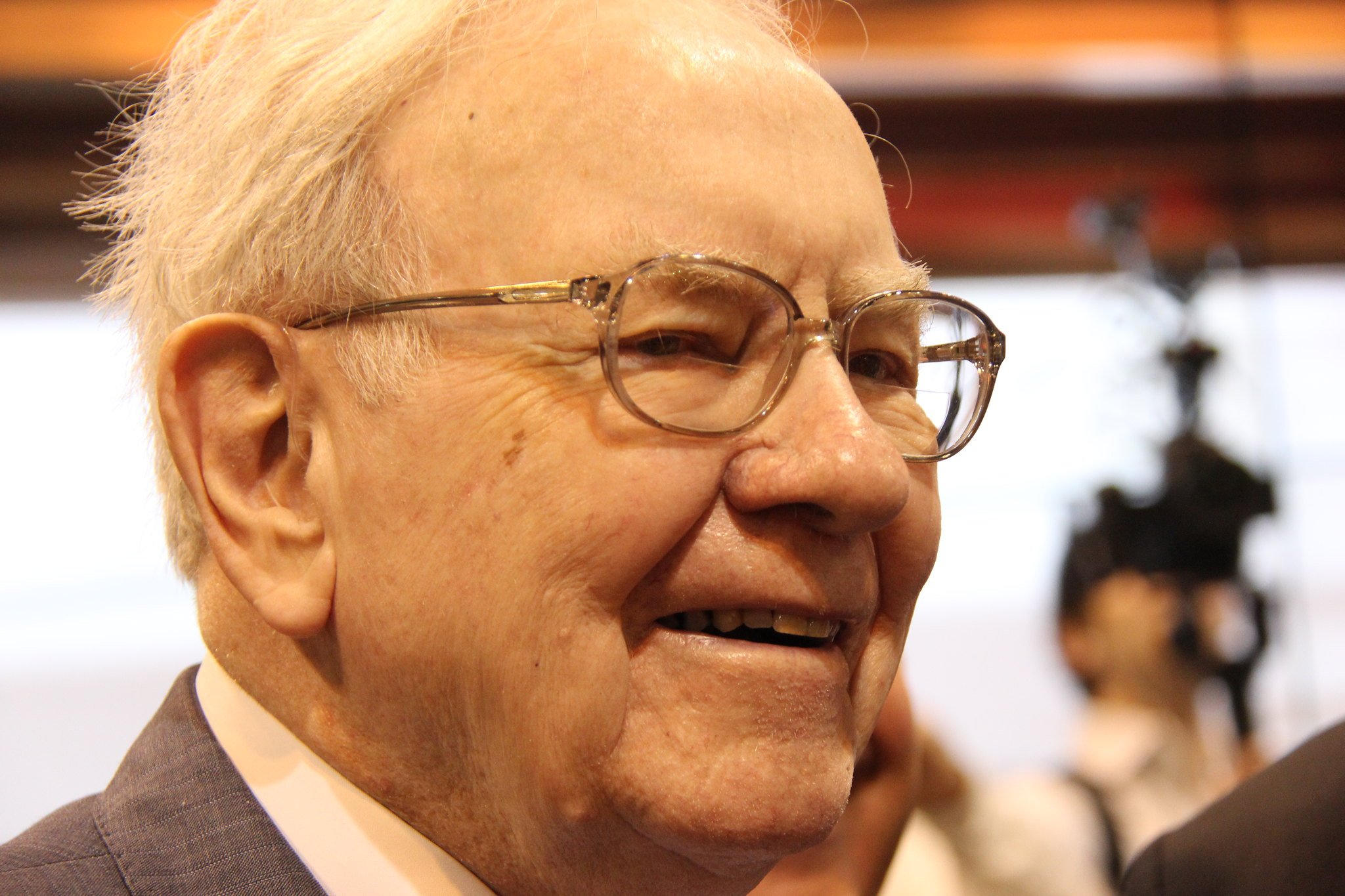
"To quite an extent, gambling is a tax on ignorance. I find it socially revolting when the government preys on the ignorance of its citizenry. When the government makes it easy for people to take their Social Security checks and pull [slot machine] handles, it relieves taxes on those who don't fall for it. It's not government at its best."
-- Warren Buffett
After spending last week in Mississippi for the Southern Gaming Summit, I've finally gotten a chance to catch up on the Berkshire Hathaway (NYSE:BRK-A) (NYSE:BRK-B) Annual Shareholder meeting. I came across the above quote from the May 5 Q&A session. The quote is part of Berkshire CEO Warren Buffett's response to a question regarding Buffett's thoughts on the future of the gambling industry. Buffett's partner Charlie Munger then followed up by labeling gambling a "dirty business."
Now I don't necessarily disagree, and I certainly respect the opinions of both Buffett and Munger as two of the great philosophers of our time. And, of course, as Nick Naylor says in Thank You for Smoking, "If you argue correctly, you're never wrong." That said, I believe Buffett's assertion that casino gambling is a "tax on ignorance" is largely incomplete, and for a number of reasons.
Gambling as perception
My first objection is that I believe casino gambling to be a matter of perception. There are no illusions about what a slot machine is designed to do -- or any other game in the casino, for that matter. The simple fact is that the games the casino offers are designed to make money for the casino.
The casino doesn't actually win or lose; what the casino does is earn. Gamblers may win or lose today or tomorrow, but over multiple sessions, they spend. That said, the perception that there is a competitive relationship between the gambler and the casino (i.e., "We've got to beat the house!") is largely up to the imagination of the patron, as the casino does not view the gambler the same way. That the relationship between the casino and the card counter in blackjack has evolved into a sport is entirely a fluke, as the casinos have spent the past 45 years since the publishing of Edward Thorpe's Beat the Dealer trying to take the sport out of the game by changing the rules, only to face resistance from the gambler.
A slot attendant doesn't actually talk smack to the slot player, nor is it a commonly accepted practice for a blackjack dealer to goad a gambler into betting more than he is comfortable with (e.g., "Come on. Bring it!"). And contrary to popular belief, the casino isn't actually out to "suck the gambler dry" every time someone walks into the casino, either -- the casino's primary concern is that gamblers' experience is an enjoyable one, so that the next time they choose to gamble, they come back and visit them rather than their competitor.
Not to get lost in all of this, keep in mind that the casino actually does sell a product -- or rather, a package of entertainment products.
The entertainment package
My guess is that neither Buffett not Munger spend much time around casinos these days. That said, at least in my opinion, the casino business today no longer centers around luring in suckers. Certainly, there are exceptions, but I believe the average casino patron to be somewhat more sophisticated than either Buffett or Munger would give credit for. And the truth is that it is a capitalist sign of respect for the consumer when MGM Mirage (NYSE:MGM) spends $7.4 billion building Project CityCenter, Las Vegas Sands (NYSE:LVS) builds Palazzo, and Steve Wynn puts his touch into Wynn Resorts' (NASDAQ:WYNN) Wynn Las Vegas and Encore. I would also extend credit to Harrah's Entertainment (NYSE:HET) for the $700 million Margaritaville project it announced on Tuesday for Biloxi, and Melco PBL (NASDAQ:MPEL), as well as for the recently opened six-star Crown Macau -- despite the horrible execution.
So what do the casinos sell?
1. Gambling. More specifically, the casinos sell volatility in a variety of forms, the charge for which is the house edge on any given bet.
2. Non-gaming amenities. A casino competes for business in large part with the drawing power of its hotel, shopping, clubs, bars, restaurants, golf, fishing, museums, movie theaters, bowling alleys -- not necessarily just on the casino property itself, but perhaps in the area around the property. On the Las Vegas Strip, non-gaming business accounts for the majority of revenues. You might say that the average Strip visitor is only 45% ignorant.
3. Convenience. The No. 1 factor in the performance of the casino is its location. If you're looking for action, you need someone to take it, and all else being equal, the most convenient player wins. However, all else usually isn't equal.
4. The experience. A big part of the draw to the casino is the experience -- the kind of experience you can get in the poker room at Bellagio that you can't get at the Isle of Capri in Boonville.
Gambling as culture
Labeling casino gambling a "tax on ignorance" also ignores the social aspects of gambling, as well as the cultural background of the person doing the gambling. For example, in a paper on the gambling habits of Chinese migrants in New Zealand, John Wong, M.Ed., notes that gambling has been "part of the social fabric of the Chinese society for thousands of years." Not only are games such as Mah-jong considered socially acceptable, but even "healthy hobbies." Wong cites a Chinese proverb: "A little gambling is soothing and relaxing; heavy gambling could affect your mental health."
That's just one example, but the point is that gambling in moderation may be not only acceptable in a wide range of cultures at any given point in time, but, in some cases, may even be the social norm.
Problem gambling vs. education
Robert Stocker II, a lawyer from Dickinson Wright PLLC, says that 1%-2% of the population is prone to compulsive behavior in general, with gambling being merely one behavior in which this trait manifests itself. This is a very real problem. Whereas a rational person might set limits or slow down when losing, a compulsive gambler would rather raise the stakes and try to catch up.
Now obviously, an argument against gambling on those grounds would not stand up on its own. This is because if we're going to prohibit gambling based on that 1%-2% of the population, then we should also outlaw alcohol to prevent alcoholism in the approximately 7% of the population susceptible to it. (Oops! That little experiment didn't work out so well, did it?) It doesn't make sense in aggregate, and it probably wouldn't work, either.
However, problem gambling goes beyond compulsive gambling. In my opinion, gamblers who gamble more than they can afford can also be included in the category "problem gamblers." Even skilled poker players and blackjack players may be destined to go broke if they lack proper money-management skills.
But that's really the thing: There's a difference between ignorance and stupidity. While you can't cure the stupid, you can educate the ignorant. At the risk of sounding like Nick Naylor, the argument that gambling is a "tax on ignorance" based on this group of people is really a cop-out for any weakness in the education system. What we should be doing is teaching kids about money management -- saving, investing, and spending within your means -- at an early age.
Perspective
Having said all of that, I would agree that gambling does tax ignorance -- but only to the extent that education does not suffice. When Buffett says that gambling is -- to an extent -- a "tax on ignorance," that is his opinion based on his perception of what gambling is and what casino companies do. I respect it, but I believe the assessment to be incomplete.
Now, if five decades from now, I have both the wits and the opportunity to run a $170 billion company, I may feel differently about what senior citizens are supposed to be doing. But for now, I'm operating under the assumption that the occasional day at the casino beats staying at home, playing Scrabble, and watching the Game Show Network.
- The Future of the Mississippi Gulf Coast
- From the Southern Gaming Summit: Hot Products
- Did Congress Kill Online Poker?
- Poker Writers: Please Curb Your Enthusiasm
- Berkshire Hathaway Annual Meeting: Notes from the Q&A Session
Fool contributor Jeff Hwang owns shares of Berkshire Hathaway and Melco PBL. The Fool has a disclosure policy that is neither ignorant nor stupid.