The Nuclear Option

While Cameco's (NYSE: CCJ) recent operational experience is essentially an exercise in Murphy's Law, this company is still the nuclear option for investors. Because Cameco is a vertically integrated nuclear energy company, you can have your yellowcake and eat it too.

As ConocoPhillips (NYSE: COP) operates across the full petroleum pathway from well to gas tank, so does Cameco participate in the full nuclear supply chain. In addition to being the world's top uranium miner (at nearly one-fifth of global production in 2007), Cameco has a hand in refining, fuel conversion, and fabrication, as well as power generation. Just about the only missing piece is in-house uranium enrichment, but the company has stated its intent to enter that business in due time. Given the troubles faced by USEC (NYSE: USU), you can hardly blame Cameco for taking an opportunistic approach.

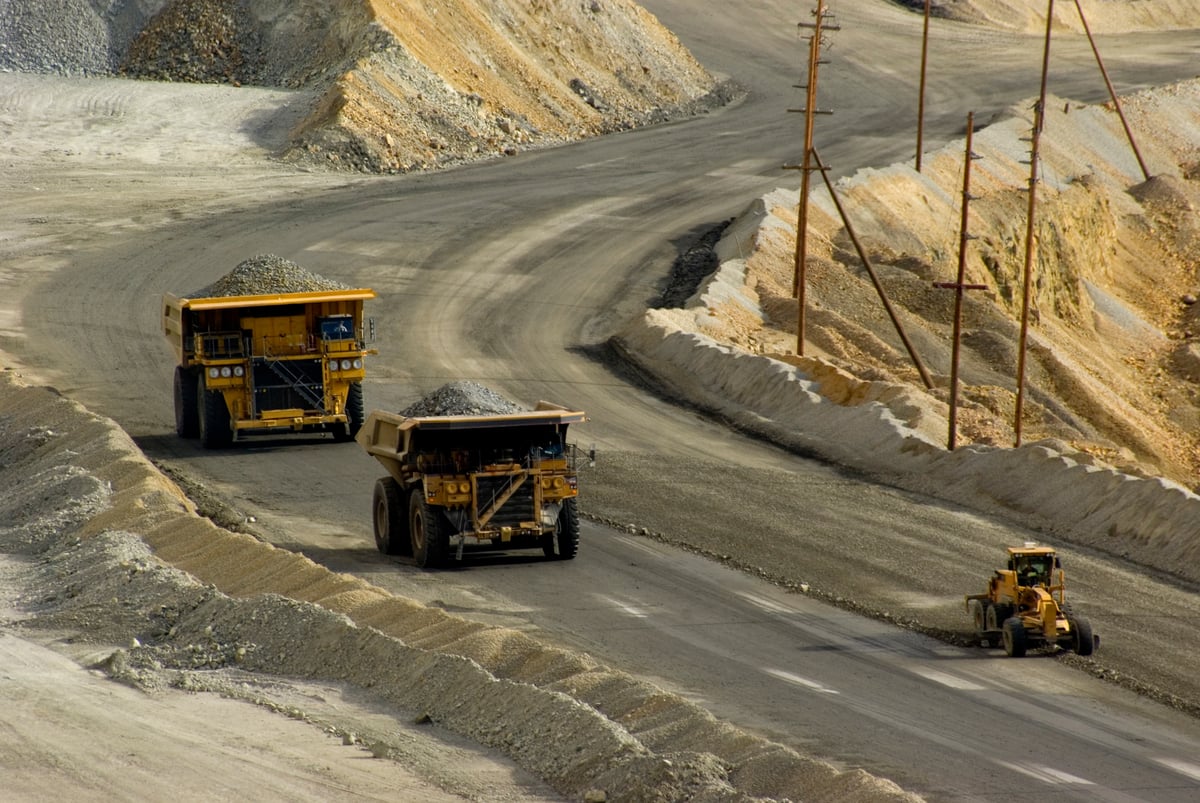
On account of Cameco's unique asset base, uranium mining is the company's cornerstone operation. Your average uranium deposit's ore grade runs around 0.2%. In Saskatchewan's Athabasca Basin, however, Cameco holds deposits that are 100 times richer. Potash Corp. of Saskatchewan (NYSE: POT) clearly isn't the only company reaping that province's mineral bounty. Cameco's total reserves, at north of 500 million pounds, are simply massive. Global mine production is expected to come in around 125 million pounds in 2008.

Given the 80-plus reactor additions anticipated worldwide by 2017, Cameco can't just rest on its Canadian cache. The firm has interests in exploration ventures as far-flung as Gabon, Mongolia, and Paraguay. Wherever the next major uranium discovery is made, Cameco won't be far behind.

The falling spot price of uranium has given uranium junkies serious jitters. Fronteer Development Group (AMEX: FRG) doesn't even explore for uranium, but its equity interest in a company that does has obliterated the share price. Cameco offers protection via both its long-term supply contracts, which now provide both a price floor and strong upside participation, and its diversification across the fuel cycle. At the same time, there are plenty of reasons to expect uranium prices to hold up longer term, meaning Cameco will continue to cash in.

Get the best of the Fool delivered to your inbox every Friday

Cameco's splitting atoms, but it's not splitting Foolish investors. Motley Fool CAPS players rate the company a full five stars. Join the conversation right here.

Fool contributor Toby Shute doesn't have a position in any company mentioned. The Motley Fool has a disclosure policy.

Comment (2)
Recommended (7)

Comments from our Foolish Readers

Help us keep this a respectfully Foolish area! This is a place for our readers to discuss, debate, and learn more about the Foolish investing topic you read about above. Help us keep it clean and safe. If you believe a comment is abusive or otherwise violates our Fool's Rules, please report it via the Report this Comment Report this Comment icon found on every comment.

  • On June 18, 2008, at 7:20 AM, CleverDan wrote: Report this Comment

    Nuclear power - fission, currently - is the only option for consistent, dependable, day-and-night large-scale power generation, if the demand for energy keeps increasing. Not stating that it's a good or bad thing (though nuclear power has, statistically, killed far fewer people than coal or oil have - whether it's mining, accidents, or pollution and global warming, the fossil fuels are much dirtier and more deadly, overall!)

    The numbers are simple and powerful: the fission of U-235 releases roughly one million times the energy, by mass, as does burning coal or oil. Check http://en.wikipedia.org/wiki/Energy_density if you don't believe it :).

    The major drawbacks to fission power, currently, are:

    1. It produces long-lived radioactivity in the form of fission products, which must be stored for 10,000 years before they are 'safe'.

    2. It produces weapons material like plutonium, which can be used to produce weapons and poses a risk for proliferation. I read that there's more than 250 tons of plutonium in the form of decomissioned weapons and about 10 times that sitting in the spent fuel of reactors worldwide.

    BUT:

    re: 1: the fission products are themselves unstable and receptive to being further broken down, releasing more energy. Look up 'the curve of binding energy': everything with more protons than Nickel, I believe, has more than the minimum binding energy and can release that energy if broken down (but of course, if broken into something smaller than Ni, it would take energy). Everything under iron, I think, can be fused with something else to release energy (which is why stars stop fusing when they get to iron, and only a supernova or some other cataclysm can pack more energy in and make bigger nuclei, like the U-235 we use today).

    SO, next-generation ('Gen-IV') reactors - like liquid-metal fast breeders and liquid-fluoride designs - can not only split U-235, but also breed more fuel out of natural, plentiful U-238 (becomes plutonium, which is also burned), AND even more plentiful Th-232.

    re: 2, there are new reactor designs which incorporate continuous on-site fuel reprocessing in ways in which the plutonium, U-233 and other weapons-grade material are never in a form which can be stolen or separated out (without great risk to unshielded or even shielded humans), and are burned as part of the fuel cycle.

    If we move to using breeder and liquid-fluoride reactors, especially those fueled with thorium (which is more abundant and produces no plutonium), we can achieve *100 times* the amount of energy release from the same amount of fuel as current wasteful 'once-through' light-water reactors!

    So, fission is the power of the future, at least till fusion becomes practical (I'd say at least 50 years on that front, barring some amazing breakthrough... and don't talk about Farnsworth Fusors or such, which have yet to come anywhere near break-even... I think last I saw they were under 1 to 100 output/input).

    There are currently no publically tradeable companies which are engaged in research into Gen-IV reactors, AFAIK, but you can read more about them here: http://en.wikipedia.org/wiki/Generation_IV_reactor and here: http://www.eoearth.org/article/Small_nuclear_power_reactors .

    However, there IS a company which is engaged in creating fuel designs which utilize thorium to burn more efficiently in existing reactors - and burn up the excess weapons-grade plutonium and uranium which we're at it: Thorium Power (http://finance.google.com/finance?q=OTC:THPW). Tiny company, but I believe they have a sound fundamental idea

    and I've put my money where my mouth is: I own shares, about 25% of my current investment. It's a long shot, but worth it when they've got the monopoly on fuel contracts for the next-generation non-proliferative breeder reactors.

    There are a few interesting articles out there on thorium as a nuclear fuel; there's another discussion I started on Google Finance at http://finance.google.com/group/google.finance.717256/browse... , listing a few recent articles on the company... it's a pretty quiet board; feel free to be the first to comment!

    Anyway: Summary:

    • Fission power is a lot safer and more environmentally friendly than fossil fuels.

    • Next-generation reactors will be able to safely and efficiently burn up the spent fuel from current reactors instead of wastefully burying it!)

    • Nuclear power is dependable, and has the highest *capacity factor* of any utility; I believe most of the plants out today can run at over 90% rated capacity, year-in-year-out, while coal and oil plants are maxing out at 60%. Wind and solar are much, much lower, meaning they have much greater power fluctuation (like night and day), and are still more expensive per unit power than nuclear, even with subsidies. They'll provide a piece of the power pie, but not nearly as much (till, say, we run out of U and Th in a few hundred years...)

    • Thorium will be the 'unleaded' nuclear fuel of the future; U will become increasingly scarce, frowned upon as a danger for weapons proliferation, and harder to mine (Th comes from monazite sand deposits, a lot easier to get at than U!)

  • On June 23, 2008, at 1:46 AM, TMFSmashy wrote: Report this Comment

    Well, that didn't take long. Cameco invested in an enrichment venture on Friday.

Add your comment.

Report This Comment

Use this area to report a comment that you believe is in violation of the community guidelines. Our team will review the entry and take any appropriate action.

Sending report...

Compare Brokers

TD AMERITRADE
more info
ShareBuilder
more info
Power E*Trade

more info
Scottrade
more info
Fool Disclosure

DocumentId: 666439, ~/articles/articlehandler.aspx, 8/29/2008 1:56:43 PM,

Sign up for FREE Motley Fool site access!

Already registered? Login Here

It’s FREE! Enter your email address, and we’ll rush you to the article you're looking for right now.

Privacy / Legal Information

We will use your email address only to keep you informed about updates to our web site and about other products and services that we think might interest you. The Motley Fool respects your privacy. Please read our Privacy Statement

.

Related Tickers

Cameco Corp (USA)

CCJ Down! $29.87 -0.44 (-1.45%) 1:39 PM
CAPS Rating:
1165 Outperforms
31 Underperforms
Rate This Stock

Major Indices

S&P 5001,288.51 -0.94%
DJIA11,591.67 -1.05%
RSL 2K741.71 -0.81%
NASD2,372.85 -1.61%
Updated: 1:41:33 PM
Sponsored by:

The Motley Poll

Where will the U.S. dollar go from here?

Sponsored by: