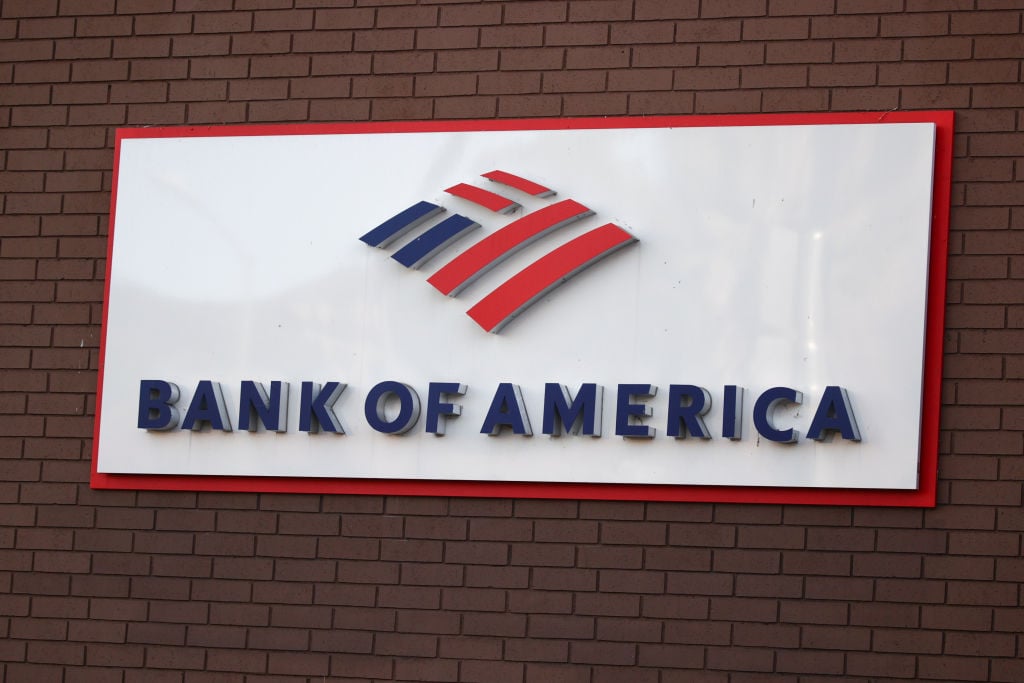
Was Bank of America Forced to Buy Merrill?

Recs

22

Disney Buys Marvel!

David Gardner called it. He’s up 1,334%! See what David’s recommending that you buy NEXT.

Stock Advisor

Shares of Bank of America (NYSE: BAC) are now down almost 75% in the past three months, making this former bank bully's market cap substantially smaller than that of Wells Fargo (NYSE: WFC) and just half the size of former competitor No.1 JPMorgan Chase (NYSE: JPM).

Most of the plunge came in the last week, as B of A's deal to purchase Merrill Lynch prompted a second helping of bailout funds to help cover massive Merrill losses. Shareholders are infuriated -- as they should be -- and have filed a class action lawsuit against CEO Ken Lewis and former Merrill CEO John Thain in protest. The outrage ultimately led to Thain's resignation earlier today.

Two key questions that investors want to know the answers to are when those seemingly "unexpected" Merrill losses came to light, and why the deal was still consummated after they were discovered.

Here's what we do know
One popular argument is that the Fed "forced" the deal down Lewis's throat. Is it true? Well, it certainly didn't start that way. When the deal was first struck in September, the The Wall Street Journal reported that "[CEO] Ken Lewis said … that he felt 'no pressure' from federal government regulators to sign the deal."

As the report describes, things began to unravel in mid-December, when the depth of Merrill's losses took Lewis by surprise. That prompted a visit to Fed chairman Ben Bernanke and Treasury Secretary Hank Paulson on Dec. 17, where Lewis confessed that buying Merrill was too much for B of A to swallow. Lewis felt that Merrill had faltered enough to claim a material-adverse-change clause, which might allow him to walk away.

According, again, to The Wall Street Journal, Bernanke and Paulson worried that a failed deal would ravage financial markets, and warned B of A that pulling out "would reflect poorly on [B of A] and suggest it hadn't done its due diligence and wasn't following through on its commitments."

Nothing suggests that the Fed "forced" a deal against Lewis's will. On the contrary, it seems more appropriate to say that Lewis forced Bernanke and Paulson -- who have a responsibility to protect the financial system -- to bail out his blunderous miscalculation. As Lewis himself put it, "We went to regulators and told them we would not, that we could not close the deal without their assistance."

Maybe it's just me, but "would not close it without their assistance" seems like a far cry from "I tried to back out, but they held a gun to my head."

Moving on
To me, the argument that the Feds forced this deal to happen (a) seems to be untrue, and (b) ignores what's really important: that Lewis swung for the fences without understanding the risks, and shareholders are now paying dearly for his mistakes.

Someone remind me again: why hasn't Lewis followed Thain out the door yet?

For related Foolishness:
Like this article? Get our best articles delivered direct to your inbox at no cost. Sign up for Foolwatch Weekly by entering your email below.

Fool contributor Morgan Housel doesn't own shares in any of the companies mentioned in this article. JPMorgan Chase is a Motley Fool Income Investor recommendation. Bank of America is a former Motley Fool Income Investor selection. Try any of our Foolish newsletters today, free for 30 days. The Motley Fool is investors writing for investors.

Comments from our Foolish Readers

Help us keep this a respectfully Foolish area! This is a place for our readers to discuss, debate, and learn more about the Foolish investing topic you read about above. Help us keep it clean and safe. If you believe a comment is abusive or otherwise violates our Fool's Rules, please report it via the Report this Comment Report this Comment icon found on every comment.

  • Report this Comment On January 22, 2009, at 8:13 PM, Seano67 wrote:

    I'm not sure what a class-action lawsuit would accomplish. I mean it wouldn't help any of the shareholders get their money back, would it?

    Either way, it'll be really interesting to see what happens here. Thain's already out (thank god), Lewis is clearly a dead man walking- and as to who they might turn to to try and right the ship, I have no idea. Whoever that person is, I wish him or her the best of luck, cause this bank and its shareholders might very well be screwed for years and years to come.

  • Report this Comment On January 22, 2009, at 9:20 PM, valari25 wrote:

    I am going to claim credit for this article! Really, it is all I have right now as I hope and pray that no company I own stock in cuts their dividend. I am looking at you WFC and GE!!!

  • Report this Comment On January 22, 2009, at 11:58 PM, sultanofbaseball wrote:

    The banks and financial institutions are all out of control. It is rather obvious that they spend way more than they have at the expense of their shareholders and the taxpayers who have to BAIL them out. The federal government has to nationalize these banks sell off all there assets if there are any. All banks asking for a BAILOUT must submit a financial report to the federal government so assets can be sold and then allow to restructure under tight supervision.

Add your comment.

Compare Brokers

TD AMERITRADE
more info
ShareBuilder
more info
Power E*Trade

more info
Scottrade
more info
Fool Disclosure

DocumentId: 815096, ~/Articles/ArticleHandler.aspx, 11/22/2009 3:22:42 PM

Report This Comment

Use this area to report a comment that you believe is in violation of the community guidelines. Our team will review the entry and take any appropriate action.

Sending report...

The Must-Read Story on Fool.com
An Open Letter to the Federal Reserve

Related Tickers

11/20/2009 4:00 PM
BAC $16.09 Up +0.01 +0.06%
Bank of America Co… CAPS Rating: ***
JPM $42.46 Down -0.09 -0.21%
JPMorgan Chase & C… CAPS Rating: ***
WFC $27.87 Down -0.45 -1.59%
Wells Fargo & Comp… CAPS Rating: ***

Community: Investing Wiki

Term Of The Hour

Fed Model: The Fed Model (not endorsed by the Federal Reserve) hypothesizes that the market is in equilibrium when the earnings yield on the S&P 500 matches the yield on the 10 year Treasury note. Any dissonance in the relationship would show that equity valuations are out of whack.

Want to learn more or edit this definition?
Click here to read more!