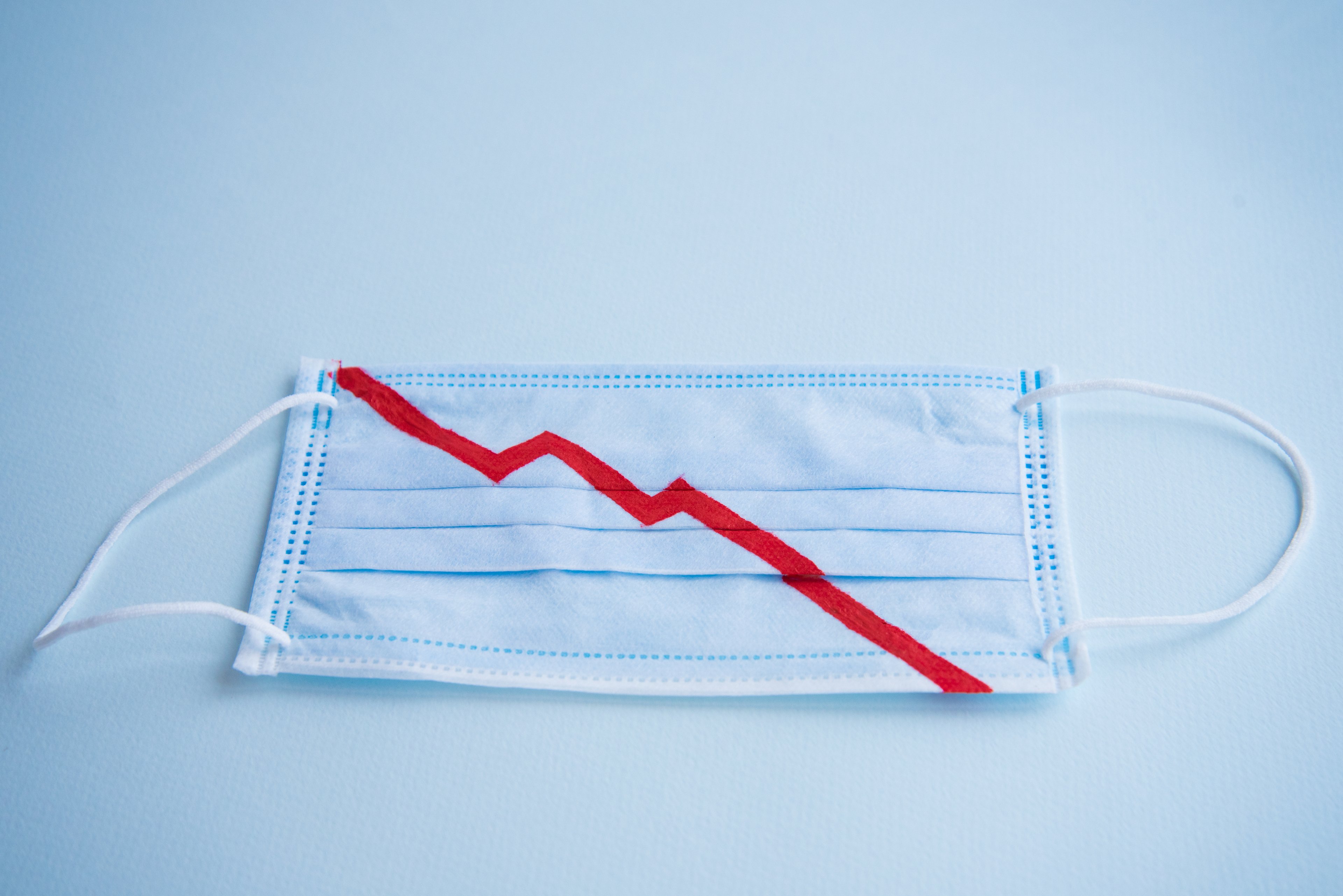
In a note to clients last year, former Societe Generale investment strategist James Montier identified 42 stocks worldwide that he believes threaten investors with a permanent loss of capital. With valuations now substantially higher, there is reason to believe the same screen would produce an even longer list today.
So what?
Montier is not your run-of-the mill investment strategist, which is one of the reasons I follow him. For instance, he once published a research note on the psychology of happiness with 10 suggestions, including the following: "Have sex (preferably with someone you love)."
Don't be fooled by this unorthodox style, though. Montier is no charlatan -- he's an expert on behavioral finance, and his work is steeped in the no-nonsense principles of value investing, as laid out by legendary teacher-investor Ben Graham.
In other words, it's worth your time and money to listen to what he has to say -- particularly on a matter as serious as preserving your wealth.
Permanent loss of capital vs. stock price drop
First, let me emphasize what value investors refer to by a permanent loss of capital. Whether stock losses are permanent can be determined only if you have a notion of the stock's intrinsic value. Two sets of circumstances can result in permanent loss: Either your cost basis was materially higher than the intrinsic value, or the intrinsic value itself has declined.
It's vital to understand that a drop in stock price does not cause a permanent loss of capital. Rather, if the stock price is substantially higher than its intrinsic value, you should expect that the stock will ultimately suffer a downward adjustment -- don't confuse cause and effect. Furthermore, not all stock-price drops are the product of latent permanent losses -- they may have other causes, such as forced selling and investor irrationality.
The trinity of risks
Now that we know what it is we are trying to avoid, let's focus on the three factors Montier refers to as the "trinity of risks" that can produce such losses:
1. Valuation risk: If earnings are at a cyclical high, the current P/E may be masking an overvalued stock. Montier uses an adjusted P/E ratio that replaces current earnings per share (EPS) in the denominator with a 10-year average EPS. This approach smoothes out the effect of earnings volatility and comes straight from the Ben Graham playbook. When screening for danger, Montier looks for stocks that have an adjusted P/E ratio greater than 16.
2. Balance sheet/ financial risk: Excessive leverage can force a company into bankruptcy, no matter how sound the underlying business. Investors need to be particularly sensitive to financial risk in an environment that combines a sluggish economy and tight credit.
The Z-Score is a statistical indicator of bankruptcy risk developed by Edward Altman of NYU. Montier's screen identifies companies with a Z-score below 1.8, the "distressed" range which indicates companies run a significant risk of bankruptcy.
3. Business / earnings risk: If current earnings are significantly higher than their recent historical average, investors might be extrapolating future earnings from an inflated base and award the stock a valuation it doesn't deserve. This risk is exacerbated at the tail of a bubble. Montier looks for companies with current earnings-per-share (EPS) that are double or more the 10-year average.
Using Montier's three criteria, I found 35 stocks trading on major U.S. exchanges with a market value above $500 million. The following table contains seven of them:
|
Stock |
Adjusted Price/ Earnings Ratio* |
Z-Score |
Latest Annual EPS/ 10-year Average EPS* |
|---|---|---|---|
| AirTran Holdings (NYSE: AAI) |
52.4 |
1.46 |
6.8 |
| Canadian Solar (Nasdaq: CSIQ) |
624.2 |
1.57 |
24.2 |
| CF Industries Holdings (NYSE: CF) |
45.5 |
1.64 |
2.8 |
| Frontier Communications |
70.5 |
1.25 |
3.2 |
| IntercontinentalExchange |
76.7 |
0.41 |
2.8 |
| NYSE Euronext (NYSE: NYX) |
90.4 |
1.02 |
2.6 |
| Transocean (NYSE: RIG) |
21.3 |
1.66 |
3.1 |
*Note that, in certain cases, the average earnings may be calculated over fewer than 10 years for lack of data. Source: Capital IQ, a division of Standard & Poor's, as of Oct. 15, 2010.
Two surprise guests
I was surprised to find two exchange operators show up on the list (IntercontinentalExchange, NYSE Euronext), as this is a sector I generally find attractive. Perhaps I'm mistaken... or perhaps this simply illustrates that mechanical screens are inherently limited when it comes to analyzing individual companies. For example, Montier's screen is biased against legitimate high-growth companies, as the adjusted P/E and the ratio of current earnings to the 10-year average don't allow you to distinguish between secular increases (or declines) in earnings and cyclicality.
As the following table demonstrates, companies such as Apple (Nasdaq: AAPL) and CarMax (Nasdaq: KMX), that have produced 10-year annualized EPS growth of 29%, trigger both criteria:
|
Stock |
Adjusted Price/ Earnings Ratio* (Aug. 23, 2010) |
Latest Annual EPS/ 10-year Average EPS* |
Forward P/E* (Next 12 months' estimated EPS) |
|---|---|---|---|
| Apple (Nasdaq: AAPL) |
124.9 |
3.6 |
18.3 |
| CarMax (NYSE: KMX) |
49.1 |
2.1 |
18.6 |
*At Oct. 15, 2010. Source: Capital IQ, a division of Standard & Poor's.
A sensible approach to stock-picking
Let's recap:
- There are three fundamental sources of risk that can inflict a permanent loss of capital on your portfolio.
- Montier's screen is a useful tool for identifying stocks that pose these risks.
- The screen has its limitations, particularly when it comes to growth companies.
An absolute commitment to avoiding permanent capital losses and the flexibility to evaluate different types of companies on their own merits: These are two principles that guide the team at Motley Fool's Million Dollar Portfolio in their stock-picking. This real money portfolio seeks to achieve wealth appreciation over the long term by owning only the best stock recommendations from across the Motley Fool's different services. If you'd like to find out more about putting this "best-of-breed" approach to work for you, enter your email address in the box below.
This article was originally published on Feb. 12, 2009. It has been updated.
True to its name, The Motley Fool is made up of a motley assortment of writers and analysts, each with a unique perspective; sometimes we agree, sometimes we disagree, but we all believe in the power of learning from each other through our Foolish community.
Fool contributor Alex Dumortier, CFA, has no beneficial interest in any of the companies mentioned in this article. CarMax is a former Motley Fool Inside Value recommendation. NYSE Euronext is a Motley Fool Rule Breakersselection. Apple is a Motley Fool Stock Advisor pick. The Fool owns shares of Apple. The Motley Fool has a disclosure policy.