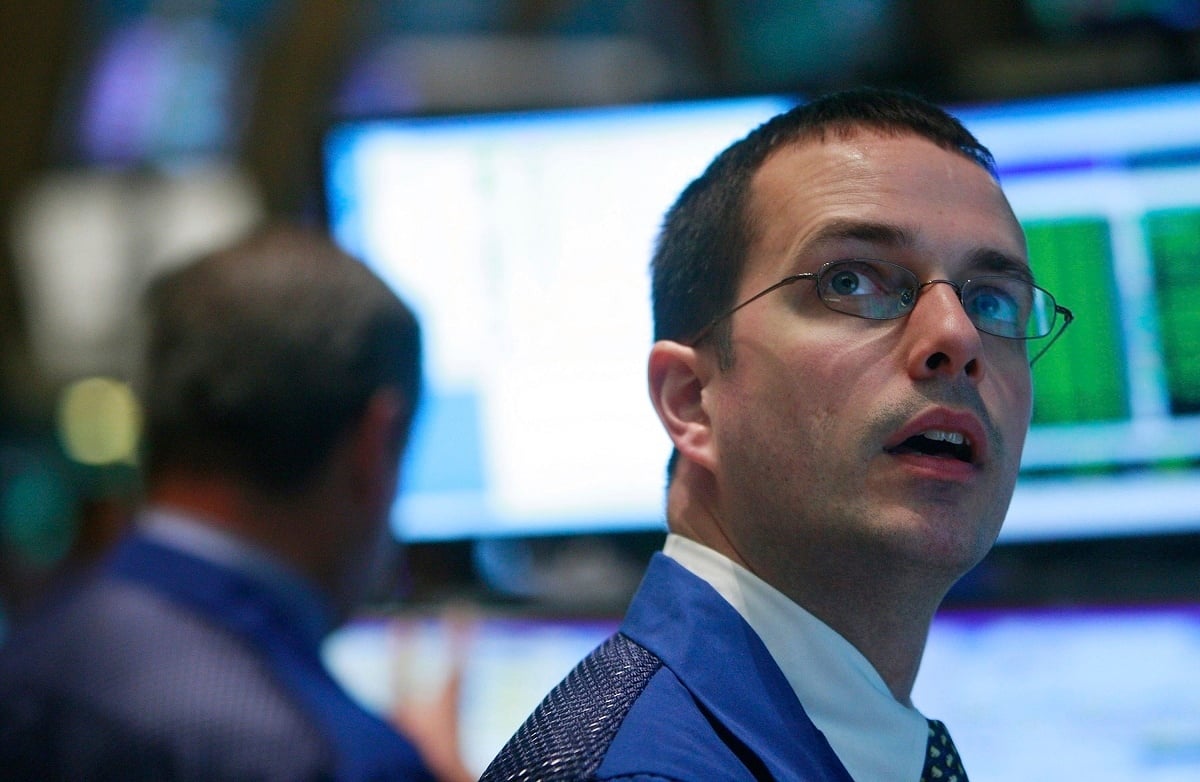
There's no doubt that the big banks were neck-deep in the muck that created the Great Recession. But with mea culpas and regime changes from all the major players, why are investors still shunning them now that they're performing well?
Three prominent cognitive biases -- anchoring, the negativity bias, and the empathy gap) -- may be stopping you from investing in the money-handlers. Once we clear the air, you may have a better view of how bank stocks can improve your portfolio for the long run.
Anchors aweigh
Sometimes a past event becomes so engrained in our minds that it influences future decisions -- a phenomenon called anchoring. With the financial crisis only recently behind us, it's no surprise that many investors have a hard time letting go of the past, even when banks' operations have improved. Let's look at some of the players in the financial sphere, their past indiscretions, and their current condition.
|
Financial Institution |
Top Indiscretion |
Current Condition |
|---|---|---|
|
AIG (AIG +0.33%) |
|
|
|
Goldman Sachs (GS 1.37%) |
|
|
|
Wells Fargo (WFC 0.55%) |
|
|
None of the banks operating today have a halo around their heads. But with increased regulations, federal lawsuits, and internal reform, many are getting back to the basics of their business -- and profiting from it.
Accentuate the negative, eliminate the positive
Even with good news from the financial sector coming in left and right, it's difficult to focus attention on the positive when negative events are so sensationalized. But it's not just media attention that causes us to focus on the negative. Our brains have a general tendency to give more weight to negative information than positive – what's known as the negativity bias.
Consider, for example, the recent trading kerfuffle at a JPMorgan Chase (JPM 1.49%) office in London that resulted in losses of $6 billion. In that scandal's wake, few investors will remember that JPM was one of the only banks to emerge from the financial crises whole, and that it remains profitable even after the rogue-trading incident.
Mind the gap
Now, as Foolish investors, we know that we need to take our emotions out of investing or suffer the consequences of buying high and selling low. But according to the empathy gap, we tend to underestimate the power of our emotions on decision-making. Say you had a mortgage with Countrywide that resulted in foreclosure; it would be understandable that as an investor, you'd have emotional barriers against investing in Bank of America (BAC 0.21%).
But if investors can divorce themselves from their feelings, they might realize that Bank of America has been slowly reclaiming its footing. Since it's currently trading at around 73% of its tangible book value, it may be a solid value play.
A Foolish takeaway
It's not uncommon to have biases influence everyday decisions. But when you're deciding on investments, be sure to take a minute and question your aversion to a certain company or sector. If your decision isn't supported by the fundamental research any investment requires, you may be victim of a cognitive bias -- and you might be holding your portfolio back from its full potential.