1. Salesforce Splurges $5.7 Billion to Stay Relevant
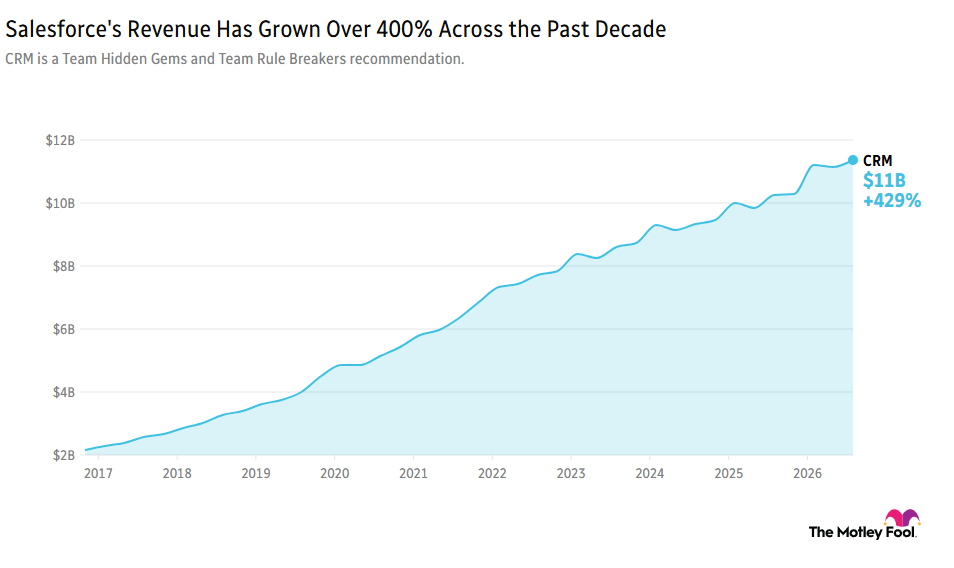
Salesforce (CRM -0.27%) just made its boldest marketing bet in years. It will buy Braze (BRZE +0.24%) for $47.50 per share in cash in a $5.66 billion deal. Marc Benioff is buying Braze’s real-time engagement engine, which Salesforce’s Marketing Cloud always lacked.
Braze, a Team Rule Breakers and Team Hidden Gems recommendation, jumped more than 50%. Salesforce shares were unchanged. Two Fools weigh the implications of this deal.
“The days of Salesforce growing 20% per year are behind it”
—TMF chief investment officer Andy Cross
Marketing and communications haven’t necessarily been Salesforce’s strengths, so Braze should add immediate product cred for clients.
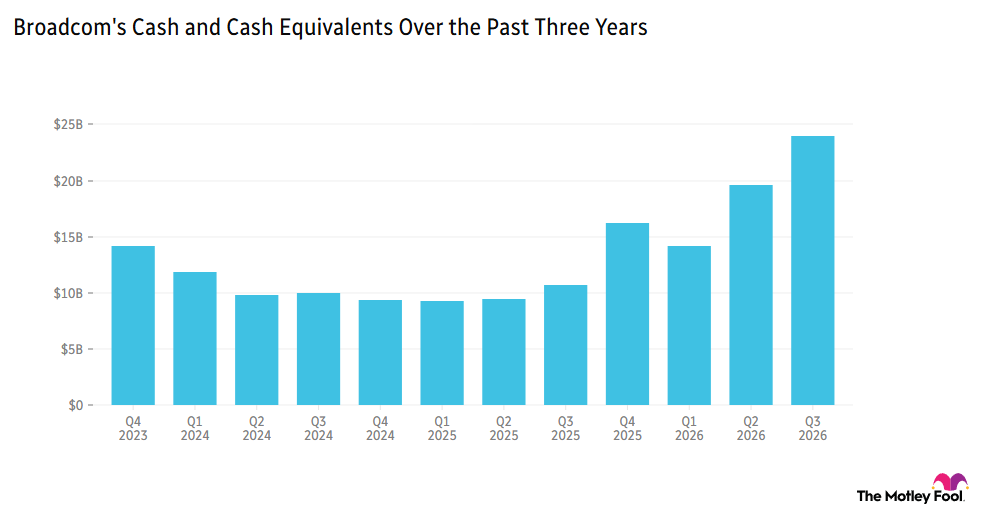
And Salesforce has the balance sheet and cash flow to pull it off, since it holds more than $11 billion in cash. Compared to Informatica or the massive Slack acquisition of a few years ago, Braze is relatively inexpensive, costing less than one year’s worth of Salesforce's operating profits.
Still, I’m less sanguine about Salesforce’s longer-term prospects, even with Braze in its family (which I think is a good tuck-in acquisition). I think the stock can do fine, but with growth rates more in the 7% to 10% range, investors should look more toward market-matching or slightly trailing returns.
“The question is whether Salesforce gets more interesting with Braze inside the fold. I believe it does.”
— Fool senior analyst Tim Beyers
Financially, Braze has more than $300 million in net cash on its balance sheet, while operating margin has been improving steadily thanks to improved sales efficiency. Every incremental dollar of sales and marketing expense led to $4.58 in new revenue in fiscal Q2, up from $3.25 in Q1.
Salesforce is paying about 6.8 times trailing revenue for a business that’s growing its topline by over 25% annually while improving margins. At a time of trillion-dollar IPOs and $100-billion-plus mega mergers, this one feels pretty modest — and might be timely.
2. Netflix Needs a Home Run
For over a decade, Netflix (NFLX -5.31%) wrote the rules of modern entertainment, leaving legacy moguls scrambling in its wake. By the end of 2025, it had passed 325 million paid memberships.
Then it quietly stopped reporting its quarterly subscriber count, and the story changed to viewer engagement. The latest quarter laid the problem bare. The Team Rule Breakers and Team Hidden Gems recommendation fell close to 6% after hours.
- The real problem is watch time: Netflix’s growth runs on three levers: more members, higher prices, and ads. March U.S. price hikes lifted revenue 12% to $12.9 billion, but it was the slowest growth in nearly three years. Ad revenue of $2.7 billion in 2026 will be up from around $1.5 billion in 2025 but below the earlier $3 billion target. The fourth lever is the one that didn’t move: viewing hours rose a mere 2% in the first half of 2026.
- The long-term challenge: YouTube and short-form video are pulling attention away daily. Netflix is scrambling for fresh fuel, leaning hard into live events, gaming, and sports rights to retain eyeballs while shuffling creative leads. It laid off about 1,000 employees, or 6% of its workforce, last week. One signature hit, and the narrative could flip. Making it a habit is the hard part, and that is the only real catalyst for long-term growth.
3. Two Beats, Opposite Moves: ISRG Falls, SpaceX Soars
Intuitive Surgical (ISRG -2.26%) and Space Exploration Technologies (SPCX +7.80%) both beat estimates after Tuesday’s close. Yet their shares moved in opposite directions. Intuitive, which makes the da Vinci surgical robot, earned $3 per share on roughly $3 billion in revenue. It beat estimates, but the stock still fell 7%. SpaceX reported revenue of $14.58 billion, up 161% and above estimates, with the stock up 8% ahead of the market open.
- Intuitive’s U.S. growth is cooling: U.S. da Vinci procedures (robotic surgeries) grew just 10% in Q3, lagging a 20% surge overseas. Intuitive narrowed its full-year global guidance range to 14%-15% from 13.5%-15.5%. Because procedures drive recurring instrument sales, this volume trajectory matters more than the profit beat. Team Rule Breakers recommends the stock.
- SpaceX is guiding to a step-up: Management expects first-quarter 2027 revenue of $33 billion to $37 billion, more than double the third quarter. It expects to spend $35 billion to $40 billion in capex in Q4. High-stakes compute revenue, the money from selling computing power, must arrive on time to justify that spending blitz. CEO Elon Musk didn’t rule out a merger with Tesla (TSLA +3.41%), calling it a “good idea” on the earnings call.
4. Next Up: Tesla, Meta, and IBM Face Spending Questions
After Wednesday’s close, three companies deliver results with big spending decisions in the spotlight.
- Tesla is expected to report flat revenue of around $28 billion and adjusted earnings of $0.44 per share. Wall Street also projects a $4.5 billion free cash flow drain alongside roughly $7.8 billion in capital expenditure. Timeline clarity on Cybercab and Optimus volume is critical to justify Tesla's massive capital spending. The stock is outperforming the S&P 500 by 87% since the April 2024 Hidden Gems recommendation.
- All eyes are on Meta Platforms (META +0.47%) as it prepares to report earnings, with 2026 capex guidance of $130 billion to $145 billion serving as the main event. Previous spikes in spending have dragged the stock down sharply. Meta now needs a stellar Q4 revenue outlook – expected to be around $73.6 billion – to convince investors the massive outlay is paying off.
- IBM (IBM +3.94%), a Team Hidden Gems recommendation, looks to recover after client delays in software and mainframe deals hurt last quarter, as spending shifted toward supply-constrained infrastructure. CEO Arvind Krishna noted a third of those stalled deals closed in early Q3. While Q3 software revenue should confirm that momentum, the company's upcoming guidance will drive the stock's immediate direction.
5. EQT Turns Gas Into Cash
Team Hidden Gems
Team Hidden Gems sees EQT (EQT -1.37%) reaching $95.04 within five years, nearly double today’s price of about $52. Shares have gained about 36% since our first Team Hidden Gems recommendation at roughly $38 in November 2023. We think the market still prices America’s leading independent natural gas producer like a bet on gas prices. At less than 12 times trailing earnings, EQT offers a fair price for a far steadier business.
- Built-in shock absorbers: EQT owns the pipelines and storage that move its gas to market, and other producers pay it fixed fees to reserve space on that network. The company also uses hedges (contracts that lock in a selling price ahead of time) to soften the blow when gas prices drop. With those cushions in place, EQT grew free cash flow about 78% over the past 12 months to $3.77 billion.
- Cash with a purpose: Management used that cash to cut total debt about 42% over the past year, and EQT raised its quarterly dividend 3% in October 2026. Our Moneyball system now rates EQT’s one-year financial performance an 81, far above its five-year score of 58. Natural gas demand should rise as well, since power-hungry artificial intelligence data centers increasingly run on gas-fired plants.
Team Hidden Gems is happy to collect a growing dividend while the market catches up to how steady EQT’s cash flow has become.
6. Today’s Question!
If you’re bearish on a stock and management drops a surprise acquisition, do you rethink the trade – or cover and run?
Discuss with friends and family, or become a member to hear what your fellow Fools are saying!