1. Oncology Pulse: The Latest Breakthroughs and Major Trial Wins
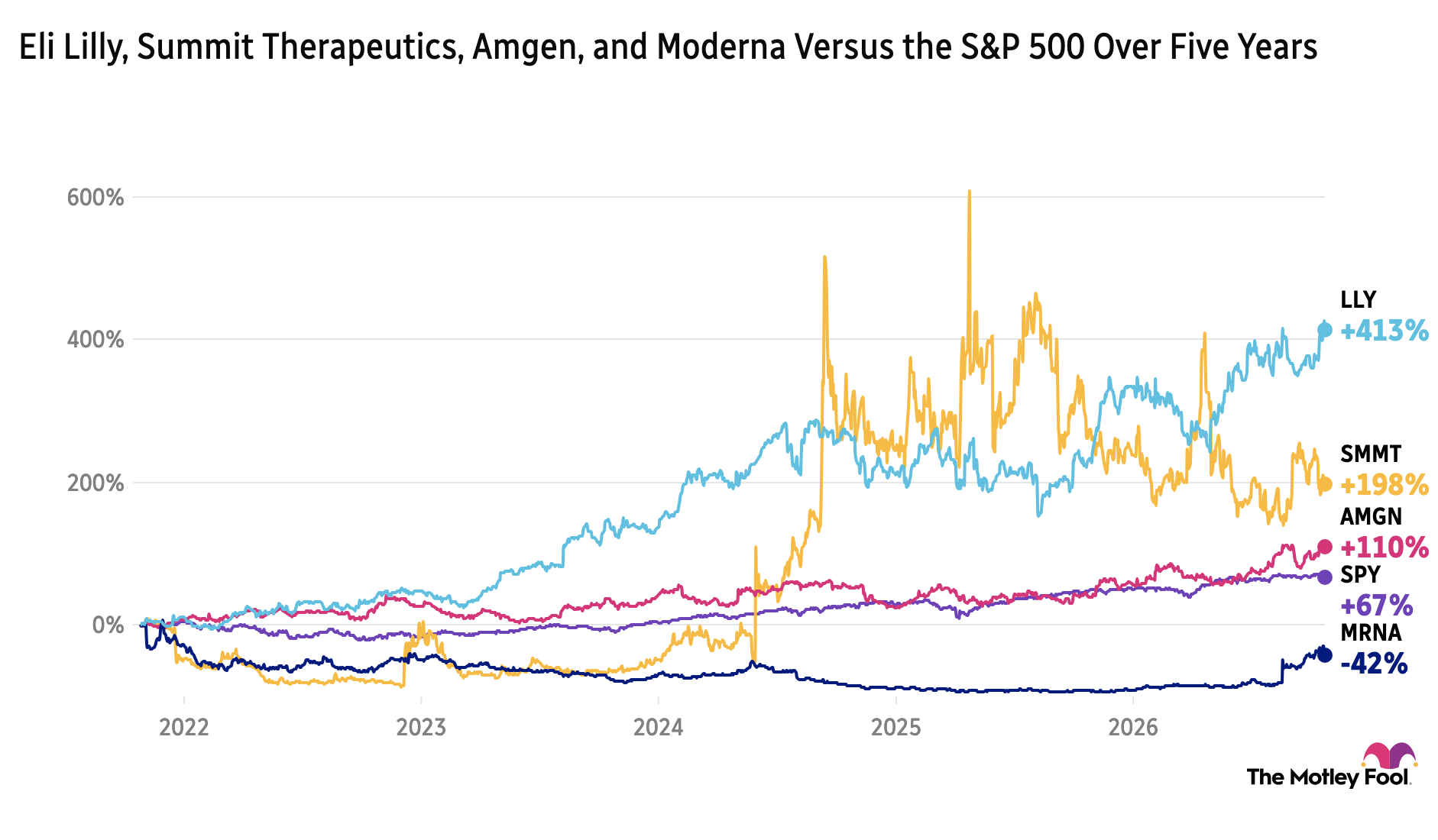
The European Society for Medical Oncology (ESMO) Congress, one of the world’s biggest cancer conferences, runs in Madrid until Oct. 27. Top late-breaking trials presented so far have displayed an unusually strong showing.
- AstraZeneca (AZN +0.20%): Its stomach cancer drug Sone-Ve doubled median survival to 10 months from 5 months in patients who had already tried at least two treatments. AstraZeneca owns the drug outright, so this strengthens the long-term growth case.
- Eli Lilly (LLY +1.18%): Olomorasib, combined with immunotherapy and chemotherapy, shrank tumors in 62% of 77 patients receiving first-line treatment for KRAS G12C-mutated lung cancer. Responses lasted a median of 14.5 months. Phase 3 data is the next big test. Lilly is recommended by Team Rule Breakers.
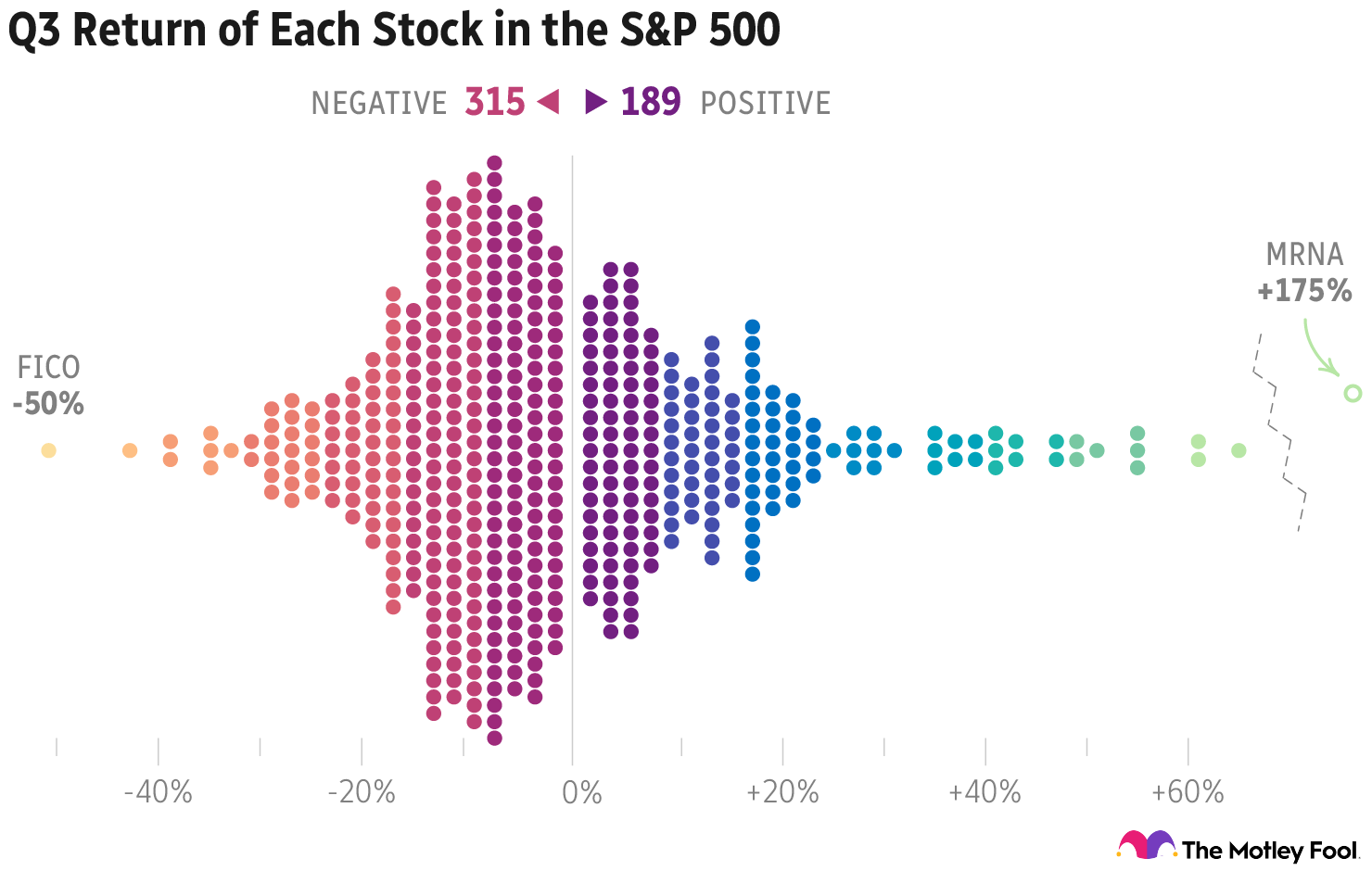
- Moderna(MRNA -0.17%)/Merck (MRK -0.32%): Their personalized cancer vaccine, Intismeran, cut the risk of recurrence or death by 42% when added to Keytruda. The data leaked early and fell short of sky-high hopes. Moderna, recommended in Hidden Gems and in Rule Breakers, was down 10% in pre-market trading.
- Amgen (AMGN +2.08%): Imdelltra combined with Imfinzi extended median survival to 21.1 months versus 12.7 months for Imfinzi alone in small cell lung cancer. Moving this therapy into earlier treatment lines could greatly expand its market. Amgen is recommended in Stock Advisor by Team Rule Breakers and by Team Hidden Gems.
- Roche (RHHBY -2.08%): Its next-generation KRAS inhibitor, divarasib, beat rival drugs from Amgen and Bristol-Myers Squibb (BMY +0.68%) in a head-to-head trial. It nearly doubled the response rate from 32% to 58%.
- Summit (SMMT -1.81%): The Team Hidden Gems rec saw its Ivonescimab combined with chemotherapy top Imfinzi plus chemotherapy in first-line biliary tract cancer. However, the trial only enrolled patients in China.
The biggest message from ESMO so far? Several trials show real survival gains, not just smaller tumors. Also, newer drug types, such as targeted antibody drugs, T-cell engagers and vaccines, are outperforming today’s standard treatments, either on their own or alongside existing drugs.
2. AI Jitters, Oil Spikes, and the Fed’s Next Move
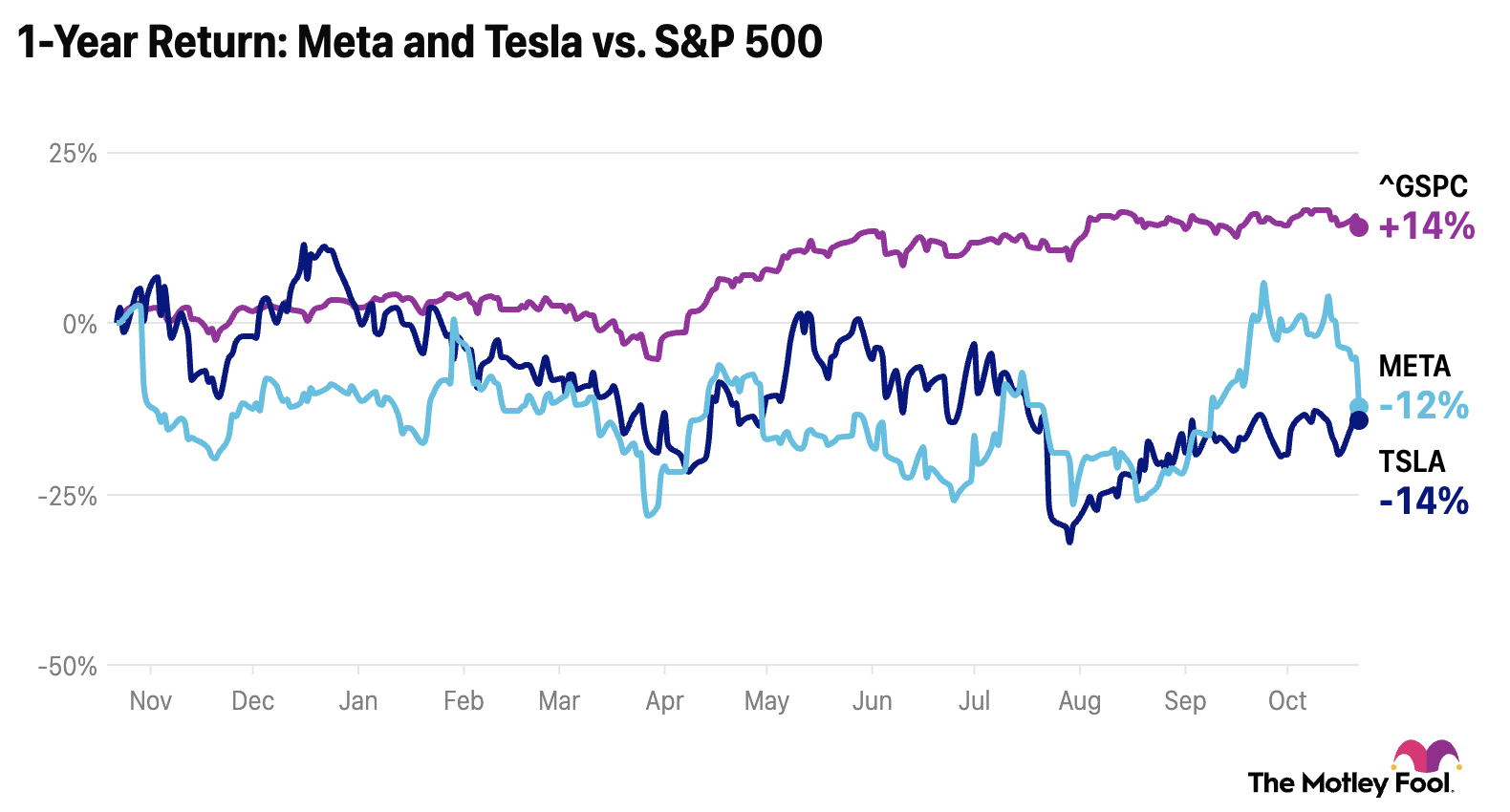
U.S. stocks lost ground for a second straight week, with the S&P 500 down 0.47% and the Nasdaq off 0.71%. Artificial intelligence (AI)-spending jitters and surging oil prices triggered the sell-off. Meta (META -1.75%) fell 9.4% after earnings, and led the megacap rout. Brent crude, the global oil benchmark, jumped to $116.72 on Friday, hitting a six-month high on Middle East fears. S&P 500 and Nasdaq-100 futures are up about 0.2% to 0.3% this morning, hinting at a modest bounce.
- Wednesday’s Fed decision: The Federal Reserve ends its two-day meeting Wednesday. Markets see roughly 90% odds that the Fed will hold rates steady. The bigger question is what happens next. If inflation stays stubborn, investors may have to reckon with a possible rate hike in December. That uncertainty could keep markets volatile.
- Thursday’s inflation scorecard: Thursday’s report on the PCE price index, the Fed’s preferred inflation gauge, will offer another clue about where rates are headed. Core PCE excludes food and energy prices, but persistently high oil prices could feed into broader inflation. Growth stocks may buckle under pressure. For long-term investors, the key is to separate a market-driven sell-off from a deterioration in earnings and business outlook.
3. In Dips, Rule Breakers Add Up & Don’t Double Down
Team Rule Breakers
The Nasdaq-100 has dropped a little over 7% since its Oct. 6 peak. The stock that fell hardest looks like the best bargain. Usually it isn’t. The second of the six Rule Breakers Habits is built for months like this one: Add up, don’t double down.
- Doubling down feels like repair work: Buying more of a loser lowers your average cost, so a smaller rebound gets you back to even. But the company has no idea what you paid. A stock down a third means the market has misread the business or the business is cracking. You don’t yet know which. So pretend you don’t own it. Would you buy it today on the business alone?
- Adding up means feeding what works: Rule Breakers recommended Alphabet (GOOG -0.63%) in June 2022 at a split-adjusted $113.75. It has nearly tripled since. Its shares are down about 6% since Oct. 6. Yet Google Cloud, which rents AI computing power to other companies, grew 82% in the most recent quarter. The main risk is spending: up to $205 billion this year, mostly on AI data centers that only pay off if demand holds.
Doubling down means believing the market is wrong and you’re finally right. Adding up means believing a working business keeps working. That’s usually the easier belief to defend, and it’s where new money belongs.
4. Fool Recs Take Center Stage This Earnings Week
Another busy earnings week arrives, with many more companies recommended across Fool services reporting this week. Here are some of the big ones:
- Visa (V -0.47%), 1.2% behind the S&P 500 since 2024’s Stock Advisor rec by Team Hidden Gems, reports fourth-quarter results after Tuesday’s close. Visa's top-line growth relies on steady transaction volumes and cross-border travel.
- Alphabet holds its third-quarter call after Wednesday’s close. Google Cloud growth, AI spending, and any updates on its self-driving unit, Waymo, will be in focus.
- Sterling Infrastructure (STRL +1.27%), a Team Hidden Gems recommendation, reports Q3 earnings after Wednesday's close. Data center work is a key growth driver. Look for signs that AI-related building demand is holding up.
- EMCOR (EME +1.66%) reports before Thursday’s open. For this Team Hidden Gems recommendation, backlog (contracted work not yet completed) and data center demand matter most.
- Mastercard (MA -0.76%) also releases its results Thursday morning. Both Team Rule Breakers and Team Hidden Gems recommend it. Cross-border volumes and value-added services will show how consumer spending is holding up.
- Intel (INTC +0.77%) reports Q3 results after Thursday’s close. Investors want to know whether the turnaround at this Team Hidden Gems rec is lifting profit margins. Supply constraints and progress at its foundry, the contract chipmaking arm, are the key swing factors.
- Reddit (RDDT -4.47%) reports Thursday as well. The company expects Q3 revenue of $860 million to $870 million. Team RB will be tracking advertising growth and whether that momentum carries into the outlook.
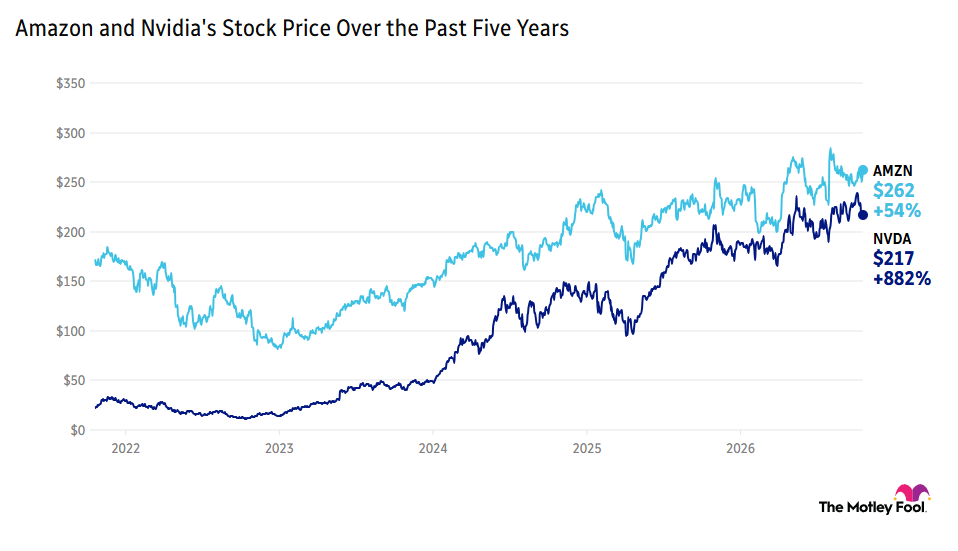
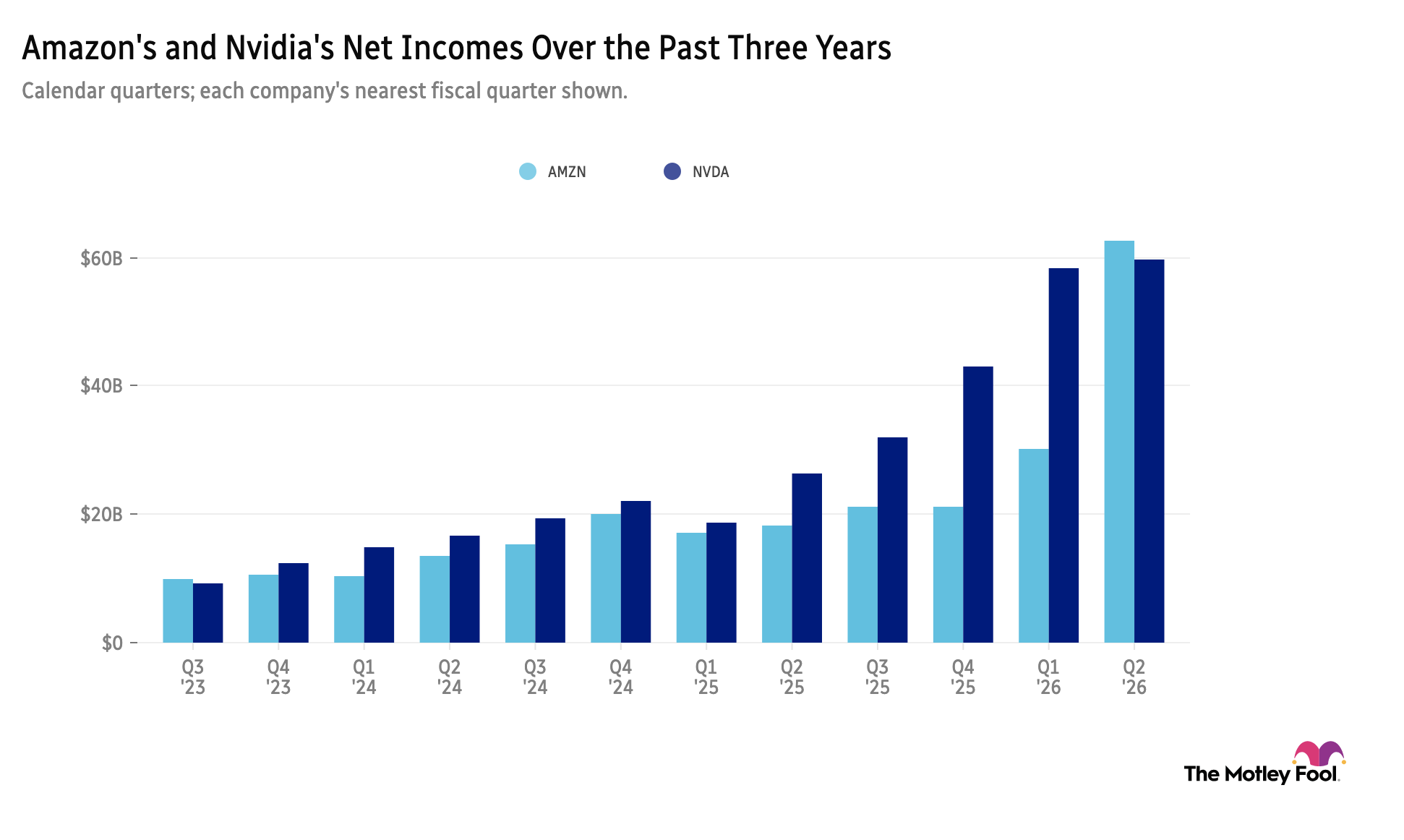
- Amazon (AMZN +0.21%) is another Magnificent Seven megacap reporting this week, after Thursday’s close. It expects Q3 net sales of $197 billion to $202 billion. We’ll check whether it delivered, along with growth at its cloud unit, AWS, and capital spending plans.
- Chevron (CVX +0.31%) reports third-quarter results before the market opens Friday. Shares sit near a 52-week high on rising oil prices. This Dividend Investor and Team Hidden Gems recommendation’s Hess integration and Guyana expansion are the items to track.
5. TransDigm’s Slump Hides Its Next Climb
Team Rule Breakers
Our five-year price prediction for TransDigm (TDG +0.66%) is $1,750, implying about 9% annualized gains from today. The stock is down 10% since our March recommendation in Pro, and more than 30% from its all-time high last July. You won’t find the reason in its results. Sales grew 23% last quarter. What fell was the price investors will pay for those results. It went from about 23 times forward EBITDA, a profit measure, to roughly 15 today.
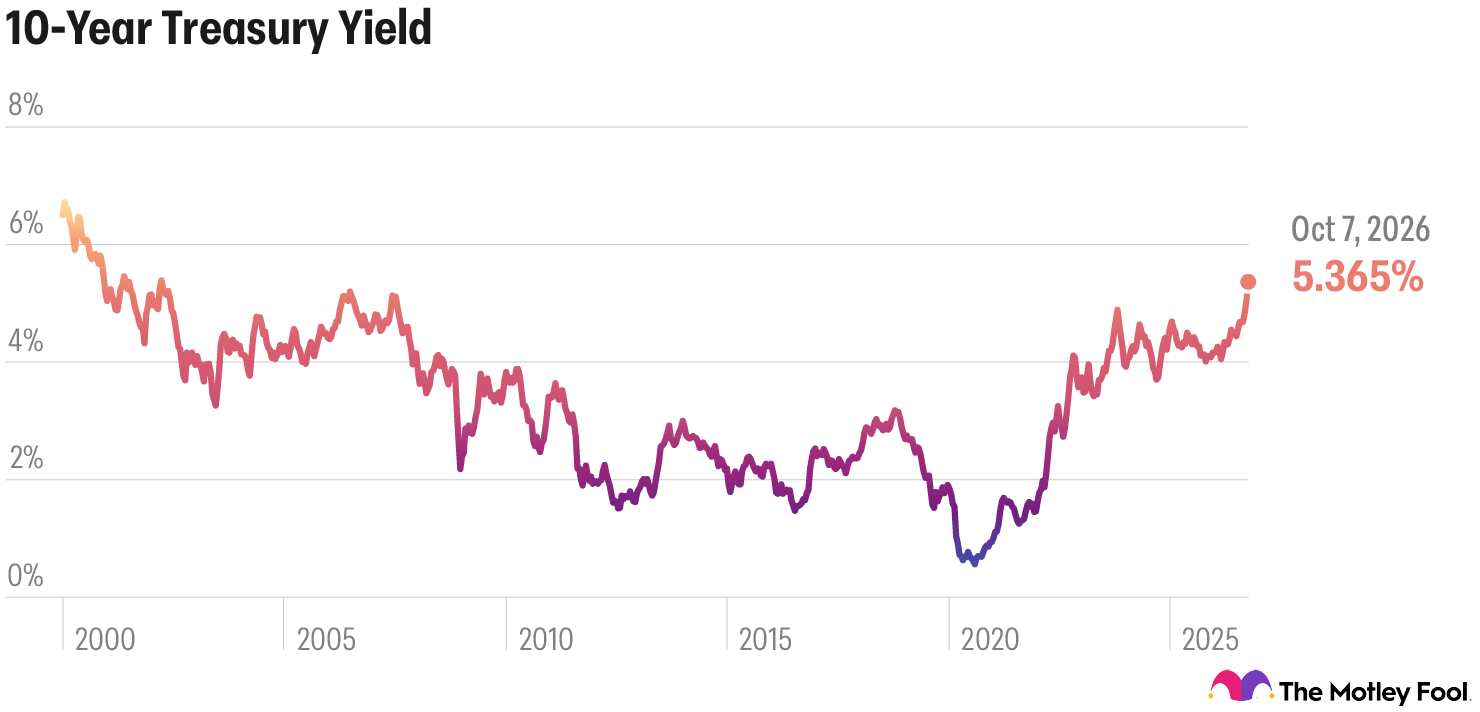
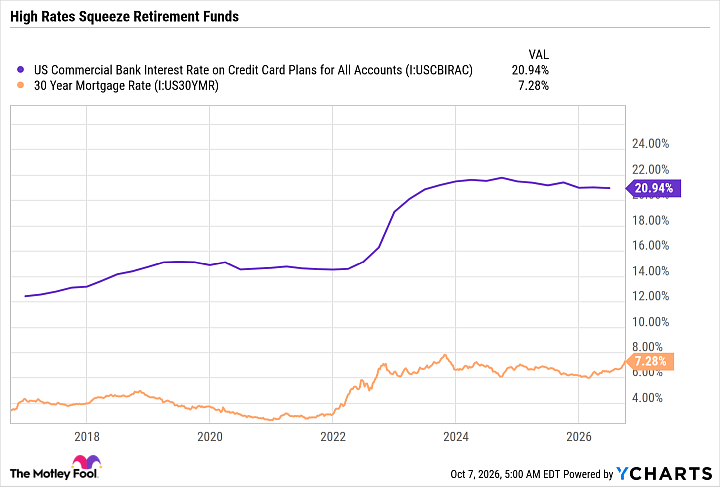
- Higher rates raise the bar on acquisitions: TransDigm grows by borrowing to buy proprietary aerospace businesses. Every point of interest narrows the gap between what a deal costs and what it earns. The last time rates climbed, after the pandemic, the stock went essentially nowhere for two years.
- The oil scare is overblown: The fear is that pricier jet fuel means fewer flights and fewer replacement parts. But commercial aftermarket revenue grew 17% last quarter. Management said higher fuel prices hadn’t had a material impact.
We don’t need the multiple to bounce back for this investment to work. We expect the business to keep delivering. Last quarter, management raised its full-year outlook and said bookings are running ahead of expectations. In spring 2020, with much of the world’s fleet grounded and sales down a third, TransDigm still generated nearly $400 million in operating cash flow. We think the market is underestimating how durable those results are.
6. Today’s Question!
Halloweek is here! Which industry or stock gives you the creeps right now and why?
Discuss with friends and family, or become a member to hear what your fellow Fools are saying!