Investing can change your life for the better. But there's a common misconception that you need thousands of dollars just to get started. That's not the case. With the emergence of low-cost investing apps, you can start investing with as little as $100 or even less. In this article, we'll show you how.

The most important step in investing is simply getting started. And this is true regardless of how large or small your initial investment dollars are. In this article, you'll learn six great ways to invest with just $100 -- or even less. By putting your money to work, you'll be well on your way toward long-term financial independence.
Six great ways to invest $100 starting today
You have $100 and are looking to invest it. Here are our six best suggestions for how to do that:
- Start an emergency fund.
- Use a micro-investing app or robo-advisor.
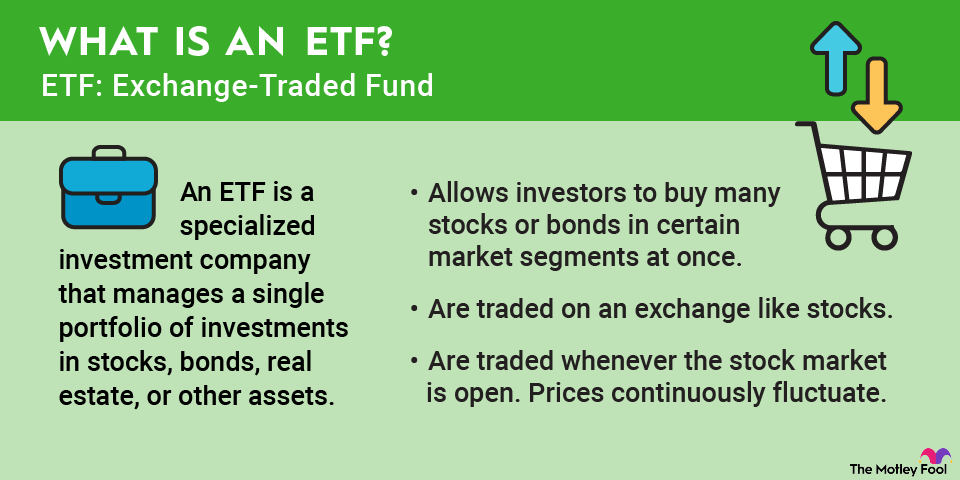
- Invest in a stock index mutual fund or exchange-traded fund (ETF).
- Buy fractional shares of stocks.
- Put it in your 401(k).
- Open an individual retirement account (IRA).
Now, let's take a look at each of these in more detail.
1. Start an emergency fund
You might be thinking, "This isn't an investment." And you're right. But what if you buy stocks with your $100 and then need to buy a new tire for your car soon after? You'll have to sell the investments you just bought. That's why starting with money in a savings account -- even if it's a small amount -- is a crucial part of investing.
Savings Account
If you already have money in savings to cover life's unexpected expenses, you can skip this idea. But if you don't, using $100 to start an emergency fund can be the smartest personal finance move you can make.
Interest rates on savings accounts have also improved greatly in the past few years. As of late 2025, you can easily generate 3% returns or more from your emergency savings.
2. Use a robo-advisor
Once you have financial emergencies covered, you're in a much better position to start investing. But what if analyzing stocks and other investments sounds a little too much? In this case, a robo-advisor may be just the ticket.
Robo-advisors ask a few questions about your financial goals and life circumstances, and then develop a customized investing strategy. They'll use basic information, such as age, family size, income, and risk tolerance. Robo-advisors then handle all the details of selecting investments, making purchases and sales, and keeping you informed.
3. Invest in index funds
Stocks are the most powerful wealth-building tool the average person can buy. However, it can be challenging to pick the winners, and individual stocks can be intimidating for new investors. This is where index funds come in.
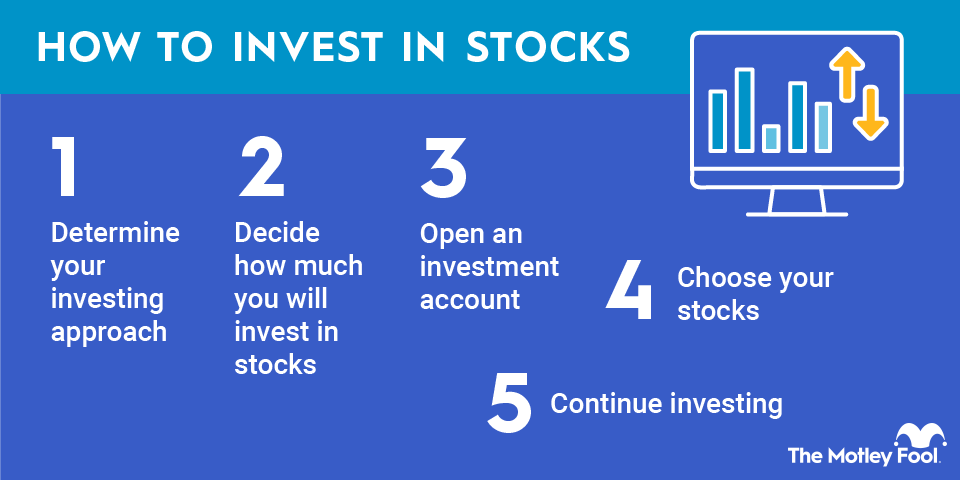
When you invest in an index fund, you buy a piece of every company held in that index. In other words, if you invest $100 in the SPDR S&P 500 ETF Trust (SPY +0.70%), you'll own a tiny portion of all 500 companies in the S&P 500 index. Over time, index funds can be excellent wealth-building tools, with minimal effort from you.
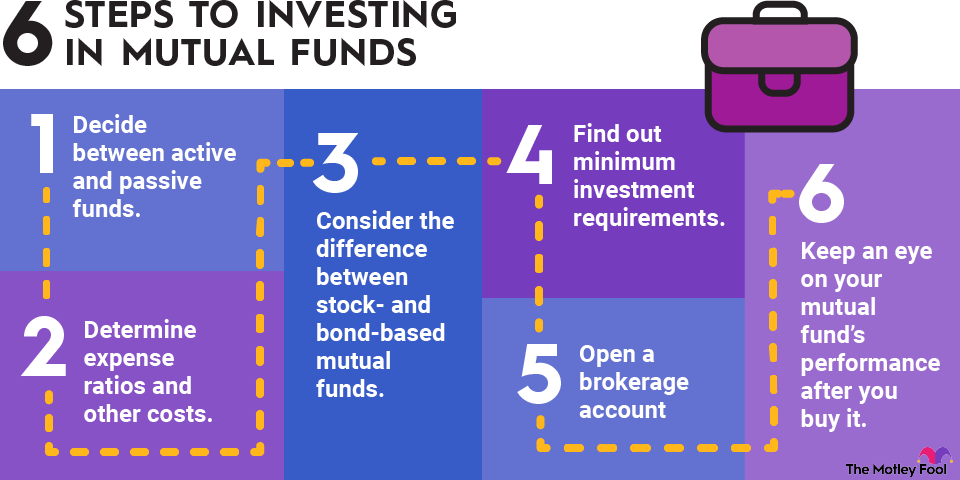
You can choose from a wide variety of stock indexes, ranging from popular ones, like the S&P 500 index, to more specialized indexes. Index funds are easily purchased through an investment app or brokerage account, and they are available in both exchange-traded fund (ETF) and mutual fund forms.
There are some differences between ETFs and mutual funds, but as a general rule, ETFs are the easier way to invest. That's especially true for beginners.
Once you've built a solid foundation of the best index-tracking funds, you can branch out and explore other investing options. But an index fund might well be all you'll ever really need to succeed with your investing. In fact, legendary investor Warren Buffett has said that a simple, low-cost S&P 500 index fund is the best investment most people can make.
Interested in an index fund that costs more than $100? The next topic also applies to ETFs.
4. Use fractional shares to buy stocks
Index funds make stock investing easy, but picking your own stocks can also be a great way to invest. If you have the time and desire to do some basic stock research, it's entirely possible to produce excellent long-term returns. And that's especially true if you already have a solid backbone of index funds.
It's easier than ever to start a stock portfolio with $100 or less. Most brokers nowadays no longer charge commissions, and many major brokerages offer fractional share investing.
So, what exactly is fractional share investing? In short, you tell your broker how many dollars you want to invest in a stock. For example, if you invested $100 in a stock that traded for $500, your brokerage account would show that you owned 0.2 shares of that company.
Looking to invest in index funds? Good news! Most brokers that offer fractional investing for stocks will also allow you to buy fractional shares of ETFs.
5. Put it in your 401(k)
If you have a 401(k) or other employer-sponsored retirement plan, funding it could be an excellent use of your investment dollars. That's especially true if you haven't maxed out your employer's matching contributions.
There's even more to like about investing in your 401(k): lower taxes. Every dollar you contribute to your 401(k) is considered a pretax contribution, meaning you won't pay income tax on that dollar for the year you contributed it to your account. Better yet, your investments will grow tax-free until you start taking distributions in retirement.
Are you self-employed? You can open a solo 401(k). You won't get the free money from an employer, but you can still take advantage of those pretax contributions and tax-free growth.

6. Open an IRA
Have an extra $100 you want to invest for retirement above and beyond your company 401(k)? An individual retirement account (IRA) is a great way to go, and it can turn even small sums of money into a substantial nest egg over time.
Let's say you stash $100 a month in an IRA for 30 years. Based on the S&P 500's historical performance, the $36,000 you invest would be worth almost $180,000. That's the power of compounding gains over time.
Why an IRA? In a word, taxes. With a traditional IRA, you gain similar benefits as with a 401(k), reducing income taxes by cutting your taxable income each year you contribute while also growing your nest egg tax-free until you start taking distributions in retirement.
A Roth IRA gives you the same tax-free growth as a traditional IRA. However, instead of lowering your taxable income each year by making contributions, distributions in retirement are 100% tax-free.
Is investing $100 worth it?
It may not seem like investing $100 will have a meaningful impact on your financial future. But over the long term, the act of getting started can lead to financial behaviors that can make a big difference. Investing $100 one time might not create life-changing wealth. But investing $100 every month certainly can.
One way not to invest $100
One trap to be aware of is investing in penny stocks. Penny stocks are typically low-priced stocks of smaller or thinly traded companies.
While it may seem logical that tiny companies or stocks trading for just pennies per share (or even less) have the highest return potential, the reality is that the world of penny stocks is full of fraudulent companies and pump-and-dump schemes (think The Wolf of Wall Street). In short, if you're asking how best to invest $100 in penny stocks, the answer is, "Don't."
Tips to maximize your $100 investment
If you're investing $100, the absolute best way to maximize your investment involves a couple of steps:
- Use your $100 investment to learn about investing. Most investment apps and brokerage platforms have extensive educational tools you can take advantage of.
- The most effective way to maximize your $100 investment is to make it a recurring one. If you're buying index funds or investing in stocks, set up an automatic transfer for every time you get paid. You'll be surprised at how quickly your account can grow.
Related investing topics
Don't wait to invest
If you've been holding off on investing, don't wait any longer. Take your $100 and pick one -- or more -- of these six ways to put it to work. You'll be surprised at the difference it will make in the long run.