Where Pi came from
Nicolas Kokkalis and Chengdiao Fan, two Stanford University researchers, founded Pi Network. They began developing it in 2018 with the goal of making a digital currency for everyday people. They released a white paper and the Pi Network app on March 14, 2019 (Pi Day).
Kokkalis and Fan are still in charge of the project and serve as its core team. Kokkalis is head of technology, and Fan is head of product.
How Pi works
The Pi Network app is about as straightforward as it gets. It has a lightning button that you tap to mine Pi. This also starts a 24-hour countdown, and, when it ends, you need to check in and tap the button again to continue mining. You don't need to leave the app open to mine, so all it takes is opening the app and tapping the button every 24 hours.
Your hourly mining rate is determined by when you signed up. Earlier members earn at a higher rate than those who came after. You can boost your mining rate by inviting new users or building a security circle.
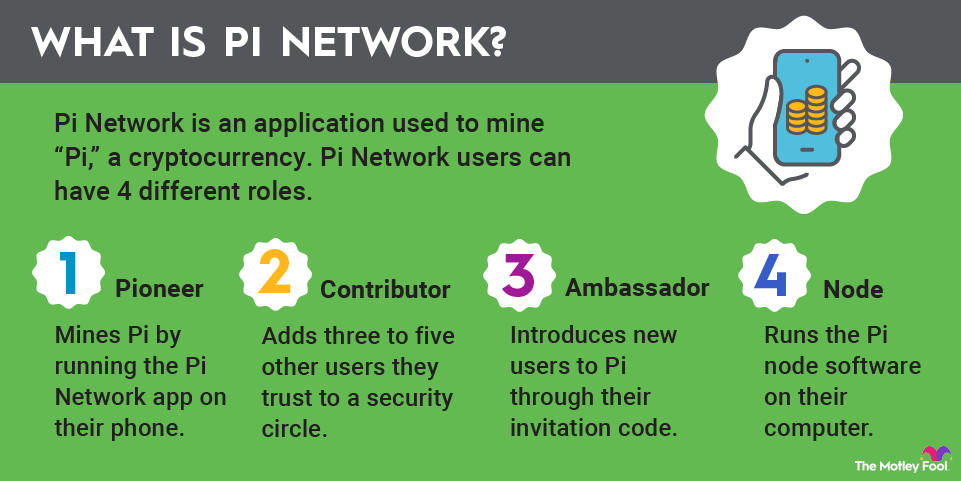
There are four roles users can play on Pi:
- Pioneer: Mines Pi by tapping the lightning button.
- Contributor: Adds three to five other users they trust to a security circle. Contributors earn an extra 0.2 PI per hour for each member of their security circle.
- Ambassador: Introduces new users to Pi through their invitation code. Ambassadors earn up to a 25% mining bonus for each person they invite.
- Node: Runs the Pi node software on their computer. This software is currently in the testing phase.
Users can have multiple roles. For example, you could be a Pioneer, Contributor, and Ambassador if you mine Pi, build a security circle, and invite new users.
According to the Pi white paper, it's being built on the Stellar Consensus Protocol used on the blockchain for Stellar (XLM +1.34%). The Stellar Consensus Protocol was chosen to enable user-friendly, mobile mining.
Connections
Pi Network doesn't have any notable partnerships. It has held a Pi Hackathon to kickstart development of Pi apps and an ecosystem. Winning projects and honorable mentions received funding in both U.S. dollars and PI coins.