



Here's What Happens When Your Debit Card Triggers a Fraud Alert

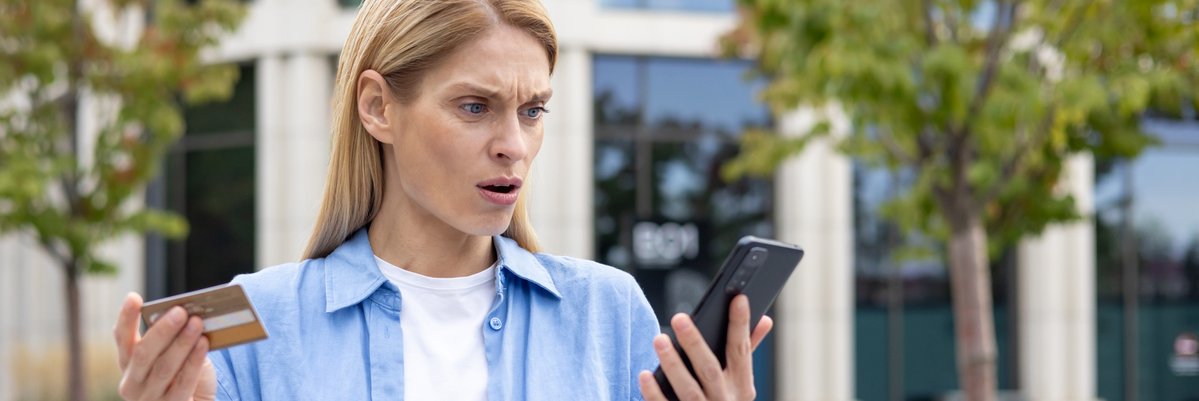
Image source: Getty Images
While it feels like a major inconvenience, a fraud alert is actually a protective block placed on your account when a transaction doesn't match your usual spending patterns.
If this happens to you, the first thing to know is that your money isn't necessarily gone; it's just temporarily locked. You need to immediately check your phone for a text message or a push notification from your bank's app. Responding "Yes" to confirm the purchase will usually lift the block instantly, though you'll likely need to ask the cashier to run the card a second time.
Why your card was flagged in the first place
Banks use all sorts of strategies to build a "normalcy profile" for your account. An alert is triggered when a purchase falls outside these parameters.
Common triggers include making a physical purchase far from your home zip code, a sudden high-dollar transaction at a store you've never visited, or several small "test" purchases made in quick succession.
The best high-yield savings accounts pay around 10x the national average APY. Compare the best ones right here.
How to handle a legitimate fraud alert
If the alert was triggered by a purchase you didn't make, the situation is more serious.
You must inform the bank immediately, usually by replying "No" to the text alert or calling the number on the back of your card. The bank will permanently deactivate your 16-digit card number and mail you a replacement to prevent further theft.
Ways to prevent future false alarms
While you can't always avoid these alerts, you can minimize the headache by keeping your bank updated on your habits.
- Set travel notices: Even if your bank says they aren't required, logging your destination in the app before a trip can prevent geographic blocks.
- Update your contact info: If your bank has an old cellphone number, you won't receive the SMS alert that allows for an instant fix.
- Carry a backup: I've written about personal finance for years, and my #1 rule is to never rely on a single card. Always carry a backup credit card or have a digital wallet (like Apple Pay) ready to go.
A lot of people keep their checking and savings accounts at the same bank. That's a huge mistake. Big banks like Bank of America and Chase generally pay 0.01% APY on their savings accounts. High-yield savings accounts currently pay around 4.00% APY. They're just as secure and you can open one in minutes. Compare the best high-yield savings accounts right here.
Don't ignore the "silent" alerts
Sometimes a bank won't block the card but will still send an alert for a suspicious, smaller purchase. Always review these notifications immediately.
Catching a $1 "test" charge today could prevent a $1,000 theft tomorrow. If you're ever in doubt, log into your mobile banking app to "freeze" the card yourself while you investigate the charges.
Our Research Expert
Jake FitzGerald is a full-time Editorial Strategist and Personal Finance Writer at Motley Fool Money, leading content production and distribution while also writing about credit cards, bank accounts, and other financial products. He has more than a decade of experience editing and shaping financial content to give readers clear, trustworthy money advice. His work focuses on delivering practical insights that empower people to make smarter financial decisions. Off the clock, he’s a fan of college football tailgates and still loyal to his favorite putter -- despite what his short game suggests.
Motley Fool Stock Disclosures
JPMorgan Chase is an advertising partner of Motley Fool Money. Bank of America is an advertising partner of Motley Fool Money. The Motley Fool has positions in and recommends Apple and JPMorgan Chase. The Motley Fool has a disclosure policy.