How To Retire In Style

Recs

334

It's said that human beings stand out from other species by virtue of our ability to think and plan ahead. While that may be true, most of us also have great trouble thinking about or preparing for the long term in the middle of our daily tasks and toil. Heck, it's difficult enough to plan something just six months ahead, like a summer vacation. How on earth are we supposed to be able to think about something in the distant future -- like retirement?

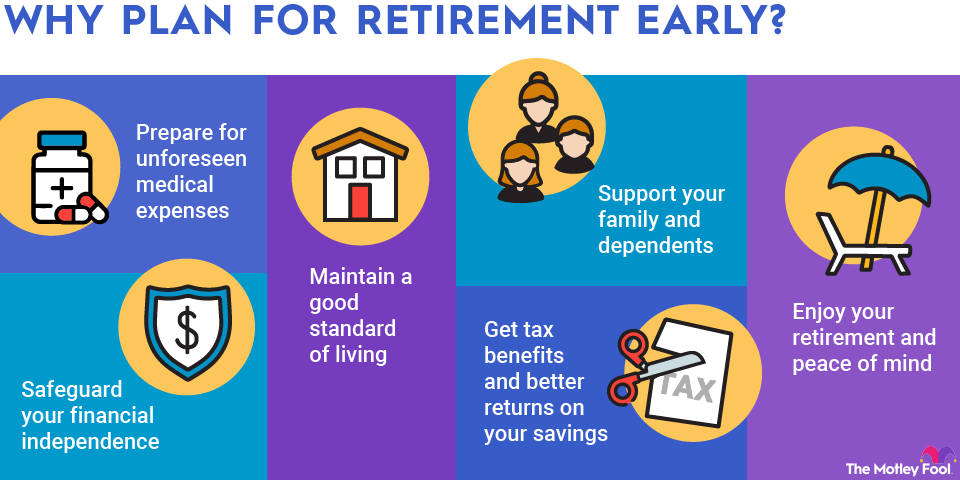
However, thinking in advance, and acting on those thoughts, are keys to being ready when the future becomes the present. The younger you are, the more distant your retirement -- and the greater your ability to compound your returns over time. That paradox can work to your advantage.

In this collection, we try to answer the important questions:

  • How much will I need for my retirement in order to live comfortably?
  • What are my goals?
  • When should I start?
  • What should I do?
  • How much can I count on from Social Security?
  • What costs might I run into once I've actually retired?

We all need to ask these questions, but with all our short-term preoccupations, we often wait too long to do so. These 13 Retirement Steps, along with a bevy of tools for running the numbers, can help you cut through the haze and see the realities that will make your golden years truly golden -- in fine Foolish fashion. Let's get started!

Questions about your plan? Consider a 30-day free trial to our Rule Your Retirement service, which features a monthly newsletter, solid asset allocation and investing advice, high-powered financial-planning tools, and professionally staffed discussion boards. Give it a complimentary test-drive.

Best Odds in the Universe!
If you're interested in a 98.79% chance at beating the market... and a 70.84% chance at DOUBLING the market's return – Motley Fool Supernova could be just what you're looking for. And get this: We arrived at these odds from 10,000 random back-tested portfolios composed of Motley Fool Co-founder David Gardner's personal stock picks.

It's why David recently handpicked a small team of world-class portfolio managers. You see, he thinks these odds can get even better! And he'd like to prove it to you...

Simply enter your email address. And the answer to the question everybody is asking will be delivered to your inbox!


Comments from our Foolish Readers

Help us keep this a respectfully Foolish area! This is a place for our readers to discuss, debate, and learn more about the Foolish investing topic you read about above. Help us keep it clean and safe. If you believe a comment is abusive or otherwise violates our Fool's Rules, please report it via the Report this Comment Report this Comment icon found on every comment.

  • Report this Comment On June 06, 2009, at 12:39 AM, FOOLTOCROSS wrote:

    I don't have a million to play with, but I give you the thumbs up.

  • Report this Comment On March 07, 2011, at 7:42 AM, mischkap wrote:

    What is the penalty on funds withdrawn from a Roth IRA before age 59 1/2?

  • Report this Comment On April 24, 2011, at 8:35 PM, sedie3000 wrote:

    10% plus taxes.

  • Report this Comment On May 21, 2011, at 12:50 PM, LF1989 wrote:

    My spouse and I(both 45 years old) invested in a whole life policy last year with Mass Mutual and are investing roughly $5000 per month. We were recently told by our accountant that we should never have gone with Whole Life and should eat the losses and get out now and put our money into term and mutual funds. Can anyone tell me if it is worth losing the $68000 we've already put into it and go elsewhere. Should we dump one policy and keep the other? Or stay where we are. We are embarassed that we went into this without educating ourselves first.

  • Report this Comment On June 08, 2011, at 7:46 AM, JCashForever wrote:

    LF1989,

    Not knowing your situation, I'd be a fool to comment, but that hasn't stopped me in the past for other posters. So here goes.

    Some comments:

    1. A whole life policy is probably not the best way of investing money. Since it combines an investment vehicle with a life insurance policy, it is usually an extremely conservative and expensive option. That is, the returns are usually paltry and the expenses are very high. Your accountant sounds like he knows a little something, and I like the idea of getting term insurance and investing the savings in premiums elsewhere. I would ask him for advice or find an investment professional that you can trust. The Mass Mutual person who got you into the whole life policy would not be on the top of my list.

    2. If I recall correctly, you can stop paying premiums on a whole-life policy and let it self-fund to perpetuity or until the money runs out. Or you can cash it out. Best to talk with your accountant or advisor about the best option. The message here is that you should find another vehicle to invest your $5K a month.

    3. On the good side, with $5K a month to invest, you should be able to build a nice-sized portfolio fairly quickly that can provide growth and/or income as necessary for your needs. Again your advisors should be very helpful here.

    4. There's nothing to be embarrassed about. We all make mistakes. Just try to figure out if this really is a mistake. Who knows, maybe there is a legit reason for being in a whole life policy. But if there isn't, then move on. You're only in your 40's...so you still have plenty of time to learn and probably make many more mistakes. Just keep learning from them.

    Good luck. You'll be fine.

  • Report this Comment On June 15, 2011, at 11:55 AM, starrose12 wrote:

    Dear LF1989,

    I work in the insurance industry and some people do use permanent policies as a retirement funding vehicle. Simply put, it allows people to save money with better interest rates than any bank would have right now. The only way it works though is to overfund the policy so that you have a nice chunk of change at the end of the timeline you are looking at. Your advisor should have shown you what the cash value of your policy would be in the timeframe that you gave him/her. When you are ready to take the money out you can do so by taking a percentage of the cash value as a loan on the policy. That loan you don't have to pay back if you do not want to, it just gets subtracted from the death benefit. As long as there is money in the policy it will still stay in force. Since I don't know your exact situation, I can't tell you whether what you did was right or wrong. What I would do is what JCashForever said and talk to some other people. Make sure that your goals are being met with this policy. If not, you should sit down with someone who wants to help you reach your goal, not just help themselves to a nice commission. You still have time to change things and I'm sure you'll find that you aren't making the mistakes that you think you are!

    Good luck.

  • Report this Comment On July 05, 2011, at 11:29 PM, TBone008 wrote:

    Dear LF1989,

    I also work in the insurance industry as well, and notice the terminology that starrose12 is using.... "Ready to take the money out you can take a percentage as a "LOAN" and if you don't pay it back it gets "DEDUCTED" from your death benefit, the cash value built inside the policy isn't really your money, it is the insurance company's, if you look closely at your policy paperwork i'm sure you will find the terminology "cash SURRENDER value" because you surrender the cash back to the company, your beneficiary does NOT get both the cash and the death benefit, it's whichever is greater, life insurance is meant to just insure the INCOME of a person should they die prematurely, never as a savings vehicle. Whole life, universal life, pure protection etc.... (notice all the names to describe cash value) I personally would take the advice of your accountant and look into possibly taking out a term life policy and investing the difference elsewhere, Suze Orman is notorious for giving that advice.

    Good luck

  • Report this Comment On July 10, 2011, at 7:45 AM, sweydert wrote:

    LF1989

    Although it's not possible to offer professional advice in this forum, perhaps the best way to ensure you make the right decisions going forward is to get unbiased financial advice from a fee-only financial advisor.

    In my opinion it doesn't make sense to take financial advice from anyone who (1) is not a verified expert and (2) has no economic interest in his or her recommendations. Could you imagine sending your mother to see an advisor who doesn't at least meet these basic criteria? Why would accept less for yourself?

    In seconds you can select from a pool of about 1,500 such advisors nationwide at www.napfa.org.

    Regards,

    Steven Weydert, CFP(r), MS

    President

    Weydert Wealth Management, LLC

    Irvine, CA

  • Report this Comment On August 16, 2011, at 11:26 PM, investmentyour wrote:

    If you are a young person and smart enough to start thinking of retirement, you should start looking into DRIP investment. Which is to me one of the best way to start saving for retirement. You can start as low as you want and watch your money working for you. However, make sure you invest in a strong company that will pay yield quaterly. You probably never heard of DRIP before; don't worry i have got you covered since i found this excellent website that break it down in details:

    http://www.investmentyour.com/drip-investment

  • Report this Comment On September 14, 2011, at 3:28 PM, pdquapp wrote:

    Im 30 and have about a 1 million and dont know what to do with it. High dividend stocks?

  • Report this Comment On September 21, 2011, at 11:33 AM, fraudexposer wrote:

    LF1989

    Life insurance is NOT an investment, unless you are investing in the protection of your loved ones. When I sold financial products, I never sold a whole life policy. I prefer Universal Life--but compare products from various companies. Look for the date of the mortality table used. If they use a twenty year old table, they are using high, obsolete rates--rates from when people did not live as long as they now do.

    With Universal, you have flexibility. You can toss in $5k at the start of the year and the net amount earns interest from day one. Each month the monthly cost for pure insurance and the fees are deducted, but the balance earns interest. With an annual premium you save on the huge amount charged to those who pay installments, and you earn more interest.

    If you take a loan, you are borrowing from the insurer and the loan is charged interest because you have the right to repay it, and restore the full death benefit. Compare loan interest rates between insurers.

    You also can take cash as a withdrawal, reducing the death benefit but not paying loan interest. If you ever choose to increase the death benefit in future years, you may need to prove good health (depending on the amount of the increase).

    Universal life is good for people who may lose their jobs or have sudden, huge expense (i.e., medical). If you have sufficient cash to carry the policy until you can afford to pay again, no interest is charged. This is not a loan. The policy continues to exist, the death benefit does not reduce, but the cash value decreases by the amount of insurance and fees charged each month--and that is all.

  • Report this Comment On October 30, 2011, at 10:36 PM, karlm1 wrote:

    Are you sure its a whole life policy? withe the amounts you are putting in it sounds more like a Universal or variable life product where you can direct investments into sub accounts. Typically the fees on invested dollars are pretty high as well as increasing fees for mortality risk year after year. Also if you over fund the policy it will convert to an annuity so make sure you are not putting too much in. I agree that this is not the best place to invest. Universal and variable life products can be surrended for the cash invested inside the policy minus a surrender charge so you are not going to lose all your 68K. You are going to be okay.

  • Report this Comment On November 06, 2011, at 12:03 PM, fstphn wrote:

    ROTH withdrawal of PRINCIPAL has NO

  • Report this Comment On November 06, 2011, at 12:05 PM, fstphn wrote:

    ROTH IRA WITHDRAWAL OF PRINCIPAL HAS NO PENALTY, regardless of age. Earnings must be held for 5 years.

  • Report this Comment On November 28, 2011, at 1:56 AM, Merins wrote:

    I think one should start considering his retirement planning at an early stage of life so as to enjoy a comfortable retirement. Try to start your retirement planning as early as possible because the risk taking capacity is high when we are young. Generating a high return from our income always becomes our priority at a younger stage. The longer is the period for investment, the more you can save and thereby avail the benefits of compounding interest rate. I would recommend the early you start your retirement planning, the more is the amount you will have at the time of retirement.

    Source: http://www.hdfclife.com/Products/RetirementPlans/PensionPlan...

  • Report this Comment On December 14, 2011, at 4:32 AM, AFVeteran wrote:

    Its amazing to me that an accountant would advise you of what to INVEST in when that isnt really his area of expertise. Given the state of the market you have to wonder what HIS portfolio looks like given how he dismisses an INSURANCE and tells you to "invest" your money somewhere else.

    Here are facts about the policy you have

    7%+ dividend

    Guaranteed cash value growth

    NO RISK TO YOUR CAPITAL

    Death Benefit that is MULTIPLES of cash put in

    Tax free growth and TAX FREE WITHDRAWLS

    First and foremost its an INSURANCE which means in case things happen....youve put in 2500 a month in on each policy which leads me to believe its somewhere around a 2-3 million dollar policy depending on your health

    Will a mutual fund pay you a millions of dollars if your husband dies while you have maybe 100-200K invested with them? No

    There are IRS rules in place which make certain functions of a whole life policy mandatory (cant overfund it, have to take "loans" vs straight cash etc.) Look at the policy....notice that mathmatically if you pay your premium to age 100 it matches the initial death benefit face amount.

    Upon closer inspection youll notice that your face amount is much smaller than the actual death benefit which will increase with yearly dividends

    Case in point I ran a general 45 old male 1mil face amount policy to age 100 - 20K a year premium - by age 70 his cash value is 810k and his death benefit is 1.6mil with a dividend of about 31K and rising each year as equity builds. This guy has put in 488K in and has a death benefit of almost 4 times that should something happen AND can pull the cash out TAX FREE to supplement his retirement as he sees fit...whether thats the dividend amount or whatever he decides he needs....tax free

    ZERO RISK with 1mil protection from day one and growing yearly for life...by age 100 there is a death benefit of 4.6 million tax free.....people who "buy term" cant buy term when they really need it and rarely ever actually invest to reach these goals anyway...Mass offers convertible term for those who cant afford the proper whole protection in their younger years....but imagine NOT having whole life in place and developing a medical condition that no one will write term for? What then? Its INSURANCE not vegas.....the IRR is like 5.5% or better depending on dividend rates which have been as high as 12% some years....mostly hovering around 8% over the last decade

    Whole life is about guarantees which no one else will give you.

    Its another asset class thats a solid foundation for more aggressive strategies. Its an instant estate.

    Please call your Mass rep and go over the policy again so you can understand it. In year 10 your cash value will about equal your premiums youve paid in...if you still feel the same for whatever reason you can cash then - its NOT an investment....investments involve RISK....this is guaranteed for life NOT a gamble.

  • Report this Comment On February 03, 2012, at 8:04 PM, Hawmps wrote:

    The problem with investing in life insurance for retirement is the requirement of death to receive the benefit.

  • Report this Comment On February 03, 2012, at 8:18 PM, Hawmps wrote:

    The problem with life insurance as an investment is that it requires death to get the benefit.

Add your comment.

Compare Brokers

Fool Disclosure

DocumentId: 813701, ~/Articles/ArticleHandler.aspx, 2/13/2012 7:01:43 AM

Report This Comment

Use this area to report a comment that you believe is in violation of the community guidelines. Our team will review the entry and take any appropriate action.

Sending report...

Today's Market

updated 2 days ago Sponsored by:
DOW 12,801.23 -89.23 -0.69%
S&P 500 1,342.64 -9.31 -0.69%
NASD 2,903.88 -23.35 -0.80%

Create My Watchlist

Go to My Watchlist

You don't seem to be following any stocks yet!

Better investing starts with a watchlist. Now you can create a personalized watchlist and get immediate access to the personalized information you need to make successful investing decisions.

Data delayed up to 5 minutes


Advertisement