How Much Cash Should You Keep at Home?

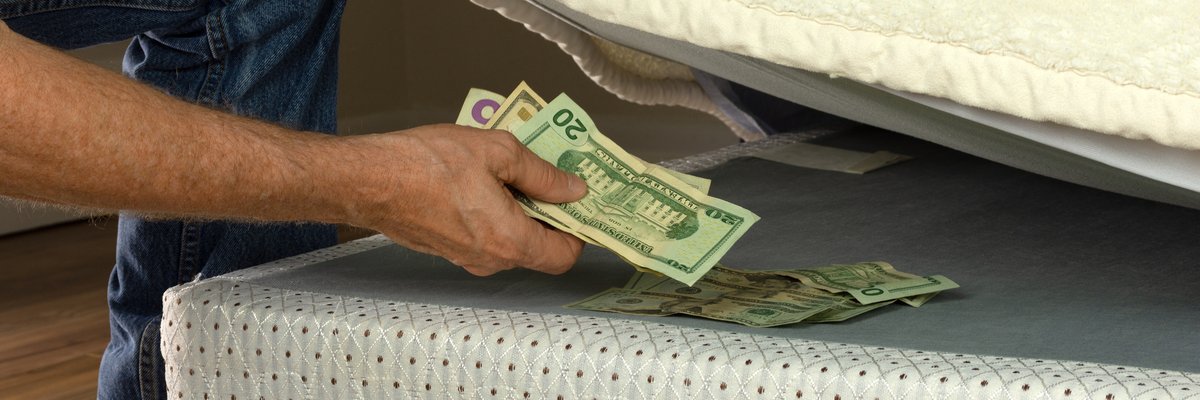
Image source: Getty Images
If you're like me, you've probably used cash a handful of times in the last year -- if at all. But how much cash should you have on hand, really?
Most people don't need much. But you should think about keeping a bit of cash at home for everyday use -- and maybe a few weeks' worth of expenses for real emergencies.
Here's how to land on the right number for your situation, plus where to put the cash you're not keeping in your wallet.
How much cash should you keep on hand?
A couple hundred dollars is enough for most people. That's enough to cover a tank of gas, a quick grocery run, and a phone charger (or even a new phone).
If you live somewhere prone to hurricanes, wildfires, or other disasters, you might want more (as we'll see below). Anything beyond that starts to work against you -- it's not earning interest, and it's not insured if something happens to it.
According to Motley Fool Money research, only 63% of Americans could cover a $400 emergency expense with cash alone. That's not a reason to stockpile bills under your mattress -- but it is worth keeping a bit of cash on hand.
How much cash should you keep at home for a natural disaster?
If you live somewhere that regularly loses power or gets cut off from ATMs and card readers, plan for one to two weeks of essential spending in cash. That's enough to cover gas, food, and supplies until banks and payment networks are back up.
FEMA and most emergency preparedness experts recommend small bills -- fives, tens, and twenties. Nobody's making change from a hundred during a blackout.
And lastly, keep this disaster fund separate from your everyday cash so you're not tempted to dip into it for a coffee run.
Where to store cash safely at home
If you're keeping a few hundred dollars on hand, spread it out. Don't keep all of it in one obvious spot like a nightstand drawer or a cookie jar.
A small fireproof and waterproof safe is worth the investment if you're holding disaster-level cash. Bolt it down or hide it somewhere a burglar wouldn't think to look first.
And finally, I recommend skipping the "under the mattress" cliche. It's unwieldy, and not too safe to begin with.
Why keeping too much cash at home is risky
Cash sitting in a drawer doesn't grow. Put that same money in a high-yield savings account, and you can actually earn something on it instead of having it quietly lose value to inflation. Compare top high-yield savings account options here.
There's also no insurance backstop. Money in a bank account is protected by the FDIC, up to $250,000 per depositor. Cash in your house isn't protected against theft, fire, or flooding -- if it's gone, it's gone.
And if you ever need to prove where a large stash of cash came from (say, for a mortgage application), you can't. Money in a bank account leaves a paper trail. Cash doesn't.
A better home for the rest of your emergency fund
Your real emergency fund -- the three to six months of expenses most experts recommend -- shouldn't live in cash at all. Keep it in a savings account or one of the top combo checking and savings accounts where it's insured, earning interest, and still just a transfer away when you need it.
That's the balance: enough physical cash to get through a short outage, and the rest working for you where it's safe and accessible.
Our Research Expert
Ryan Wilcox is a full-time Personal Finance Writer at Motley Fool Money, covering credit cards, bank accounts, investing, auto insurance, and other personal finance topics. Ryan has been writing about credit cards and savings since 2022. Before joining Motley Fool Money, he was a full-time writer at The Points Guy, where he focused on maximizing credit card rewards and travel strategies. He holds a bachelor’s degree in English and American History from the University of North Carolina at Chapel Hill, where he also spent four years reporting for The Daily Tar Heel. With a background in both journalism and consumer finance, he brings a clear and thoughtful voice to money topics. Outside of work, Ryan is likely reading, writing, or updating his Letterboxd account.
Motley Fool Stock Disclosures
The Motley Fool has a disclosure policy.