Track the companies that matter to you. It's FREE! Click one of these fan favorites to get started: Apple; Google; Ford.

Recs

329

What Should I Invest In?

Now that you know why you're investing and how to get started, it's time to dig deeper and pick some investments. As you may have noticed, there are several categories of investments, and many of those categories have thousands of choices within them. So finding the right ones for you isn't a trivial matter.

The single greatest factor, by far, in growing your long-term wealth is the rate of return you get on your investment. There are times, though, when you may need to park your money someplace for a short time, even though you won't get very good returns. Here is a summary of the most common short-term savings vehicles:

Short-term savings vehicles

  • Savings account: Often the first banking product people use, savings accounts earn a small amount in interest, so they're a little better than that dusty piggy bank on the dresser.
  • Money market funds: These are a specialized type of mutual fund that invest in extremely short-term bonds. Unlike most mutual funds, shares in a money market fund are designed to be worth $1 at all times. Money market funds usually pay better interest rates than a conventional savings account does, but you'll earn less than what you could get in certificates of deposit.
  • Certificate of deposit (CD): This is a specialized deposit you make at a bank or other financial institution. The interest rate on CDs is usually about the same as that of short- or intermediate-term bonds, depending on the duration of the CD. Interest is paid at regular intervals until the CD matures, at which point you get the money you originally deposited plus the accumulated interest payments. CDs through banks are usually insured up to $100,000.

Fools are partial to investing in stocks, as opposed to other long-term investing vehicles, because stocks have historically offered the highest return on our money. Here are the most common long-term investing vehicles:

Long-term investing vehicles

  • Bonds: Bonds come in various forms. They're known as "fixed-income" securities because the amount of income the bond generates each year is "fixed," or set, when the bond is sold. From an investor's point of view, bonds are similar to CDs, except that the government or corporations issue them, instead of banks.
  • Stocks: Stocks are a way for individuals to own parts of businesses. A share of stock represents a proportional share of ownership in a company. As the value of the company changes, the value of the share in that company rises and falls.
  • Mutual funds: Mutual funds are a way for investors to pool their money to buy stocks, bonds, or anything else the fund manager decides is worthwhile. Instead of managing your money yourself, you turn over the responsibility of managing that money to a professional. Unfortunately, the vast majority of such "professionals" tend to underperform the market indexes.

Retirement plans
A number of special plans are designed to create retirement savings, and many of these plans allow you to deposit money directly from your paycheck before taxes are taken out. Employers occasionally will match the amount (or a percentage of that amount) you have withheld from your paycheck up to a certain percentage of your salary. (Pssssst … that's what we affectionately call "free money.") Some of these plans let you withdraw money early without a penalty if you want to buy a home or pay for education. If early withdrawals are not permitted, you may be able to borrow money from the account, or take out low-interest secured loans with your retirement savings as collateral. Rates of return vary on these plans, depending on what you invest in, since you can invest in stocks, bonds, mutual funds, CDs, or any combination.

  • Individual retirement account (IRA): This is one of a group of plans that allow you to put some of your income into a tax-deferred retirement fund -- you won't pay taxes until you withdraw your funds. Withdrawals are taxed at regular income-tax rates, not at the lower capital-gains rates. All IRAs are specialized accounts (not investments) that allow the account holder to invest the money however he or she likes. If you qualify, some or all of your IRA contribution may be tax-deductible.
  • Roth IRA: This retirement account differs from the conventional IRA in that it provides no tax deduction up front on contributions. Instead, it offers total exemption from federal taxes when you cash out to pay for retirement or a first home. A Roth can also be used for certain other expenses, such as education or unreimbursed medical expenses, without incurring a penalty -- although any earnings that are withdrawn are subject to income taxes unless you are more than 59 ½ years old. Not all taxpayers are eligible to contribute to a Roth IRA. You may be able to qualify if you participate in corporate retirement plans and don't qualify for deductible contributions to the conventional IRA.
  • 401(k): A retirement savings vehicle that employers offer. It's named for the section of the Internal Revenue Code where it's covered. Given the tax advantages and the possibility of corporate matching -- those cases when your employer matches part of your contribution -- the 401(k) is well worth considering.
  • 403(b): The nonprofit version of a 401(k) plan. Local and state governments offer a 457 plan.
  • Keogh: A special type of IRA that doubles as a pension plan for a self-employed person, who can put aside significantly more than the contributions allowed for an IRA.
  • Simplified Employee Pension (SEP) plan: A special kind of Keogh-individual retirement account. SEPs were created so that small businesses could set up retirement plans that were a little easier to administer than normal pension plans are. Both employees and the employer can contribute to a SEP.

Investing in stocks
It's worth taking a closer look at stocks, because historically, they've had much better returns than bonds and other investments. Essentially, stock lets you own a part of a business. Dating back to the Dutch mutual stock corporations of the 16th century, the modern stock market exists as a way for entrepreneurs to finance businesses using money collected from investors. In return for ponying up the dough to finance the company, the investor becomes a part-owner of the company. That ownership is represented by stock -- specialized financial "securities," or financial instruments -- that are "secured" by a claim on the assets and profits of a company.

Common stock
Common stock is aptly named -- it's the most common form of stock an investor will encounter. This is an ideal investment vehicle for individuals, because anyone can take part; there are absolutely no restrictions on who can purchase common stock -- the young, the old, the savvy, the reckless. Common stock is more than just a piece of paper; it represents a proportional share of ownership in a company -- a stake in a real, living, breathing business. By owning stock -- the most amazing wealth-creation vehicle ever conceived (except for inheriting money from a relative you've never heard of) -- you are a part-owner of a business.

Shareholders "own" a part of the assets of the company and part of the stream of cash those assets generate. As the company acquires more assets and the stream of cash it generates gets larger, the value of the business increases. This increase in the value of the business is what drives up the value of the stock in that business.

Because they own a part of the business, shareholders get a vote to elect the board of directors. The board is a group of individuals who oversee major decisions the company makes. They tend to wield a lot of power in corporate America. Boards decide whether a company will invest in itself, buy other companies, pay a dividend, or repurchase stock. Top company management will give some advice, but the board makes the final decision. The board even has the power to hire and fire those managers.

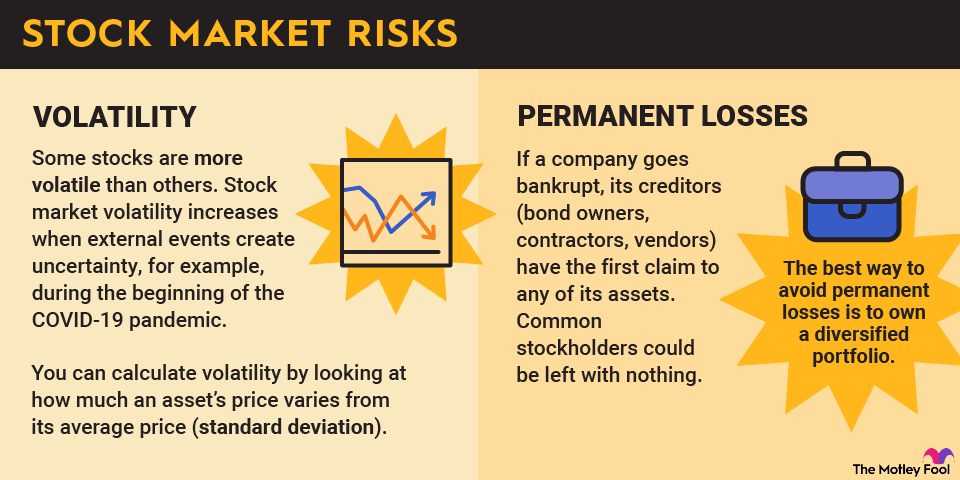
As with most things in life, the potential reward from owning stock in a growing business has some possible pitfalls. Shareholders also get a full share of the risk inherent in operating the business. If things go bad, their shares of stock may decrease in value. They could even end up being worthless if the company goes bankrupt.

Different classes of stock
Occasionally, companies find it necessary to concentrate the voting power of a company into a specific class of stock, in which a certain set of people own the majority of shares. For instance, if a family business needs to raise money by selling equity, sometimes they will create a second class of stock that they control and has, say, 10 votes per share of stock, while they sell another class of stock that only has one vote per share to others.

Does this sound like a bad deal? Many investors believe it is, and they routinely avoid companies with multiple classes of voting stock. This kind of structure is most common in media companies and has been around only since 1987.

When there is more than one class of stock, they are often designated as Class A or Class B shares.

Next steps
We hope this hasn't been the most painful thing you've had to read this week. You're now conversant enough in stock-market matters to impress those who are very easily impressed. Although knowing the terms and general workings of the stock market is just the first step in your investing career, it's useful to know that each share of stock represents a proportional share of a business, and that the potential rewards are great, but that stocks are also riskier than putting money in the bank.

Jeff Fischer and team have demystified options. And they can rack up income like $1,030... $2,626... and $3,228 on a schedule you can set your watch by!
That's why we're glad to announce every single one of their closely guarded strategies is available to YOU during May and June – 100% FREE, no strings attached! Just enter your email address in the box below...


Read/Post Comments (23) | Recommend This Article (329)

Comments from our Foolish Readers

Help us keep this a respectfully Foolish area! This is a place for our readers to discuss, debate, and learn more about the Foolish investing topic you read about above. Help us keep it clean and safe. If you believe a comment is abusive or otherwise violates our Fool's Rules, please report it via the Report this Comment Report this Comment icon found on every comment.

  • Report this Comment On September 24, 2008, at 7:58 AM, Mike1940 wrote:

    I am 68. My income is fixed and largely tax-free (government disailities). My wife is 53, works and our combined incomes are over $120,000. We have a joint Pioneer Value A regular stock portfolio that has rallen in value in 3 months from over $5K to under $3K. Another is a traditional IRA holding $10K 3 months ago and has fallen to < $8K at present. I am thinking of transferring or rolling over both accounts to an Oppenheimer money market or IRA. What is your advice?

  • Report this Comment On December 18, 2008, at 1:54 AM, YEN4PESOS wrote:

    Mike, It's December 17th now. Wow I hope all went well 4 u. I suspect there may be carnage. It got pretty ugly there for a while. If you are just reading this comrade, The US isn't capitalist anymore since you last logged on. I'm not sure what the suits are calling it this week, but it all boils down to the new rules in 09 which to any fool, looks like some hybrid of socialism. Never the less, the Gov. is spending like a drunk sailor on shore leave. And they aren't through.....! They are spending it faster than they can print it. And if my hunch is right, by next Labor Day, we'll be barely hanging on to the reins of an inflation run-a-way that will take a decade(or a war,if history does repeat its self) to get a handle on. If you still have 5k,.... START hedging for inflation my comrade. It is about to leave the launch pad. Thats from one fool to another. And,... the options there are limited. One of the guys from the Brain Drain will do an article on that ..... Next December.... oops.

  • Report this Comment On January 14, 2009, at 7:27 PM, samthestar17 wrote:

    This article was a great help. thanks, man.

  • Report this Comment On August 11, 2009, at 8:51 AM, Courtwud wrote:

    What are the qualifications for a Roth IRA? I've heard a few people mention that was the investment to get into right now and your article states not all people will qualify.

  • Report this Comment On September 02, 2009, at 1:36 PM, smartsaver11 wrote:
  • Report this Comment On January 14, 2010, at 10:04 AM, Elisahome wrote:

    Class C shares compared with Class A shares.

    I am in my early 50's, my current Broker has all of our investments in Class C shares. I was approached by a financial adviser from our bank to invest with their institution. He recommends changing all current investments to American Funds Class A shares.

    Investment amount $100,000.

    What would you recommend? Would the initial fee of 3.5% recoup with the lower over all ratio?

    Many Thanks

  • Report this Comment On March 04, 2010, at 2:11 PM, tradetoday wrote:

    Most people new to investing start with mutual funds. Don'f fall for the sales guys pitch and buy load funds. Paying a fee does not mean the mutual fund is better. Learn everything you can about trading, and you can make your investment grow into a nice nest egg. For more help on learning how to invest, check out tradingrite.com.

  • Report this Comment On March 13, 2010, at 1:04 PM, BdaProvidence21 wrote:

    Elisahome --

    Your current broker is using C shares because they pay an ongoing commission to him/her each year in the form of higher annual expenses. An A share pays a commission from your investment only one time up front. If you are using an advisor to buy-and-hold and only make occasional changes, you will pay less in fees with an A share. For a shorter-term holding period, C shares may be less expensive. Either way a true advisor should tell you the service you should expect and how he or she is paid. And for the record, American Funds are not evil just because they are load-funds; they encourage investors to work with an honest advisor who will encourage them and educate them to make long-term choices. They just aren't the only option.

  • Report this Comment On March 21, 2010, at 12:17 PM, stevejmm wrote:

    I'm anew investor attempting to start trading in stocks and after my research, my question is, "how many shares is a good starting point?" for someone in my case. I have an account with one of the many big name investment companies that gharges $8 a trade. I'm trying to start with around 2k, any advice would be greatly appreciated.

  • Report this Comment On September 11, 2010, at 11:06 AM, bevelegg wrote:

    How Do I Known When It Is Time to take some money off of the mutual Fund (Bond, and Stock mutual Fund. Since they are reinvesting the dividend. Should I take the reinvesting off. or should I take the 21% that the Mutual Fund has make so far and go back to the intital investment.

  • Report this Comment On December 10, 2010, at 2:14 PM, Donnadjbrown wrote:

    Between my husband and I our yearly income is approx $104,000, we have absolutely no tax right offs, don't own any property and want to begin investing some of our income, any suggestions, would like to invest semi-aggressive but for long term?

  • Report this Comment On September 21, 2011, at 4:42 AM, jow847 wrote:

    So much for run away inflation...

    Temporary government spending is the only thing that prevented a second great depression

  • Report this Comment On September 27, 2011, at 8:17 AM, dnelly23 wrote:

    I know this article was written back in '08, when CD rates were sky high, but as for 2011-2013, I wouldn't touch 'em. Interest rates today are less than 1% on avg 1 year CDs (whereas they were around 5% during the time of this article). If you must invest in a FDIC insured investment vehicle try a rewards checking account. They come with a few strings attached but are fdic insured and still feature APY's above 3%.

    http://bankvibe.com discloses a number of these accounts throughout the country. They're usually offered by smaller community banks and credit unions.

  • Report this Comment On October 13, 2011, at 10:59 AM, acmn1113 wrote:

    I just have a question: apart from Constant Contact, are there any women owned businesses that are doing well in the stock market?

    I have searched for a little while and have not been able to find much info.

    Where can I go to find an index of women owned companies? Is there such a thing? Thanks.

  • Report this Comment On October 13, 2011, at 11:02 AM, catoismymotor wrote:

    Plastics, my boy. Plastics!

  • Report this Comment On November 27, 2011, at 9:23 PM, shirlhinkle wrote:

    My plan is to get ahead of the game for once!

    I have more mortgage than house value.

    A large number of people lost jobs and houses in 2008 and 2009.

    Many had to declare bankruptcy.

    A portion of these people have been back to work for at least 1 year.

    They are in a good position to purchase a new home at discount prices.

    They will start qualifying for new mortgages 3 yrs after bankruptcy.

    That means these homes can get financed in 2012 and 2013.

    I'm getting on board with FNMA while it is a sleeper.

    It’s only going for 20¢!

    I don’t think the government will let it’s own property fail, do you?

    It jumped up to $1.00 last Feb 2011, so it has potential now.

    I think it is going to go far past this level - to $35 within 10 years.

    By betting $200 for 1000 shares I could lose my little investment.

    But, when it goes to $2 I make 10x my money, or $10,000.

    It was at $70 in 2008.

    When it goes to 10% of that amount or $7 that's 35x gain.

    For 1000 shares that's $35,000.

    I will use this benefit from FNMA to pay my mortgage down.

    Then I will have more house value than mortgage.

    That is the way life should be.

    It is definitely worth risking $200.

  • Report this Comment On December 19, 2011, at 3:08 AM, vishal231 wrote:

    This blog is very appropriate and useful and i really appreciate your time and effort which u have spent to write the valuable blog. I would like to thank you for sharing.

    Regards,

    http://www.tips.biz

  • Report this Comment On December 27, 2011, at 1:20 PM, cinmankane wrote:

    Hi I'm 65 and have about 100K invested in an IRA. I am confident in my broker and have done ok through the ups and downs of the past years. However now I am thinking of taking the money and moving it to an insured bank account instead of in stocks and bonds. Can I do that without paying income taxes on the money?

  • Report this Comment On October 26, 2012, at 10:00 PM, robertclapton wrote:

    We have direct provider for BG/SBLC/LC from top AA rated banks in the world. HSBC London or HongKong ETC our leasing fee is 6+2 Genuine brokers and Borrower only. Please contact Mr Robert Clapton Contact: Email: robert.clapton@rocketmail.com Telephone: +44-777-650-6313

  • Report this Comment On March 30, 2013, at 1:44 AM, kittycriston wrote:

    hye, its good that you started learning about stocks from now..and before you take any decision on whom to choose and what website you use ..do your research then only take a step and ya i have some reference to you as you asked how to when and what to buy and sell..

    http://maxcommodity.com/

    its working gud for me.. try using it.. and yes do change the country in the top of the page.. by default is shows INDIA

    all the best :)

  • Report this Comment On March 31, 2013, at 11:49 AM, 5talentsfinance wrote:

    http://5talentsfinance.blogspot.com/

    Buy when the market is low not high, at this point the market is at all time highs so either wait for it to drop but if it doesnt then consider dollar cost averaging for now.

  • Report this Comment On April 13, 2013, at 11:09 PM, liuaimei wrote:

    Money laundering

  • Report this Comment On May 04, 2013, at 3:14 AM, Vipinmehra wrote:

    All the options are good but i use to invest in stocks for long term.It gives good returns than savings or Fixed deposits. By proper <a href="http://www.moneyworks4me.com/stocks/how-to-invest/stock-inve... analysis</a>,your money will be safe.

Add your comment.

Compare Brokers

Fool Disclosure

DocumentId: 646901, ~/Articles/ArticleHandler.aspx, 5/21/2013 7:02:10 AM

Report This Comment

Use this area to report a comment that you believe is in violation of the community guidelines. Our team will review the entry and take any appropriate action.

Sending report...

Today's Market

updated 9 hours ago Sponsored by:
DOW 15,335.28 -19.12 -0.12%
S&P 500 1,666.29 -1.18 -0.07%
NASD 3,496.43 -2.54 -0.07%

Create My Watchlist

Go to My Watchlist

You don't seem to be following any stocks yet!

Better investing starts with a watchlist. Now you can create a personalized watchlist and get immediate access to the personalized information you need to make successful investing decisions.

Data delayed up to 5 minutes


Advertisement