Advertiser Disclosure
Many of the offers that appear on this site are from companies from which The Motley Fool receives compensation. This compensation may impact how and where products appear on this site (including, for example, the order in which they appear) and may influence which products we write about, but our product ratings are not influenced by compensation. We do not include all companies or offers available in the marketplace. Websites may earn compensation when a customer clicks on a link, when an application is approved, or when an account is opened.
Many or all of the products here are from our partners that compensate us. It’s how we make money. But our editorial integrity ensures that our product ratings are not influenced by compensation.
Our hub covers everything you need to know about credit cards—how they work, managing debt, upgrading cards, maximizing rewards, and calculating your debt payoff timeline. Whether you're looking understand your credit or optimize your rewards, we provide expert insights to guide your financial decisions
We recommend comparing options to ensure the card you're selecting is the best fit for you. To make your search easier, here's a short list of standout credit cards.
5.00/5
Our ratings are based on a 5 star scale.
5 stars equals Best.
4 stars equals Excellent.
3 stars equals Good.
2 stars equals Fair.
1 star equals Poor.
We want your money to work harder for you. Which is why our ratings are biased toward offers that deliver versatility while cutting out-of-pocket costs.
= Best
= Excellent
= Good
= Fair
= Poor
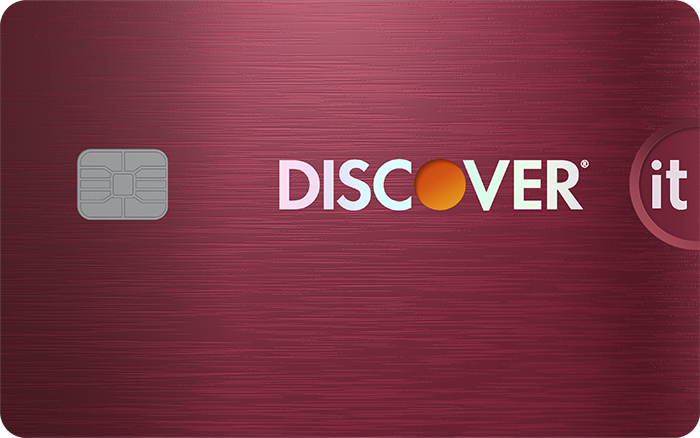
Best for cash back on rotating categories
Discover will match all the cash back you’ve earned at the end of your first year.
INTRO OFFER: Unlimited Cashback Match for all new cardmembers. Discover will automatically match all the cash back you’ve earned at the end of your first year! There’s no minimum spending or maximum rewards. You could turn $150 cash back into $300.
1% - 5% Cashback
Earn 5% cash back on everyday purchases at different places you shop each quarter like grocery stores, restaurants, gas stations, and more, up to the quarterly maximum when you activate. Plus, earn unlimited 1% cash back on all other purchases.
5.00/5
Our ratings are based on a 5 star scale.
5 stars equals Best.
4 stars equals Excellent.
3 stars equals Good.
2 stars equals Fair.
1 star equals Poor.
We want your money to work harder for you. Which is why our ratings are biased toward offers that deliver versatility while cutting out-of-pocket costs.
= Best
= Excellent
= Good
= Fair
= Poor
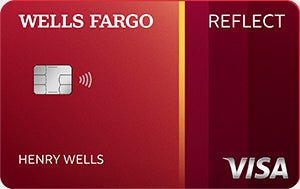
Best for long 0% intro APR
N/A
N/A
Intro:
0% intro APR for 21 months from account opening on purchases and qualifying balance transfers
Purchases: 0% intro APR for 21 months from account opening on purchases
Balance Transfers: 0% intro APR for 21 months from account opening on qualifying balance transfers
4.70/5
Our ratings are based on a 5 star scale.
5 stars equals Best.
4 stars equals Excellent.
3 stars equals Good.
2 stars equals Fair.
1 star equals Poor.
We want your money to work harder for you. Which is why our ratings are biased toward offers that deliver versatility while cutting out-of-pocket costs.
= Best
= Excellent
= Good
= Fair
= Poor
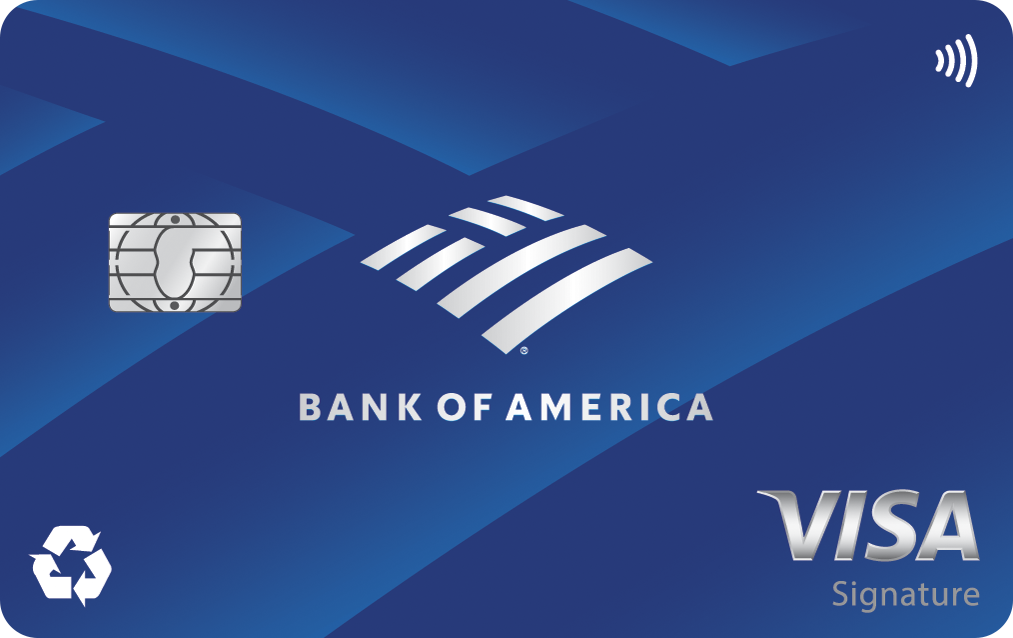
Best for unlimited rewards on purchases
25,000 points (worth $250 travel credit)
25,000 online bonus points after you make at least $1,000 in purchases in the first 90 days of account opening - that can be a $250 statement credit toward travel purchases
1.5-3 points per dollar
Earn unlimited 1.5 points per $1 spent on everyday purchases, with no annual fee and no foreign transaction fees and your points don't expire as long as your account remains open. Earn 3 points per $1 spent on travel purchases booked through the Bank of America Travel Center.
Intro:
0% Intro APR for 15 billing cycles for purchases, and for any balance transfers made in the first 60 days. After the Intro APR offer ends, a Variable APR that’s currently 17.49% - 27.49% will apply. A 3% Intro balance transfer fee will apply for the first 60 days your account is open. After the Intro balance transfer fee offer ends, the fee for future balance transfers is 5%. Balance transfers may not be used to pay any account provided by Bank of America.
Purchases: 0% Intro APR for 15 billing cycles for purchases
Balance Transfers: 0% Intro APR for 15 billing cycles for any balance transfers made in the first 60 days
We're firm believers in the Golden Rule, which is why editorial opinions are ours alone and have not been previously reviewed, approved, or endorsed by included advertisers. Motley Fool Money does not cover all offers on the market. Motley Fool Money is 100% owned and operated by The Motley Fool. Our knowledgeable team of personal finance editors and analysts are employed by The Motley Fool and held to the same set of publishing standards and editorial integrity while maintaining professional separation from the analysts and editors on other Motley Fool brands.
Terms may apply to offers listed on this page.