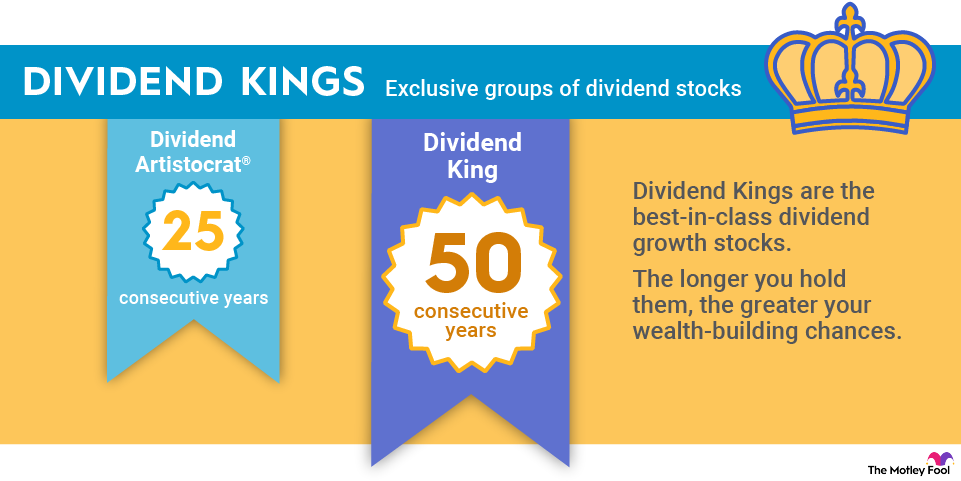
PepsiCo (PEP -0.64%) has an illustrious record of paying dividends. The global snacking and beverage giant extended its dividend growth streak to 54 in a row in 2026. That put it in the elite group of Dividend Kings, a company with 50 or more years of annual dividend increases.
The iconic company invests heavily in new product innovation, productivity enhancements, and other drivers to grow its revenue and profit margins. It also routinely acquires snack and drink brands that consumers love (it paid almost $1.7 billion for Poppi in 2025). PepsiCo's continued investments should enable it to maintain its exceptional track record of dividend growth.
What to consider before investing in high-yield dividend stocks
You should consider the following factors before investing in high-yield dividend stocks:
- Whether the company has the financial strength to sustain its high-yielding dividend if market conditions deteriorate.
- If investing in a company with a lower yield but higher growth and total return potential may be better for your financial situation.
- Signs that the stock might be a dividend yield trap.
- If the company can increase its dividend in the future.
Pros and cons of investing in high-yield dividend stocks
Investing in high-yield dividend stocks has its share of benefits and drawbacks. Some of the pros include:
- More income: Investing in high-yield dividend stocks enables you to generate more dividend income from every dollar you invest compared to lower-yielding stocks or those that don't pay a dividend.
- Lower volatility: High-yielding dividend stocks tend to be slower-growing companies and are often less volatile.
- Higher long-term total return potential: Higher-yielding dividend stocks can often deliver higher total returns over the very long term as dividend income accumulates.
On the other hand, here are some cons of investing in higher-yielding dividend stocks:
- Potentially higher risk profile: Some higher-yielding dividend stocks are at greater risk of dividend reductions due to high payout ratios or weaker financial profiles.
- Slower growth: Most higher-yielding dividend stocks are slower-growing companies.
High-yield dividend stocks versus other dividend strategies
There are three primary dividend investment strategies:
- High-yield dividend strategy: This strategy aims to generate passive income, making it ideal for retirees and investors seeking regular cash flow. It can be a lower-risk strategy as long as investors avoid yield traps.
- Dividend growth strategy: This strategy focuses on investing in companies with a history of dividend increases. While this approach initially generates less income, it has historically delivered the highest total returns over the long term.
- Dividend capture strategy: This active, short-term strategy involves buying a stock right before its ex-dividend date and selling it shortly after to capture the dividend. It aims to generate more income on your invested capital. However, it's more challenging due to the active management, tax implications (you'd receive non-qualified dividends and potentially incur capital gains taxes), and the risk of losing money on the stock purchases.
How to invest in high-yield dividend stocks
Here's a step-by-step guide on how to invest in high-yield dividend stocks:
- Open your brokerage app: Log in to your brokerage account where you handle your investments.
- Search for the stock: Enter the ticker or company name into the search bar to bring up the stock's trading page.
- Decide how many shares to buy: Consider your investment goals and how much of your portfolio you want to allocate to this stock.
- Select order type: Choose between a market order to buy at the current price or a limit order to specify the maximum price you're willing to pay.
- Submit your order: Confirm the details and submit your buy order.
- Review your purchase: Check your portfolio to ensure your order was filled as expected and adjust your investment strategy accordingly.