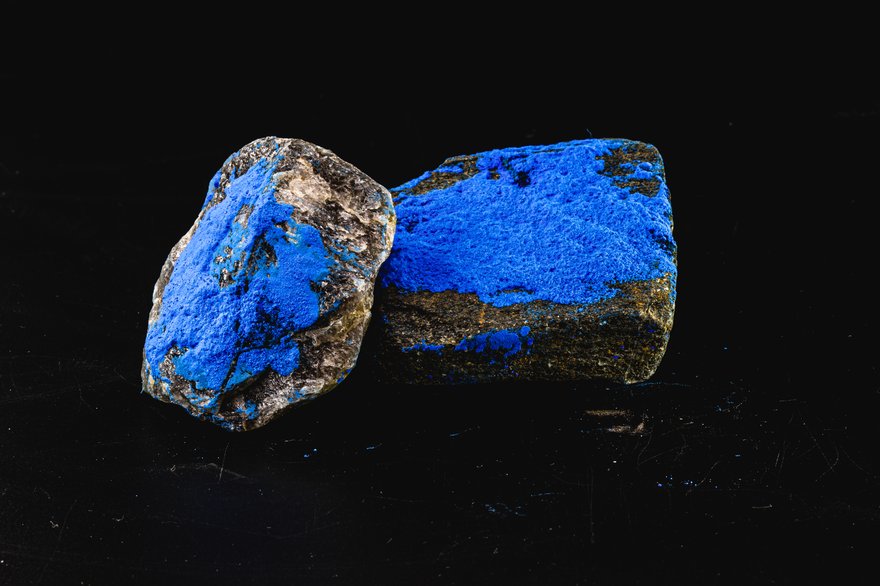
Cobalt is a common element found worldwide. It's usually a byproduct of refining copper or nickel. It has widespread uses. Cobalt is essential for many commercial, industrial, and military applications.
However, a big demand driver in recent years has been its use in electric vehicles (EVs). The leading use of cobalt is in electrodes for rechargeable lithium-ion batteries. As more automakers electrify their vehicles, the demand for cobalt should rise.
Many mining companies extract cobalt for commercial purposes, though few focus specifically on the metal. That can make it hard for investors to choose the best one to take advantage of the potential growth in cobalt demand to support EVs. Investors might want to consider taking a broader approach by investing in an exchange-traded fund (ETF) with exposure to the cobalt sector.
Here's a closer look at some of the top ETFs to consider buying to capitalize on the expected rise in cobalt demand.
Investing in top cobalt ETFs in 2024
Since cobalt is obtained from mining other metals, no ETF focuses solely on the metal. However, investors can access this essential element via a number of mining stock and base materials ETFs.
| Exchange Traded Fund | Annual Expense Ratio | Assets Under Management | Description |
|---|---|---|---|
| Vanguard Materials ETF (NYSEMKT:VAW) | 0.1% | $2.8 billion | An ETF that invests in mining and base materials stocks. |
| iShares MSCI Global Metals & Mining Producers ETF (NYSEMKT:PICK) | 0.39% | $1.5 billion | An ETF that holds a portfolio of metal and material mining stocks from around the world. |
| Amplify Lithium & Battery Technology ETF (NYSEMKT:BATT) | 0.59% | $148.7 million | A fund focused on stocks in the lithium-ion battery industry. |
| ProShares S&P Global Core Battery Metals ETF (NYSEMKT:ION) | 0.58% | $2.8 million | An ETF focused solely on companies mining battery metals. |
1. Vanguard Materials ETF
The Vanguard Materials ETF is a large fund focusing on companies that produce base materials and metals. It offers broad exposure to the material sector (including cobalt) for a very low ETF expense ratio of 0.1%.
The ETF held 114 stocks as of early 2023. It's most heavily weighted towards specialty chemicals (25.7% of the fund's holdings) and industrial gases (20.3%). However, it offers exposure to copper producers (5%), which also tend to produce cobalt.
The Vanguard Materials ETF offers a modest dividend yield of 1.6%, making it ideal for investors in search of passive investment income.
Although it's not a pure play on cobalt, this ETF is lower risk because it offers broader exposure to the entire materials sector.
2. iShares MSCI Global Metals & Mining Producers ETF
If you’re interested in a more direct investment in mining stocks, the iShares MSCI Global Metals & Mining Producers ETF is a top choice. The fund also is not a pure play on cobalt. Its portfolio consisted of 259 global mining stocks as of early 2023.
The iShares MSCI Global Metals & Mining Producers ETF has top holdings in some of the world’s largest cobalt producers. Notable names included Glencore (GLNCY -0.68%) and China Molybdenum (CMCLF 2.1%). Top copper producer BHP Group (BHP -1.36%), which obtains cobalt from its nickel- and copper-refining activity, was by far the top holding as of early 2023 at 13.8% of the fund.
3. Amplify Lithium & Battery Technology ETF
The Amplify Lithium & Battery Technology ETF also isn’t a direct investment in cobalt. The fund focuses more on battery technology, which is a key driver of cobalt demand. The small ETF held 106 battery-related stocks as of early 2023.
Amplify’s offering has a diverse list of stocks involved in the development of lithium-ion battery technology and manufacturing. It also holds metal mining and production stocks that provide the raw materials used in making batteries. As of early 2023, cobalt stocks comprised almost 9% of the fund’s investments. It also counted notable cobalt producers BHP Group and Glencore among its top five holdings.
Related investing topics
4. ProShares S&P Global Core Battery Metals ETF
The ProShares S&P Global Core Battery Metals ETF is a relatively new fund that started trading in late 2022. It's a tiny fund with minimal assets under management, making it very risky. However, it's the first ETF to only invest in companies mining metals for batteries.
As of early 2023, it held 41 companies. Many of its top holdings are lithium stocks. However, it does own shares of top global mining companies like BHP Group and Glencore, which produce some cobalt.
Given its focus on battery metals, the stocks held in the ETF have lots of growth potential as EV adoption accelerates.
ETFs offer exposure to cobalt and more
Since cobalt is a byproduct of other mining activities, investing directly in the element outside of specific mining stocks isn't easy. Cobalt prices are also likely to be volatile as supply and demand change from year to year. Investing in an ETF, along with other metal and base materials stocks, could be a top way to play this key ingredient in electric vehicles and batteries.