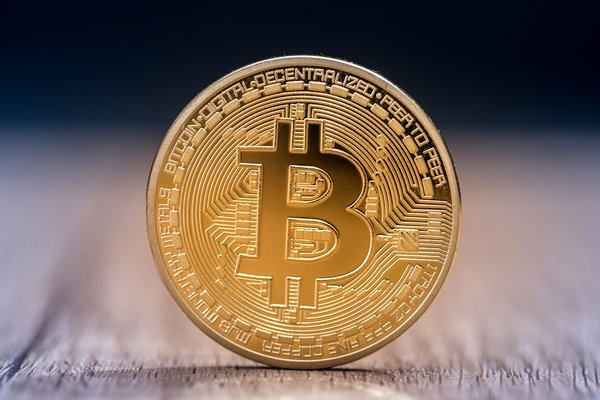
The idea of a blockchain was first conceived as the mechanism supporting Bitcoin (BTC -2.1%). To solve the double-spending problem associated with digital currencies, Satoshi Nakamoto devised an immutable ledger of transactions that chains together blocks of data using digital cryptography.
While the idea works extremely well for Bitcoin and other cryptocurrencies, there are loads of other useful applications of blockchain technology. Here are 15 of them.

1. Money transfers
The original concept behind the invention of blockchain technology is still a great application. Money transfers using blockchain can be less expensive and faster than using existing money transfer services. This is especially true of cross-border transactions, which are often slow and expensive. Even in the modern U.S. financial system, money transfers between accounts can take days, while a blockchain transaction takes minutes.
2. Financial exchanges
Many companies have popped up over the past few years offering decentralized cryptocurrency exchanges. Using blockchain for exchanges allows for faster and less expensive transactions. Moreover, a decentralized exchange doesn't require investors to deposit their assets with the centralized authority, which means they maintain greater control and security. While blockchain-based exchanges primarily deal in cryptocurrency, the concept could be applied to more traditional investments as well.
3. Lending
Lenders can use blockchain to execute collateralized loans through smart contracts. Smart contracts built on the blockchain allow certain events to automatically trigger things like a service payment, a margin call, full repayment of the loan, and release of collateral. As a result, loan processing is faster and less expensive, and lenders can offer better rates.
4. Insurance
Using smart contracts on a blockchain can provide greater transparency for customers and insurance providers. Recording all claims on a blockchain would keep customers from making duplicate claims for the same event. Furthermore, using smart contracts can speed up the process for claimants to receive payments.
5. Real estate
Real estate transactions require a ton of paperwork to verify financial information and ownership and then transfer deeds and titles to new owners. Using blockchain technology to record real estate transactions can provide a more secure and accessible means of verifying and transferring ownership. That can speed up transactions, reduce paperwork, and save money.
6. Secure personal information
Keeping data such as your Social Security number, date of birth, and other identifying information on a public ledger (e.g., a blockchain) may actually be more secure than current systems more susceptible to hacks. Blockchain technology can be used to secure access to identifying information while improving access for those who need it in industries such as travel, healthcare, finance, and education.
7. Voting
If personal identity information is held on a blockchain, that puts us just one step away from also being able to vote using blockchain technology. Using blockchain technology can make sure that nobody votes twice, only eligible voters are able to vote, and votes cannot be tampered with. What's more, it can increase access to voting by making it as simple as pressing a few buttons on your smartphone. At the same time, the cost of running an election would substantially decrease.
8. Government benefits
Another way to use digital identities stored on a blockchain is for the administration of government benefits such as welfare programs, Social Security, and Medicare. Using blockchain technology could reduce fraud and the costs of operations. Meanwhile, beneficiaries can receive funds more quickly through digital disbursement on the blockchain.
9. Securely share medical information
Keeping medical records on a blockchain can allow doctors and medical professionals to obtain accurate and up-to-date information on their patients. That can ensure that patients seeing multiple doctors get the best care possible. It can also speed up the system for pulling medical records, allowing for more timely treatment in some cases. And, if insurance information is held in the database, doctors can easily verify whether a patient is insured and their treatment is covered.
10. Artist royalties
Using blockchain technology to track music and film files distributed over the internet can make sure that artists are paid for their work. Since blockchain technology was invented to ensure the same file doesn't exist in more than one place, it can be used to help reduce piracy. What's more, using a blockchain to track playbacks on streaming services and a smart contract to distribute payments can provide greater transparency and the assurance that artists receive the money they're owed.
11. Non-fungible tokens
Non-fungible tokens, or NFTs, are commonly thought of as ways to own the rights to digital art. Since the blockchain prevents data from existing in two places, putting an NFT on the blockchain guarantees that only a single copy of a piece of digital art exists. That can make it like investing in physical art but without the drawbacks of storage and maintenance.
NFTs can have varied applications, and ultimately they're a way to convey ownership of anything that can be represented by data. That could be the deed to a house, the broadcast rights to a video, or an event ticket. Anything remotely unique could be an NFT.
12. Logistics and supply chain tracking
Using blockchain technology to track items as they move through a logistics or supply chain network can provide several advantages. First of all, it provides greater ease of communication between partners since data is available on a secure public ledger. Second, it provides greater security and data integrity since the data on the blockchain can't be altered. That means logistics and supply chain partners can work together more easily with greater trust that the data they're provided is accurate and up to date.
13. Secure Internet of Things networks
The Internet of Things (IoT) is making our lives easier, but it's also opening the door for nefarious actors to access our data or take control of important systems. Blockchain technology can provide greater security by storing passwords and other data on a decentralized network instead of a centralized server. Additionally, it offers protection against data tampering since a blockchain is practically immutable.
Related Investing Topics
14. Data storage
Adding blockchain technology to a data storage solution can provide greater security and integrity. Since data can be stored in a decentralized manner, it will be more difficult to hack into and wipe out all the data on the network, whereas a centralized data storage provider may only have a few points of redundancy. It also means greater access to data since access isn't necessarily reliant on the operations of a single company. In some cases, using blockchain for data storage may also be less expensive.
15. Gambling
The gambling industry can use blockchain to provide several benefits to players. One of the biggest benefits of operating a casino on the blockchain is the transparency it provides to potential gamblers. Since every transaction is recorded on the blockchain, bettors can see that the games are fair and the casino pays out. Furthermore, by using blockchain, there's no need to provide personal information, including a bank account, which may be a hurdle for some would-be gamblers. It also provides a workaround for regulatory restrictions since players can gamble anonymously and the decentralized network isn't susceptible to government shutdown.
Blockchain is in its infancy
Blockchain technology has only been around for a dozen years, and businesses are still exploring new ways to apply the technology to support their operations. With the growing amount of digital data used in our lives, there's a growing need for the data security, access, transparency, and integrity blockchain can provide.
Expert Q&A

Dr. Merav Ozair
The Motley Fool: What advice would you give to someone interested in investing in blockchain technology?
Dr. Ozair: Blockchain technology is definitely the future. There is no escaping that. However, it is difficult to predict which projects will last and which will fail and be forgotten.
Most blockchain technology companies are in their early, if not very early, stages. Hence, investing in companies utilizing blockchain technologies has all the same risks as investing in a start-up. And like in any start-up, the risk-reward ratio is high.
Therefore, learn about blockchain technology, do a thorough due diligence on any project -- from its technology to business model to execution. Learn about the "problem" it is trying to solve and what solution it's offering -- both from a technological perspective and a business perspective.
There's a lot of potential with blockchain technology, but the execution is in the details.
The Motley Fool: Which industries, other than finance, do you think blockchain has the potential to disrupt?
Dr. Ozair: The future that I have been envisioning is that every product or service application we know today will run on some form of blockchain technology. In other words, the "rails" of all products and services (i.e., the technology that "runs" these applications) will be a type of DLT.
I truly believe that in 10 to 15 years, this would be feasible.
Like the internet, which has become a pivotal part of our everyday lives, and we cannot imagine life without it, so will DLT. When we use the internet, we do not ask ourselves – "How does it work?" or "Why should we use it?" – we simply use it for the mobility, flexibility, efficiency and connectivity it provides. The COVID-19 pandemic has underscored the Internet's benefits. It enabled us to connect to services, products and people and facilitated a smooth transition to a remote, contactless global economy. Now Web 2.0 – Internet is evolving to Web 3.0 – Distributed Ledger Technology.
The Motley Fool: What innovations or trends in blockchain technology are you most excited about?
Dr. Ozair: The ecosystem of blockchain technology is evolving very rapidly. Every day (literally) you learn about new applications and new business use cases that have utilized blockchain technology. It is truly – slowly but surely – being implemented in any industry and any "traditional" application. From finance to healthcare to retail to art to education, the implementations are boundless.
The true power of blockchain technology is its ability to facilitate services to underserved communities and genuinely to democratize society. That was the premise of Bitcoin, when it was first launched in January of 2009 – i.e., a peer-to-peer payment system, and we somewhat lost focus on the main purpose of blockchain technology as" greed" got in the way.
The utilization of Decentralized Autonomous Organization (DAO) as the governance of any blockchain system and application, will enable blockchain applications to provide the needs of the underserved communities, nationally and globally.