Billionaire investor Ray Dalio of Bridgewater Associates runs the largest hedge fund in the world, so when he recently warned that an artificial intelligence (AI) bubble was forming, it was newsworthy. In an interview on Bloomberg Television, Dalio said that all great technological changes create bubbles and that AI was showing the typical signs of this pattern.
Dalio added that right now, companies are being forced to choose between overspending and the risk of losing out by investing too little. While the investment manager thinks AI may transform the world we live in, he noted that this doesn't mean investing in companies involved in the technology will prove worthwhile, as stocks can get ahead of themselves and become expensive.
Despite his warning, Dalio's Bridgewater fund was heavily weighted toward AI stocks at the end of Q1, with his top six stock holdings all big players in the sector. Let's take a look at Dalio's top stock holdings.

Image source: Getty Images.
The cloud providers
While Dalio said companies may be forced to overspend on AI, three of his top six stock holdings are, ironically, in the big three cloud computing providers, leading the charge in AI infrastructure spending. These, of course, are Amazon (AMZN -0.95%), Alphabet (GOOGL -1.24%) (GOOG -1.08%), and Microsoft (MSFT +0.66%).
Dalio also wasn't trimming these positions in Q1; in fact, he was aggressively adding to them. He more than doubled his stake in Amazon to make it his largest position at 4.1% of his portfolio, while he increased his Alphabet stake by 50% and his Microsoft position by 10%.
AMZN Amazon
NASDAQ · As of 4:00 PM ET 10/23/26

Combined, these three companies are set to spend a whopping $580 billion in capital expenditures (capex) this year, mostly directed toward AI infrastructure. All three are seeing strong revenue growth, led by their cloud computing units, while AI has also been helping drive growth across their other businesses.
Alphabet has arguably the biggest advantage of the three, having developed both its own world-class chips and AI models, which gives it a nice cost edge. Amazon's chip business, however, is gaining momentum and shouldn't be overlooked. The company is also seeing significant operating leverage in its e-commerce operations from its investments in AI and robotics. Microsoft is looking to play catch-up in both chips and AI models, but its stake in and partnership with OpenAI give it some time.
While all three are spending big, they are seeing strong growth, and the stocks look attractively valued.
The infrastructure plays
In addition to owning cloud providers, three of Dalio's six largest stock positions are in hardware companies benefiting from this immense spending. And similar to the cloud stocks, he was also aggressively adding to his positions in Q1.
NVDA Nvidia
NASDAQ · As of 4:00 PM ET 10/23/26
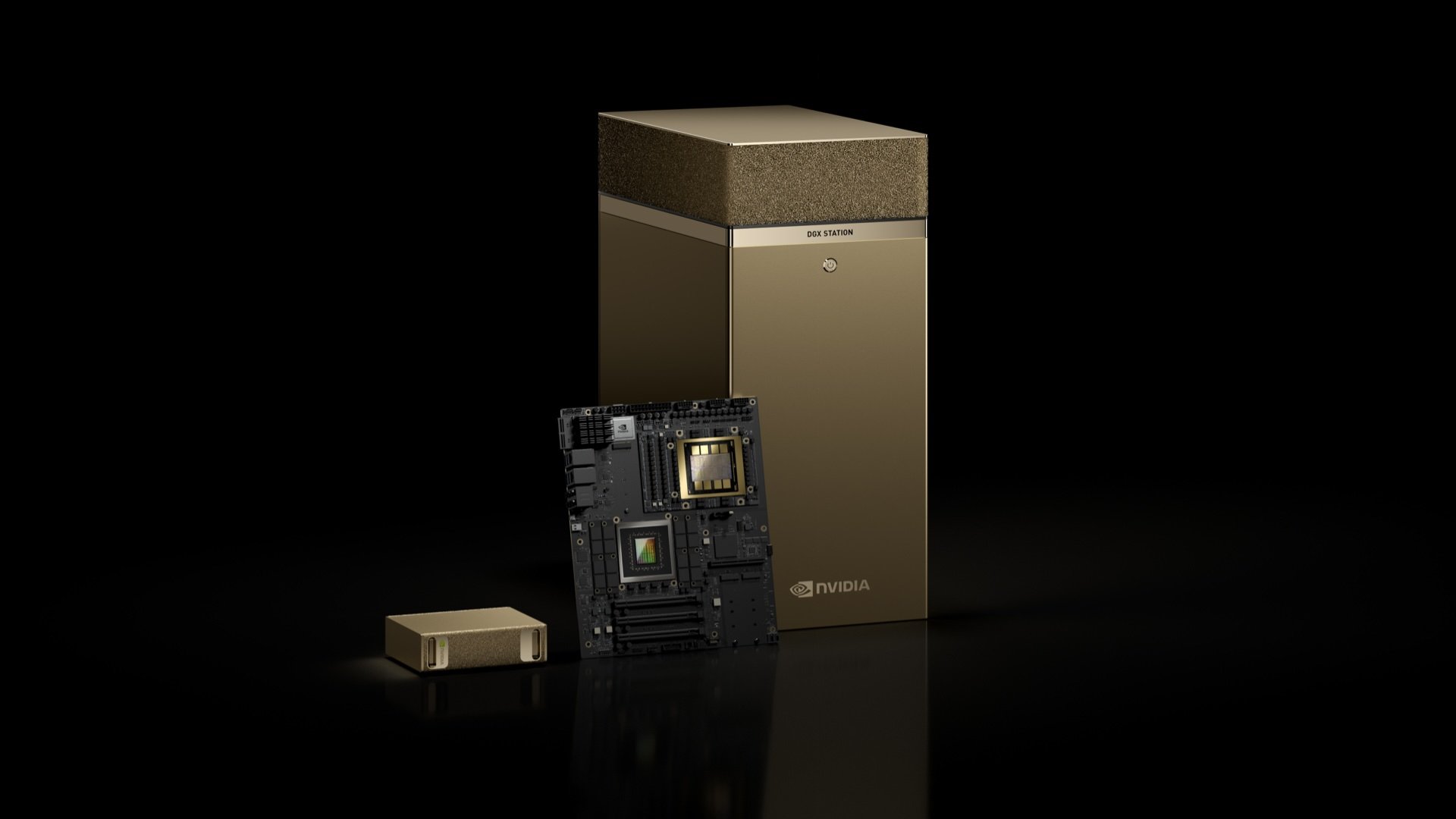
Dalio's second-largest stock position is in Nvidia (NVDA -0.59%), where he increased his shares held by 20%. Nvidia, of course, is the king of AI infrastructure and has been the biggest beneficiary of the data center build-out. Its graphics processing units (GPUs) are the main chips used to train AI models, where it has established a wide moat in this area with its CUDA software platform. The company is more than just a GPU maker, though, now offering end-to-end AI servers for specific tasks with its own portfolio of chips and networking components.
AVGO Broadcom
NASDAQ · As of 4:00 PM ET 10/23/26
In addition to Nvidia, Dalio was also buying shares in No. 4 holding, Broadcom (AVGO -0.48%), increasing his stake by more than 50%. Broadcom is seeing significant growth driven by its custom AI chip business and data center networking portfolio. The company helped Alphabet develop its highly regarded Tensor Processing Units (TPUs) and is seeing other hyperscalers turn to it to help them develop their own custom AI chips, particularly for inference. It sees this business growing to more than $100 billion in fiscal 2027.
Continuing his AI infrastructure investments, Dalio also boosted the stake in his No. 5 position, Micron (MU +2.46%), by 65%. Micron is benefiting from a significant DRAM (dynamic random access memory) bottleneck, driving surging prices. With GPUs and other AI chips requiring high-bandwidth memory (HBM), a special form of DRAM, demand is through the roof. The memory market is in the midst of a huge supercycle, and companies are taking advantage of it not only through higher prices but also by locking in longer-term deals for the first time.