Shares of Figma (FIG +2.24%) rose 37.4% in July 2026, according to data from S&P Global Market Intelligence. It was a bumpy ride with a sharp drop in the middle of the month, but still a welcome respite from deep price drops in June.
Either way, the company didn't actually do much to achieve this gigantic price increase. Also, it's more of a bounce than a victory march. Figma's stock is currently down 79% from the first-day closing price in August 2025, even after July's big gains.
FIG Figma
NYSE · As of 4:00 PM ET 10/23/26

Figma's stock did a lot of nothing, loudly
Figma joined the Russell family of indexes at the end of June, resulting in a large volume of automated buys from index-based mutual funds and exchange-traded funds (ETFs). As a result, the stock entered July with a solid tailwind.
A couple of bullish analyst notes stoked Figma's fires, followed by an 11.9% single-day jump on July 13 as an institutional investor disclosed a large Figma position. The stock was also heavily shorted at the time, making it easier to unleash quick jumps on limited news.
The good times didn't last forever. Wall Street decided to step back from richly valued software stocks at the start of earnings season, and many high-growth companies in that industry took significant hits around July 21.
Meanwhile, OpenAI launched the Presence tool on July 22, adding weight to the dark clouds over enterprise software stocks. Presence lets companies set guardrails and permissions around how AI agents handle their data, aimed at customer support, sales, and internal workflows. That arguably undermines the value of many software systems. Figma followed that group lower for a few days before hitting a fresh short-term bottom on July 23.
But July 24 brought a lighter market mood, starting Figma's return to bullish price moves. Over the next week, tech investors rotated out of chip stocks and into the software side, boosting Figma's share price again. July 27 brought Figma's largest one-day jump in July on no company-specific news.
Figma really didn't do much to earn July's gains. You can see that surge as a barometer of wider stock market trends, amplified by heavy short-selling and rattled investor nerves in the tech sector.
Image source: The Motley Fool.
Great quarter, terrible reaction
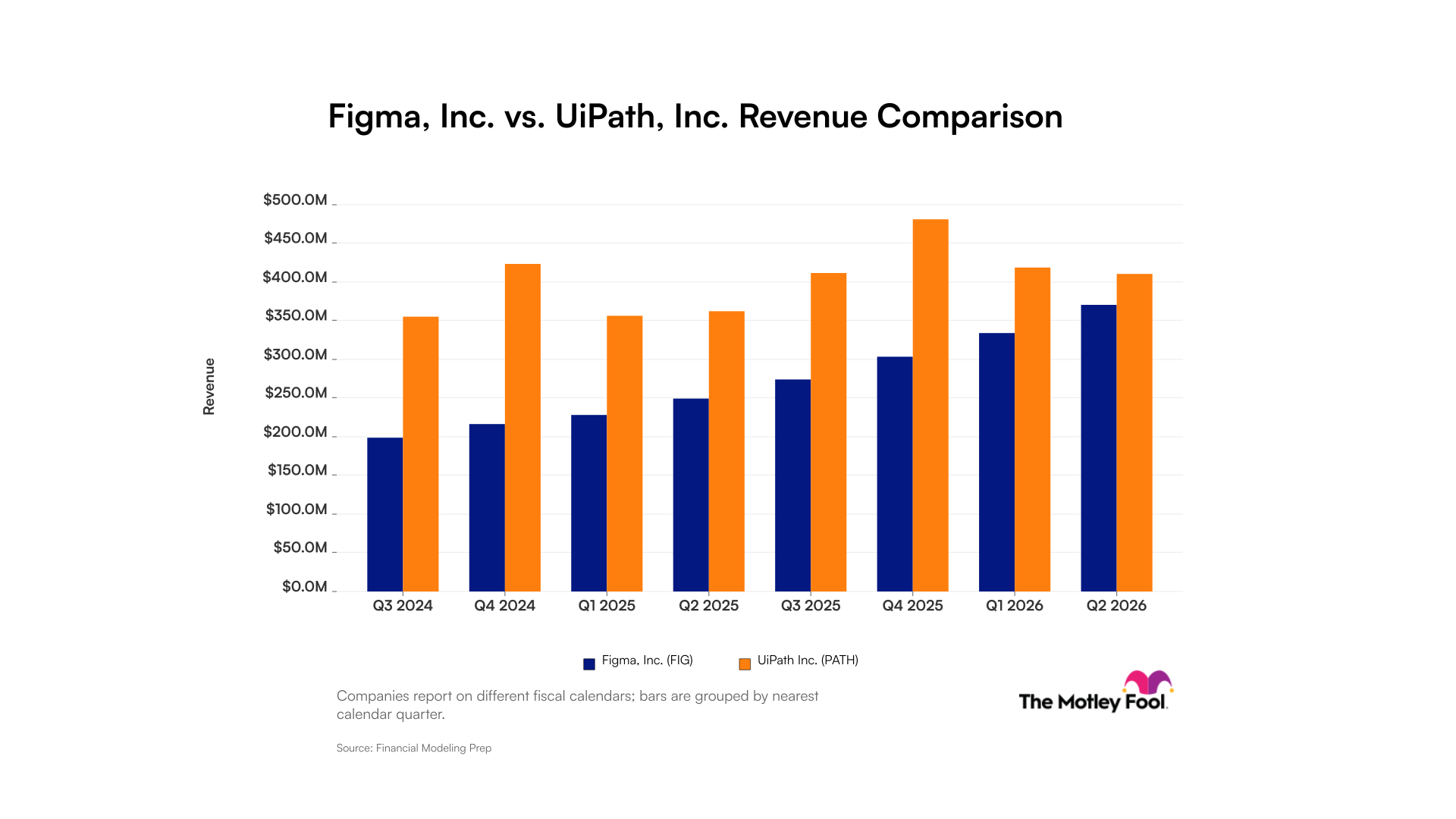
The company followed up on July's news-free swing with an impressive earnings report on Aug. 5. Figma doubled Wall Street's consensus earnings estimates. Revenue was $370.1 million, up 48% year-over-year. Guidance for fiscal year 2026 and the next quarter was above then-current Street expectations.
The stock fell 17% over the next two days anyhow. There was probably some profit-taking in that drop after July's robust surge. Investors also didn't love Figma's soaring AI back-end expenses. At some point, Figma seems destined to either increase the price of its services or cut back on the AI tools integrated into its design and product development platforms.
Looking ahead, August could be another volatile month. Figma completed its initial public offering (IPO) on July 31, 2025, and the extended lockup period for more than half of its Class A shares expires on Aug. 31. Bears worry that insiders will sell out as soon as they can.
That being said, this isn't the best time to buy Figma's stock. I want to see how Figma's AI expenses compare to revenue growth over the next few quarters.