Elon Musk has a history of stretching the horizon until it looks close enough to grab. In late August, he offered his "best guess" that Space Exploration Technologies (SPCX -1.74%) could generate roughly $3.5 trillion in revenue by 2033.
That prediction was posted casually on social media, not offered as formal company guidance. However, as is frequently the case when Musk communicates, his words still landed with force. This forecast invites some simple questions:
- What does SpaceX actually sell today?
- How big a leap is Musk trying to sell?
- Why should investors treat a timeline this aggressive as anything more than marketing?
Let's dig into SpaceX's current state and explore Musk's history using timelines. Spoiler alert: History suggests he's nowhere near correct with this prediction.
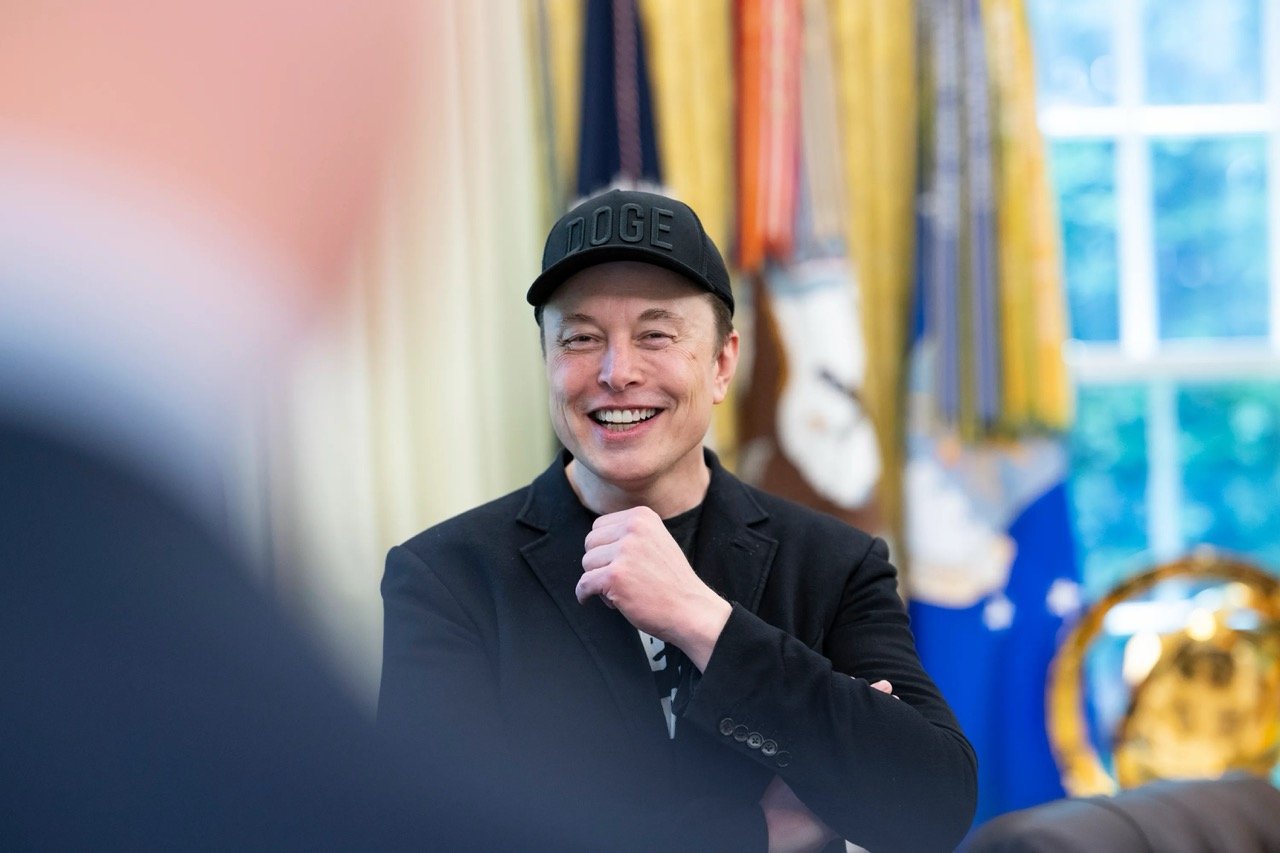
Elon Musk. Image Source: The White House.
How big is SpaceX?
Despite its name, SpaceX is not primarily a launch business at this point. The company also has a connectivity segment built around Starlink's broadband service as well as an artificial intelligence (AI) infrastructure division.
Through the first six months of 2026, SpaceX generated $12.5 billion in total revenue -- an increase of 54% year over year. Starlink was the largest contributor, comprising 60% of sales. The space segment only generated about $1.6 billion in revenue during the first half of the year. Not only was that virtually flat year over year, but accelerating research and development costs for the Starship program have resulted in widening operating losses for the segment.
AI infrastructure encompasses the part of the company that leases capacity and related services to hyperscalers. This division consolidates xAI (the maker of Grok), X (formerly Twitter), and the software coding platform Cursor. Although AI is SpaceX's fastest-growing business, the company spent $23.6 billion in capital expenditures on that segment alone during the first half of the year. In other words, AI is absorbing enormous capital spending for only $3.4 billion of revenue.
SPCX Space Exploration Technologies
NASDAQ · As of 4:00 PM ET 10/16/26
Putting Musk's $3.5 trillion claim into perspective
Amazon and Walmart are the world's two largest companies as measured by annual revenue. The two of them together recorded about $1.47 trillion of sales over the last year. Musk's 2033 forecast is nearly 2.4 times that sum. It is also roughly 140 times SpaceX's current revenue run rate.
The consensus estimate of Wall Street analysts covering SpaceX is for total revenue of $44.6 billion for the company in 2026. If the company delivers as they expect this year, it would still need to grow at an 86% compound annual growth rate over the next seven years to reach Musk's $3.5 trillion projection. That aggressive outlook assumes no headwinds from regulations, emerging competition, or capital constraints.
Even the most blue-sky models from Wall Street analysts don't see the company reaching comparable revenue numbers until closer to 2040, and those predictions are tied to the following assumptions:
- Thousands of Starship launches per year.
- Starlink continues to add subscribers and government contracts at an accelerating pace, and enters the telecommunications industry -- possibly releasing its own mobile device.
- Orbital data centers become a real market.
Even if all these developments succeed on optimistic schedules, they don't automatically produce a company larger than today's two largest retail giants combined. Smart investors can see that Musk's forecast is not a modest stretch of SpaceX's current trajectory. Rather, it is a bold claim that SpaceX will converge upon several industries at once at a speed no other industrial company has ever sustained.
History is not on Musk's side
The reason I have major doubts about Musk's 2033 forecast is not just because space exploration and AI are hard businesses to compete in. It's also because Musk's track record on timelines at Tesla (TSLA -2.13%) has been one of overpromising and underdelivering for nearly a decade.
- 2016–2017: Full self-driving (FSD) was described as imminent, and a coast-to-coast autonomous drive was promised but never delivered.
- 2019–2025: Robotaxis were expected "next year," with 1 million robotaxis forecast for 2020. Neither happened. Unsupervised autonomous driving was repeatedly pushed to "next year" or "by year-end." Currently, Tesla operates an extremely limited, geofenced robotaxi service with safety monitors in Austin, Texas. This is far short of the original vision.
- November 2019-late 2021: Cybertruck was promised to be in production for $39,900 and feature a 500-plus mile range. Instead, volume deliveries began in late 2023 at roughly twice the expected price and for a vehicle with far less range.
- 2019-2022: The Tesla Semi was unveiled for 2019 production. A handful of pilot trucks didn't appear until late 2022.
- Recurring missed deadlines: A $25,000 Tesla car, early factory-scale Optimus robots, and solar-roof volume have all followed the same loop: an explicit date and years of slips, followed by another date.
Tesla's market value has long been supported by the story that these programs were just around the corner and would transform the company into something much larger than an automaker. In reality, the company's milestones have drastically lagged the narratives that Musk has spun.
I think the same marketing talent and a similar appetite for distant numbers now surround SpaceX. A $3.5 trillion sales figure by 2033 is less of a budget and more of a valuation hyperbole: Keep the horizon far enough away that every quarter of growth and every successful operational stress test can be interpreted as progress toward an almost unimaginable destination.
Musk's history at Tesla suggests that his proposed milestone target for SpaceX is nothing more than a fantasy. The prudent interpretation is that SpaceX is a respectable, fast-growing company aspiring to become a vertically integrated industrial empire spanning space, internet services, and AI development. Based on the evidence of Musk's own track record, however, SpaceX is a far cry from becoming a $3.5 trillion sales machine seven short years from now.