Image source: The Motley Fool.
DATE
Thursday, July 30, 2026, at 11 a.m. ET
CALL PARTICIPANTS
- Senior Vice President and Chief Financial Officer - James Patrick Lynch
- Chairman and Chief Executive Officer - Martin A. Kropelnicki
TAKEAWAYS
- Net Income -- $56.5 million for the quarter, compared to $42.2 million in the second quarter of 2025.
- Diluted EPS -- $0.93 per share, increasing from $0.71 per share in the prior year period.
- Revenue -- $309 million, up 16.6% from $265 million in the second quarter of 2025.
- IRMA Revenue -- $15.3 million, reflecting the retroactive application of the 2024 California General Rate Case decision back to Jan. 1.
- Regulatory Rate Changes -- $15 million, attributed to authorized rate changes and new regulatory mechanisms.
- Deferred RAM Revenue -- $9.3 million, representing residual balances that the company now expects to collect over the next two years.
- Water Supply Costs -- $6.3 million increase, reflecting higher per-unit costs for production.
- Income Tax Expense -- $7 million increase, driven by higher taxable income and a higher effective tax rate.
- Year-to-Date Net Income -- $60.5 million, compared to $55.5 million through the first six months of 2025.
- Year-to-Date Revenue -- $523 million, increasing from $469 million in the prior year.
- Quarterly Capital Expenditures -- $147 million, an increase of 23.1% over the $119 million invested in the second quarter of 2025.
- Year-to-Date Capital Expenditures -- $270 million, representing a record level of investment for the first half of a fiscal year.
- CapEx Compound Annual Growth Rate -- 11.4%, based on the company's 10-year infrastructure investment trend.
- PFAS Budget -- $155 million net, covering estimated treatment costs after accounting for $60 million in recoveries from polluters.
- Rate Base Projection -- $3.5 billion by the end of 2028, assuming the completion of planned capital projects.
- Rate Base Compound Annual Growth Rate -- 12%, reflecting the speed of infrastructure replacement and expansion.
- ATM Program Proceeds -- $88.8 million, raised during the second quarter under the $350 million shelf registration.
- Unrestricted Cash -- $43.4 million, held on the balance sheet as of June 30, 2026.
- Restricted Cash -- $45.7 million, earmarked for a potable water pipeline project in Texas.
- Available Liquidity -- $395 million, remaining on bank lines of credit totaling $600 million.
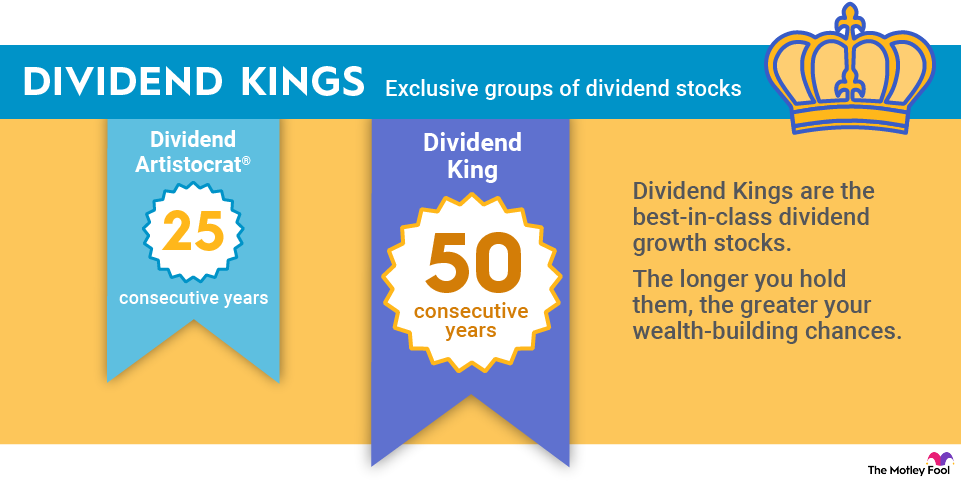
- Quarterly Dividend -- $0.335 per share, representing the company's 326th consecutive quarterly payment.
- Washington GRC Settlement -- $4.12 million in requested increases, reached through a full settlement with a 10.18% return on equity.
- California ROE -- 10.27%, which includes adjustments from the cost of capital mechanism.
- California Preapproved Capital -- $1.45 billion, authorized for the 2024 to 2027 rate cycle.
- New Wastewater Connections -- 200 units, added to the South Austin market in Texas during the quarter.
Need a quote from a Motley Fool analyst? Email [email protected]
RISKS
- Kropelnicki stated, "Am I concerned about it? I am. I am concerned about it because you have things like the, you know, Democratic Socialists of America popping up, and it is an agenda item for them," regarding potential political pressure on utility rate affordability.
- Kropelnicki indicated, "there is some instability in the economy," noting that macroeconomic indicators and government deficit spending could impact future interest rate environments.
SUMMARY
California Water Service (CWT -0.26%) management reported the formal conclusion of the 2024 California General Rate Case, which provides for significant retroactive revenue recognition and a four-year framework for capital investment. The company is currently executing a record infrastructure program focused on utility plant replacement and the implementation of treatment systems for PFAS. Strategic efforts remain centered on integrating new assets in Nevada and Oregon while seeking to consolidate ownership of a Texas wastewater joint venture. To support these capital requirements, the company utilized its at-the-market stock program and maintains a substantial liquidity position with an investment-grade credit rating.
- Kropelnicki emphasized the company's internal growth potential, stating, "we are not gonna go out on a buying spree and buy at multiples of book because we need rate base growth. We do not need rate based growth. We have plenty of rate based growth in our existing book of business."
- The company reported that year-to-date spending on PFAS treatment reached $30 million, with costs partially offset by legal recoveries and grant funding.
- Lynch noted that the $45.7 million in restricted cash is dedicated to a pipeline project with the GVRA water agency, which will serve as the company's first potable water system in Texas.
- A new Sales Adjustment Mechanism in California will allow the company to adjust sales forecasts annually if actuals deviate from projections, a feature management expects will reduce uncollected balances.
- The Washington General Rate Case settlement includes a 10.18% return on equity for the company's two largest systems and is expected to receive final commission approval in the third quarter.
- The company promoted Tammy Johnson to vice president of operations for California, highlighting her 40 years of experience and D5 operating license as evidence of internal leadership depth.
- Management confirmed that the California cost of capital adjustment mechanism remains a key protection for shareholders, allowing for ROE adjustments if utility bond indices shift by more than 50 basis points.
INDUSTRY GLOSSARY
- Advice Letter Projects: A streamlined regulatory process for utilities to seek approval and rate recovery for specific, pre-defined infrastructure investments.
- ATM (At-the-Market) Program: A method for publicly traded companies to raise capital by selling shares directly into the secondary market at prevailing prices.
- BVRT: A joint venture entity involved in wastewater operations in the Texas market.
- CAGR: Compound annual growth rate, representing the geometric progression ratio that provides a constant rate of return over a time period.
- GRC (General Rate Case): A formal proceeding before a utility commission to determine the rates a utility can charge its customers.
- IRMA (Interim Rates Memorandum Account): A regulatory account used to track and recover the difference between interim rates and final authorized rates during a delayed rate case.
- PFAS: Per- and polyfluoroalkyl substances, a group of manufactured chemicals that require specialized treatment to remove from water supplies.
- RAM (Revenue Adjustment Mechanism): A regulatory tool designed to decouple a utility's revenue from the actual volume of water sold to ensure recovery of authorized fixed costs.
- ROE (Return on Equity): A measure of financial performance calculated by dividing net income by shareholders' equity, used by regulators to set allowed profit levels for utilities.
Full Conference Call Transcript
Operator: Ladies and gentlemen, Until that time, your lines again will be placed on music hold. Thank you for your patience. Thank you for standing by. And welcome to the 26 Second Quarter California Water Service Group earnings call. All lines have been placed on mute to prevent any background noise. After today's presentation, there will be an opportunity to ask questions. To ask a question, you may press *1 on your touch tone phone. And to withdraw your question, please press *1 again. It is now my pleasure to turn the call over to Mr. James Patrick Lynch, senior vice president and chief financial officer. You may begin.
James Patrick Lynch: Thank you, Janine. Welcome, everyone, to the second quarter 26 results call for California Water Service Group. With me today is Martin A. Kropelnicki, our Chairman and CEO. Replay dial in information for the call can be found in our quarterly results earnings release which was issued earlier today. The call replay will be available until September 28, 2026. As a reminder, before we begin, the company has a slide deck to accompany today's earnings call. The slide deck was furnished with an 8-K and is also available on the company's website at www.calwatergroup.com. Before looking at our second quarter 2026 results, I would like to cover some forward looking statements.
During the call, we may make certain forward looking statements. And because these statements deal with future events, they are subject to various risks and uncertainties. Our actual results could differ materially from the company's current expectations. As a result, we strongly advise all current shareholders and interested parties to carefully read the company's disclosures on risks, and uncertainties found in our Form 10-K, Form 10-Qs, press releases, and the other reports we file with the Securities and Exchange Commission. And now, I will turn the call over to Martin to provide a brief overview.
Martin A. Kropelnicki: Thanks, Jim. Good morning, everyone. Consistent with our past earnings call, I am going to give you a quick overview of the agenda and then Jim and I are going to jump into some of the details for the quarter. There are only kind of 6 items on the agenda today that we want to go through. Starting obviously in the in the second quarter, the end of April, we received a decision on our California general rate case As part of that decision, during the quarter, we recognized our IRMA, which is the balancing account that takes the retroactive portion of the rate case back to January 1.
So this rate case was close to being on time, which was very good news. It was, you know, approximately 90 to 100 days delayed, but we are made whole back to the original date of January 1. That was recognized in the quarter as well as other items that we will be talking about. In addition, during the quarter, we reached this full settlement in our rate case up in Washington. I will provide some more details about that when we get to that slide. During the second quarter, we had record capital. We invested a record $270 million in new plant for the first 6 months of the year.
That continues to move ahead, especially as we start to invest in our PFAS treatment programs throughout our service territory. And to partially offset that growth, we did raise about $88.8 million through our ATM or at the market stock program and the company declared its 326th quarterly consecutive dividend of $0.335 per share. In addition to the quarter, we continue to work on our nexus integration plans. And Nexus has been great to work with and things are progressing there. We will give you some more details on that. And then lastly, those of you that like to look at some of the numbers on sustainability and some of our numbers.
We did publish our water quality and sustainability reports as well as receive a number of awards during the quarter. And later on towards the end, I will introduce the 2 new officers As some of you may know, Greg Milleman is not here. As you remember at the last call, that was his last call with us, and he retired and officially retired from the company. And I will be talking a little bit about his replacement as well as 1 other promotion, a key promotion we had. during the quarter. So that is the agenda for today. Jim, why do not I turn it over to you? We will go through the numbers.
James Patrick Lynch: Thanks, Martin. As Martin mentioned, the Q2 results reflect the decision we received in our 2024 California GRC and also the retroactive application of the decision through the IRMA to the beginning of 2026. The net income for the quarter was $56.5 million or $0.93 per diluted share. That compares to Q2 2025 net income of $42.2 million or 71¢ per diluted share. Revenue for the quarter was $309 million compared to $265 million in the second quarter of 2025. The primary earnings drivers included $15.3 million of IRMA revenue related to the delayed 2024 California GRC, and of which about $9.2 million of that was related to the first quarter.
So that was the look back portion that was recognized in Q2. We also had $15 million that was due to rate changes and changes in regulatory mechanisms. And $9.3 million of remaining deferred RAM revenue that is now expected to be collected over the next 2 years. If you remember when we stopped decoupling, we still had some residual RAM balances that were deferred until we reached the proper accounting guidance that would allow us to report the revenue. So we have now reached that place. And at this point, we have recognized the remaining deferred balances.
These increases were partially offset by $6.3 million in higher per unit water supply costs about $7.9 million in costs related to the deferred RAM revenue, and $7 million in higher income taxes that was due primarily to higher income and the increase and an increase in our effective tax rate. If we move on to slide 6, you can see the impact of the activity of our second quarter on our diluted earnings per share. The primary drivers were customer rate changes, the IRMA the deferred RAM revenue, each of which contributed $0.20, $0.15, and $0.11 per diluted share, respectively.
And these increases were partially offset by the water production cost and deferred RAM related expenses of $0.08 and $0.10 per diluted share, respectively. If we turn to slide 7, on a year to date basis, net income through the end of the quarter was $60.5 million or $1.00 per diluted share and that compared to year to date net income in the prior year of $55.5 million or $0.93 per diluted share. Revenue was $523 million compared to $469 million year to date in 2025.
The primary earnings drivers were largely the same as those we experienced for the quarter And so turning to slide 8, you can see the impact on the year to date drivers with regards to our diluted earnings per share. Customer rate changes, the IRMA and deferred RAM revenue contributed $0.30, $0.20, and $0.11 per diluted share, respectively, and these were partially offset by higher water production costs and the deferred RAM related expenses of $0.19 and $0.10 per diluted share. So that is kind of a summary of the financial performance so now I will turn the call back over to Martin to walk us through some capital some of our capital activities.
Martin A. Kropelnicki: Great. Thanks, Jim. I am on slide 9 for everyone on the call. So looking at our infrastructure investment through the second quarter, for the quarter, CapEx was $147 million. That was up from $119 million the prior year. that is about a 23.1% increase year over year. Our 10 year compound annual growth rate increasing capital or growth capital is hovering right around 11.4% right now. As a reminder, the capital estimates for 2026 and going out now until they complete the projects, include an estimated net $155 million that is been budgeted for PFAS.
And I am saying that because we have approximately $60 million of recovery from polluters that is being used, so the sum of the 2 numbers will get you back close to the original estimates that we provided. About a year and a half ago, 2 years ago, and we started looking at that PFAS. I will say the PFAS numbers will still tend to move around a little bit as our legal team has continued to do an outstanding job at getting recoveries to offset the cost of the PFAS treatment on behalf of our customers from the polluters. So they continue to get more dollars coming in as well as some grant dollars are coming in.
But kind of the main theme is being consistent with what we have had the last 20 years which is our compound growth rate on the capital investment or our growth capital is holding in, you know, a little north of 10%. And our internal target that we try strive for is 10%. So it is up a little bit by the PFAS assessment. I think as everyone knows, when you go to the next slide, when you are increasing your rate base at 10%+ a year, your CapEx, excuse me, you are growing your rate base, And right now, we have a compound annual growth rate of almost 12% on our rate base growth.
The slides that you see here today have all been trued up for the California decision based on the numbers that were in that decision. So we anticipate having approximately $3.5 billion in rate base by the end of 2028, assuming we can get all the capital in the ground on time. So, obviously, the company remains very capital focused. So obviously, CapEx continues to be strong. The company continues to the capital plans well. We are able to get that capital built into rates in California. it is preapproved. So I think it is a little bit easier in California for earnings modeling because it is a prospective state The other states we have are all historical.
But overall, we are very happy kind of with the CapEx growth and the rate base growth that we have as we move through this next rate cycle. On the West Coast. So but, Jim, why do not I turn it back to you to cover liquidity and some of our capital plans for the second half of 2026?
James Patrick Lynch: Greg. Thanks, Martin. So we do continue to maintain a really strong liquidity profile to execute the capital plan and also as we continue to pursue tuck in M&A, and look to integrate Nevada, Oregon, and the BVRT acquisitions. As of June 30, 2026, we had $43.4 million in unrestricted cash, and about $45.7 million in restricted cash. Along with approximately $395 million available on our bank line of credit. Just as a reminder, that restricted cash is really earmarked for a project we have in Texas with a water agency there, GVRA, in building a pipeline into 1 of the new areas that we hope to be delivering potable water in here in the near term in Texas.
So it is our first potable water system in Texas and we are really looking forward to that initiative. In addition, we maintain credit facilities totaling $600 million. Those credit facilities are expandable up to $800 million and they have maturities that extend into March 2028. So we are really well positioned with regards to our existing credit facilities We also renewed our ATM stock program in May 2025, with $350 million on the shelf registration. During the second quarter, we did raise $88 million in proceeds from stock sales under the ATM program.
We believe the balance sheet is in pretty good shape and that additional any additional financing we raise in the second half of 2026 will be primarily tied to growth and that growth is really earmarked for constructing the remainder of our 2026 capital program. And closing of Nevada and Oregon in terms of those acquisitions. And we also will look to pay down our line of credit in California as we head towards the end of the year and begin to prepare for our activities in 2027. Importantly, both group and Cal Water maintain a strong credit rating of A plus stable from S&P Global.
And I think that really just serves to underscore the strength of our balance sheet. And finally, yesterday, we did declare our 326 consecutive quarterly dividend of $0.335 per share and that represents about a 7.6% CAGR growth in our 5 year dividend. So really pleased and happy with our ability to deliver that to the shareholders.
Martin A. Kropelnicki: Thanks, Jim. I am now on slide 12. And I wanna talk a little bit about what is happening on the regulatory front. Again, just to recap the major components of the approved 2024 general rate case in the state of California, The approved rate case will drive significant infrastructure investment from 2024 to 2027. I know that is a little confusing, but it is 2024, 2025, 2026, and 2027. You have to include kind of a stub year of the year that you file your general rate case.
So in total, in California, prospective years, the capital gets approved in advance We got about $1.45 billion of preapproved capital In addition, the commission approved approximately $229 million of advice letter projects, and that gets us to just shy of $1.7 billion over that 4-year period. In addition, in the rate case, the commission also affirmed the Monterey style RAM. We have continued to have in the past and has continued through this next cycle, a pension balancing account a healthcare balancing account, a conservation expense balancing account, and an incremental cost balancing account for water production cost.
In addition, what is new in the settlement that was authorized is we have a sales adjustment mechanism, which I think really is a big deal. Since we did not get full decoupling. But we got the Monterrey-style RAM, the sales adjustment mechanism allows us to adjust our sales forecast the following year if the sales numbers are out of out a certain percent from what the forecast was. So previously, when we decoupled, we did not have that option. And that tended to set up growing balances uncollected balances from customers as the decoupling mechanism would balance from month to month, quarter to quarter.
So having a sales just mechanism, I think, is a big deal that will help smooth out the revenue forecast and actual revenue in the second, third year of the rate case. In addition, a new thing that we got this year that we asked for was a liability balancing account. And I think, you know, we are well into wildfire season for all of you that have studied trying to procure insurance as a homeowner or as a consumer out on the West Coast. I think it is harder even as a company. So the commission did authorize us to have an insurance balancing account for the state of California, which I think is a good thing.
So overall, you know, it is nice to have the 24 rate case wrapped up We started recognizing the revenue from that rate case in the actual billings on July 1, so it is live. And now we are moving on to fully implement that capital. In addition, during the quarter, we reached a settlement on the Washington Water General rate case. Now keep in mind, Washington is a historic test year for capital purposes. We filed our rate case on September 25, 2025. We asked for just under $4.3 million. $4.29 was the actual filing number. And it was for increases across 2 of our largest washing systems that we have requested a 10.2% ROE.
And the final settlement that we reached with the commission we reached a full all party settlement of $4.12 million as well as ROE of 10.18%. So overall, pretty close to the ask. So very happy with the with the outcome. With the all parties settlement, it is been filed, and it has not been approved yet by the commission, but we expect it to get approved here sometime in the third quarter, and we will start recognizing that revenue for Washington And the third quarter. So overall, good news on the rate case front. Going to the next slide, talking about our strategic initiatives.
The other big thing that company's working on in addition to the capital is really the acquiring the NEXUS assets in Oregon and Washington. Change and fill applications have been filed. Integration planning with Nexus and Cal Water has been moving very, very well. Nexus is a great partner to work with. We are very happy with the level of support we are getting from them. And we are continuing to move forward for a close or year end, excuse me, I anticipate with Nevada, we will likely get there decision first. They have a statutory timeline to approve the merger and we have been in discussions with them and answering their questions.
Oregon does not have a statutory timeline but we are in the process of answering their questions and working with them as well. So our goal would be to try to close the acquisition before the end of the year and moving forward. In addition with the BVRT joint venture, as you may recall, we have submitted an application to buy out the rest of that partnership to become the sole owner of that BVRT. That change of control application was deemed, it was reviewed by the commission, they go through a review process. It was deemed quote unquote complete. Meaning it goes to the commission for approval. So we are waiting to hear back from them.
In addition, we also have a consolidator rate case that was settled and we are waiting for final commission approval in Texas. So Texas has been very busy between the rate case settlement as well as the application. In addition, during the quarter, the team connected an additional 200 new connections to our wastewater systems in that South Austin market. So that market kind of continues to grow. Excuse me. Looking at slide 14, looking at some of our other highlights for the quarter, Obviously, we have been celebrating that the company's 100-year, 100 years of service, essentially. And we set up a number of regional events, so we are halfway through that process.
Those have been well received by our employees and a lot of the government officials in the areas that we serve. So we are trying to make it a highly visible well branded, we are in your community, here's what we do type of event. So that process continues to go very, very well. The company has a lot of pride in the fact we have been around for a hundred years and the fact that we were started by 3 World War I veterans back in 1.93 thousand. In addition, we are seeing a lot of customer engagement We have had tens of thousands of customers visit our website. that is been dedicated to our 100-year anniversary.
And likewise, I encourage you to look at that if you wanna see some of the history of the company how we have grown from 3 small districts in Northern California to now being the largest investor-owned water utility in the state of California. As well as, in Hawaii and Washington. During the quarter, we won a number of awards. Which is great recognition. We tend not to talk about that a lot, but it is something the company takes a lot of pride in. You know, we recently won the Alliance for Water Efficiency Award.
We have been named the top workplace by USA Today, and been noted by Time as being 1 of the world's most impactful companies for our continued work on sustainability and renewability So, all really good stuff, all happening around our 100-year anniversary, and we will be ringing the bell on the NYSE on November 30 with our board and a number of employees to celebrate our 100 years of service as we would like to say. As you may recall, at the end of the last conference call, we did a little tribute to Greg Milleman. For those of you who work with Greg Milleman, he is a big personality.
And before the call, Jim and I were joking around about it is kind of hard not having Greg in the room with us. Because he is he is a fun person to work with. So Greg has officially retired. He is consulting on some of our rate projects for us and still available to help us, but I think he is actually in the Caribbean this week, which, really, as Jim and I worked a lot of hours the last couple weeks, I wish we were with Greg, actually, and we could razz him up a little bit.
Having said that, we had a great internal candidate ready to replace Greg, and it is Greg, another Greg, so the last name changes. first name does not. But Greg Shemansky, was, named vice president of rates by our board of directors. And Greg has a long history in the rate. And regulatory world, starting way back working with San Diego Gas and Electric. He worked for American Water for a number of years. And joined us a few years ago. Very, very well qualified as an undergraduate degree from UCLA, in economics as well as an MBA in finance from Purdue University.
So Greg has officially taken over leading our rates team, and he is certainly well qualified to do so. In addition, given the growth of the company, we added, a VP of operations who just runs the California entity. We have had a senior vice president of operations who is run all of our operations. In all 5 of our states. And given the growth that we have been experiencing, we thought it was time to have, a vice president of operations just for California who reports to the senior VP of operations. So very, very happy to announce the promotion of Tammy Johnson, Tammy is no stranger to the water business. She has 40 years of experience.
Tammy started as a field worker in the union back in the eighties. And I say that because she started in the field at a time when there was not a lot of female utility workers in the field, and she started in Bakersfield which I think was a great place to start, but I would imagine it was a pretty rough group to break into being a female. And she's just done a fabulous job. She continued to move up through the union ranks. She was a union officer. She's got-- she has all our sort of-- She's actually a D5, so she has the highest level operating license you can have in the state of California.
She went back to school after she had kids and completed her bachelor's degree. And then went on to complete her MBA as well. And just knows operations very, very well. And for those of you that know me, I am very big about having someone who is been an actual operator operating our system. So we are very happy that we have both Tammy Johnson and Greg Shemansky joining the officer team here effective July 1. So with that, looking ahead into the second half of 2026, the agenda is really simple. Right? We have got to continue to get the capital in the ground, including our PFAS program.
Year to date, we spent about $30 million on that program. And we will give you an update every quarter on where the spending is on that program. We have a couple new officers. We have a lot of rate case stuff going on. and, of course, then our goal is to get the NEXUS deal closed before the end of the year. So we have plenty to do, a lot of capital to get into the ground, the company remains very, very focused on executing on those tasks. So with that, Janine, we will take a pause and why do not we open it up for questions, please?
Operator: Thank you. Ladies and gentlemen, we will now begin the question and answer session. To ask a question, you may press *1 on your touch tone phone. And to withdraw your question, please press *1 again. If you are using a speakerphone, please lift the handset before pressing any keys. 1 moment, please. We gather questions. We have a question from Davis Sunderland from Baird. Please go ahead.
Davis Sunderland: Hi, it is Good morning, guys. Sure. Good morning, Davis. Maybe if I could start off, Martin, would just be curious to get your thoughts on affordability. And I know there is been a lot of rhetoric around utility bills, pushback against rate increases, just some different things happening in different parts of the country. And just would love to hear any of this has changed your guys' strategy or how you guys think about this.
Martin A. Kropelnicki: Yeah. Well, I and, Davis, you have been following us for a while, and, we have been out on a number of non deal roadshows with Baird. So affordability has always been on the forefront for us. There are 2 broad measures. You know, that you use for affordability. 1 is the EPA generally looks at water bills and the average household budget As long as you are below 2%, you are considered affordable. We are below 2% in all in all of our districts, And then in the state of California, before we can actually file a rate case, we have to do this affordability test and file it, review it with the commission.
And in the 24 rate case, we passed the affordability test really in all of our districts but 1, but in that 1 district was a very small district that had a lot of capital needs. And in California, we have a couple tools. We have a rate support fund. And we have a low income rate assistance fund. And so we work with the commission through the rate case process to apply some of those things to make sure the rates are affordable for this 1 small district. So we have not had any big issues with that. As you may recall, prior to filing a large rate case, we always meet with our customers.
We hire a third party firm We do a number of focus groups and interview literally thousands of customers. To get their ideas, their thoughts, their perceptions on things. And part of that discussion in those focus groups is really affordability. So for us, we have not had really any major issues with affordability.
And even when you look at things is that what I think what you are seeing back East is you are seeing a lot of government agencies, not just the commissions, but governors, etcetera, push back on rates, especially electrical rates because they have been raising so high and then the fear with data centers are rising those costs and passing those costs on to customers as they build out new infrastructure. We have not had any of those problems. And you know, the we have that 10.27% ROE in California. We just got through a rate case. The rate case was approved. If we did not have really any major interveners in California.
Rate case up in Washington, that is pending approval. that is a 10.18% ROE. that is in that settlement. And so we are not seeing any signs. We are not getting any feedback from the commission that we have affordability issues as of right now. But, again, there is a lot of care and nurturing that goes in when we prepare the rate case. To make sure we are not tripping some of those trip wires. And I think the rates team and our government affairs team and our community affairs team have done an outstanding job at navigating the headwaters on that.
And I think, you know, we are gonna continue to keep doing what we are doing and trying to balance affordability with the needs of the capital investment. And, you know, the best thing I can say to you or any of the analysts covering our stock is go back and look at our 20 year history. We have been able to do this 10% kind of growth rate on CapEx, which is growing rate base. We have been able to do it and be successful at getting rate recovery. And again, not trip these affordability things that are popping up. So am I concerned about it? I am.
I am concerned about it because you have things like the, you know, Democratic Socialists of America popping up, and it is an agenda item for them. We have certainly seen our electric rates, you know, increase. You know, California has a second highest electric rate increase that electric rates in The US, so that affects our cost of production. But we are not driving the affordability crisis in America. It is not water it is driven by the rate side. And so continuing to differentiate ourselves on that front, I think, is part of the process when we meet with regulators and lawmakers and the state at the federal government level.
So watching it, concerned about it, Obviously, I think we have been navigating the waters around affordability quite well.
Davis Sunderland: Awesome. Greg details, and thank you for all that, Martin. Maybe if I could ask another 1. Lots of, I guess, forecast now calling for a higher interest rate environment looking forward, maybe as soon as a couple months from now, if not sooner. Just wondering any impact this might have on willingness to pursue other M&A or liquidity outlook or just any other facets of the business, I guess, that might be impacted by this? Sure.
Martin A. Kropelnicki: And, you know, you are asking a question. This is a subject of great debate with our board We spent a lot of time talking about the economic landscape, in particular, the instability of some of your major macroeconomic indicators, that are out there. Now, inflation was down. You saw the inflation numbers that came out this morning. They continue to trend down, so I think that gives the Fed a little bit more breathing room. I think that was a good sign, but concurrently, you have a whole bunch of government spending given the conflict with Iran. And government spending especially with military spending, tends to be a boom for the economy but not when it is deficit spending.
And so that is the piece that kinda gives me a little bit of concern on the interest rate side. Just to remind everyone, especially in California, which our largest entity, we do have this cost of capital adjustment mechanism that, frankly, it is a 2-way mechanism. it is good for stockholders. it is also good for rate payers. And so if Moody's AA utility bond index swings by more than 50 basis points, up or down we can apply to adjust our ROE with that mechanism.
And so I do not think that mechanism gets a lot of PR But frankly, you know, 1 of the reasons why we have 1 of the highest ROEs in the country is because we have had this mechanism. And that mechanism triggered upward during this last cycle. And so I think we have to watch and see. I am glad I am not Jerome Powell as I told the board. You know, I know his boss is demanding lower interest rates, and I am always looking at the Fed consensus of the board, and he had consensus in his first meeting that he had not seen the minutes for the second meeting.
They will not be out for a couple weeks. They met yesterday. But there is some instability in the economy. And interest rates, if you look at the mix, as of yesterday, about 38% of the economists were calling for an increase and about 62% were calling them for to be flat or maybe trend down. So depending on what inflation does, you may see a tick up in interest rates here in the short term, i.e., the next 6 months. But I think as you go through 2027, if you can get the conflict in The Middle East resolved, those interest rates. Ultimately start trending down.
And I think, as an economist, I think this is a real important point. Economists tend to talk about it in their circles, but you do not hear a lot of coverage about it. Broadly speaking, in the finance community. But if you think about from the subprime crisis, until COVID, you had an ultra low interest rate environment. And changing economics, a big part of the economy is interest rates. And you model the economic effects of GDP given those changes in interest rates.
But what that period of ultra low interest rates showed to some extent, is that interest rates have a much smaller effect on the economy I think, than what John Maynard Keynes thought about when he was developing his classic you know, economic theories. And so it could have a little bit of effect on us, but obviously our capital program, especially in California, is preapproved. The cost of debt is a pass through cost, you know, as we do our cost of capital act. Applications. And then we have this cost of capital adjustment mechanism, which I think is a very good thing to help protect our stockholders in the event of rapid increases in interest rates.
So that is a long answer and a lot of economic jargon, but I do love this stuff, and it was a source of discussion with our board. Over dinner on Tuesday night as well as into the boardroom yesterday. And then Jim's been adding Yeah.
James Patrick Lynch: Davis, 1 other thing. Just a reminder. We are on, I think, our third extension on our cost of capital in California. And remember that the cost of capital is separate from the that proceeding is separate from the general rate case proceeding. So we will be filing or asking if we are unsuccessful in getting another extension, we would need to file in May for new rates of in 2027 for new rates to begin January 1, 2028. And so that does provide an opportunity not only for a relook at ROE, but also for a recasting of our average cost of debt.
So any debt that we raise that is higher than our current average cost of debt recovery we will have an opportunity to kind of right size or get into that calculation when we go through that proceeding.
Martin A. Kropelnicki: Yeah, I would add 1 thing, Davis, on that. 1 of the things that is been nice in the western half of the U.S. We have not had any pushback from the commission about the need to invest in infrastructure I think given the fact we have been dealing with climate change and wildfires and going into an El Nino, super El Nino year, you know, readiness of the infrastructure has been important. So as we have gone through our rate cases, affordability has not been a big discussion with the commission. They have been very focused on our expansion capital, which replacing infrastructure in our existing model. And understanding the reasons why we need to do that.
And based on the results of the rate case, I think the commission's, you know, understanding the mission at hand and supporting it From an M&A side to the last part of your question, our primary growth engine is this replacement capital. it is doing great. it is above 10%. Strategic M&A is a secondary growth engine, but let me make sure I am, like, clear about this. there is no gun to our head to go out and buy anyone because we need growth. We have plenty of growth. Internally in the states that we operate in, which is with the replacement capital that we have. So we will continue to be opportunistic.
Like we were with the Nexus acquisition. It gets us in Oregon. It gets us into Nevada. it is a good sized acquisition. The valuation we thought was fair. But, you know, we are not gonna go out on a buying spree and buy at multiples of book because we need we need, you know, kind of rate base growth. We do not need rate based growth. We have plenty of rate based growth. In our existing book of business. Super, super helpful. Lots of great details, and thank you both.
Davis Sunderland: Maybe if I could just be greedy and sneak in 1 more quick 1, I guess more of a housekeeping than anything potentially for you, Jim, But just having not seen the queue, I am sure there will be more details. But the big step up in other ops expenses and then the step-down in D&A. Wondering if this is IRMA related or if there is just any other color you could give on the dynamics there. And thank you both very much.
James Patrick Lynch: Yes. I think the big increase in other ops is really related to the deferred RAM revenue that we recorded. So rather than presenting those 2 net, we had to show the change in the revenue line item, but then there was also associated costs with that revenue. So net, recognition of the RAM, deferred revenue was about $1.2 million to $1.3 million. But when we presented on line items, it is $7.9 million in terms of cost and about $9.2 million to $9.3 million in terms of the revenue.
Davis Sunderland: Great. Thanks, guys. Okay.
Martin A. Kropelnicki: Thanks, Davis.
Operator: Thank you. And, again, should you have a question, please press *1. There are no further questions at this time. This concludes our question and answer session. I will now turn the call over to the management.
Martin A. Kropelnicki: Great. Thanks, Janine. Thanks, everyone, for joining us. it is nice to have the 2024 general rate case done in California. We are just about done with the general rate case in Washington. Second half of the year is going to be busy with a lot of capital investment and, obviously, closing on the NEXUS transaction as well, so celebrating our 100-year anniversary. So thank you all for joining us today and your support of our endeavors. We will look forward to updating everyone on these major programs. At the end of the third quarter in 2026. So thank you very much, and everyone have a great day. Bye.
Operator: Thank you for participating for today's call. You may now disconnect.