It's been a history-making past month for Wall Street. We've watched the Dow Jones Industrial Average (^DJI +0.10%), S&P 500 (^GSPC -0.47%), and Nasdaq Composite (^IXIC -1.25%) all gallop to fresh highs, as well as witnessed a rare changing of the guard at America's preeminent financial institution, the Federal Reserve. May 15 marked Jerome Powell's final day as Fed chair, with successor Kevin Warsh officially sworn in on May 22.
Seemingly, nothing can disrupt the stock market's historic bull market rally, which has been powered by jaw-dropping spending on the artificial intelligence (AI) data center build-out.
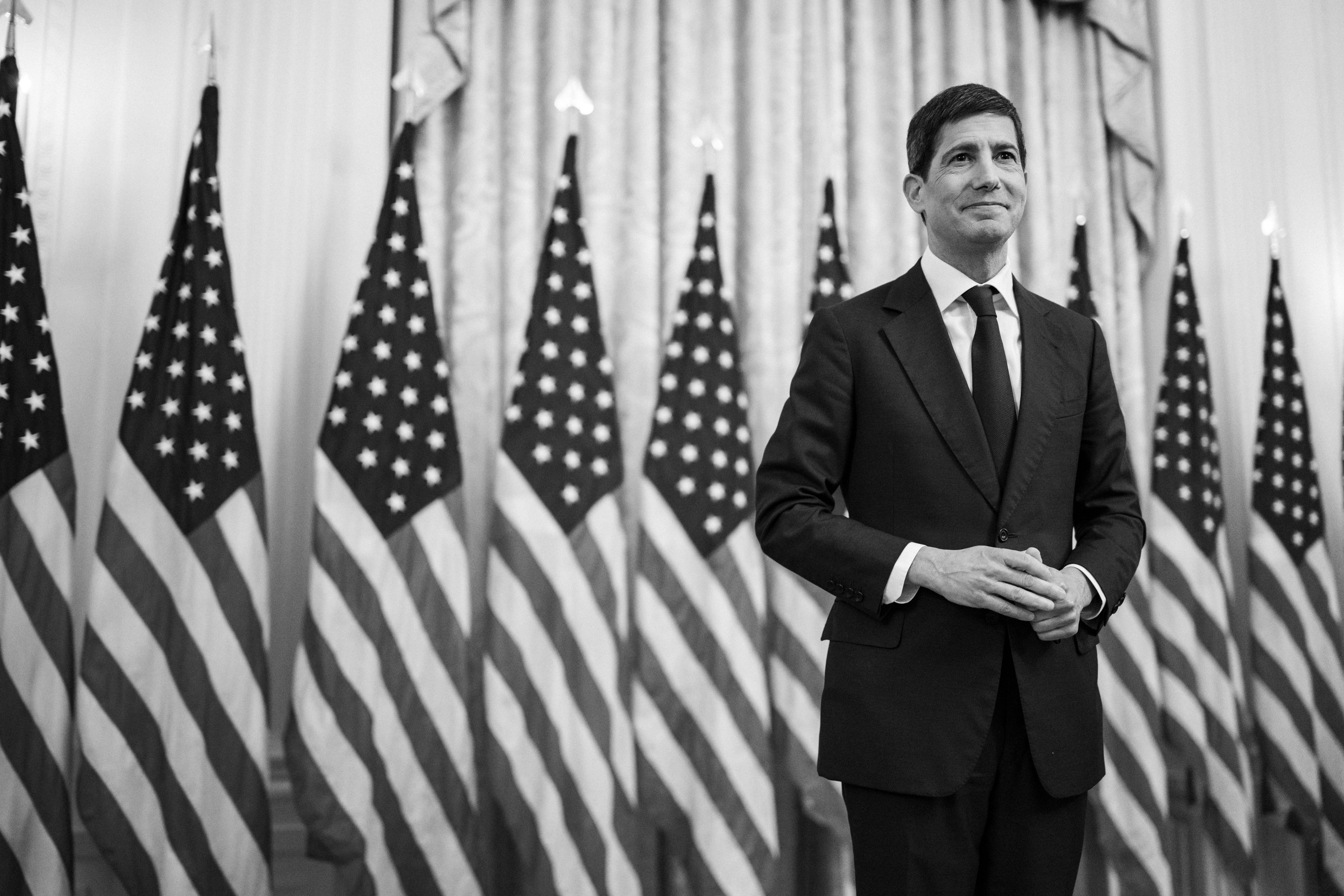
Fed Chair Kevin Warsh took the reins amid a rapid rise in inflation. Image source: Official White House Photo by Daniel Torok.
However, Wall Street's bull market may be more tenuous than investors realize, thanks largely to a surge in inflation.
The Iran war is wreaking havoc on prices
Although former Fed chair and now Governor Jerome Powell partly blamed elevated inflation on President Donald Trump's tariffs, the bulk of the pricing pressures Americans are dealing with right now trace back to the Iran war.
Trump's decision to attack Iran on Feb. 28 led the latter to close the Strait of Hormuz to most commercial vessels. This effectively halted the movement of 20 million barrels of petroleum liquids each day, representing about 20% of global demand.
⛽ Average U.S. gas prices per gallon on May 6, per AAA:
-- NBC News (@NBCNews) May 6, 2026
• Regular: $4.54 (⬆️ $1.56 since war in Iran began on Feb. 28)
• Premium: $5.39 (⬆️ $1.85 since war began)
• Diesel: $5.67 (⬆️ $1.81 since war began)
Energy markets reacted swiftly, with crude oil prices soaring and fuel prices following suit. Gas prices rose at the fastest pace in more than three decades, while diesel prices climbed even more steeply. Consumers have undoubtedly felt a pinch at the pump over the last three months.
The concern with energy supply shocks is that they typically come in waves. For instance, the adverse effects of inflation on businesses often lag a few months. But once the impact of higher transportation and production costs is fully felt, inflation can rise further.

Image source: Getty Images.
The Fed's June inflation forecast isn't terrible (but it's not good news, either)
In February, before economic data reflected the impact of the Iran war on prices, trailing 12-month (TTM) inflation was just 2.4%. By April, TTM inflation had jumped to 3.8%. The Fed's May forecast calls for a 38-basis-point jump to 4.18%. The May inflation report is due out at 08:30 a.m. ET on June 10.
But the Fed's initial June inflation forecast is the real eyebrow-raiser. According to the Federal Reserve Bank of Cleveland's Inflation Nowcasting tool, TTM inflation for June is estimated to decline by 13 basis points to 4.05%! It's the first time the Fed's forecasting tool has projected a dip in TTM inflation since the start of the Iran war.
US inflation is red hot.
-- The Kobeissi Letter (@KobeissiLetter) May 28, 2026
1. CPI Inflation: 3.8%, highest since May 2023
2. PCE Inflation: 3.8%, highest since May 2023
3. PPI Inflation: 6%, highest since March 2023
4. Services Inflation: 3.4%, highest since Sept 2025
5. Shelter Inflation: 3.3%, highest since Sept 2025
6.... pic.twitter.com/u8kaSN54G3
While this is a positive development, it doesn't mean the U.S. economy or Wall Street are out of the woods. Core Personal Consumption Expenditures, arguably the Fed's favorite measure of inflation, is expected to tick up by one basis point to 3.34% in June (relative to the May projection). The delayed effects of inflationary pressure on businesses have yet to fully play out.
Though the June inflation forecast isn't nightmare fuel for the stock market, it still points to the growing likelihood that Warsh and the Federal Open Market Committee will move away from their easing bias and possibly raise interest rates later this year. Higher lending rates may prove disastrous for the Dow, S&P 500, and Nasdaq Composite, given that debt is helping to finance the AI data center build-out amid a historically pricey stock market.