For more than a year, the shortage of memory and storage chips has been a one-way windfall. As artificial intelligence (AI) data centers soaked up the world's supply, prices for these chips have about doubled over the past year, and the companies that make them -- Micron (MU -0.66%) among them -- have been some of the biggest winners of the AI boom. Now those rising costs are landing on the companies that buy the chips.
Apple (AAPL -1.11%) buys an enormous amount of memory for its devices. So when memory prices jump, Apple's costs jump too. CEO Tim Cook made that plain this week.
"Unfortunately, price increases are unavoidable," Cook said in a recent interview with The Wall Street Journal. "We're doing our best to mitigate the huge increases that are being passed to us, and we've been trying to shield our customers from the increases, but the situation has become unsustainable."
That's a notable admission from a company that has spent two decades holding the line on prices.
And it raises a fair question with the stock near a record high: how much of this problem is already priced in?
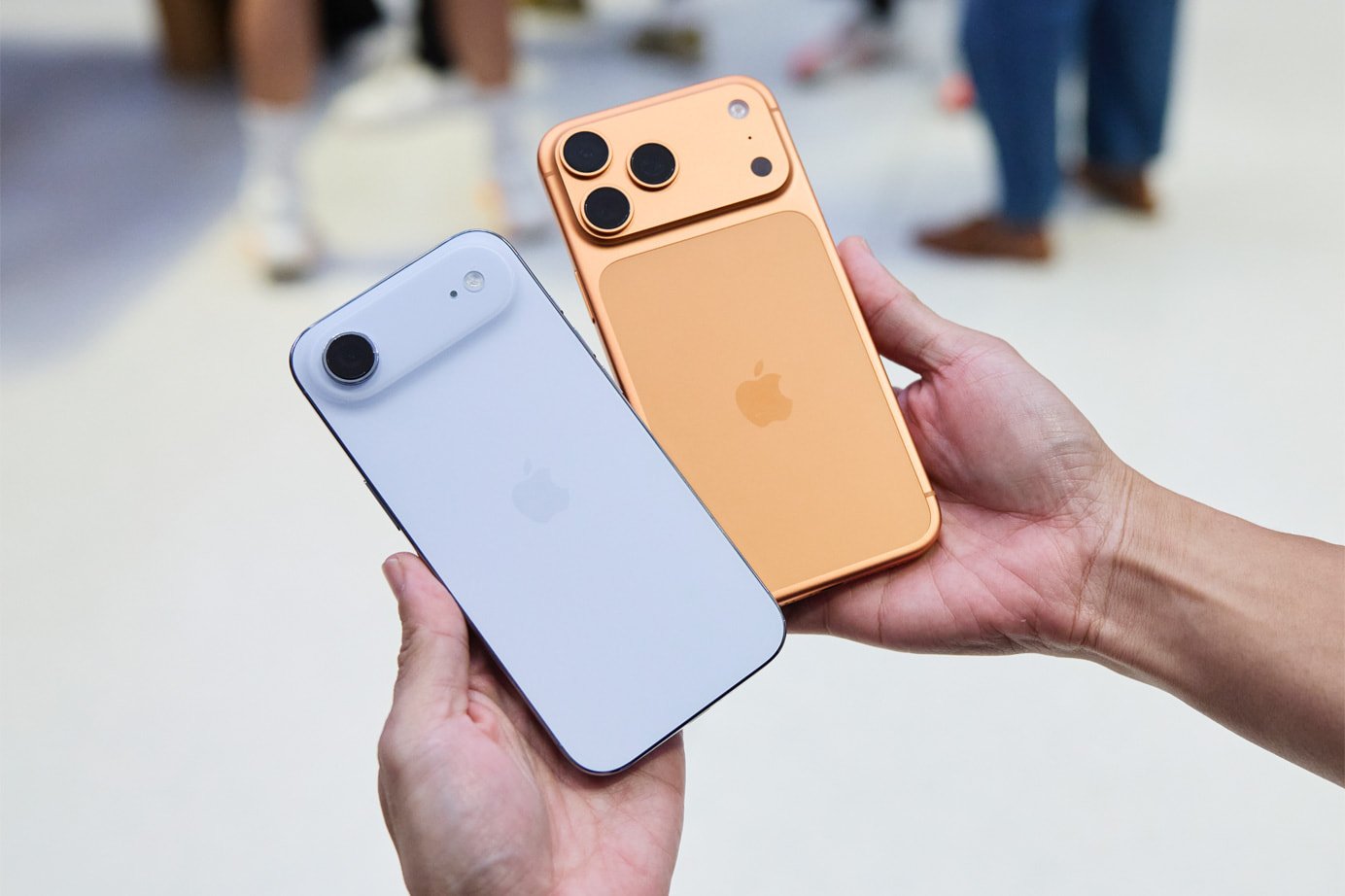
iPhone Air and iPhone 17 Pro. Image source: Apple.
A cost Apple can't design around
How much could this impact Apple?
Research firm TechInsights estimates the memory and storage inside a top-tier iPhone could climb from about $50 in last year's model to $200 in this year's -- four times as much.
What makes this tough for Apple is that it can't engineer the problem away. Sure, it designs its own processors, but the memory that runs alongside them is a commodity it buys from outside suppliers and builds into its chips. Better silicon doesn't make that memory any cheaper.
Apple's products gross margin -- the share of hardware revenue left after build costs -- fell to 38.7% in its fiscal second quarter of 2026 (the period ended March 28, 2026), down 2 percentage points from the prior quarter, a slide the chief financial officer tied partly to higher memory costs.
And management expects it to get worse.
"Beyond the June quarter, we believe memory costs will drive an increasing impact on our business," Cook said on the company's fiscal second-quarter earnings call.
New memory factories aren't expected to ramp up until 2027 at the earliest, so this isn't a headwind that clears in a quarter or two.

NASDAQ: AAPL
Key Data Points
The lever Apple can pull
Apple's response comes down to the one thing it fully controls: the price tag. So far, it has leaned on chips it bought ahead of time -- what it calls carry-in inventory -- to soften the March-quarter hit.
But Cook's word for where things are heading was "unsustainable," and The Wall Street Journal's own analysis suggested the next iPhone Pro could start at about $1,299, about $200 above today's model.
The complication is that Apple would be raising prices in a smartphone market where the number of phones sold is already expected to shrink this year. And Apple has usually absorbed cost increases rather than risk demand, holding base iPhone pricing steady even through tariffs. Asking buyers to pay up as the memory shortage drives up the cost of every device is a different test.
But there's a strong case that Apple pulls it off. Its brand and tightly linked ecosystem arguably give it more pricing power than almost any hardware maker, and demand hasn't been soft. The company's fiscal second quarter brought record March-quarter revenue of $111.2 billion, up 17% year over year, with iPhone revenue up 22% to about $57 billion. Even Greater China, a region many investors had written off, grew 28%.
But that strength has also been part of the reason that shares have become pricier recently.
As of this writing, shares trade at about $298, not far from the 52-week high of about $317 they reached earlier this month, and at about 36 times earnings. That's a rich valuation -- and investors are paying it just as the company warns that a commodity it doesn't control will press on margins.
Ultimately, I think Apple is still one of the best-run businesses around, and its scale leaves it better placed than most to ride out a shock like this. Further, I believe Apple may prove to investors that it has significant untapped pricing power -- something that could actually be a boon for the stock.
Of course, I could be wrong. Given the strong momentum of the iPhone business heading into this potential price increase, I think the odds are good that Apple's business will hold up just fine, if not exceptionally well, as it navigates this memory challenge.