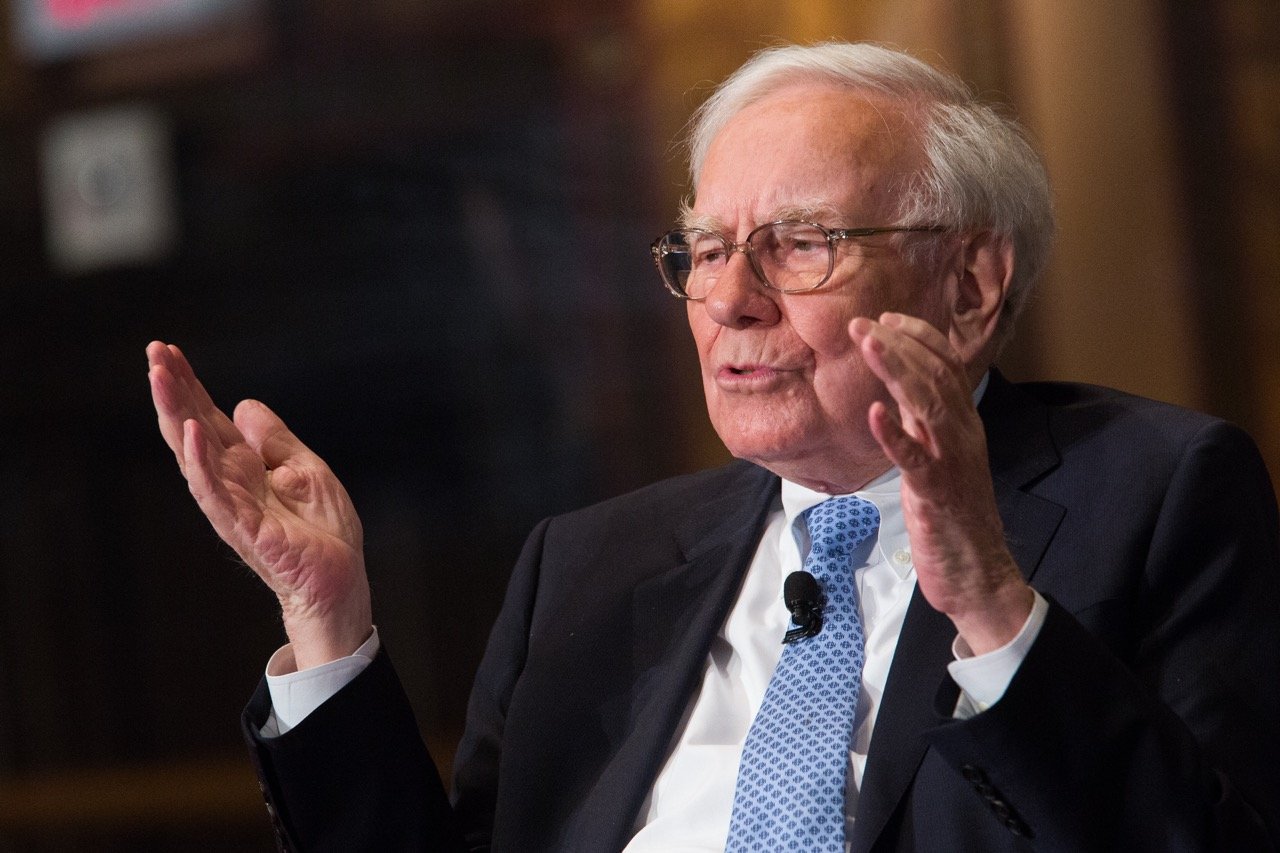
Warren Buffett has never believed in owning a little bit of everything. Berkshire Hathaway's (BRKA +1.24%)(BRKB +1.13%) latest 13F filing shows just how far the famed investor leans the other way. Of a $263 billion U.S. stock portfolio, about 67% (more than two-thirds) sits in just five companies.
And that concentration isn't a quirk of one quarter. It's how the Oracle of Omaha has run Berkshire's money for decades, and he has been unusually direct about why. Here's a closer look at where the money sits, why Buffett runs the portfolio this way, and what everyday investors should (and shouldn't) take from it.

Image source: The Motley Fool
Five stocks, two-thirds of the portfolio
Berkshire's 13F, which covers its U.S.-listed stock holdings as of the end of March, lists a portfolio of only about two dozen companies.
At the top is iPhone maker Apple, a position worth about $58 billion, or about 22% of the portfolio. Integrated payments company American Express is second at about $46 billion, or about 17%. Those two names alone account for nearly 40% of the entire book.
Rounding out the top five are Coca-Cola at about $30 billion (about 12% of the portfolio), Bank of America at about $25 billion (about 10%), and Chevron at about $17.5 billion (about 7%). Add it all up, and five companies carry about 67% of a $263 billion portfolio.
The next tier includes Occidental Petroleum and a newer position in Alphabet -- a stake first disclosed in the third quarter of 2025 that Berkshire has kept building since. But the filing doesn't capture everything Berkshire owns. The conglomerate's Japanese trading house stakes trade overseas, and its dozens of wholly owned businesses never show up in a 13F at all.
Worth noting, too: Berkshire was sitting on about $397 billion in cash and Treasury bills at the end of March. The cash pile is now bigger than the entire stock portfolio.
Why Buffett concentrates
The concentration is deliberate, and Buffett spelled out his reasoning decades ago.
"We believe that a policy of portfolio concentration may well decrease risk if it raises, as it should, both the intensity with which an investor thinks about a business and the comfort-level he must feel with its economic characteristics before buying into it," he wrote in his 1993 letter to shareholders.
"Too much of a good thing can be wonderful," he added in the same letter, borrowing a line from Mae West.
In other words, Buffett would rather own a handful of businesses he understands deeply than a hundred he knows casually.
The top five fit that mold. These are companies he has owned and studied for years, in some cases decades, with durable brands and long records of paying dividends.
And the portfolio is still very much his. Buffett gave up the CEO title at the end of last year, but as Berkshire's chairman he told CNBC last week that it was he, not new CEO Greg Abel, who initiated the company's multibillion-dollar bet on Alphabet.

NYSE: BRKB
Key Data Points
What everyday investors should take from it
The obvious lesson is conviction. Buffett doesn't spread money across his 20th-best ideas. When he finds a business he believes in at a valuation he can accept, he sizes the position so that being right matters.
Of course, before anyone mirrors those weights, it's worth looking at what surrounds them. Berkshire's five-stock core sits on top of dozens of wholly owned operating businesses, a sprawling insurance operation, and that $397 billion pile of cash and Treasury bills. Berkshire could watch its biggest holding get cut in half and keep compounding. An individual investor with two-thirds of their savings in five stocks has no such cushion.
To me, the deeper lesson is the homework. Buffett's concentration is earned by decades of studying these specific businesses, and he can hold through downturns because he knows exactly what he owns. Copying the weights without that understanding replicates his risk, not his edge.
So, study the five names. They say a lot about what one of history's great investors considers durable, and a watchlist built from them is a fine place to hunt for stocks to buy and hold. The discipline behind the portfolio is worth copying, too. But buying five stocks at Berkshire's weights is a different decision entirely, and for most investors, it's probably the wrong one.