With surging demand, limited production capacity, and skyrocketing prices, the dynamic random-access memory (DRAM) market has been red-hot this year. While there are three big players in the memory space, SK Hynix (SKHY +3.03%) and Micron (MU +3.34%) stand out as the two pure plays for investors to choose from, as the third supplier, Samsung, is a massive conglomerate involved in a variety of businesses.
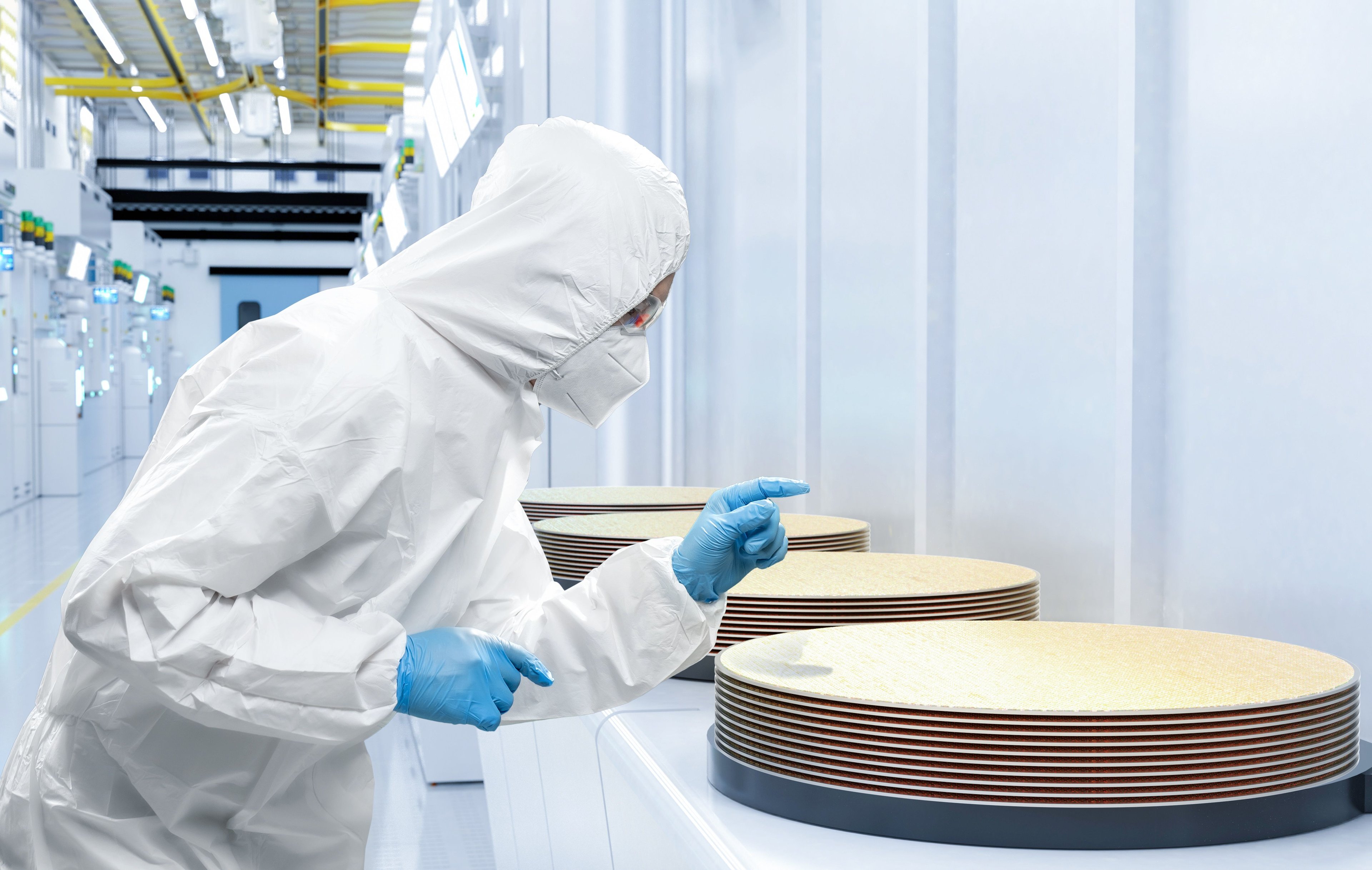
The DRAM market is being driven by surging data center demand for high-bandwidth memory (HBM), which is packaged with graphics processing units (GPUs) and other AI chips to help optimize their performance. Inference tends to be even more memory reliant than AI model training, so the pickup in this segment of the AI market is helping drive demand even more. With high prices and strong margins supported by demand that well exceeds what they are able to produce, the big three memory makers have turned most of their focus to increasing their HBM manufacturing capacity.
However, with HBM, GPUs, and other high-performance chips all being manufactured using extreme ultraviolet (EUV) lithography and only one company in the world, ASML, able to make the massive and complex machines required, there is a limit to how much chipmaking capacity can be added in a single year. On top of that, producing HBM requires upwards of three times the wafer capacity as ordinary DRAM, which further limits capacity increases.
With the big three DRAM makers focusing their efforts and capacities on HBM, ordinary DRAM is also in short supply. As a result, prices for all types of DRAM have skyrocketed. SK Hynix's CEO recently said that 2027 will bring the worst memory crunch in the industry's history and predicted that demand could outpace supply past 2030. This dynamic has been a huge boon to both SK Hynix and Micron, lifting their revenues, gross margins, and profits. Conditions could be even more favorable for them next year.
But for investors, the question is which stock looks like the better buy now.
SK Hynix: The market leader
SKHY SK Hynix
NASDAQ · As of 12:12 PM ET 10/26/26
SK Hynix is arguably the memory market leader. While Samsung has the highest market share for both DRAM and NAND, SK Hynix was the first to develop HBM, and it has a close partnership with Nvidia. It's also the GPU leader's main HBM supply partner. This relationship has helped it become the market share leader in what is perhaps the most important segment of the market, where it holds a nearly 60% share.
Overall, SK Hynix derives close to 80% of its revenue from DRAM and most of the rest from NAND (flash memory). Somewhat ironically, despite increasing HBM capacity and rising prices, standard DRAM server prices rose even more dramatically, so that segment made up a larger percentage of its DRAM revenue in Q1 than it did in the prior-year period. Overall, the company's revenue surged nearly 200% in Q1, while its gross margin went from 57% to 79%. That led to a nearly 400% surge in profit.
SK Hynix has started to lock in longer-term sales agreements for the first time, getting between three- and five-year agreements with no price caps, up-front payments from customers, and price floors. Meanwhile, it's looking to double its wafer capacity by 2030.
Micron: Booming growth
MU Micron Technology
NASDAQ · As of 12:15 PM ET 10/26/26

Similar to SK Hynix, Micron derived about 76% of its revenue from DRAM last quarter, with NAND making up the rest. Last quarter, its revenue more than quadrupled year over year, and gross margin jumped from 37.7% to 84.6%.
It, too, has started to sign long-term agreements, which it says now cover about 40% of its revenue. One area where it diverges from SK Hynix, though, is that its contracts have price caps, along with some take-or-pay provisions. Micron is also investing aggressively to increase its production capacity.
Image source: The Motley Fool
The verdict
SK Hynix is the HBM market leader, and its longer-term contracts without price caps could give it more upside if the up phase of this DRAM supercycle persists. Its American depositary receipts (ADRs) currently trade at a forward P/E of under 6, similar to Micron's valuation.
The knock on the stock, though, is that its ADRs trade at a big premium valuation to its stock in South Korea. This situation has been leading to some crazy price movements. I think SK Hynix is the better company, and its ADRs trade at a similar valuation to Micron, making it the better long-term buy. However, SK Hynix's trading dynamic is something worth considering when weighing whether to purchase the stock.