Through the end of 2025, Bill Ackman's Pershing Square compounded at a 15.9% annualized return since 2004, comfortably ahead of the S&P 500's 10.7% gomparable gain. His strategy is straightforward: Concentrate on buying stocks of high-quality businesses with dependable cash flows and with low risk of permanent capital loss.
Lately, Ackman has been leaning into megacap tech. Over the last year, Pershing Square Capital Management has almost entirely exited its stake in Alphabet (Google) and started new positions in three other "Magnificent Seven" names: Meta Platforms (META -3.72%), Amazon (AMZN -1.87%), and Microsoft (MSFT -1.93%). Ackman's firm also continues to hold a core stake in Uber Technologies (UBER -1.29%).
Together, those four stocks comprised the majority of Pershing Square's $13.7 billion portfolio in its first-quarter 13F filing. Given their growth potential, the portfolio looks capable of delivering market-beating returns in the coming years, though not without some important caveats.
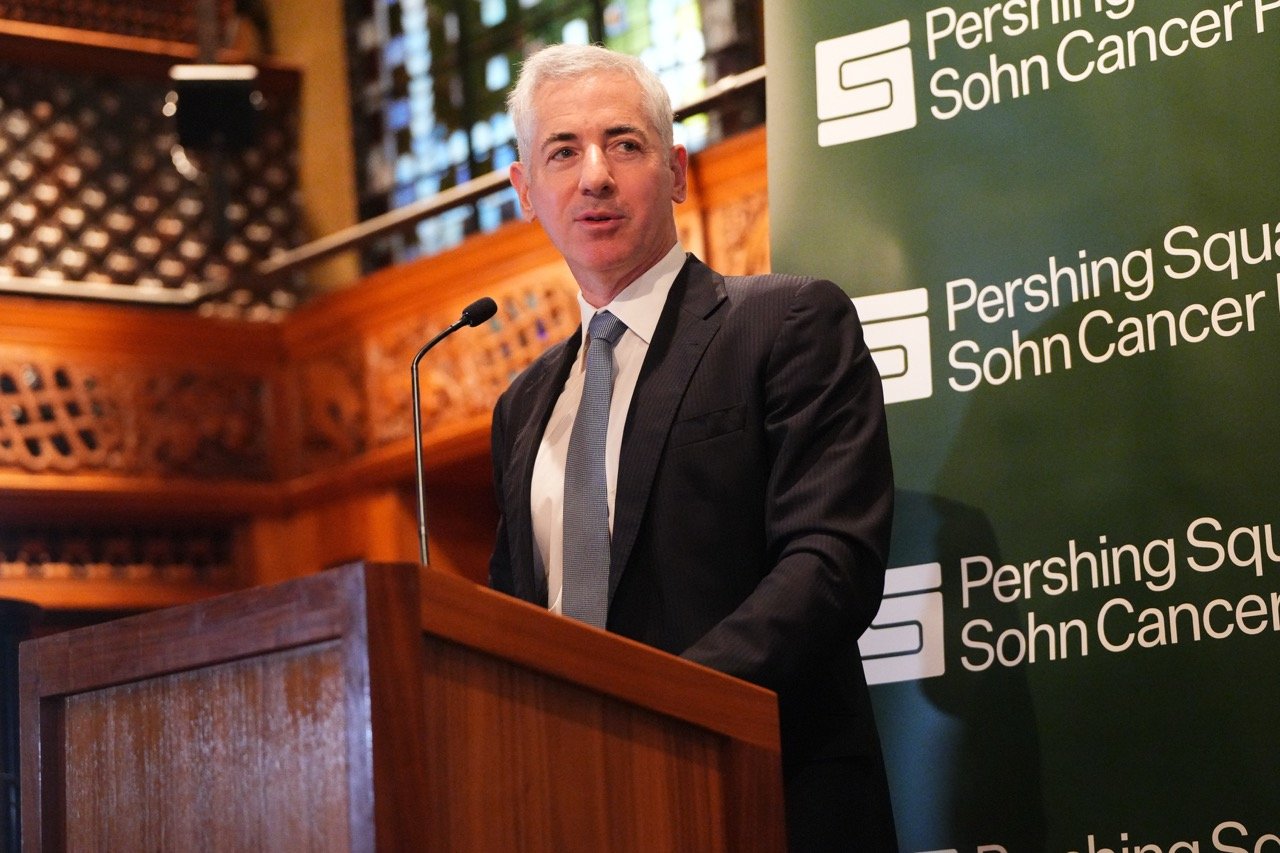
Bill Ackman. Image source: Getty Images.
A closer look at Meta, Amazon, Microsoft, and Uber
These newer tech positions will do a lot of the heavy lifting. So far, business momentum is on their side.
Meta's trailing-12-month revenue grew 28% year over year. The company is benefiting from AI-driven improvements in ad targeting and content recommendations, which are helping increase engagement and monetization. Even after its run, the stock trades at a reasonable forward price-to-earnings ratio (P/E) of about 19.
META Meta Platforms
NASDAQ · As of 4:00 PM ET 10/16/26

Amazon has accelerated trailing revenue growth to 16%, helped by demand for AI-related cloud services and steadier growth in e-commerce. Amazon Web Services (AWS) remains its primary profit engine with roughly 22.8 times forward earnings. Ackman appears to be betting the market is still underpricing AWS' earnings power.
Microsoft closed fiscal 2026 (ending in June) with revenue up 18%. Demand remains strong across productivity software and Azure, as enterprises continue to modernize IT and add AI capabilities. Shares have rebounded but still trade at a fair 26 times forward earnings.
Uber continues to lead in ride-hailing and delivery. Last quarter, gross bookings rose 24% year over year, while adjusted earnings climbed 35%. The next opportunity is autonomous transportation, where Uber is positioning itself as a distribution platform, but it will compete with players like Alphabet's Waymo and Tesla. Ackman seems to view Uber as undervalued at just 23 times forward earnings.
Can Pershing Square keep winning?
Taken together, these core tech holdings look reasonably priced relative to their growth. Analysts expect earnings to rise anywhere from about 16% annually (Microsoft) to 32% (Uber). If valuations hold roughly steady, the stocks could largely follow earnings over time.
The rest of Ackman's portfolio -- including Hertz, Howard Hughes, and Restaurant Brands -- is more tied to consumer health and the broader economy. Those positions are the bigger wildcards, but a growing economy over the next several years would be a meaningful tailwind.
The main risk for the tech group is that the massive growth in AI infrastructure spending fails to translate into durable profit growth. But it is difficult to see how the big tech companies won't succeed in an AI-driven economy, given their control of substantial compute capacity. With current operating momentum, reasonable valuations, and solid earnings expectations, Pershing Square could be well-positioned to extend its strong run in the years ahead.