Space Exploration Technologies Corp (SPCX +1.25%) released its first earnings report as a public company earlier this month.
The results were muddled. On one hand, revenue of $7.8 billion soared 92% from the same quarter a year ago. On the other hand, capital expenditures also soared to nearly $18.7 billion, up from roughly $2.8 billion a year ago and about $10.1 billion from the prior quarter.
However, the financials are only a small part of the story as the company ramps up its various business lines. Investors may have been more interested in what Chief Executive Officer Elon Musk had to say on the company's earnings call.
Here was the most shocking piece of information Musk divulged.
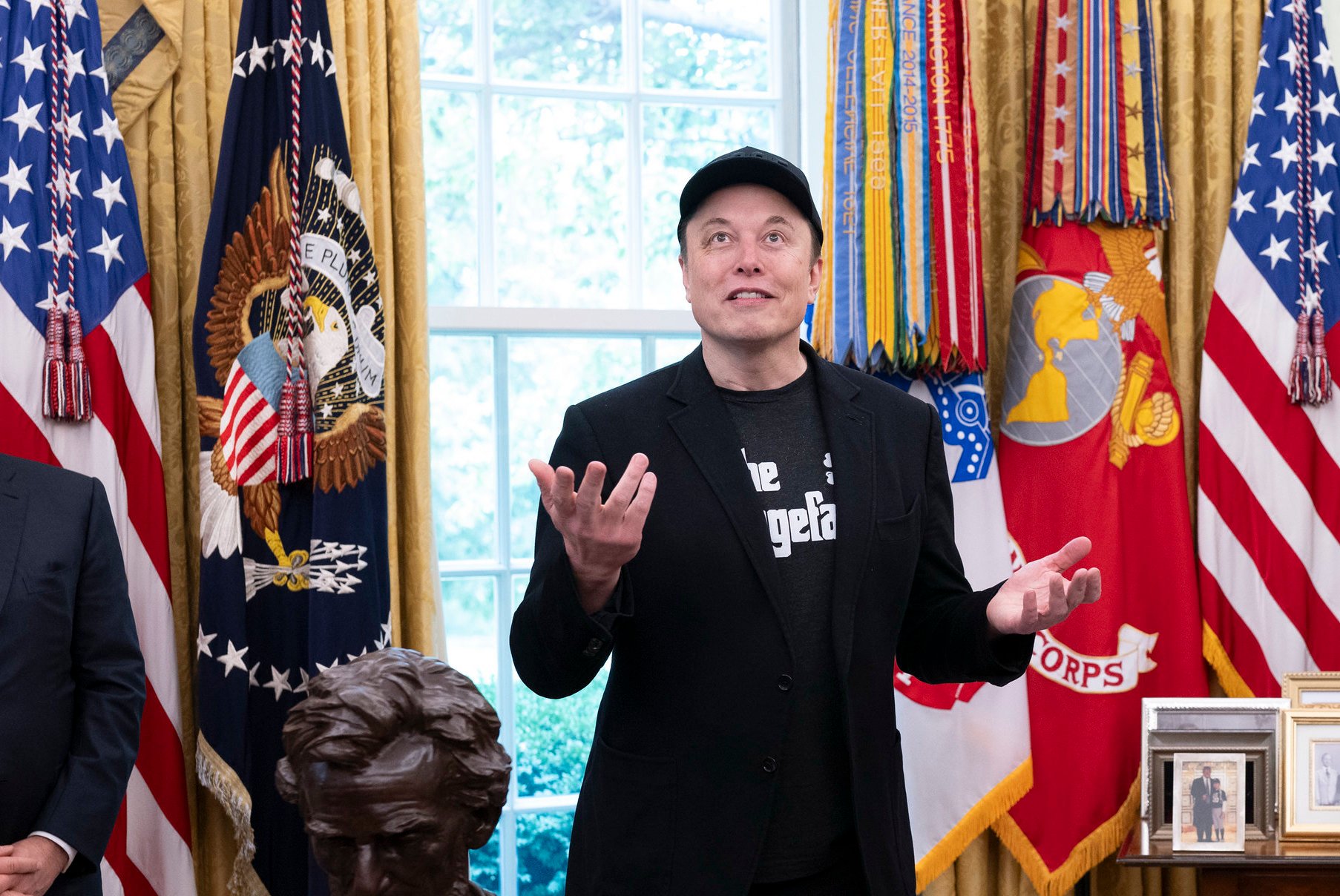
SpaceX CEO Elon Musk. Image source: The White House.
The company expects to ramp up AI compute incredibly fast
SpaceX runs a slate of businesses, one of which is the artificial intelligence (AI) division, which the company acquired through its purchase of another Musk company, xAI. XAI also includes several businesses, such as the social media platform X, Grok Intelligence, and the company's data center business.
Although Musk hopes to eventually launch data centers in space, which would ideally take advantage of the sun for power and the natural environment of space to keep the chips cool, SpaceX already has data centers on Earth.
SpaceX's Colossus data center group includes facilities in Tennessee and Mississippi with roughly 1 to 1.4 gigawatts (GW) of capacity. SpaceX has already struck major compute lease deals with Anthropic and Alphabet that could collectively generate roughly $2.2 billion of revenue per month.
And this is just the beginning, according to Musk, who told Wall Street analysts on SpaceX's earnings call that the company's terrestrial data center business should ramp quickly. Musk said he expects SpaceX to end this year with 2 GW of compute and then get close to 10 GW of compute by the end of 2027.

NASDAQ: SPCX
Key Data Points
Interestingly, when providing this outlook, Musk described it as "...our cumulative compute online...," implying that this compute could be ready for monetization.
That shocked me and probably most investors because building the data centers and getting them online are two completely different things. Building one is tough enough when you consider securing land and obtaining all the necessary permits, especially given the public pushback on data centers.
For instance, take the popular neocloud stock Nebius. Nebius is poised to have more than 4 GW of contracted compute power by the end of the year, but only have 800 megawatts (MW) to 1 GW fully online by year-end.
Now, Musk has argued that SpaceX is arguably the best at building data centers.
"In addition, of course, we are providing compute to others, and we are building and deploying compute, I think, faster," he told analysts on the earnings call. "Our rate of growth certainly is faster than anyone else. Our efficiency of compute deployment, I think, is also the highest."
It would be a heroic effort
Building and bringing online anywhere near 10 GW of compute by the end of 2027 would be an absolutely heroic effort.
The independent research firm SemiAnalysis estimates that building 10 GW of compute could require $300 billion to $500 billion of capital expenditures. However, the firm sees this as possible and believes it could lead to SpaceX hitting an annual revenue run rate of $300 billion, assuming only half of the compute capacity in 2027 is monetized.
This still would be an incredible feat. If it materializes or gets close, the stock should soar. However, although Musk has accomplished some pretty impressive things, he rarely does it on his projected timeline.
Investors should keep this in mind before deciding to invest in the stock, which is going to be risky and likely quite volatile, given the company's towering valuation of $1.8 trillion (as of Aug. 12).