This week, Eli Lilly (LLY +2.83%) announced a deal that will add to its already formidable drug pipeline.
The drug maker said it will acquire Merida Biosciences for $2.9 billion, beefing up its pipeline of potential treatments for autoimmune and allergic diseases. Merida is developing drugs that selectively degrade pathogenic autoantibodies, disease-causing agents that underlie a host of immune-mediated conditions. Many other autoimmune therapies broadly suppress the entire immune system, whereas the therapies Merida is working to bring to market target only specific pathogens without disrupting normal immune processes.
The company's leading therapy, MER511, is in Phase 1 development for Graves' disease and thyroid eye disease. About 3 million people in the U.S. have Graves' disease, and many of them go on to develop the eye condition.
Image source: Getty Images.
Lilly is already the leader in the rapidly growing global market for GLP-1 drugs, which treat both diabetes and obesity. Demand for GLP-1 drugs is enormous. The global market for obesity medicines reached $66 billion in 2025 and is projected to rise to $92 billion this year, according to healthcare research firm IQVIA. The market is forecast to reach between $105 billion and $200 billion by 2027 and continue to grow from there.
Lilly's appetite for acquisitions is voracious
The Merida acquisition is yet another addition to Lilly's portfolio. Since 2023, it has made some 26 acquisitions, many of them for more than $1 billion, of companies developing drugs and therapies in oncology, sleep disorders, immunology, infectious diseases, ophthalmology, pain, cardiology, inflammation, neurological diseases, obesity, and diabetes.
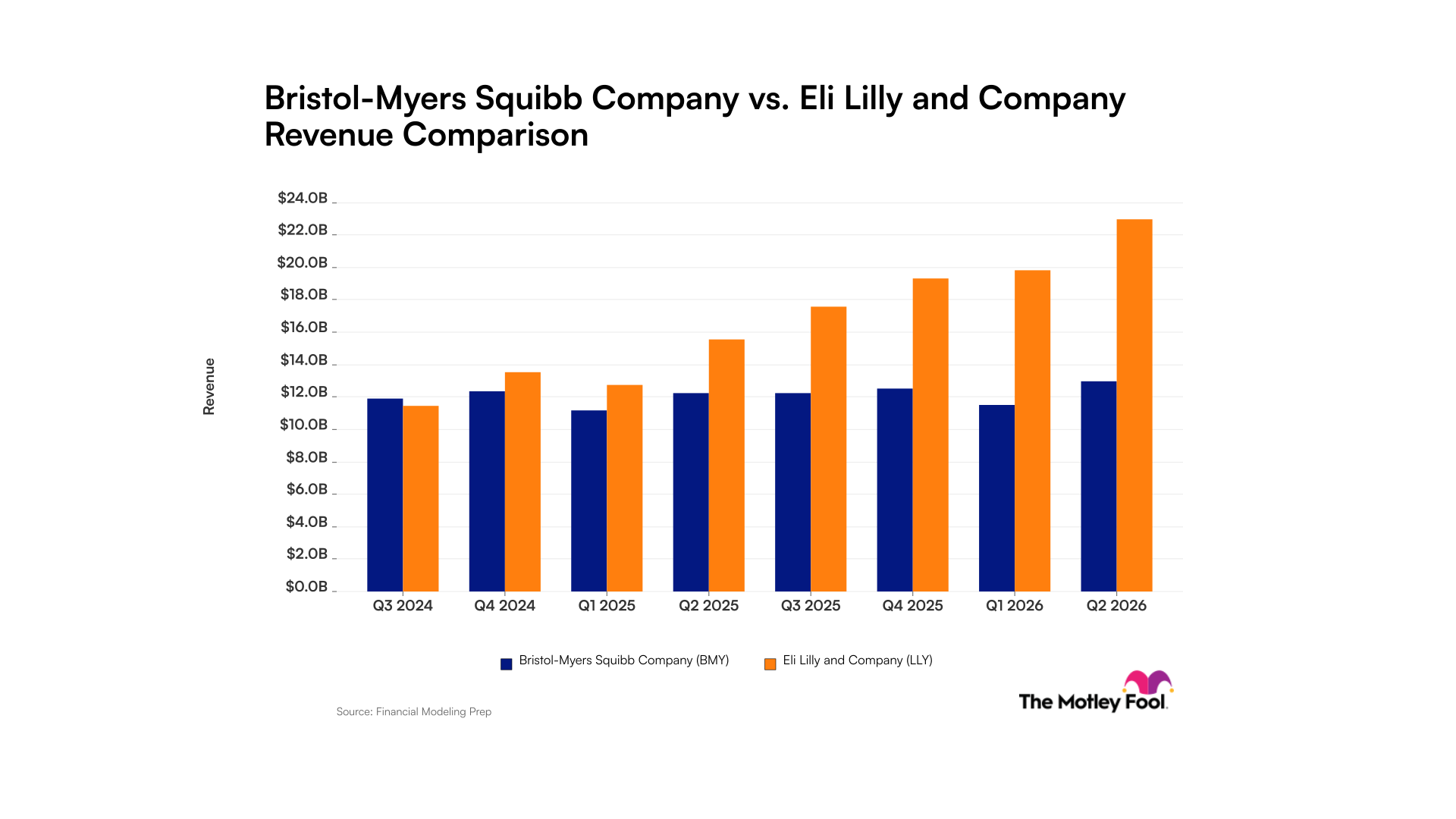
How has Lilly been able to afford all those expensive additions? It circles back to its enormous success with GLP-1 drugs. Last year, the company's drug tirzepatide, which is marketed as Mounjaro for type 2 diabetes and Zepbound for obesity, became the world's best-selling drug, surpassing Merck's Keytruda. The drug is generating enormous revenue for Lilly: Mounjaro revenue grew 91% to $9.9 billion in the second quarter, while Zepbound revenue rose 44% to $4.9 billion.
LLY Eli Lilly
NYSE · As of 4:00 PM ET 10/22/26

I firmly believe every investor should have exposure to healthcare stocks for several reasons. First, the global population -- particularly in wealthy countries -- is aging rapidly, which means more demand for healthcare, including pharmaceuticals. Also, many developing countries are getting richer, and as societies and individuals accumulate more wealth, they tend to spend a larger share of it on healthcare. Finally, healthcare companies are somewhat resistant to economic downturns, as people need healthcare no matter what the economy is doing, and will spend money on it. For all of those reasons, I think Lilly remains a very attractive investment.