Shares of Figma (FIG -0.41%) were moving higher last month, benefiting from a broad recovery in software stocks as fears of AI disruption faded and as the cloud design software delivered another strong earnings report, though the stock fell immediately after it.
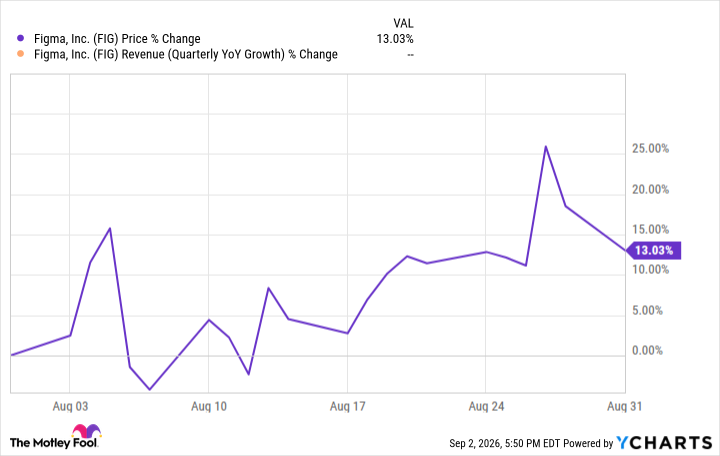
According to data from S&P Global Market Intelligence, the stock finished August up 13%. As you can see from the chart below, the stock was volatile over the course of the month, falling on its earnings report early in the month, but jumped on Aug. 13 and later in the month on Aug. 27 when Salesforce delivered a strong earnings report.
What happened to Figma
After Figma jumped on Aug. 4 in sympathy with Palantir, which surged following its earnings report, Figma tumbled on Aug. 6 on its own quarterly report, despite better-than-expected results.
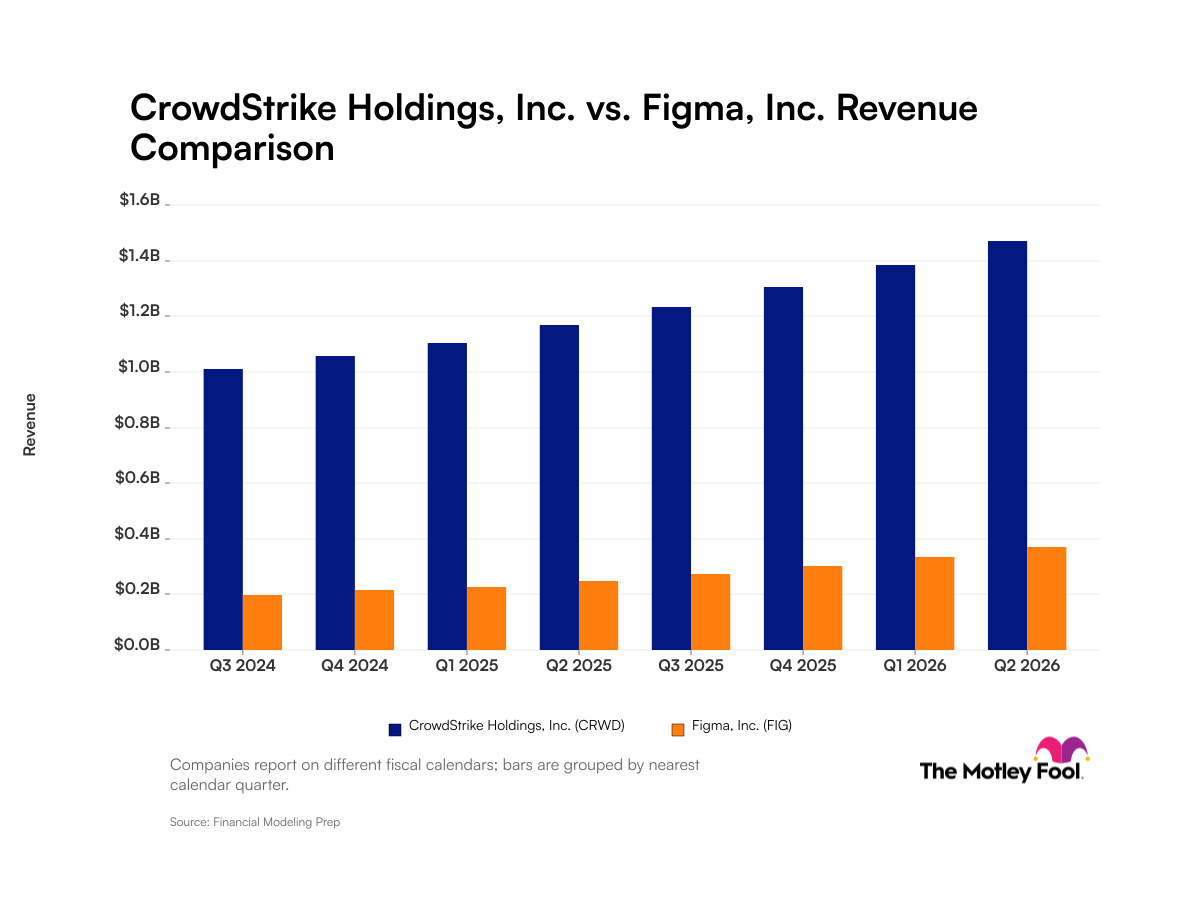
Second-quarter revenue jumped 48%, marking the third straight quarter of revenue acceleration, and the company credited new AI products like Code Layers for the strong growth. Revenue of $370.1 million beat the consensus at $351.5 million.
Overall customer growth was strong, and the company reported adjusted earnings per share of $0.08, which increased from break-even adjusted EPS in the quarter a year ago, and estimates at $0.04.
Figma even raised its guidance, calling for full-year revenue growth of 39% to $1.463 billion-$1.467 billion.
Despite the strong numbers, investors were wary of its spending as its cost of revenue more than doubled in the quarter, reflecting spending to run new AI features, and it reported a wide generally accepted accounting principles (GAAP) loss due to spending roughly 40% of revenue on stock-based compensation.
Still, Figma bounced back soon after that. The stock gained 11% on Aug. 13 after a softer-than-expected CPI report eased fears of interest rate hikes, and it jumped again on Aug. 27 in response to strong results from Salesforce, which lifted the software sector and showed it can continue to grow in the AI era.

Image source: Figma.
What's next for Figma
Figma is still struggling to convince investors it can continue to thrive in the AI era. While three straight quarters of accelerating revenue should help undo those concerns, its rising cost of revenue could be a problem.
Overall, the company continues to look well-positioned as it challenges Adobe for leadership in design software, but it will have to assuage investor concerns about margin compression.