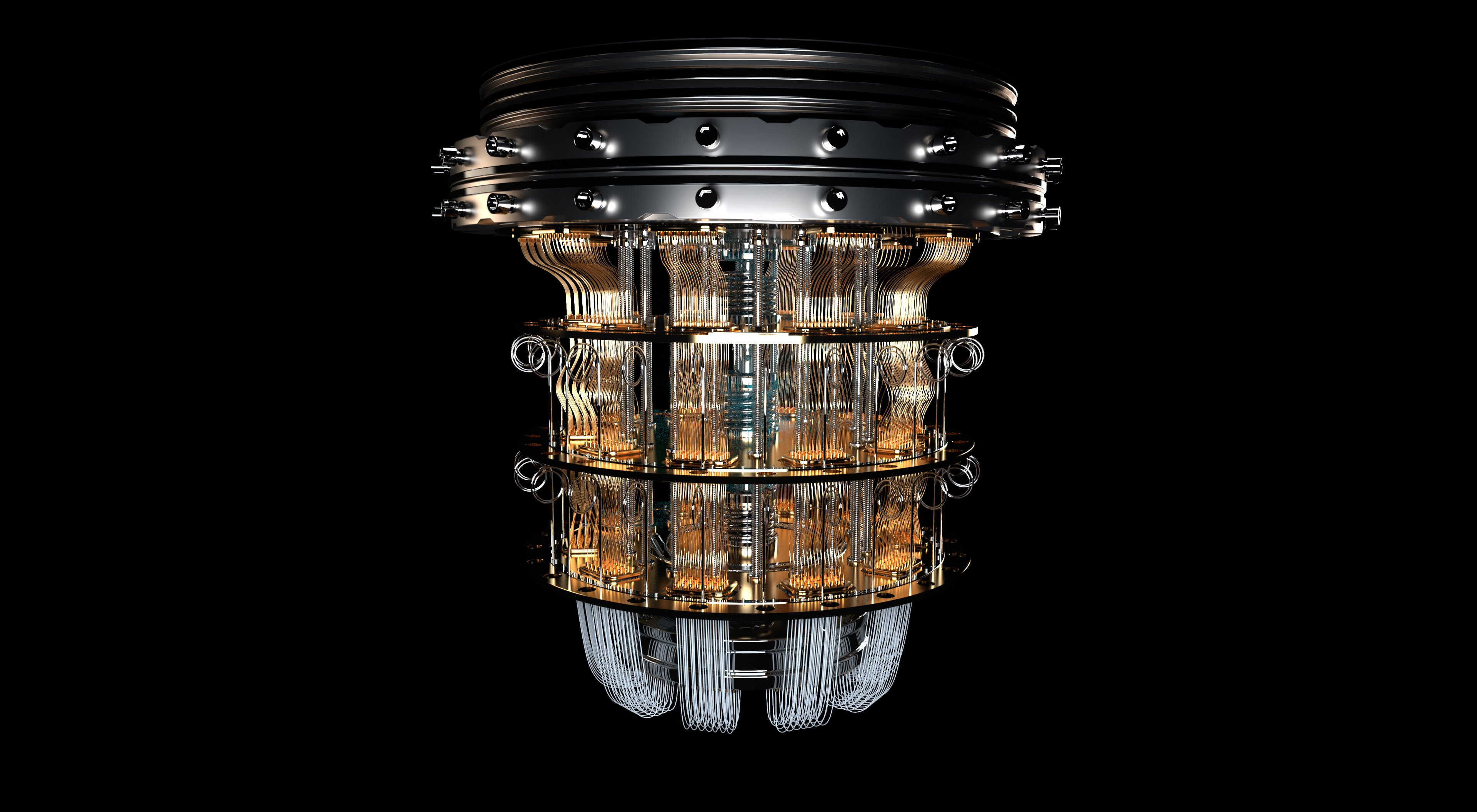
Quantum computing could be the next big wave in tech, and investors don't need to wait for the technology to be ready for mainstream use to find companies that could deliver life-changing gains from it. IonQ (IONQ +0.35%), D-Wave Quantum (QBTS +0.26%), and Rigetti Computing (RGTI +0.35%) could provide outsize returns to those who get in before quantum computing becomes a much bigger story on Wall Street.
IonQ is building a full-stack quantum platform
IonQ is attempting to become more than just a quantum computer maker. It's building a broader quantum platform spanning computing, networking, and security.
IONQ IonQ
NYSE · As of 4:00 PM ET 10/23/26

One of the biggest recent developments was its acquisition of SkyWater Technology, which allows IonQ to expand into semiconductor manufacturing and gives it a stronger edge as quantum systems grow more sophisticated. In the wake of the deal, IonQ raised its 2026 revenue guidance range to $450 million to $460 million, including SkyWater's contribution.
The company also announced that its Superion 256 will become the first quantum computing platform deployed at Nvidia's Accelerated Quantum Research Center, connecting directly to Nvidia's classical computing infrastructure in a hybrid environment.
But while IonQ focuses on full-stack computing, D-Wave is offering another way to bet on quantum computing.

Image source: Getty Images.
D-Wave is turning quantum computing into a commercial product
D-Wave has spent years solving real-world optimization problems using a niche form of the technology called quantum annealing. With that commercial focus, the company is working to put quantum computing into the hands of businesses today.
QBTS D-Wave Quantum
NASDAQ · As of 4:00 PM ET 10/23/26
In fact, the company has announced quantum computing deals with companies such as AT&T, Nasdaq's Verafin, and NTT DOCOMO, with use cases ranging from network optimization to financial applications.
However, D-Wave is also expanding beyond quantum annealing. The company laid out a roadmap to develop gate-model systems that could eventually address a much broader range of problems.
To that end, in January, D-Wave closed its acquisition of Quantum Circuits, a Yale University spin-out founded by Rob Schoelkopf, the physicist who developed transmon qubits -- a type of superconducting qubit being used by a host of players in the space, including IBM, Google, and Rigetti.
The deal gave D-Wave a dual-rail qubit design that CEO Alan Baratz says pairs the speed of superconducting qubits with the lower error rates typically associated with trapped-ion and neutral-atom qubits. "It's the best of both worlds," Baratz said.
That strategy has resulted in a vote of confidence from Washington. The U.S. Department of Commerce finalized an agreement providing up to $100 million in CHIPS and Science Act funding for D-Wave's quantum computing research and development (R&D).
Rigetti, though, gives investors a third way to play the quantum race.
Rigetti is betting on superconducting quantum computing
Rigetti is taking a different path, focusing on superconducting qubits and a full-stack approach that combines quantum hardware with the software and infrastructure needed to use it.
RGTI Rigetti Computing
NASDAQ · As of 4:00 PM ET 10/23/26
The company is working with Hewlett Packard Enterprise (HPE +2.20%) and the Pittsburgh Supercomputing Center on a new hybrid quantum-classical system supported by a National Science Foundation grant. Specifically, Rigetti is expected to provide a 9-qubit Novera quantum system, a type of hardware designed for R&D labs.
The company also signed a definitive agreement with the U.S. Department of Commerce for up to $100 million to accelerate R&D in superconducting quantum computing. It will use that funding in its efforts to address some of the biggest challenges in scaling quantum systems.
Plus, Rigetti is moving closer toward commercializing its technology. It established a dedicated systems delivery organization and appointed new operating and technology leadership to support customer development and execute its quantum processor road map.
The quantum opportunity is just getting started
Taken together, these developments show why quantum computing is becoming harder for investors to ignore. If the developers succeed in advancing it to the point that it becomes the next big thing in computing, IonQ, D-Wave, and Rigetti each could hand investors the kind of returns that build real wealth.