The Federal Reserve's monetary policy committee voted unanimously last month to raise its benchmark interest rate, the federal funds rate, by a quarter percentage point. Just about everyone believes that the rate hike was not a one-and-done event. Futures traders are pricing in one to two more quarter-point hikes by the end of this year (there are two more meetings), and several more in 2027.
Meanwhile, the yield on the two-year Treasury note has risen to 4.82%. Because that yield is the most sensitive to the Fed's interest rate, it suggests that the bond market collectively believes the Fed will raise its rate three to four more times over the next 12 months.
Finally, the members of the Fed's policy committee set projections that expect more rate hikes. So it seems the Fed is embarking on a full-on rate-hiking cycle. The question for investors, then, is: How will the stock market react to that cycle?
Well, there's extensive research on this topic, as you might expect. But I think the research that Schwab has done is pretty representative of it. The brokerage found that the S&P 500 index has experienced maximum drawdowns of 12% within six months of the first rate hike, and 14% within the first year.
The pace of the hiking cycle matters a lot
But those figures are averages, and historical market reactions to hiking cycles have depended heavily on the speed of the hiking cycle. If the Fed is aggressive and raises rates quickly, market damage tends to be worse. If, instead, it is more gradual with hikes, the damage has tended to be less.
Having listened closely to what Federal Reserve Chair Kevin Warsh has been saying since he took the helm at the central bank, I believe he will advocate for a gradual, less-aggressive approach. And if history is any guide, the rest of the committee will go along with him.
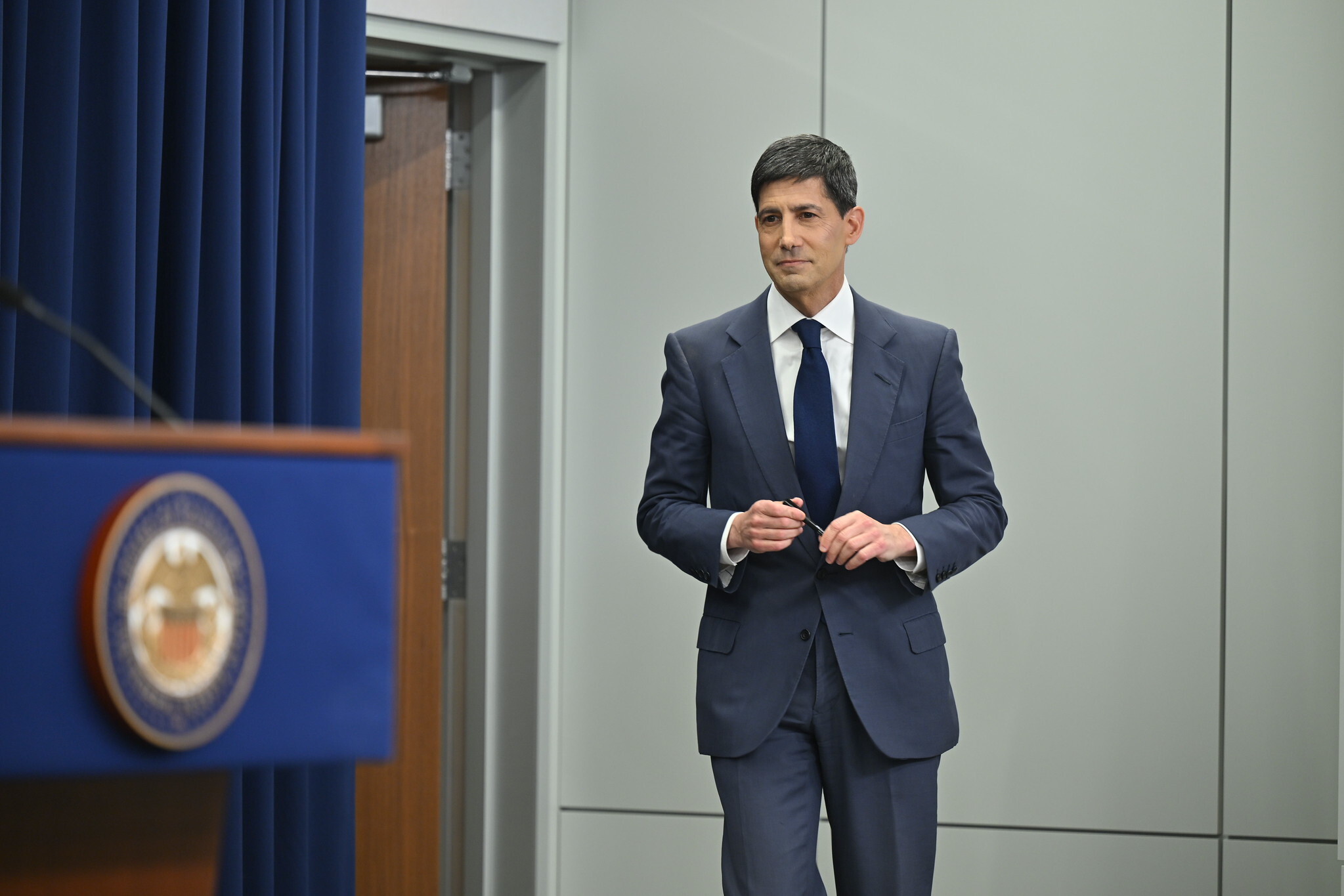
Federal Reserve Chair Kevin Warsh. Image source: The Federal Reserve.
In addition, the market volatility and any pullback or correction due to tightening cycles have historically occurred early in the cycle and have been short-lived. Then valuations stabilize and, if the inflation outlook has improved (after all, that's the goal of these rate hikes), investors become optimistic once again.
That's certainly the goal this time. And early results are promising. The Fed's first hike in this cycle was on Sept. 16. Since then, the S&P 500 has gained about 3%. Of course, the market expected that hike, and it remains unclear just how many more rate hikes the Fed will deliver. For the moment, however, I'm optimistic the Fed can normalize interest rates and slow inflation without crashing the stock market.