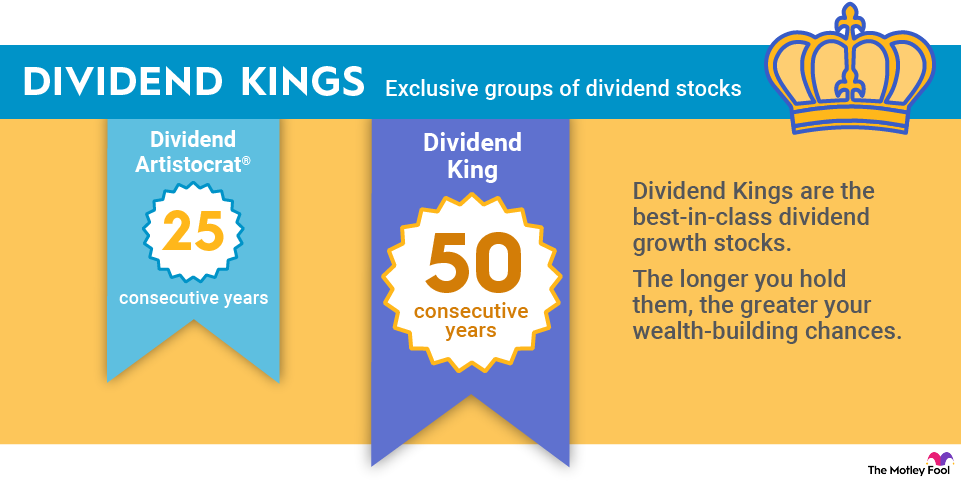
Colgate-Palmolive (CL +1.55%) has paid a quarterly dividend since 1895. Moreover, this consumer staples stock has 63 years of consecutive annual dividend increases under its belt. This growth streak makes it a Dividend King, or a stock with over 50 consecutive years of dividend growth.
With this long track record of payouts, investors pay attention when this consumer staples stock declares a dividend. On Sept. 17, Colgate-Palmolive declared its next quarterly dividend, payable Nov. 13, to shareholders of record as of Oct. 20, giving investors until Oct. 19 to purchase a position to qualify for the payout.
With this in mind, let's see how many Colgate-Palmolive shares you'd need to buy to generate $1,000 in yearly dividends.
Image source: Getty Images.
Colgate-Palmolive, its dividend, and the math behind $1,000 per year
Colgate-Palmolive currently has a quarterly dividend of $0.53 per share. Annualized, that's $2.12 per share. Divide $1,000 by that figure, and you get around 472 shares. An investor who owns 472 shares would collect around $1,000.64 in dividends annually.
CL Colgate-Palmolive
NYSE · As of 4:00 PM ET 10/16/26

Based on Colgate-Palmolive's share price of $91.61 at the time of writing, those 472 shares would cost approximately $43,240. This works out to a forward dividend yield of around 2.3%. Compared to some high-yielding dividend stocks, this yield may not sound particularly high, but consider the advantages of investing in lower-yielding dividend stocks with decades-long track records of dividend growth.
The long-term picture with durable dividend stocks
It's an understatement to say that reaching Dividend King status is a testament to a business's durability and dividend. Companies like Colgate-Palmolive, which have been able to raise payouts over decades, are fundamentally strong businesses that weather recessions, downturns, and more severe economic crises.
Colgate-Palmolive's dividend growth has averaged around 3.2% yearly for the past decade. If this trend holds, this stock's modest annual increases will compound, leading to the quarterly dividend contributing a greater percentage to overall returns. Past performance is not indicative of future results, but companies like Colgate-Palmolive have a strong chance of delivering steady total returns over time.