Micron (MU -5.63%) has been one of the biggest winners of the AI era.
Over the last year, the stock is up roughly 400%, and over the last three years, the stock has jumped 1,250%. Like other memory stocks, Micron has benefited from a shortage in memory chips, which has driven up prices and sent sector stocks soaring across the board. Among the winners are SK Hynix, Samsung, and Sandisk.
However, in recent months, some doubts have emerged about the memory boom. Micron stock peaked following its fiscal third-quarter earnings report and has struggled to return to that level, despite another blowout earnings report in September.
Micron's recent results are about as strong as any company in history. It just reported 379% revenue growth to $54.2 billion with an operating margin of 80.7%. Operating income jumped 1,100% to 43.8%.
Micron's operating income in its most recent quarter ranks above Apple, Alphabet, and Microsoft, and it's extraordinarily rare for any company to report an operating margin as high as 80%, meaning the company keeps four of every five dollars it earns in revenue, before interest and taxes. The spike in memory prices and surging demand are the primary reasons for those bumper results.
However, those numbers weren't enough to please investors, as the market is wary of the history of cyclicality in the memory sector, and they are betting that Micron's profits will come down significantly once the supply crunch eases.
The stock is now down 23% from its all-time high in June. Let's take a look at the stock's history to make an educated guess at what happens next.
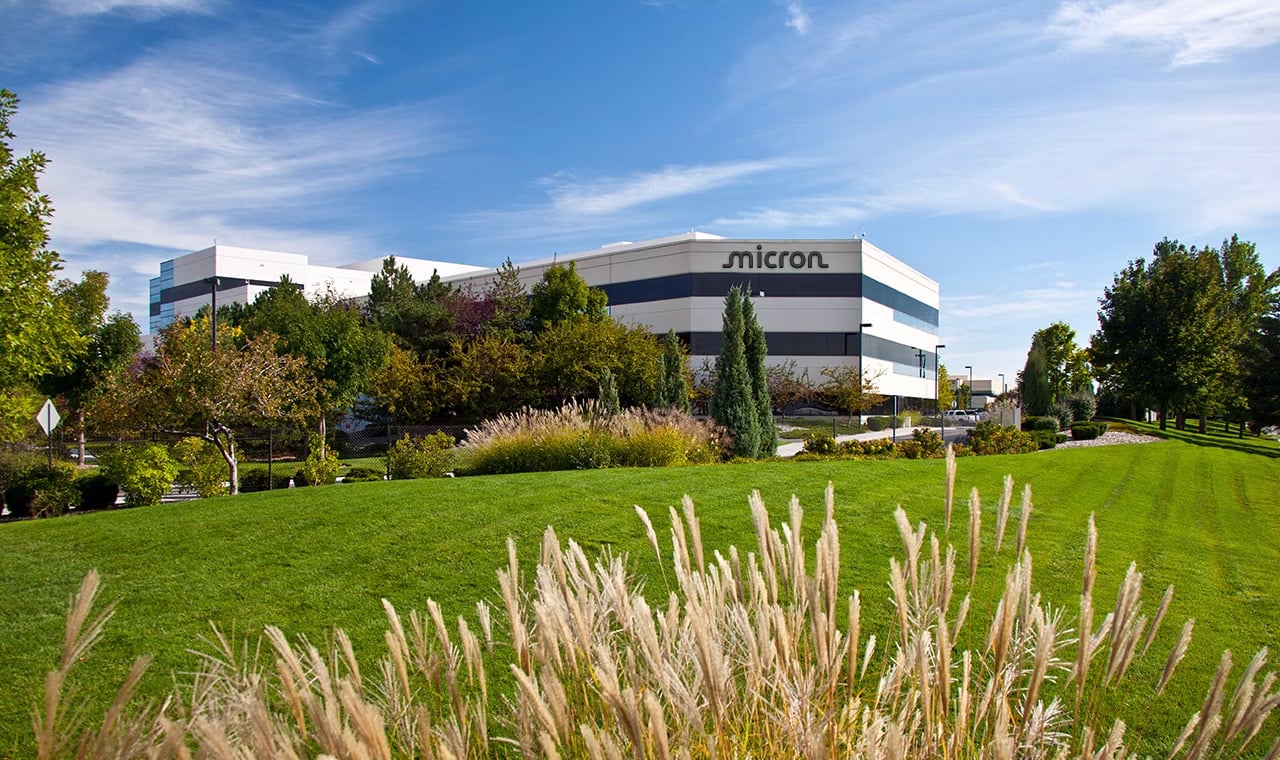
Image source: Micron.
What history says about Micron
In recent history, Micron has a strong track record at bouncing back from sell-offs like the current one. As you can see from the chart below, five times in the last decade, Micron has fallen by more than 23%, and each time the stock has recovered to an all-time high or near one.
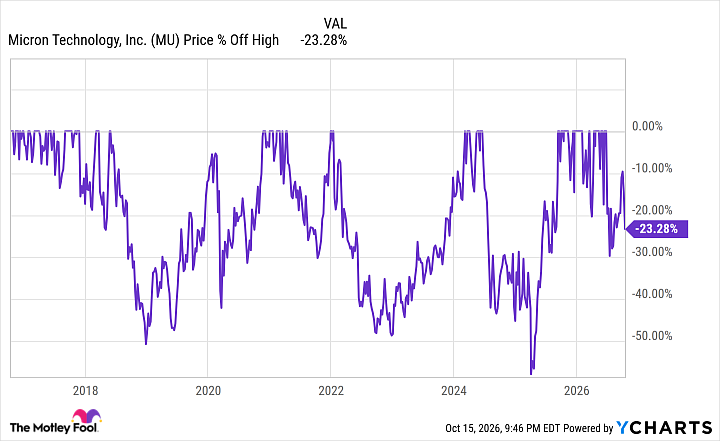
Looking at that chart, you can see that it sometimes takes Micron years to recover from 30%, 40%, or 50%, but it always does. That period includes multiple cycles in the memory sector, including 2022-2023, when Micron was losing billions of dollars a year due to a glut.
However, taking a longer view of history, the results are less encouraging.
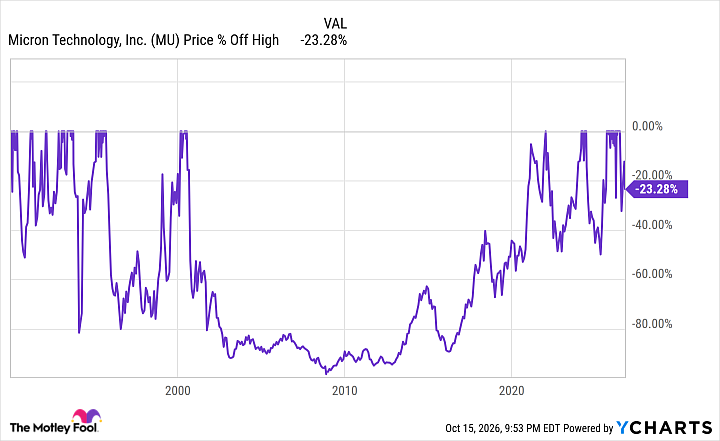
As you can see, the stock plunged following its peak during the dot-com boom, and didn't return to that level for another 20 years. For much of that time, Micron stock was down 80% or even 90% from its previous peak.
According to traditional valuation metrics, the stock wasn't even that expensive during its dot-com rally. Its price-to-sales ratio was about 8, near where it is today. Micron's price-to-earnings ratio was higher than it is today, and its EPS peaked shortly after the stock peaked, trending lower as the tech sector went bust.
MU Micron Technology
NASDAQ · As of 4:00 PM ET 10/16/26

Is the past prologue?
In investing, history can be informative, but it doesn't necessarily predict the future. Micron has gone through cycles before and seen prices fluctuate wildly, but some things are different now.
First, the company has locked in a significant percentage of its revenue through 2030 with strategic customer agreements, which should help buffer the downturn in the cycle when it comes.
Second, the AI boom still appears to be in its early stages. Future products like robotics will demand memory chips, and that, along with the growth of data centers, means that unit demand for memory has been forever changed. While prices will fluctuate, AI represents a sea change for the industry, which likely means the business won't return to pre-AI levels.
Third, Micron is betting on itself by investing $100 billion in a new megafab complex in upstate New York, which will be the largest chip manufacturing facility in the U.S. With supply constrained for at least the next couple of years, the new facility will put Micron in position to compete for growing memory demand as its competitors add capacity as well.
Micron has never grown this fast before or been this profitable, and the stock is also cheap at a forward P/E of less than 6. History won't tell us the shape of this cycle, though we know that Micron's prices and margins will eventually come down. Still, its strategic customer agreements and the growth of AI will support the long-term success of the business.
As Micron has done every time in the last decade, I expect it to recover from the current drawdown.