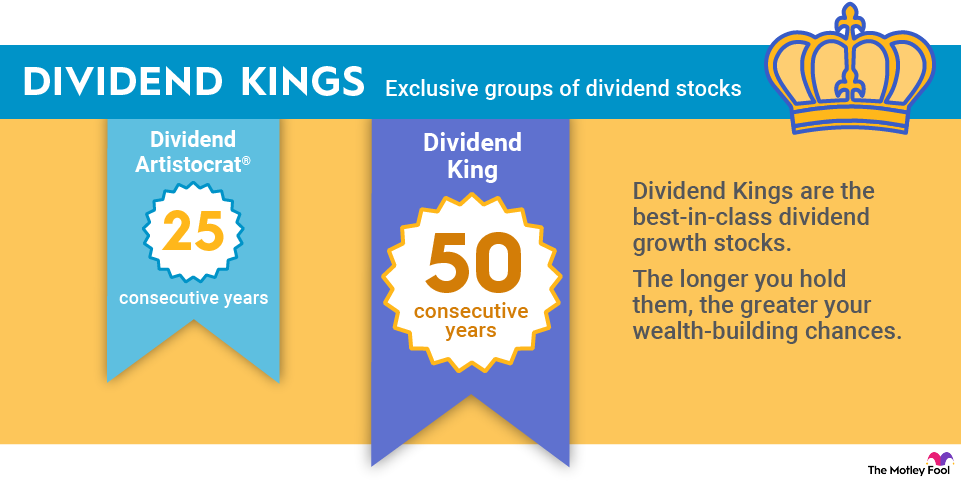
Whether you're a beginning investor or a near-retiree, the importance of purchasing stocks that pay dividends cannot be overstated. Not only do companies that have quarterly or annual payouts provide you with a steady stream of income, they also have the potential for capital appreciation. Simply put, dividend stocks can you give your portfolio what almost no other investment can -- both income and growth.
At The Motley Fool, we're avid fans of dividends -- and not just because we like that steady stream of cash. Studies have shown that from 1972 to 2006, stocks in the S&P 500 that don't pay dividends have earned an average annual return of 4.1%; dividend stocks, however, have averaged a whopping 10.1% per year. That is an incredible difference -- one that you'd be crazy to not take advantage of!
But investing in dividends can be dangerous -- companies can cut, slash, or suspend dividends at any time, often without notice. Fortunately, there are several warnings signs that may alert you, and these red flags could be the crucial factor in determining whether or not a company is likely to continue paying its dividend. Today, let's drill beneath the surface and check out Honeywell (NYSE: HON).
What's on the surface?
Honeywell International, which operates in the aerospace and defense industry, pays a dividend of 2.93%. That's certainly nothing to sneeze at, as the average dividend payer in the S&P 500, in 2009, sported a yield of 2%.
But what's more important than the dividend itself is Honeywell International's ability to keep that that cash rolling. The first thing to look at is the company's reported dividends versus its reported earnings. If you happen to see dividend payments that are growing faster than earnings per share, it may be an initial signal that something just isn't right. Check out the graph below for details of the past five years:

Clearly, there doesn't seem to be a problem here. Honeywell International has been able to boost its earnings at an adequate pace and keep its dividends in check at the same time.
The more secure, the better
One of the most common metrics that investors use to judge the safety of a dividend is the payout ratio. This number tells you what percentage of net income is paid out to investors in the form of a dividend. Normally, anything above 50% is cause to look a bit further. According to the most recent data, Honeywell International's payout ratio is 43.06%. It's obvious that, at least on the surface, there aren't any problems with Honeywell International generating enough income to support that nice dividend of 2.93%.
More important than checking out the payout ratio may be simply taking a peek at Honeywell International's cash flow. Free cash flow -- all the cash left over after subtracting out capital spending -- is used by companies to make acquisitions, develop new products, and of course, pay dividends! We can use a simple metric called the cash flow coverage ratio, which is cash per share divided by dividends per share. Normally, anything above 1.2 should make you feel comfortable; anything less, and you may have a problem on your hands. Honeywell International's coverage ratio is 4.01 -- which is more than enough cash on hand to keep pumping out that 2.93% yield. Barring any unforeseen circumstances, there really shouldn't be any major problems moving forward.
Either way, it's always beneficial to compare an investment with its most immediate competitors, so in the chart below, I've included the above metrics with that of Honeywell International's closest competitors. In addition, I've included the five-year dividend growth rate, which is also a very important indicator. If Honeywell International can illustrate that it's grown dividends over the past five years then there's a good chance that it will continue to put shareholders first in the future. Check out how Honeywell International stacks up below:
|
Company |
Dividend Yield |
Payout Ratio |
Coverage Ratio |
5-Year Compounded Dividend Growth Rate |
|---|---|---|---|---|
|
Honeywell |
2.93% |
43.06% |
4.01 |
8.97% |
|
United Technologies (NYSE: UTX) |
2.40% |
34.60% |
3.38 |
15.45% |
|
3M (NYSE: MMM) |
2.50% |
37.31% |
2.85 |
5.82% |
|
Boeing (NYSE: BA) |
2.59% |
123.47% |
2.84 |
11.38% |
|
DuPont (NYSE: DD) |
4.07% |
47.64% |
2.14 |
2.92% |
|
Emerson Electric (NYSE: EMR) |
2.78% |
52.32% |
2.92 |
10.17% |
|
Lockheed Martin (NYSE: LMT) |
3.47% |
31.04% |
3.27 |
20.46% |
The Foolish bottom line
Only you can decide what numbers you're comfortable with in the end; sometimes a higher yield and a higher reward means additional risk. However, when we look at Honeywell International's payout ratio compared to its peers, we see that it is a lower percentage than the average, which illustrates that its dividend is probably more sustainable. The bottom line, however, is to make sure that with anything -- whether it be a dividend, a share repurchase, or an ordinary earnings report -- you do your own due diligence. Looking at all of the numbers in the best context possible is just the best place to start.