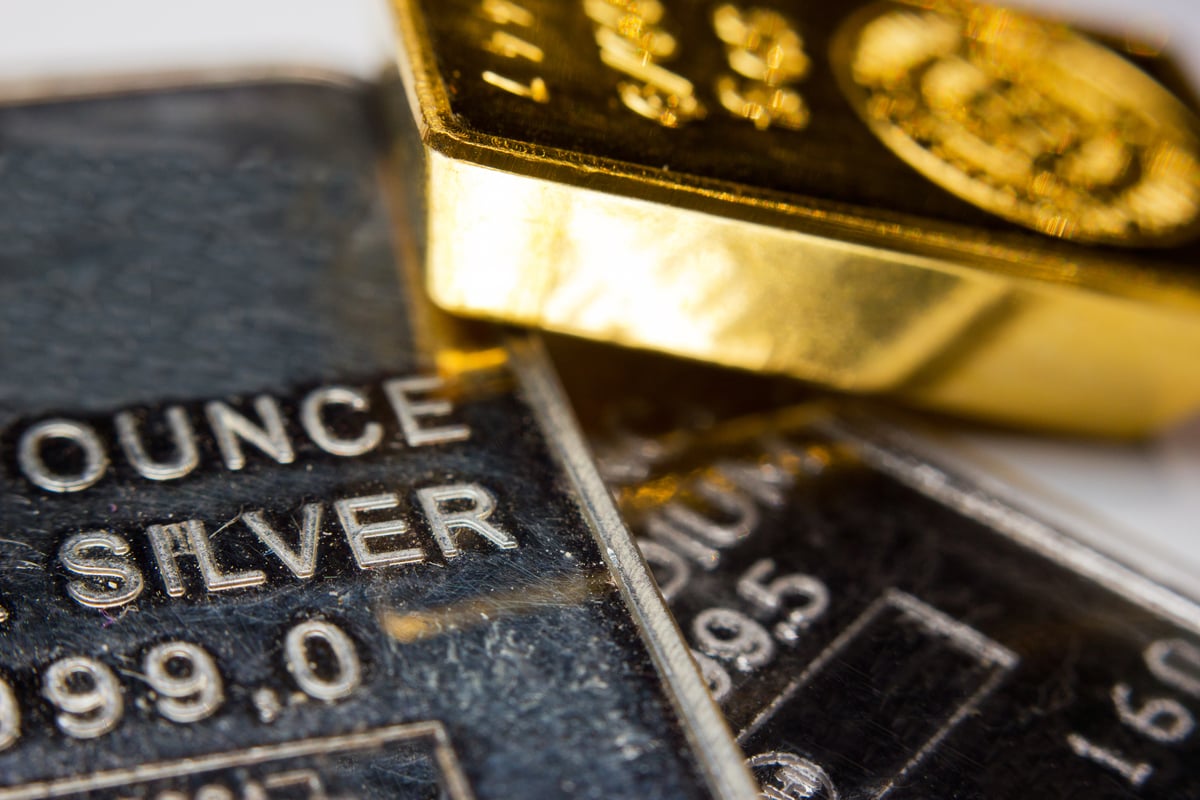
The iShares Silver Trust (SLV 1.83%) and iShares Gold Trust (IAU 1.95%) both offer direct exposure to precious metals, but SLV comes with higher fees, greater volatility, and a stronger recent return, while IAU stands out for lower costs and a larger pool of assets under management.
Both the iShares Silver Trust and iShares Gold Trust are designed to track the spot prices of their respective metals, offering investors a way to diversify portfolios with commodities. This comparison highlights key differences in cost, risk, and performance that may help investors decide which ETF better fits their investment approach.
Snapshot (Cost & Size)
| Metric | SLV | IAU |
|---|---|---|
| Issuer | IShares | IShares |
| Expense ratio | 0.50% | 0.25% |
| 1-yr return (as of 2026-02-06) | 138.9% | 73.0% |
| Beta | 0.38 | 0.09 |
| AUM | $47.3 billion | $78.0 billion |
Beta measures price volatility relative to the S&P 500; beta is calculated from five-year weekly returns. The 1-yr return represents total return over the trailing 12 months.
IAU is more affordable with an expense ratio of 0.25%, compared to 0.50% for SLV, which may appeal to cost-conscious investors. Both funds do not pay dividends, so yield is not a differentiator in this comparison.
Performance & Risk Comparison
| Metric | SLV | IAU |
|---|---|---|
| Growth of $1,000 over 5 years | $2,764 | $2,672 |
What's Inside
IAU offers pure-play exposure to gold, with 100% of its portfolio classified under real estate due to sector mapping conventions, though it physically tracks the price of gold bullion. The fund has been in operation for 21 years and is among the largest commodity ETFs globally, with nearly $80 billion in assets under management. Top holdings are not disclosed, but as a single-asset trust, investors are essentially buying direct gold exposure.
SLV, by contrast, provides targeted access to silver, with its entire composition mapped to the basic materials sector. Like IAU, SLV does not disclose individual holdings since it holds physical silver, and it carries no notable fund quirks or structural overlays. Both funds are designed for investors seeking straightforward exposure to the underlying metal price.
For more guidance on ETF investing, check out the full guide at this link.
What This Means For Investors
For most investors, it makes sense to own at least one precious metals exchange traded fund (ETF). That’s because precious metals can serve as an excellent way to diversify a portfolio and act as a hedge against inflation. Within the category, the iShares Silver Trust (SLV) and iShares Gold Trust (IAU) are two well-respected ETFs worth considering.
All that said, gold and silver have experienced extreme volatility in recent weeks and months. IAU, for example, which tracks the spot price of gold, has soared by more than 140% during the last three months before crashing by 36% at the start of February. SLV, which tracks the spot price of silver, has been more stable. SLV increased by 34% during the last three months, then plummeted by nearly 14%.
Despite these recent price fluctuations, IAU and SLV remain solid choices for investors looking to diversify their portfolios and hedge against inflation. IAU is more affordable with an expense ratio of 0.25%, versus 0.50% for SLV.
In summary, retail investors may wish to consider owning IAU or SLV depending on their risk appetite and their overall portfolio composition. IAU, with its exposure to gold, is a solid choice for more conservative investors looking to hedge against inflation. SLV, meanwhile, has a higher expense ratio, but it has also provided higher relative returns in recent years. Therefore, SLV could be the right choice for more aggressive investors seeking non-equity exposure for their portfolio.