Image source: The Motley Fool.
DATE
Wednesday, January 28, 2026 at 5:00 p.m. ET
CALL PARTICIPANTS
- Chairman and Chief Executive Officer — Bill McDermott
- President and Chief Financial Officer — Gina Mastantuono
- President, Chief Product Officer, and Chief Operating Officer — Amit Zavery
- Vice President, Investor Relations — Darren Yip
Need a quote from a Motley Fool analyst? Email [email protected]
TAKEAWAYS
- Q4 2025 subscription revenue -- $3.47 billion, up 21% quarter over quarter and year over year on a reported (non-GAAP) basis, and exceeding the high end of guidance by 1.5 percentage points.
- CRPO (Current Remaining Performance Obligations) -- Grew 25%, or 21% on a constant currency basis, two points above guidance, with a 1% contribution from Moveworks.
- Non-GAAP operating margin -- 31%, one point above guidance; full-year non-GAAP operating margin reached 31%, up 1.5 percentage points year over year.
- Free Cash Flow Margin -- 57% in Q4 (up 950 basis points year over year); full-year free cash flow margin was 35%, exceeding guidance by 1 percentage point.
- Deal Volume -- 244 deals over $1 million in NNACV; 603 customers generated over $5 million in ACV; customers over $20 million in ACV rose more than 30%.
- Net New ACV Growth -- Accelerated both quarter over quarter and year over year; technology workflows net new ACV also accelerated; ITOM grew net new ACV nearly 50% year over year, and security/risk drove nearly 40% net new ACV growth year over year.
- Now Assist ACV -- Surpassed $600 million, more than doubled year over year in Q4; deals over $1 million nearly tripled quarter over quarter; 35 deals over $1 million in Q4.
- Workflow and User Metrics -- Monthly active users grew 25%; number of workflows and transactions increased over 33% each (to 80 billion and 6.4 trillion, respectively).
- International and Vertical Trends -- Transportation and logistics net new ACV grew over 80%; business and consumer services over 70%; financial services over 40%; global government up 80%.
- Renewal Rate -- 98% renewal rate in Q4, demonstrating high platform retention.
- M&A Strategy and Targets -- Acquisitions (VESA, ARMS, Moveworks) are strategic for platform capability, not revenue; addressed security stack with visibility and identity integration; no additional large-scale M&A planned.
- Share Repurchase -- Announced additional $5 billion authorization with an immediate $2 billion accelerated share repurchase; repurchased 3.6 million shares in Q4, with $1.4 billion remaining from previous authorization.
- 2026 Guidance -- Subscription revenue expected between $15.53 billion and $15.57 billion, growing 19.5%-20% on a constant currency basis; operating margin guidance at 32%; free cash flow margin at 36%; GAAP diluted shares at 1.05 billion.
- Q1 2026 Guidance -- Subscription revenue targeted at $3.65-$3.655 billion, 18.5%-19% growth; CRPO growth expected at 20% in constant currency.
- Partnerships and Ecosystem -- Expanded partnerships with Microsoft, Anthropic, OpenAI, and NTT Data for AI integration, customer choice of LLMs, and co-development of solutions.
- AI Control Tower and Security -- AI control tower volume grew over 4x 2025 targets; security and risk drove nearly 40% net new ACV growth year over year; security portfolio cited as doubling.
SUMMARY
ServiceNow (NOW 3.94%) reported revenue and profitability above both internal guidance and analyst expectations, with accelerating growth in net new ACV and AI-driven product lines. Management emphasized its strategic platform position in workflow automation and AI orchestration, indicating customers are expanding with multi-product deals spanning autonomous IT, security, and cross-functional workflows. Integration of recent acquisitions (VESA, ARMS, and Moveworks) is presented as both technologically advanced and operationally seamless, targeted at enhancing enterprise security and AI agent governance rather than addressing revenue shortfalls. The company signaled continued discipline in capital allocation and a commitment to returning value to shareholders, highlighted by an incremental share repurchase authorization. ServiceNow’s partnerships with hyperscalers and leading LLM providers are structured to offer customer choice and maintain an open systems approach, underpinning joint go-to-market initiatives and differentiated use cases across industries.
- The company highlighted, "monthly active users grew 25%," demonstrating both adoption and increasing engagement across its platform.
- President and CFO Mastantuono stated, "RPO ended the quarter at approximately $28,200,000,000, representing 22.5% year over year constant currency growth," with current RPO at $12.85 billion (up 21% in constant currency).
- Amit Zavery described integration of acquired firms, noting, "doing is we have been integrating those products using a technology called universal agentic network. Which is built on MCP and workflow data fabric making it easy for us to really have processes as well as a lot of the domain expertise."
- Mastantuono noted the Q1 2026 outlook anticipates a "one and a half point headwind with a mix shift of on-prem to hosted revenue partially driven by the strong adoption of our hyperscaler offerings."
- Customer case examples cited substantial, quantifiable business outcomes from ServiceNow deployments, including an 80% shift to automated from human-led support, 30% cost reductions, and more than 100% ROI for selected clients.
- McDermott highlighted that after closing on Moveworks, VESA, and ARMS in rapid succession, "We do not have a large-scale M&A on the roadmap," responding directly to investor concern over acquisition pace.
- Amit Zavery explained, "the hybrid model has seemed to be resonating with my customers. They know what the envelope they have, what they will be consuming beyond that much will it cost them," reinforcing the shift to flexible pricing strategies driven by customer needs.
INDUSTRY GLOSSARY
- Now Assist: ServiceNow's AI-driven solution suite designed for workflow automation and intelligent agent capabilities, measured by annual contract value (ACV).
- NNACV: Net New Annual Contract Value; total value from new and expansion deals signed within a given period, excluding renewals.
- Workflow Data Fabric: ServiceNow's platform framework enabling the integration of data, processes, and governance across enterprise workflows, foundational for AI and automation use cases.
- CRPO: Current Remaining Performance Obligations; the portion of contracted revenue not yet recognized and expected to be collected within the next 12 months.
- CMDB: Configuration Management Database; ServiceNow's data repository mapping all assets, processes, and relationships within client IT environments.
- Assist Packs: Bundle of AI-based workflow automation capabilities ("assists") sold as add-ons to ServiceNow subscriptions, driving consumption-based revenue.
- Agentic AI: Enterprise AI agents acting autonomously or semi-autonomously in workflows, enabled by ServiceNow and integrated partner technologies.
Full Conference Call Transcript
Darren Yip: Good afternoon, and thank you for joining ServiceNow's fourth quarter 2025 earnings conference call. Joining me are Bill McDermott, Chairman and Chief Executive Officer, Gina Mastantuono, our President and Chief Financial Officer, and Amit Zavery, President, Chief Product Officer, and Chief Operating Officer. During today's call, we will review our fourth quarter 2025 results and discuss our guidance for the first quarter and full year 2026. Before we get started, we want to emphasize that the information discussed on this call, including our guidance, is based on information as of today and contains forward-looking statements that involve risks, uncertainties, and assumptions. We undertake no duty or obligation to update such statements as a result of new information or future events.
Please refer to today's earnings press release and our SEC filings, including our most recent 10-Q and 10-Ks, for factors that may cause actual results to differ materially from our forward-looking statements. I would also like to point out that we present non-GAAP measures in addition to, and not as a substitute for, financial measures calculated in accordance with GAAP. Unless otherwise noted, all financial measures and related growth rates we discuss today are non-GAAP except for revenues, remaining performance obligations, or RPO, current RPO, and cash and investments. To see the reconciliation between these non-GAAP and GAAP measures, please refer to today's earnings press release and investor presentation, which are both posted on our website at investors.servicenow.com.
A replay of today's call will also be posted on our website. With that, I'll turn the call over to Bill. Thank you very much, and good afternoon to everyone joining today's call. As you might imagine, I've been waiting for this extraordinarily exciting moment since 12/31/2025.
Bill McDermott: There seems to be speculation everywhere these days, so let's take it all head-on. Here are the facts. Our Q4 results beat expectations handily, just like we have consistently for years now. Overall, Q4 NNACV growth accelerated. Our subscription revenue growth was 21%, both quarter over quarter and year over year in Q4, 19.5% in constant currency, 1.5 points above the high end of our guidance. Contribution from Moveworks was de minimis. Our CRPO growth was 25%, 21% in constant currency, two points above our guidance, including a 1% contribution from Moveworks. Operating margin was 31%, one point above our guidance. Full year '25 free cash flow margin was 35%, one point above our already raised guidance.
We had 244 deals greater than $1,000,000 in NNACV. We had seven deals greater than $10,000,000 in NNACV. And CRM NNACV growth accelerated quarter over quarter to close its largest quarter in history. RaptorDB Pro more than tripled NNACV year on year in Q4, including $131,000,000 plus deals. Workflow Data Fabric was in 16 of our top 20 Q4 deals, and we've seen attach rates increase in every quarter of 2025. All of the workflow businesses were very strong in Q4. Gina will take you through the breakdown on all the metrics. The speculation of AI will eat software companies is out there. Let's clear it up with the facts.
Enterprise AI will be the largest driver of return on the multitrillion-dollar super cycle of investment in AI infrastructure. The real payoff comes when trillions of tokens move beyond pilots to be embedded directly into the workflows where business decisions are made. ServiceNow is the gateway to this shift, serving as the semantic layer that makes AI ubiquitous in the enterprise. We are also the great consolidator of hundreds of feature and function-specific software solutions into end-to-end business processes with our AI control tower for business reinvention. You need AI plus workflows because AI is probabilistic, which by definition means we can't be certain about the results.
Workflow orchestration is deterministic, predictable, no randomness, which is required given the sophistication and governance of running global enterprises. AI doesn't replace enterprise orchestration. It depends on it. It depends on governance. It depends on scale. Many people ask why our valuation has not kept pace with our results. The short answer is that we have been viewed as a feature-oriented SaaS company. We are not living in a SaaS neighborhood. We are a platform company executing a long-term platform strategy where AI agents and workflows are harmonious and synonymous, creating sustained advantage, not short-term wins. This makes ServiceNow's AI platform more strategically relevant today than ever. By the way, our monthly active users grew 25%.
Now Assist NNACV outperformed expectations in Q4 and surpassed $600,000,000 in ACV. In Q4, Now Assist NNACV more than doubled year over year. We had 35 deals over $1,000,000 in Q4 alone. Our AI control tower deal volume nearly tripled. We saw great brands already purchasing assist packs quarter over quarter in Q4 across a variety of industries, including financial services, manufacturing, healthcare, life sciences, public sector, and technology. Overall, the number of workflows and the number of transactions each grew over 33%, from 60,000,000,000 to 80,000,000,000 and from 4,800,000,000,000 to 6,400,000,000,000 respectively. And the growth continues. I continue to hear speculation about seat compression.
If all we did was look at available seats in our target market, there would be an estimated 1,300,000,000 seats in that target market. So we barely scratched the surface. And, of course, we're looking far beyond seats alone with our hybrid business model for billions of devices, agents, and assists. On the back of this momentum, we're guiding to 20% subscription revenue growth for 2026. And by now, everyone knows how ServiceNow rolls. We don't set our sights on hitting the guide. We set our sights on beating it. The speculation out there is that M&A is the new playbook out of necessity. Here are the facts. ServiceNow has the fastest organic growth in the history of enterprise software.
We're the fastest enterprise software company to have ever reached $1,000,000,000, $5,000,000,000, and $10,000,000,000 organically. And on our way to cross $15,000,000,000 plus this year. Since 2019, nearly quadrupled our revenue all built on a foundation of continuous innovation and net new product delivery. ServiceNow is fully capable of achieving previously stated subscription revenue and Now Assist ACV targets without M&A. Our capital allocation strategy is about accelerating customer value and shareholder value. We have never acquired a single company for revenue alone. We use M&A to expand into an even larger TAM. And it is now beyond $600,000,000,000 based entirely on where our customers need us to go, where we know we can build exciting growth businesses.
Our announced plans to acquire VESA and ARMS happened in rapid succession because this assembles three critical layers for enterprises to operate securely in an agentic AI world: visibility, identity, and orchestration. With our fast-growing billion-plus dollar CACV security and risk business, the timing to expand the opportunity could not be better. Post ARMS, we do not see any other large white spaces that are necessary to complete our platform vision for security. ServiceNow's organic growth strategy and opportunistic tuck-ins for tech and talent remain unchanged. AI, data, workflows, security. We are one of the few companies totally in control of our own destiny. We are playing offense on our tippy toes.
That's why we're announcing an incremental $5,000,000,000 US dollar share repurchase authorization with an immediate ASR of $2,000,000,000. Here's another fact. ServiceNow has one unifying objective, which is simply to be the AI-defining enterprise software of the twenty-first century. IDC estimates there will be 2,200,000,000 AI agents in the world by 2030. Millions of those will be built on the ServiceNow platform. Whatever isn't built on our platform will be governed and secured by our AI control tower. ServiceNow is a build-or-buy winner. We'll win with the builders because they want ServiceNow for our data fabric, our agents, governance, and security.
We'll win for buyers because they want best-of-breed AI native workflows and agents to reinvent their status quo in IT, HR, CRM, app development, and beyond. We have a pristine rule of 55 plus financial profile. A comprehensive integrated platform architecture. We're open to any cloud, any language model, any data source, any system integration. We're one of the most trusted companies in the world according to Forbes. Have an award-winning culture with millions of talented applicants. You may have noticed that I recently extended my own commitment here to ServiceNow until 2030 and beyond. There's one reason I did this. Overwhelming belief in this company. This is a $1,000,000,000,000 company in the making.
I can't fathom a better entry point for what ServiceNow is building. To those on this journey with us, we are grateful for your enduring support. To those who are waiting, we've given you every reason to believe the time is now. This is a one-of-one company. That's not speculation. It's a fact. Let's bring the ServiceNow story to life with customer examples. We closed a $1,000,000 plus assist pack deal with a leading US consumer services company after customer service agents generated a 400% ROI. After a year of deployment, the customer needed eight times more assists.
As they transition customer support operations to predominantly automated interactions, this is minimizing operating costs, shortening support resolution times, and enhancing the overall customer experience. They are flipping the support model from 80% human-led, 20% automated, to 80% automated, and 20% human-led. In Q4, we closed a landmark 7-figure deal with a complex high-tech manufacturer. Involving an end-to-end takeout of a legacy CRM competitor. They turned to ServiceNow CPQ to solve their complex deal evaluations, replacing manual spreadsheets and unsuccessful legacy tools. In combination with CSM, workflow data fabric, Now Assist, and other products too, our customer trusted ServiceNow as their AI control tower for business reinvention.
A leading European telecom provider is building an AI-driven CRM solution for the telecom industry with ServiceNow. They consolidated seven internal systems using ServiceNow CRM, and they're gonna modernize even further to sell, serve, and support its own customers. This is reducing cost by 30%, reducing cycle time from order to fulfillment by 25%, and resolving 20% more work orders on the first request. A leading Canadian real estate company selected ServiceNow CRM platform to integrate all aspects of their resident support and field operations with a unified data model. The customer leveraged ServiceNow to gain real-time operational visibility, optimize dispatch, and automate work order management. This drove efficiency gains that delivered more than 100% ROI.
A global business services company deployed ServiceNow agents for incident classification and resolution, resulting in initial time savings of 13% for agents involved. The company is now processing hundreds of thousands of AI assists monthly on ServiceNow. An international leader in commercial real estate services deployed ServiceNow agents to automate email triage across their service desk, reducing meantime to resolution from two days to minutes, freeing agents for higher-value work. A US insurance company uses ServiceNow out-of-the-box agents to automate email-to-case conversion, achieving 91% accuracy and saving agents up to 12% of their time annually through an AI-first mindset. A diversified industrial multinational conglomerate deployed ServiceNow agents to automate help desk triage.
These ServiceNow agents now handle over 90% of incoming requests. They've reduced triage time by 50%, with 99% routing accuracy. This saves tens of thousands of hours annually. One of Europe's largest drugstore chains uses ServiceNow to transform its customer service, cutting the time it took customers to receive support from nine minutes to thirty seconds and resolving customer issues with 98% accuracy. ServiceNow was selected by a large US county in a 7-figure deal to replace a legacy highly customized IT platform. They are supporting operations by consolidating manual fragmented processes into our AI platform, leveraging native ITSM, asset management, custom app development, and offline mobile capabilities.
A large US agency is using ServiceNow as the foundation of its IT modernization strategy. They're consolidating all IT services on ServiceNow, replacing more than 40 disparate tools currently in use, and looking ahead, they plan to use ServiceNow Agenic AI capabilities to expand self-service and reduce operational overhead. Everyone talks about AI. We deliver business outcomes with AI. Last quarter, we announced a collaboration with FedEx DataWorks. While supply chains are more critical than ever, many companies still lack the predictive intelligence needed to coordinate today's complex value chains. We're combining ServiceNow's orchestration with FedEx's unique data DNA to provide procurement leaders with trusted insights and our source-to-pay solution. FedEx is also expanding beyond just Source To Pay.
Its partnership will leverage the capabilities of the ServiceNow AI platform. Other great brands, like Adobe, Accenture, Siemens, Panasonic Avionics, and BT, have all saved millions and millions, and they're using ServiceNow to grow their business. And we could go on and on. So let's talk a little bit about our great partners. Our ecosystem includes all three hyperscalers. They're all great companies. The language model companies, they're excellent too. Systems integrators, pure play ServiceNow partners, and independent software vendors. They're all building their futures on our AI platform. Think about this.
ServiceNow and Microsoft have announced a deep AI integration, connecting copilots, agents, and data across Microsoft 365 and the ServiceNow AI platform to deliver seamless orchestration, governance, and enterprise-wide automation. The collaboration introduces Microsoft's Agent 365 integration, and it's anchored by ServiceNow's AI control tower. And it sets a whole new standard for enterprise AI interoperability, moving organizations from isolated AI experiences to autonomous AI workflows that drive efficiency and return on investment. ServiceNow and Anthropic have announced an expanded partnership to integrate Claude models more deeply into the ServiceNow AI platform. Through the collaboration, ServiceNow is also bringing leading cloud models into ServiceNow to support secure, compliant AI across numerous industries.
ServiceNow also announced a new collaboration with OpenAI to enable direct customer access to frontier model capabilities, custom ServiceNow AI solutions, and increased speed with no bespoke development required. Under this agreement, OpenAI models will be a preferred intelligence capability for several agentic use cases offered to ServiceNow enterprise customers. ServiceNow and NTT Data have expanded our strategic partnership to accelerate AI-led transformation in global enterprises, designating NTT Data as a strategic AI delivery partner. This includes co-developing and co-selling AI-powered solutions, also scaling NTT Data's use of ServiceNow's AI platform. And together, we will operationalize AI responsibly, advancing new deployment models and embedding AI engineering expertise into transformation projects.
Again, these are just a few of the many strategic partnerships. Before I wrap up, let me give you a few more facts about our strategic expansion in AI security. As you know, we're growing through the regulatory clearance process, but we can say this. The combination of VESA and ARMS with ServiceNow AI platform will create something that is mission-critical for enterprise AI. In the agentic era, if companies want to scale AI, trust and governance that span any cloud, any asset, any AI system, and any device are all non-negotiable. So here's the problem enterprises face today. AI adoption is expanding the attack surface exponentially.
Companies are deploying autonomous agents across their operations, but they're only able to see a small fraction of their digital estate. Traditional security tools do not address connected assets, especially unmanaged IoT devices, operational technology, and medical equipment. To make matters worse, leaders have no control over who and what can access critical systems and data, and they have no coordinated way to remediate vulnerabilities before they become breaches. And here's where ServiceNow's strategic vision comes into play. First, Armis will solve the visibility problem. ARMS provides real-time agentless discovery and classification of every asset across the entire enterprise. IT, OT, IoT, medical devices, industrial controllers, and even shadow IT that bypasses procurement.
This creates a continuously updated map of the enterprise environment. Armis is already protecting over 40% of the Fortune 100, precisely because they've cracked the visibility challenge. Second, VESA will solve the identity governance problem through its patented access graph technology. VESA maps access relationships and privileges across humans, machines, and AI agents in real-time. This is critical because AI agents need dynamic context-aware permissions. An agent working for a senior manager needs different access than the same agent working for a junior employee. And those permissions must be governed continuously, not set once and forgotten. CISOs have told us this is the bottleneck preventing AI agent deployment at scale.
When both of these are integrated into ServiceNow's AI platform and AI control tower, this is how orchestration goes from theory to reality. When we combine ARMS asset visibility with VESA's identity governance and ServiceNow's business context CMDB, which maps every asset to the services, processes, and teams it supports, you create something highly differentiated. A unified end-to-end security exposure and operation stack that can see, decide, and act across the entire technology footprint. Let's make this concrete for you. Armis discovers a vulnerability on an unmanaged IoT device in a manufacturing plant. That exposure insight automatically flows into ServiceNow's AI control tower.
Now you understand which production line depends on that device, which team owns it, and what the financial impact of downtime would be. Simultaneously, VESA maps who and what has access to that device and related systems. ServiceNow then automatically prioritizes the risk based on business impact, triggers the appropriate remediation workflow, routes it to the right team with the right permissions, and tracks resolution. All before an incident has a chance to occur. This is autonomous proactive cybersecurity, not alerts that sit in a queue. Not manual coordination across fragmented tools, not security theater either. This is intelligent action at machine speed, governed by unified policies executed through an automated workflow machine. We just closed the largest quarter ever.
Customers recognize the expanded security capabilities these acquisitions will unlock, and they are encouraging us to go even deeper and broader with them on OT. Our customers are very excited, and so are we. In closing, ServiceNow is exactly where the world needs it to be. The AI control tower for business reinvention. Situated in the core of the enterprise, in the core of enterprise AI. With the capabilities to automate, orchestrate, and integrate any business process. With Moveworks from ServiceNow, we put AI to work for people, a front door to the agentic enterprise for every single employee in the world. We have the workflow data fabric to map the right information to the right workflows.
We have the most innovative technology operating system in the world, the only one capable of delivering fully autonomous IT. We have the customer demand to deliver AI native solutions for the employee experience and the customer experience to modernize expensive legacy systems. With VESA and ARMS, we'll have the most comprehensive approach to secure the agentic enterprise. There's only two measurements that matter in enterprise technology. Is there completeness of vision? Is there proven capability to execute? On both counts? It's an enthusiastic yes for ServiceNow. And two things can be true at the same time. You can have fast-growing new market participants building exciting use cases, especially for personal productivity at work.
You can also have fast-growing market leaders at the core of enterprise-grade AI. Many postmortems have been written in the enterprise over the years. Most of them, ironically, have been dead wrong. The great Lou Gerstner once said, changing business processes in a company is like setting your hair on fire and then using a hammer to put it out. This is hard work. It requires deep domain expertise, industrial-grade technology, and a global distribution engine to reach global enterprises and meet the customer where they are. Operating plans exist to organize a business. Dreams exist to unleash the imagination.
Unprecedented fast time to value for our customers, $30,000,000,000 plus in revenue, consistent expansion of free cash flow, best-in-class profitable growth, $1,000,000,000,000 market cap, our dreams for ServiceNow are clear. And no operating plan will hold us back. The world works with ServiceNow isn't a tagline. It's a hardline. If you have any doubts that we're building to greatness, look forward to your questions later in the call. Thank you for your time and attention. I'll hand it over to our President and Chief Financial Officer, Gina Mastantuono. Gina, over to you.
Gina Mastantuono: Thank you, Bill. Q4 was another strong quarter, concluding a remarkable year of AI innovation. Net new ACV growth accelerated both quarter over quarter and year over year. We exceeded our top-line growth and operating margin guidance metrics, showcasing our team's consistent execution and unwavering strength of our business. Emerging product areas, including Now Assist, workflow data fabric, Raptor, and CPQ, all outperformed in the quarter. Furthermore, AI is also driving significant cost efficiencies that have resulted in full-year profitability beats on top of our recently raised guidance. Turning to our results. Q4 subscription revenues were $3,466,000,000, growing 19.5% year over year in constant currency, exceeding the high end of our guidance range by 150 basis points.
RPO ended the quarter at approximately $28,200,000,000, representing 22.5% year over year constant currency growth. Current RPO was $12,850,000,000, representing 21% year over year constant currency growth, a 200 basis point beat versus our guidance. Moveworks contributed one point to both RPO and CRPO. From an industry perspective, transportation and logistics continued to lead the way with net new ACV growing over 80% year over year. Business and consumer services also posted impressive growth, surpassing 70% year over year, followed by financial services growing over 40% year over year. Telecom, media, and technology also delivered strong growth in the quarter.
We achieved a robust 98% renewal rate in Q4, highlighting the importance and value that customers place in the ServiceNow AI platform. We closed 244 deals greater than $1,000,000 in net new ACV in the quarter, including nine with new logos. Our strategic focus on landing the right new continues to deliver results, as new logo net new ACV in EMEA and Japan were up nearly 30% year over year. We accelerated net new customer adds in 2025 to end the year with over 8,800 customers, including 603 generating over $5,000,000 in ACV. Even more impressive, the number of customers contributing $20,000,000 or more rose over 30% year over year.
These trends reflect the resilient strength in our core accompanied by increasing momentum in our emerging growth sectors. Our technology workflows net new ACV growth accelerated in Q4, both quarter over quarter and year over year, as customers embrace autonomous IT to accelerate ROI, integrated workflows, take out costs, and improve operational resilience. Service ops is in 16 of our top 20 deals, highlighted by a standout performance in ITOM, which grew net new ACV nearly 50% year over year. ITAM was in 17 of our top 20 deals. Security and risk was in 19 of our top 20 deals and drove nearly 40% net new ACV growth year over year.
Core business workflows were in 13 of our top 20 deals, CRM was in 16, and both saw net new ACV accelerate sequentially. As Bill mentioned, CPQ had a phenomenal quarter. Logic is a perfect example of our M&A strategy creating demonstrable ROI. We identified an adjacent opportunity, moved decisively, integrated flawlessly, and we're already seeing outsized returns. Go-to-market synergies have unlocked significant opportunities as Logix's customer count as part of ServiceNow has nearly quadrupled. Finally, creator workflows were in 19 of our top 20 deals year over year in Q4, with an impressive 32 deals over $1,000,000 in ACV.
Moving to our success in driving broader AI adoption, Now Assist continues to outperform all expectations, surpassing $600,000,000 in ACV and tracking well towards our $1,000,000,000 plus target for 2026. In Q4, deals greater than $1,000,000 nearly tripled quarter over quarter, and customers spending more than $1,000,000 grew over 40%. The number of deals that included five or more Now Assist products increased by over 10x year over year as enterprises expand their AgenTik AI capabilities across their deployments. We've also overachieved our initial AI control tower targets by more than 4x for 2025. As we develop prescriptive roadmaps for GenTig deployments, we are seeing the pace of AI monetization accelerate.
For example, our FDA FTEs engaged with a leading American fast-food chain to enable a path to scaling AgenTik AI across their customer service operations. As a result, they expanded their assist entitlements by 13x upon contract renewal in Q4, based upon anticipated value and usage. It's stories like these that have driven customer service now assist deals to see over 70% upsell expansion at renewal in Q4. Turning to profitability. Non-GAAP operating margin was 31%, 100 basis points above our guidance, driven by the top-line outperformance, OpEx efficiencies, and disciplined spend management. Our free cash flow margin was 57%, up 950 basis points year over year, driven by strong collections, lower CapEx, and significant operating leverage.
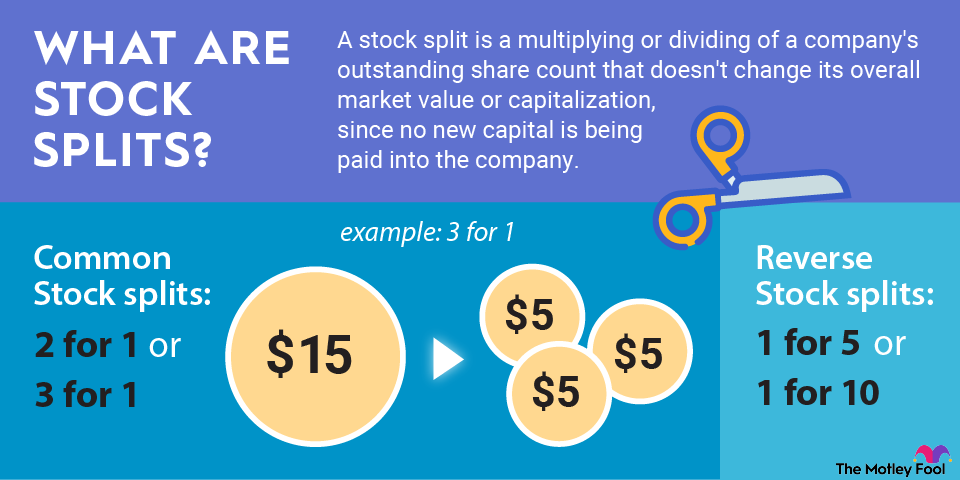
For the full year 2025, operating margin was 31%, up 150 basis points year over year. Free cash flow margin was 35%, up 350 basis points year over year, and 100 basis points above our guidance, which I would remind you we raised by 200 basis points just last quarter. Total free cash flow for 2025 was a robust $4,600,000,000, up 34% year over year. We ended 2025 with a healthy balance sheet of over $10,000,000,000 in cash and investments. In Q4, we bought back approximately 3,600,000 shares after adjusting for the stock split as part of our share repurchase program. As of the end of the quarter, we had approximately $1,400,000,000 of authorization remaining.
Given our strong cash position, our strategy of managing the impact of dilution, and our confidence in the business, we announced today that the Board of Directors authorized the purchase of up to an additional $5,000,000,000 of common stock under this program. With the recent pullback in our stock, we also plan to launch a $2,000,000,000 accelerated share repurchase program. Together, these results continue to demonstrate our ability to drive a strong balance of world-class growth, profitability, and shareholder value. Moving to our outlook. For 2026, we expect subscription revenues between $15,530,000,000 and $15,570,000,000, representing 19.5% to 20% year over year growth on a constant currency basis. This includes a one-point contribution from Moveworks.
We expect a subscription gross margin of 82%, reflecting incremental data center investments related to public cloud, geo-expansion, and AI. We expect an operating margin of 32%, up 100 basis points year over year, driven by OpEx savings enabled by AI efficiencies. We expect a free cash flow margin of 36%, up 100 basis points year over year, and 350 basis points ahead of our target that we gave at Financial Analyst Day in May. This is driven by significant operational leverage and further opportunities to reduce CapEx. Finally, we expect GAAP diluted weighted average outstanding shares of 1,050,000,000.
For Q1, we expect subscription revenues between $3,650,000,000 and $3,655,000,000, representing 18.5% to 19% year over year growth on a constant currency basis. This includes a one-point contribution from Loopworks and a one and a half point headwind with a mix shift of on-prem to hosted revenue partially driven by the strong adoption of our hyperscaler offerings. We expect CRPO growth of 20% on a constant currency basis. This also includes a one-point contribution from Moveworks. We expect an operating margin of 31.5%, and we expect 1,050,000,000 GAAP diluted weighted average outstanding shares for the quarter. In conclusion, 2025 has been an incredible year, and we're just getting started.
The world is in the midst of an intelligence super cycle, and ServiceNow is capitalizing on this decisive moment in technology, where the strongest companies leverage rapid change to extend their market leadership. Our recent strategic acquisitions bring us incredible talent and create enormous new market opportunities while solidifying our ability to put AI to work securely across every corner of the enterprise. As we integrate these best-in-class capabilities into the ServiceNow AI platform, we're layering on advantages that position us for even stronger, more durable growth over the long term. Our organic growth engine remains fully intact. Our strategy, complete with a disciplined focus on margin expansion, remains unchanged.
But the ambition is larger, and our confidence in sustained high organic growth has never been greater. Finally, Bill and I want to express our deepest gratitude to our employees around the world. Your relentless innovation and unwavering commitment to our customers are the foundation of everything we've accomplished. With that, I'll open it up for Q&A.
Darren Yip: Operator, did we lose you?
Operator: At this time, I would like to remind everyone, in order to ask a question, press star followed by the number one on your telephone keypad. Please limit yourself to one question. And your first question comes from the line of Alex Zukin. Please go ahead.
Alex Zukin: Hey, guys. Thanks for a really inspired and inspiring message. And congrats on a very strong end to the year. Maybe, Bill, first one for you. Just give us a flavor a little bit of the tailwinds and headwinds that you're seeing both in the demand environment, from a budgetary perspective, and also kind of how you're thinking about the monetization of AI in the product set, particularly the consumption component to play out as we get through the year. You've already clearly cleared the $500,000,000 hurdle that you set for yourself, well on your way to $1,000,000,000. How should we think about that layering into the numbers? And then I've got a quick follow-up for you.
Bill McDermott: Well, thank you very much, Alex, for your very nice remarks. And, also, giving me a chance to explain how it's going out there in the marketplace. You know, we have excellent hyperscalers in the marketplace. They're all great companies. We have exciting language models. We have good data lakes that are out there too. And we have, as you know, six plus decades of legacy systems that have really burdened these companies quite substantially. At the same time, they've customized them. They've invested heavily in them. And they're not gonna rip them out, at least the ones that matter. But what they are doing now is they are looking for platforms that really do matter.
And they are recognizing that MIT study that said basically 95% of those projects out there weren't delivering a positive ROI. They're recognizing clearly that you can't have little pet projects. That AgenTic AI is not just a revolution. It's the only way to survive. It's the only way to grow. And so now they're looking for a platform that spans functions and goes across the business process frontier of their enterprise. As I've said repeatedly, it could be recruit to retire. It could be order to cash, procure to pay, design to build. There are many of these processes, but there's only one company that actually has a platform that's a cross-functional platform.
And so our cooperation with all of them has led many of our customers to simply say, we love it. We want to expand with you, which they're doing. But at the same time, they're looking to retire tools that don't matter. And they're looking to thoroughly examine functional platforms. Because if you could do cross-functional AI work, to reinvent the process on the fly and it's autonomous, why do you want to get drugged down by these little toys or large model large systems that perhaps have built up over the years with many different instances and people are swivel sharing between 33 apps a day. So it's the radical simplification that comes with AI.
And one thing I wanted to double down on is you could see our user count is growing. You can see it's growing in harmony with our revenue. And you can also see that our margins are growing. So we're really the winning hand for companies that want the consolidator. And they want a consolidator now. That's different than it was six years ago when I told you we're the platform of platforms, and we work with everybody. We still do. But we have to respond to what the customer wants. They want cost out, want autonomy in, and they want margin improved and growth. We're giving it to them.
In terms of the buying cycle, what's so cool about this buying cycle is if you have an ROI, and you're fast to value, which we are, we're the fastest one, you don't actually need a budget to get approval on your deal. Just need an executive that wants to win. And the CEOs are investing heavily. Our pipelines have never been better. Let me be clear. Never been better. And don't forget, we gave you those numbers without actually a full forty-day cycle and approval of deals in public sector. Because of the government shutdown. So we got a lot going on there. And we got a lot going across industries and across all segments of the company.
And finally, security grew 100% year over year. So our customers are loving on the digital front door from Moveworks, and we're loving having Moveworks. They're really excited about Armas and Beza for all the reasons I stated in the kind of the keynote here. So you should feel really good about ServiceNow. We didn't have to work hard to give you a great guide. It's there.
Amit Zavery: Alex. So we already, of course, have been selling this hybrid pricing model and we're already seeing a lot of customers now add assist packs. We shared in the earnings already that we had many cuts with average deal size of 500k and some in multi 7-figure range. Renewing and adding more assist packs when they're running out of tokens. That adoption and that consumption is starting to happen very, very fast, especially now that they're using agentic use cases and workflows to run the business. And once they start using one, they start using many more. That's where the assist packs are starting to come in.
So the consumption part has been adding to our subscription revenue quickly as well. And the key to that...
Bill McDermott: Building on what Amit said, which is so important, this is where cross-functional also comes in so heavily. Because these deals, in many cases, have seven or more ServiceNow products built into them. So we're not confined by we can make one buyer in the enterprise happy. We're actually making a team that reports to the CEO happy. So the strategic relevance is elevated considerably. And these assists, we've been telling you now for a year that the day was coming with a hockey stick with form around the reload on those tokens. It's happening.
Alex Zukin: Guys, out of respect to my colleagues, I'll leave it there. But congratulations. And no further questions.
Bill McDermott: Thank you very much, Alex.
Operator: Your next question comes from the line of Keith Weiss with Morgan Stanley. Please go ahead.
Sanchez: Yeah. Hi. This is Sanchez speaking for Keith Weiss, and congrats on proving out the durability of growth in the business throughout the year. I wanted to follow-up on some of the themes in Q3, particularly the federal business. So give me some color on how federal performed via your expressed relative to expectations? I know we had a government shutdown to deal with. You know, there's some large deals in the pipeline. Just how that sort of shaped up in Q4 and what the prospects are looking like for the balance of the year in 2026 on the Fed side?
Bill McDermott: Thank you. Yeah. Well, it was really great. About the Fed business is even with the shutdown and less days to do business, you know, you have to comply with the procurement procedures. And as you know, forty days is a minimum standard, we were still able to get very, very nice deals. And our OneGov offering has been really well received. So we're seeing a very big pipeline in the public sector. What didn't happen in 2025 is only good news for 2026. And we're also seeing that we have significant traction that's now developed in state and local. Public sector more broadly is growing not just US Fed, which is great, but also state and local.
And I do want to mention, we shouldn't forget the global government business because that was up 80% year over year. So the global government business is on fire. Across Europe, the Middle East, and obviously Asia. So feel really, really good that the brand is resonating. And what we're doing in the US is now translating beautifully to the rest of the world. We're in great shape.
Operator: Your next question comes from the line of Gabriela Borges with Goldman Sachs. Please go ahead.
Gabriela Borges: Hi, good afternoon. Thank you. My question is for Gina on the gross margin outlook. Tell us a little bit about how you think about the puts and takes to gross margin, particularly around some of the temporary headwinds you have before monetization on the consumption revenue part of the business. How much of the gross margin headwind from LLM costs inference and API calls, how much of that is temporary versus structural? Thanks so much.
Gina Mastantuono: Thanks, Gabriela, for the question. So listen, I'm really excited about the overall guide from a margin perspective. The fact that despite some headwinds in gross margins, we're able to increase operating margin guidance by 100 basis points and free cash flow by another 100 after increasing by 350 basis points this year is pretty remarkable. I'd say on the gross margin headwind, the bulk of it is actually our very strategic focus on moving more towards hyperscalers that have slightly lower gross margins at this stage of the game given our capacity there with them than our internal.
Now those margins are margin business you'd want me to take every single day, and we're offsetting any headwind down below the line with efficiencies. As we continue to scale up, those hyperscaler deals, margins get even better. And so you can count on ServiceNow to ensure that you will see not only best-in-class top-line growth of 20% plus, but also continued margin accretion at the bottom line, both from an operating margin and free cash flow perspective.
Gabriela Borges: Very good. Thanks for all the color.
Operator: Thank you. Next question comes from the line of Samad Samana with Jefferies. Please go ahead.
Samad Samana: The execution scale continues to be very impressive, so congrats on that. Bill, maybe a question for you. I appreciate you digging into the M&A given that it's been such a big focus. You made a point about there may not be more to expand the TAM at least on the security side via M&A. So should we take that as maybe we won't see Armis-sized deals going forward? Or just maybe help us get some clarity on how we should think about the M&A in 2026. And then Gina, if you could give us any details on Armis' financials.
I know it hasn't closed yet, but it would be helpful just to think you know, how fast it's growing, size, scale, etcetera. You both so much.
Bill McDermott: Yeah. Thank you very much, Samad, for the question. First of all, I wanted to underscore what both Gina and I both said. We're an organic growth company. These were very select M&A moves for the talent, the technology, and the moment to capture a $125,000,000,000 market TAM. And this is also where our customers wanted us to be. As I said, our security and operations portfolio right now is doubling year over year. And they wanted us to do more. I wanted to make it very clear to the investors. I hear you. And we did not and never have bought an asset like many others have, and I know that's probably why it's on your mind.
Because we needed the revenue. What we needed is the innovation and the expanded growth opportunity of a great TAM and a customer base that's waiting for us. So I want to knock that one out of the park based on our great 2025 results and our extraordinary guide and as it relates to future M&A. We do not have a large-scale M&A on the roadmap. What happened and I felt for you all we had Moveworks. It took nine months to close. We no sooner closed Moveworks, which we love Moveworks. We love Bob and the founders of the company, and it's a great culture, great fit. We love them.
Amit and I were no sooner celebrating on their campus with their spouses and everything then we also closed on that and then had Armis and Vezza come to you within, like, a few days. So probably, it was a little bit what's going on over there at ServiceNow? And I noticed that we lost about $10,000,000,000 in market cap on that. Because of the worry. So now the worry is gone. You can give us back the market cap. And, no, we're not going after anything large. We now have them in the family, and we're gonna grow them like we do everything else. And I would want to make one thing clear.
And I'll give Amit a chance to do this. It's really important. We chose assets also that were heavily integrated with ServiceNow already. So this isn't one of those, how's the integration gonna go? It already went. So maybe Amit can give you a little color on that.
Amit Zavery: Yeah. Thanks, Bill. So the way we've been doing clearly, we have this one platform philosophy, and we continue to invest that way. What Armis and Vezza have been doing is we have been integrating those products using a technology called universal agentic network. Which is built on MCP and workflow data fabric making it easy for us to really have processes as well as a lot of the domain expertise which come from Vezza and Armis. Make it integrated into a lot of the capabilities we provide in our one platform.
Over time, some of the capabilities which we have in our one platform will be available through Armis and Vezza, but they are right now completely integrated in a process-oriented way and allowing customers to get advantage of those integrations straight away without having to wait, replatform, or do things which are not going to be more architecturally correct. So with architecturally, we've been very thoughtful about how we bring all these technologies while getting customer adoption quickly as well as value created for customers. And this UAN is a very modern way of integrating and providing a superior way of integrating and bringing products together.
So this will be very straightforward for our customers, and there's no real-time loss when we bring all these capabilities into one platform mindset.
Gina Mastantuono: And then lastly, Samad, on your question on the impact. So we expect to close Armis at this point, second half, early second half of this year. And based on that timing and estimated revenue adjustments that always happen in acquisitions, we expect subscription revenue contribution to be about a point, 100 basis points in 2026. We expect potentially up to maybe 50 bps on headwind to operating margin in '26. Up to 50, so not that large. And given our strong organic operating leverage, we expect to absorb any headwinds to that dilution in 2027 and continue delivering operating margin expansion.
And so we're very committed in our M&A strategy to continue delivering expansion both on the operating margin and free cash flow perspective. We'll obviously provide more details around all of that at Financial Analyst Day as we get closer to close. But, again, not that big of an impact either on the top line or bottom line. It's really about the incredible capabilities and the addressable market that we're opening up for us to go after.
Samad Samana: Great. Thank you all for the thoughtful answers. Have a good night. Thank you so much. Thanks so much. Thank you.
Operator: Your next question comes from the line of Peter Weed with AllianceBernstein. Please go ahead.
Peter Weed: Thank you, and congrats on the really strong finish to the year and guidance for the upcoming year. You know, I think one of the exciting announcements that have come out are your partnerships with OpenAI and Anthropic, you know, one obviously today and one a few days ago. And I couldn't help but notice in reading those, you know, it looks like both of them are making some investments in helping with your customers and getting traction and scaling. Maybe you can share a little bit more about those partnerships. And, obviously, now with multiple of them, there's also kind of the question of decisions for customers, like which one would you focus on?
Like, how do you think through which partner to pull in when? And how are the partners investing and kind of helping you get even more out of the customer opportunity and really driving the business faster?
Amit Zavery: Yeah. Peter, thanks for the question. So as you know, we've been always working with many of the hyperscalers as well as the large language model providers. And we really had an open ecosystem as a mindset. With the large language providers like OpenAI, Anthropic, as well as Google and Gemini, we allow customer choice. We have prompt engineered and made sure that those models work with our products. And customers don't really have to worry about what the underneath the covers, what LLMs we are using. They can choose if they want to and, and let's, use anyone which we provide out of the box.
What we have done over time now is with each of these providers, there's some unique capabilities we think we can take to market. So for example, OpenAI, what we're doing around voice AI. And speech to speech, real-time, multimodal, as well as multilingual capabilities. So our CRM products can now have voice capabilities with OpenAI as a preferred model so that we can have a much more differentiated offering using what we know from domain as well as context and adding the OpenAI speech capabilities into our product. Similarly, with Anthropic, they have a very good coding agent. A build agent, which is a white coding tool, allows anyone to build any workflow on top of ServiceNow.
And we use Claude as the underlying technology to generate some of the code. Then we provide the context, the security, the governance on top of that using build agent to run those workflows on top of ServiceNow as well. So we're finding those unique use cases which might be useful with one of these individual providers, and they want to take those products to go to market with us. We, of course, collaborate with them and tell them about what's the issues with any model maybe, what efficiencies we can get out of it, and how can we optimize it so our customers get value.
But we still keep this idea of openness and availability of default choices for customers. So they can choose anything they want to. And then we'll provide some unique use cases, which will be done with individual providers like OpenAI and Anthropic where they have interest to come with to go jointly to market and build those unique solutions as well. So customer guidance is pretty straightforward. They can choose any of the models. Everything will work. But there might be some of these individual use cases. We believe could really be turbocharged with some of these providers.
And typically in the infrastructure, the model providers are providing 5-10% of value and 90% of IP has been built by ServiceNow to really provide that context-driven enterprise use cases out of the box for our customers who get value instantly.
Bill McDermott: And, Peter, because your question is so strategic and so important, I'd just like to build on this excellent answer. We have to recognize the harmony and the synchronicity between these models and ServiceNow. And the idea that these models are eating enterprise software may be true in some cases, but, obviously, it's not true in our case. They're actually leaning into us because of the innovation on our platform and the broad reach of our go-to-market global engine. So these are very enticing and interesting factors in their decision to team up with us. But it also really does manifest itself.
I think it's something that Dario said when he said, obviously, the cofounder of Anthropic, he said a common error that enterprises make with AI is to treat it as a kind of bolt-on tool that you access now and then. The way to get much better results is to make AI an integral part of how we get work done. And it has to be woven into the whole range of things workers do every day. That's where you actually start to see where these systems are adding value. And it's also why we're partnering with ServiceNow.
So it's kind of like where the decisions in the business take place is in the workflow, and the models need that to have the business impact and really to be resolute with the c-suite of these corporations. So I think that it's really a match made in heaven. I think it's gonna be a great tailwind for our growth. And I hope that we help them grow too. So it's really a nice, nice thing. And I'm glad today we had a chance to clear it all up.
Operator: Thank you. Thanks, Peter. Your next question comes from the line of Patrick Walravens with JMP Securities. Please go ahead.
Patrick Walravens: Oh, great. Thank you. And let me add my congratulations and my appreciation of the hitting the three bear cases upfront. So, Bill, I was talking to a senior executive at a Fortune 500 company. And they really want to transform the enterprise using AI, but there's some sort of specific concerns holding them back. And I'm just there's four of them. I'm just gonna reel them really quick. And I'm sure you have these kinds of conversations all the time with customers, and I just wonder how you address them. Number one was how do we monitor the agents in real-time? Number two was, how do we have kill switches? Number three was, how do we have grading agents?
And then number four was red teaming. So are those the kinds of things that come up all the time, or was this unusual? And how do you address them?
Amit Zavery: No, Pat. I'll address those. I mean, think this I mean, no doubt, every customer we speak to in enterprise are wondering how to adopt the AI, how to make it easy to manage, and really have controls. And no doubt, that questions come up every time in terms of what technology to use and do that very well. So the way we addressed it the reason we launched AI Control Tower early last year and why it's getting so much traction is because we addressing these things head-on. Right? How do you manage and monitor agents real-time? Not just our agents, third-party agents in one system.
It's really built on top of CMDB, so we can now all the kind of assets, be it hardware, software, and AI agent assets. Assets in the same system. And then we can really give you full-time real-time monitoring, observability, as well as cost management, auditing, security in one place. And that allows you to do kill switches where you can now go and shut down any agent which is going rogue, prevent any kind of nefarious activities, as well as do red teaming and ensure you're making security as a prevalent and most important aspect of what you're doing before you go and deliver any AI agents.
And that's it really has opened up a lot of customers' ability to now adopt agentic use cases. Because before, they were worried about losing control, security, governance, and compliance. Now with AI, Control Tower, be able to give them that ability and remove that barrier out of the way. And that's where we saw this huge amount of new use cases emerge with customers and starting to adopt things around incident management, triaging, and things like that. Very quickly because we can give you that real-time visibility and full control. So these are real questions and things we've been addressing and has really worked out.
And AI control tower has grown so fast for us because that takes on head-on as a heterogeneous product out there.
Bill McDermott: And, Patrick, one thing I would say as an example, I'll give you an example of a public sector entity and the man himself who runs this particular entity has literally thousands and thousands of employees, nearly 100,000. And it's set up in three different divisions. What you're seeing a lot of now is they want to consolidate these divisions. They want to consolidate the action onto one platform. Because I keep going back to east to west AI as a cross-functional sport. There's only one CMDB in the world that behaves like ServiceNow's. They know all the people are, all the places are, and all the things are on one platform.
And then you apply the AI and all of our know-how that Amit just outlined and they're running quickly. So he's gotta make change fast. He doesn't have years. He has weeks and months. So we give him a business case to show them an incredible benefit on the ServiceNow platform. And then they looked at what we did with Armas and Vezza, and they said, we're all in. Please roadmap that into the thinking because I want to have one instance. I want to have one single view of my entire enterprise. And I'm going with ServiceNow. In that conversation, we were basically consolidating them out of about 479 legacy tools. And that's what's happening out there.
Because AI is changing the game. This is the consolidator platform.
Patrick Walravens: That's fantastic. Thank you, Bill and Amit.
Amit Zavery: Thank you, Pat. Thanks, Pat. Thank you, Pat.
Operator: Your next question comes from the line of Matt Hedberg with RBC Capital Markets. Please go ahead.
Matt Hedberg: Great. Thanks for taking my question, guys. And congrats from me as well, really strong results here. I guess for Bill or Amit, in an agentic world, it really does seem like now with assist packs, are resonating with customers, and it's great to see the $600,000,000 ACV number already. I guess, while we're entering this period of hybrid pricing and paid seats are still growing strong, do you envision a time in the future when ServiceNow pivots completely away from seats due to maybe consumption or some form of value-based pricing, for instance?
Amit Zavery: Matt, maybe I'll give you my perspective. Of course, Bill and Gina can add that. You know, we keep on thinking about what's the best way to give value and show them what they can get out of the products. Right? So we keep on getting input from them in terms of what kind of pricing and packaging works for them. Typically, we've seen customers do want flexibility, but they also want predictability. So without having some kind of guardrails and understanding how much they're going to spend and what they're going to get out of it, going to complete 100% consumption may be too early in some of the cases.
So I think that the hybrid model has seemed to be resonating with my customers. They know what the envelope they have, what they will be consuming beyond that much will it cost them. And a lot of times, customers even have come back and say, you know what? I've been using a lot more than I'm entitled to. I will just renew on do an on the thing with another higher subscription. So it might not be just consumption-driven. So we just want to give that flexibility. There's some products we do consumption only already, by the way. Right? So we do things like storage, or additional things you might want to use for capacity.
We're doing that, build some tokens around workflow data fabric from an integration perspective. So wherever it makes sense, we will do that. As we go more and more AI native in terms of packaging, we want to continue still to make sure that we don't confuse our customers too much. And make it so difficult for them to predict what they're gonna spend. That they can keep on staying on the sidelines.
Bill McDermott: So we just wanna manage that very well. And, Matt, you know, just building on Amit here for a second. You know? Let me give you a real example. So Amit's 100% right. That the customer wants predictability, which is why against some of the theories out there that there would be seat compression, which is why our active user base is growing 25%. Okay? It's because they want that predictability. The other thing they want is with the assist, when we sell a pro plus version of this platform, we have contemplated all the puts and takes on their business innovation and what the ROI is gonna be to get the sale in the first place.
And so when they derive more value from the assist that they have that comes with the Pro Plus, they're happy to renew it. In fact, they're looking for more ways to use us. You never have a dissatisfied software customer. When you deploy the software and you have happy users. You have an eager customer that wants to expand, and that trend is really big in the AI world. And finally, we're so flexible because what we do is where the rubber hits the road. We're delivering the ROI, and we know it. So I'll give you one example where we replaced the legacy CRM system. By the way, it's not the one I referenced in the script.
And the customer saved $682,000,000. And we would be very happy to take a percentage of that savings and give it to our great shareholders. But the customer will quickly pull back and say, no. No. I like the predictability of the seats. I'm good with that. I'm good with the assist. Let's keep that going. And it's so strong, these business cases, that we now have large SIs that are actually underwriting the savings on ServiceNow. Underwriting it. And guaranteeing it to the customer. Just think about the swagger we can walk into a c-level meeting with knowing that sharing the logos and the examples.
So no matter where the customer needs us to be, if they'd rather split the profits with us, we're open for business.
Operator: We have time for one more question. And our final question comes from the line of Brian Schwartz with Oppenheimer. Please go ahead.
Brian Schwartz: Yes. Hi. Thanks for taking my question this afternoon, squeezing me in. I'm not sure if this is for Bill or Amit. It's on the topic of the mega LLM provider partnerships. Bill, in your introductory comments, you're clearly making it clear you view these anthropics open AI as more complementary to ServiceNow's product set than as competitors. Guess the question I wanted to ask you or Amit, if we think about the percentage of AI inferencing and training workloads that are gonna run on the platform in 2026? How do you think that mix would break out between those workloads running on ServiceNow LLMs versus those third-party foundation models? Thanks.
Amit Zavery: Yeah. Brian, I think, as I said, we definitely want to make sure customers have choice, and they can use any of those foundational models as well as now LLM. In many cases, we've seen customers may line up using frontier models because some of the use cases might make sense to the frontier models. Inferencing as part of the overall workload is still very low as a percentage of cost or usage-wise. Right? As they use tokens, we have a lot of other works we do on top of the inferencing part of it.
Which is really the whole context, data management, the integration, understanding that the particular workflow required for a use case they want to go and deliver on it. So that's really where most of the power goes in. And, I would say in the long term, I would see more of the frontier models as the inferencing models. Versus now LLM, but their sovereign requirements, private data center requirements. Things customers want to deploy in, like, on-prem. But all these models don't work. And that's where we would probably still continue using a lot of third-party our own now LLM as well.
We just want to make sure we have choices and flexibility and let the customer really choose it out. From us, the cost perspective doesn't matter really.
Brian Schwartz: Thank you.
Operator: Ladies and gentlemen, that concludes today's call. Thank you all for joining. You may now disconnect.