Image source: The Motley Fool.
Date
Jan. 28, 2026 at 5:30 p.m. ET
Call participants
- Chief Executive Officer — Elon Musk
- Chief Financial Officer — Vaibhav Taneja
- Vice President, Vehicle Engineering — Lars Moravy
- Director, Autopilot Software — Ashok Elluswamy
- Head of Investor Relations — Travis Axelrod
Takeaways
- Automotive margins excluding credits -- Improved sequentially from 15.4% to 17.9%, supported by positive regional mix effects despite 16% lower deliveries.
- Total gross margin -- Exceeded 20.1%, the highest in over two years, achieved despite lower fixed cost absorption and tariff impacts.
- Energy revenue -- Reached nearly $12.8 billion, increasing 26.6% year over year, with high deployments across MegaPack and Powerwall in all regions.
- Energy gross profit -- Achieved a new quarterly record, attributed to strong global demand and high deployments.
- FSD paid customers -- Climbed to nearly 1.1 million worldwide, with about 70% representing upfront purchases.
- FSD model shift -- Transitioned fully to a subscription-based sales model, with short-term negative margin impact expected for automotive.
- Free cash flow -- Ended the quarter at $1.4 billion.
- CapEx for next year -- Forecasted to exceed $20 billion, with spending targeted at six factories, AI compute infrastructure, and fleet expansion.
- Bitcoin holdings impact -- Net income negatively affected by a 23% quarter-over-quarter drop in the value of Bitcoin holdings.
- Operating expenses -- Increased sequentially by $500 million, mainly due to higher stock-based compensation and charges linked to operation Maestro under the 2025 CA performance award.
- Services and other margin -- Declined from 10.5% to 8.8%, primarily from increased employee-related costs tied to service center ramp-up for the expanding fleet.
- Backlog -- Ended the year with a larger backlog than in recent years, attributed to record deliveries in smaller international markets and increased demand in APAC and EMEA.
- Model S and X production -- CEO Musk said, "We expect to wind down S and X production next quarter and basically stop production of Model S and X next quarter."
- Optimus production plan -- Plans include converting Fremont's S and X line into an Optimus robot factory with an annual capacity goal of one million units.
- Robotaxi fleet -- CEO Musk stated, "We are well over 500 [robotaxi] vehicles at this point between the Bay Area and Austin," noting a monthly doubling pace.
- CyberCab production start -- CEO Musk said, "We expect to start production in April," indicating an S-curve ramp expectation and long-term production surpassing other vehicle models.
- AI compute investment -- Major investment planned in AI chips, compute infrastructure, and future in-house semiconductor manufacturing (TerraFab), not included in current CapEx guidance.
- Battery supply constraint -- Described as the biggest global constraint, with ongoing solutions such as integrating 4,680 cells in nonstructural packs.
- Energy backlog and outlook -- Strong, globally diversified backlog with increased deployment expected from the launch of MegaPack 3 and Mega Block, though margin compression is anticipated from competition, policy uncertainty, and tariffs.
Need a quote from a Motley Fool analyst? Email [email protected]
Risks
- Energy margins face compression from increased low-cost competition, policy uncertainty, and tariffs according to management outlook.
- Automotive margins may see short-term pressure from the transition to a subscription-based FSD sales model.
- Net income negatively impacted by a 23% depreciation of Bitcoin holdings and unfavorable foreign exchange from intercompany borrowings.
- Long-term supply risk cited by CEO Musk: "if we don't do the Tesla TerraFab, we're going to be limited by supplier output of chips," referencing potential chip and memory shortages.
Summary
Tesla (TSLA +2.60%) delivered sequential improvement in automotive margins, record gross margins, and strong revenue growth in energy, while preparing for a transformative shift with higher future capital expenditures and the wind-down of legacy vehicle production. Management outlined aggressive expansion plans focusing on autonomous vehicle and robotics, massive investments in AI compute and factories, and a pivot to a subscription model for FSD, all supported by a robust backlog but tempered by margin and supply chain pressures articulated for the year ahead.
- CEO Musk announced the end of Model S and X production next quarter, reallocating Fremont capacity for Optimus robot manufacturing.
- The CyberCab, a fully autonomous vehicle with no steering wheel or pedals, is scheduled for production start in April and is expected to become the highest-volume model longer-term.
- FSD adoption reached nearly 1.1 million paid customers, with a full transition to a subscription model expected to impact short-term automotive margins.
- Record quarterly and annual energy results were reported, with management forecasting continued growth but flagging risk of margin compression.
- AI chip and compute investments are set to increase further, and management signaled plans for domestic semiconductor manufacturing to address long-term supply risks.
- Robotaxi deployment exceeded 500 vehicles in service and is reportedly doubling monthly, with substantial infrastructure and service network investment to support growth.
Industry glossary
- FSD (Full Self-Driving): Tesla's advanced driver-assistance system offering full driverless vehicle operation, marketed as a software feature on its vehicles.
- Optimus: Tesla's humanoid robot platform, developed for general-purpose automation tasks, with manufacturing now prioritized at scale.
- CyberCab: Tesla's dedicated fully autonomous two-passenger vehicle designed for transportation as a service, without driver controls.
- TerraFab: Proposed large-scale Tesla semiconductor fabrication facility integrating AI logic, memory, and packaging for internal needs.
- 4,680 cells: Tesla's proprietary high-energy-density battery cells, integrated into vehicle packs to address production constraints.
- MegaPack: Tesla's commercial-scale battery storage product for utilities and large energy users, contributing to energy segment growth.
- Powerwall: Tesla's home energy storage solution supporting its residential and small business energy business.
- Operation Maestro: Internal designation for a performance-based stock compensation program referenced in fiscal Q4 2025 financials.
Full Conference Call Transcript
Elon Musk: Thanks, Travis. So I have updated the Tesla, Inc. mission to amazing abundance, and this is intended to send a message of optimism about the future. I think we are most likely headed to an exciting, amazing era of abundance. I think with the advent or continued growth of AI and robotics, I think we actually are headed to a future of universal income, not universal basic income, but universal high income. There is going to be a lot of change along the way, but that is what I see as the most likely outcome. So I think it makes sense to update Tesla, Inc.'s mission to reflect that goal.
Obviously, along that way, we are going to keep improving safety, driving down the cost of goods, and getting people access to anything they need without compromise. Making sure that the environment is great, nature is great, and people can have whatever they want, which seems like probably the best future. Open to other ideas, but that sounds like the best future you could possibly imagine. I guess it would be that everyone can have whatever they want, including amazing medical care, but we still keep the beauty of nature and Earth. I think that's probably the best outcome. We are seeing the first steps along that way this year for Tesla, Inc., post major steps.
As we increase vehicle autonomy and begin to produce Optimus robots at scale, we are making very big investments. This is going to be a very big CapEx year, as we will get into. That is deliberate because we are making big investments for an epic future. I think all these investments make a lot of sense. We will continue to make sure that when we do spend capital, it is spent very efficiently. But it's a lot of things. Major investments in batteries and the entire supply chain of batteries. We are also going to be significant manufacturers of solar cells, and we are making massive investments in AI chips.
I think these all make a ton of strategic sense. I guess I have one, not exactly bad news, but it's time to bring the Model S and X programs to an end with an honorable discharge. We are really moving into a future that is based on autonomy. If you are interested in buying a Model S and X, now would be the time to order it because we expect to wind down S and X production next quarter and basically stop production of Model S and X next quarter. We will obviously continue to support the Model S and X programs for as long as people have the vehicles.
We are going to take the Model S and X production space in our Fremont factory and convert that into an Optimus factory with a long-term goal of having a million units a year of Optimus robots in the current S and X space in Fremont. That is slightly sad, but it is time to bring the S and X programs to an end and shift to an autonomous future. As my profile picture on X for a few months there, the future is autonomous. With respect to self-driving and robotaxi, people are obviously following with very close attention the progress of FSD, and you can experience it for yourself.
If you have a Tesla, you notice with every software update, the car gets better and better at autonomy. We were able to do our first rides with no safety monitor in the car in Austin. These are paid rides, randomly selected paid rides with no safety monitor. I think maybe as of yesterday or so, we actually do not even have a chase car or anything like that. These are just cars with no people in them and no one following the car in Austin. We are obviously being very cautious about this because we want to have no injuries or serious accidents along the way. I think it makes sense to be very cautious.
You will see the amount of autonomy increase dramatically, I think, every month, essentially. There will also be an opportunity, something we have talked about for a long time, for existing owners of Teslas to add or subtract their cars to the fleet, kind of like how Airbnb works where you can add or subtract your house to the Airbnb inventory. I think probably the value of the Tesla, Inc. partial people adding or subtracting the cars to Tesla, Inc.'s autonomous fleet is probably a little underweighted by a lot of people because we have millions of cars with AI4 that can do this.
It might potentially provide an opportunity for a lot of customers to earn more lending their car to the fleet than their lease cost to Tesla, Inc. It's kind of like you get paid to own a Tesla, Inc. It's quite a good scenario. We expect to have fully autonomous vehicles in probably somewhere between a quarter and half of the United States by the end of the year, pending regulatory approval. A big factor would be if there's some kind of federal preemption for autonomous vehicles. In the absence of that, you have to go on a city-by-city or state-by-state basis.
Nonetheless, even if it is city-by-city, state-by-state, we expect to be in dozens of major cities by the end of the year. With respect to energy, the Tesla, Inc. energy team has done incredible work. The growth rate on that work is continuing to be very strong. We are building more manufacturing capacity and expect that energy will have very high growth for as far into the future as we can imagine. The solar opportunity is underestimated. We think the best way to add significant capability to the grid is solar and batteries on Earth and solar in space.
That's why we are going to work towards getting 100 gigawatts a year of solar cell production integrating across the entire supply chain from raw materials all the way to finished solar panels. Maybe a bit more about Optimus. We will probably unveil Optimus 3 in a few months. I think it's going to be quite surprising to people. It's an incredibly capable robot. As I mentioned, we are replacing the S and X line in Fremont with a million unit per year line of Optimus. Because it is a completely new supply chain, there's really nothing from the existing supply chains that exist in Optimus. Everything is designed from physics first principles.
That means the normal S curve of manufacturing ramp will be longer for Optimus than it is for products that have at least some portion of an existing supply chain. When everything's new, the production rate will be proportionate to the least lucky, least confident part of the entire supply chain. If there's 10,000 things that need to go right, it only takes one to be slow to lag that. It will be a stretched-out S curve. I'm confident that we'll get to a million units a year in Fremont of Optimus 3. This Optimus really will be a general-purpose robot that can learn by observing human behavior.
You can demonstrate a task or verbally describe a task or show it a task. Even show it a video, it will be able to do that task. It's going to be a very capable robot. I think long-term Optimus will have a very significant impact on the US GDP. It will actually move the needle on US GDP significantly. In conclusion, there are still many who doubt our ambitions for creating amazing abundance. We are confident it can be done, and we are making the right moves technologically to ensure that it does. Tesla, Inc. has never been a company to shy away from solving the hardest problems.
I think that's how you build value in a company, you solve hard problems. I don't know how you create value by solving easy problems. There are a lot of hard problems that the Tesla, Inc. team is going to solve, but it's an incredibly talented, hardworking team. I'd like to thank everyone at Tesla, Inc. for their incredible hard work. It's an honor to work with such a talented group. Thank you to everyone who is supporting this mission. The future is more exciting than you can imagine.
Travis Axelrod: Fantastic. Thank you so much, Elon. Next, we have some remarks from Vaibhav. Go ahead.
Vaibhav Taneja: Thanks, Travis. Q4 2025 was an interesting quarter in a couple of respects. On the autos front, while in Q3, we saw a surge in US demand before the higher consumer credit cliff, pulling in some demand from Q4. In other parts of the world, we saw an increase in demand leading to record deliveries in smaller countries like Malaysia, Norway, Poland, Saudi Arabia, and Taiwan, while continued strength in the rest of APAC and EMEA. We therefore ended 2025 with a bigger backlog than in recent years. Note that none of these countries have the latest version of FSD available yet. On the storage front, we hit yet another record in terms of deployments.
I would like to thank our customers and Tesla, Inc. for continuing this momentum. On the automotive margins front, automotive margins, excluding credits, improved sequentially from 15.4% to 17.9%. Automotive gross profit was flat sequentially despite 16% lower deliveries, primarily due to regional mix as we had proportionately more deliveries in APAC and EMEA. As we look to 2026, with the progress that has been made with autonomy, our focus is on ramping production at all our factories. Our biggest constraint globally continues to be on the battery pack front. While our teams have been creative in trying to resolve the situation by now putting 4,680 cells in nonstructural packs, we continue to iterate improving things from here on.
FSD adoption continued to improve in the quarter, reaching nearly 1,100,000 paid customers globally. Of these, nearly 70% were upfront purchases. It is important to note that beginning this quarter, we are transitioning fully to a subscription-based model for FSD. Therefore, net additions to this figure will primarily be via subscription model and, in the short term, will impact automotive margins. On the energy front, we achieved yet another record in terms of gross profit for the quarter and ended the year with nearly $12.8 billion in revenue, a 26.6% year-over-year growth. This was the result of high deployments in all regions and continued strength in demand for both MegaPack and Powerwall.
As we look at 2026, our backlog remains strong, well-diversified globally, and we expect increasing deployments with the launch of MegaPack 3 and Mega Block. However, we expect margin compression from the increased low-cost competition impacts to market from policy uncertainty, and the cost of tariffs. Services and others margin declined from 10.5% to 8.8% primarily from higher employee-related costs for service centers as we start preparing for the ramp in activity from the growth in the fleet size. We did see an improvement in margin from our supercharging business, which is included within services and other. Additionally, note that our robotaxi business-related costs, while not material, are also included within this.
Given that we are still in the early phase of our fleet deployment, are still doing a lot of validation testing. The revenue and cost per mile metrics are not meaningful to discuss at the moment. On total gross margin front, we ended the quarter with over 20.1%, something which we haven't achieved for over the last two years. This improvement came despite the impact of lower fixed cost absorption and the impact of tariffs, which were in excess of operating expenses increased sequentially $500 million in Q4, primarily from increased stock-based compensation for employees and as we started recording charges on for one operation Maestro under our 2025 CA performance award.
That was deemed to be probable over the work term. Additionally, our spend on AI-related initiatives and new products like CyberCab, Semi, Optimus, and MegaPack, etcetera, continues to be at elevated levels and we expect this trend to continue for the full year 2026. Net income was negatively impacted from mark-to-market charges on a Bitcoin holding, which depreciated 23% as compared to the last quarter, and the impact of unfavorable impact of FX, primarily from our large intercompany borrowings. On the free cash flow front, we ended up at $1.4 billion. We did end up CapEx being slightly below our previous guidance of $9 billion.
But like, as Elon already mentioned, this year is going to be a huge investment year from a CapEx perspective. At the moment, we are expecting that CapEx would be in excess of $20 billion. We will be paying for six factories, namely the refinery, LFP factories, CyberCab, Semi, a new mega factory, the Optimus factory. On top of it, we will also be spending money for building our AI compute infrastructure and will continue investing in our existing factories to build more capacity. And then, you know, also the related infrastructure along with it. We will also further expand our fleet of robotaxi and Optimus.
While this may seem a lot, we believe this is the right strategy to position the company for the next era. We will make such investments, as Elon mentioned, in a very capital-efficient manner. Note that this does not include potential investments in solar cell manufacturing or our tariff fab as we are still in the early phase and we plan to provide an update in future quarters. Starting not the next chapter, but a new book on the progression of this company. 2026 would be when all of this began.
While at times it feels daunting, it is going to be the most exciting change in Tesla, Inc.'s history and we could not have even dreamed of embarking on this journey without the support of our customers and our investors. For again showing the confidence in us, let's get ready for a future of amazing abundance. Thanks.
Travis Axelrod: Great. Thank you very much, Vaibhav. Now we're going to head over to investor questions. As always, we will start with questions from say.com. The first question is, today there are approximately 90 million cars sold globally each year. Does Tesla, Inc. have a view, based on its robotaxi ambition, what this number will be in five or ten years? And how does this impact Tesla, Inc.'s EV strategy to have more models?
Elon Musk: Yeah. Thanks, Travis. As Elon said, the future is autonomous.
Lars Moravy: Obviously, autonomy and CyberCab are going to change the global market size and mix quite significantly. I think that's quite obvious. General transportation is going to be better served by autonomy as it will be safer and cheaper. Over 90% of vehicle miles traveled are with two or fewer passengers now. This is why we designed CyberCab that way. In this new autonomous market, we at Tesla, Inc. have the advantage of efficiency, cost, and manufacturing at scale that really no one else has. We've built that over the last decades. We believe that the segment we are creating will grow millions year over year.
Elon Musk: Just to add to what Lars said there. The point that Lars made, which is that 90% of miles driven are with one or two passengers or one or two occupants, essentially, is a very important one. Because that implies that the CyberCab, which is a dedicated two-seater dedicated robo taxi, is a little confusing with the terms robo taxi and CyberCab. Sorry about the confusion. In fact, in some states, we're not allowed to use the word cab or taxi, so it's going to get even more strange. It's going to be like cyber vehicle or something cyber car. But the CyberCab, which is a specific model that we're making, does not have a steering wheel or pedals.
So this is clearly, there's no fallback mechanism here. It's like this car either drives itself or it does not drive. We expect to start production in April. As always, it's just an S curve of the production rate is an S curve, so it starts off very slowly and then grows exponentially, then you hit the linear, and then ultimately it asymptotes at whatever your target volume is. We would expect over time to make far more CyberCabs than all of our other vehicles combined. Given that 90% of distance driven or distance being distance traveled exactly, no longer driving, is one or two people. I think it's like 80% is just one.
It would mean that long-term CyberCab would make several times more CyberCabs per year than all of our other vehicles combined.
Vaibhav Taneja: Great. Thank you so much.
Travis Axelrod: Next question, a bit related. Are there still plans to launch new models to address different price segments and vehicle types which could materially expand the TAM for Tesla, Inc.?
Lars Moravy: Yeah. To further on what we were just talking about, we've launched our least expensive models ever over the last few months and are continuing to expand those models globally. Over the last decade, we have continually brought down the cost of our vehicles without sacrificing range, performance, or premiumness. We will continue to do that, as Vaibhav said, investing in our factories, but these are all trade-offs of where we spend our time or money. To Elon's point just now, CyberCab coming, we are aiming to bring that Tesla, Inc. premium ride experience to our largest market yet. It could be five or ten times our current levels of production.
This new autonomous market, you have to start thinking about us as moving to providing transportation as a service more than the total addressable market for the purchased vehicles alone. Of course, we do have plans to have robotaxis in various shapes and sizes, but obviously, CyberCab will be the grand majority of that volume.
Elon Musk: Yeah. The vast majority of miles traveled will be autonomous in the future. I would say probably less than I'm just guessing, but probably less than 5% of miles driven will be where somebody's actually driving the car themselves in the future, maybe as low as 1%.
Vaibhav Taneja: Great.
Travis Axelrod: The next question is, historically, Tesla, Inc. has spoken about gross margin per model. Are there standalone gross margin targets for the current models excluding the benefits for FSD sales?
Vaibhav Taneja: You know, we've talked about this with the previous two questions, but transportation, as we know, is changing. I think we cannot keep applying the same framework from a car sales model to the future, what we are trying to do. So it has to be looked at more holistically. In autonomy, software will be the driver for growth from now. As we aim to maximize the global fleet, we have been laser-focused on COGS from our side to make sure because that is something which we manage. So we will keep focusing on that. But I think we need to look at it from a different dimension.
Elon Musk: Yeah. Like, the CyberCab, the whole design of CyberCab was to optimize the fully considered cost per mile of autonomous driving. It's a different design problem than if you're trying to design cars for people who will be driving versus being driven. So CyberCab is super optimized for minimum cost per mile and also for a much higher duty cycle. You would expect CyberCab to be used probably fifty or sixty hours a week instead of the ten or eleven hours a week that a driven vehicle is used. Typically, people might drive their car for an hour and a half a day on average, so it's like ten hours a week out of a hundred and sixty-eight.
But I think an autonomous vehicle is likely to be used probably five times as often. Which means that you need to design the vehicle for much more wear and tear per unit time and much more resilience. It's more like a commercial truck that's in continuous operation or close to continuous operation. That is how you design an autonomous vehicle.
Vaibhav Taneja: And so we will have larger vehicles in the CyberCab in the future that are designed for full autonomy. We've actually shown pictures of this and in fact have shown prototypes. So this is not exactly a secret. In fact, we've given people rides in them. We're not keeping this hiding this light under a bushel here. It's like we're literally saying what we're gonna do and have said what we're gonna do for a while.
Elon Musk: I really think long-term, the only vehicles that we'll make will be autonomous vehicles with the exception of the next generation Roadster which we're hoping to debut in April.
Vaibhav Taneja: Hopefully.
Elon Musk: It's gonna be something out of this world. Fantastic.
Travis Axelrod: The next question we unfortunately have to skip because it's not related to Tesla, Inc. We would like to remind folks who use the say platform to please focus these questions on Tesla, Inc. So with that in mind, we're going to move on to the next question. Which is what is the current bottleneck to increased Robotaxi deployment and personal use unsupervised FSD? Is it the safety and performance of the most recent models or is it people to monitor the robotaxis in car, or remotely? Or is there some other blocker? Ashok, if you want to kick off on this one.
Ashok Elluswamy: Yeah. We have scaled the robotaxis service that's available to customers over the last year. In order to just learn these scaling problems without having to wait for unsupervised. Let's get two goals. One is to learn as much as possible with the safety monitors. Secondly, be laser-focused with the engineering team to solve the unsupervised FSD problem. I think we did both. By the end of last year, we had a long tail of issues that we were able to churn through, and then in the last couple of weeks, we started unsupervised robotaxis service to public customers in Austin.
I think some customers took rides last week and also service continues today without any real cars, something like that. Separately, we did scale the fleet size in the Bay Area and in Austin. Through that, we learned issues with charging and other issues that we would have seen once we scale the unsupervised fleet. Both are happening in parallel. A variant of the software that's used for the robotaxis service was shipped to customers with v14 and customers saw a huge jump in performance. A lot of happy feedback from customers. Since then, we have improved the software significantly as well.
Customers will continue to see with their own software releases that the software is so good that they're screaming to remove the trial monitoring software because they're bored inside the car too much.
Lars Moravy: Adding to that a little bit with what Ashok said about learning about our charging and service needs. We're using our vast network of charging and service centers that really only Tesla, Inc. has in this space to jump-start our infrastructure build-out needs. Get ahead of robotaxi autonomous vehicle demand. We expect that because of this network, we are the only company capable of scaling at the rate that is needed for the tsunami of autonomy that has come.
Travis Axelrod: Great. Moving on to the next question. After the unveil of the Cybertruck, Elon stated that if it didn't sell well, Tesla, Inc. would build a more conventional-looking pickup. How practical would it be to create this new design on the Cybertruck architecture, and could it be conveniently built on the existing production lines?
Lars Moravy: Actually, in its segment, CyberTruck can be a leader and is selling more than any other electric truck out there. Our competition continues to pull back. But to the question itself, from a line standpoint, we always design our lines to be super flexible. We've built 3 and Y on the same line. We built S and X on the same line still. Showing that we can do that. The Cybertruck line was designed in the same way and is one of our most fully ready for autonomy platforms.
Elon Musk: But yeah. We will transition the Cybertruck line to just a fully autonomous line. There's obviously a market there for cargo delivery, like you say, localized cargo delivery within a city, within a few hundred miles, something like that. There's a lot of cargo that needs to move locally within a city, and an autonomous Cybertruck could be very useful for that.
Travis Axelrod: Great. Moving on to the next question. Regarding Optimus, could you share the current number of units deployed in Tesla, Inc. and actively performing production tasks? What specific roles or operations are they handling and how has their integration impacted efficiency or output?
Elon Musk: Well, we are still very much at the early stages of Optimus. It's still in the R&D phase. We have had Optimus do some basic tasks in the factory. But as we iterate on new versions of Optimus, we deprecate the old versions. It's not in usage in our factories in a material way. It's more so that the robot can learn. We wouldn't expect to have any kind of significant Optimus production volume until probably the end of this year.
Ashok Elluswamy: Great. Optimus Gen 3 is an awesome robot. It is awesome.
Elon Musk: Yeah. It's an awesome robot that minimizes any differences, but it looks like a human. People could be easily confused that it's a human. This helps our strategy for the AI too because you can learn how humans do these tasks, and it's very easy to teach the robot in the same way. As opposed to previous robots.
Elon Musk: I guess one thing I should say, there's a lot of news of various companies announcing layoffs and whatnot. But at our Tesla, Inc. factory in Fremont, we actually expect to increase headcount over time. To significantly increase output from our factories. We don't have any layoff plans. We expect to actually increase headcount.
Vaibhav Taneja: Great.
Travis Axelrod: The next question similar to the other autonomy questions but slightly different, when is FSD going to be 100% unsupervised?
Elon Musk: Well, it is 100% unsupervised. FSD is 100% unsupervised. We obviously have cars operating with no one in them and no safety monitor and no follow car or anything like that in Austin right now. For customers, we're just being very cautious with the rollout. With each successive version as we prove it out and we make sure that there are no unique issues in particular cities. Sometimes you get some very difficult intersections. It will be an intersection where a lot of humans have accidents, by the way. There are some pretty nutty intersections where a lot of humans make mistakes and have accidents in various cities. We want to make sure that FSD can handle those unusual intersections.
If you take LA, for example, where Wilshire and Santa Monica combined is like there's about 20 traffic lights. People are constantly having accidents there. You want to make sure that FSD can handle things in a particular city. We're actually just being paranoid about safety. With each successful release of FSD, we will reduce the amount of driver monitoring that's needed proportionate to the safety of the FSD build.
Travis Axelrod: Great. As it relates to Robotaxi, what has surprised you about the rollout so far? We've talked about what's constrained the fleet expansion to date, but it appears there are 200 vehicles based on public tracking. Is that something that we can confirm?
Ashok Elluswamy: I wouldn't say there's anything that really surprised us because we are a large fleet. We had all the metrics. There was some sort of surprise. It was just continued work to grind down on the long tail of issues, and that's what enabled us to launch the unsupervised service in Austin.
Elon Musk: Yeah. In terms of taxi vehicles carrying paid customers, I think we're well over 500 at this point between the Bay Area and Austin.
Ashok Elluswamy: There's a varying amount of vehicles depending on the load, but you can have more vehicles during peak times and then fewer vehicles in the off hours.
Vaibhav Taneja: Yeah.
Elon Musk: This will probably double every month type of thing. It's on an exponential curve.
Vaibhav Taneja: One other thing people forget is that we've been deliberate on all this in the sense that we have the supporting infrastructure already in place, whether it's service centers, charging. Yes, we'll have to augment as the fleet grows depending upon the density of where the demand is and whatnot. But it's not something we just stumble upon and we're starting to. We've been at it for years. Not every city is designed the same way. Same thing. Our infrastructure is also not the same in every city. But you have to give us credit that it's been a journey.
Like Lars said, if there's some company which can do it, already been at it, so we should be able to deliver much better.
Vaibhav Taneja: Great.
Travis Axelrod: The next question is about chase cars, which we already covered. Moving on to the last question. Elon, you've been spending significant personal time on Tesla, Inc.'s chip design. What was the forcing function behind this increased involvement? Do you think external chip sales will represent a significant portion of Tesla, Inc.'s valuation by the end of the decade?
Elon Musk: Well, I tend to spend time on whatever the most critical issue is for the company. Completing the AI5 chip design and having it be a great chip is arguably the number one most critical thing to get done, which is why I'm spending more time on that than currently anything else at Tesla, Inc. I spend pretty much every Saturday on this, and a chunk of every Tuesday. If I'm spending my Saturdays on something, it's going to be something pretty important. I do think AI5 will be a very good chip. I feel quite confident about the design at this point. AI6, which will follow that, aspirationally would follow that in under a year.
It will be yet another big leap beyond AI5. I feel pretty good about our chip strategy right now. In terms of selling it outside of Tesla, Inc., we first need to make sure we have enough chips for our vehicle production, all of our Optimus production. We will actually use the AI5 chips in our data centers. We already use the AI4 chips in our data centers. When we do training, it's a combination of the AI4 chips and NVIDIA hardware. Primarily that we do training with. By the end of the decade, things are changing so fast that it's hard to imagine what happens at the end of the decade.
When I look ahead at what's the limiting factor for Tesla, Inc. growth if you go three or four years out, I think it actually is chip production. Is there enough AI logic and enough memory, enough RAM for volume? Right now, I see that as being the thing that probably limits our growth in three or four years. Which implies that we're not selling chips outside of Tesla, Inc. because we need them. In fact, I think it's going to make sense. This is definitely going to be a controversial thing, but I think Tesla, Inc. needs to build a TerraFab. I mentioned this at the shareholder meeting.
Even when you look at the output of the best-case output of all of our key suppliers, and I'd say even they're beyond suppliers are like strategic partners like Samsung, TSMC, and Micron. We say, what's the most you could possibly make? Then it's not enough. I think in order to remove the constraint, the probable constraint in three or four years, we're going to have to build a Tesla, Inc. TerraFab, a very big fab that includes logic, memory, and packaging. Domestically. That's actually also going to be very important to ensure that we are protected against any geopolitical risks.
I think people may be underweighting some of the geopolitical risks that are going to be a major factor in a few years. A lot of people will say that's crazy. Fabs are really hard. Yes, I know fabs are really hard. I don't think they're easy.
Vaibhav Taneja: But we do hard things. We do a lot of hard things. We didn't used to have car factories.
Elon Musk: Or we didn't used to have battery cell factories or lithium refineries or MegaPack factories or all these other things. We figured it out. I think if we don't do the Tesla, Inc. TerraFab, we're going to be limited by supplier output of chips. I think maybe memory is an even bigger limiter than AI logic. For example, we have chip supply deals with TSMC in Arizona and Samsung in Texas, but currently, there are no advanced memory fabs at scale in the United States. There are zero, literally zero. Hopefully, Micron will have something going in a few years because they are headquartered in Idaho, where they make a lot of potato chips.
We don't really need to make computer chips too. We're with our strategic partners on the chip front, memory and logic. I think we gotta also try our hand at building a large-scale fab that integrates logic memory and packaging. If we don't do that, we're just going to be fundamentally limited by the supply chain. Especially if there's some worst-case geopolitical situation, it would be quite a severe situation. I think quite frankly, it'd be crazy not to try out the TerraFab.
Vaibhav Taneja: Yeah.
Elon Musk: We'll have a bigger announcement on this in the future.
Vaibhav Taneja: Awesome. With that,
Travis Axelrod: we're going to move on to analyst questions. The first analyst is Emmanuel from Wolfe Research. Emmanuel, please feel free to unmute yourself.
Emmanuel Rosner: Great. Thank you so much. It's Emmanuel Rosner from Wolfe Research. My first question is on CapEx. You signal a pretty large increase to over $20 billion for this year. Was hoping to better understand where the investments are going. Any way to dimension for us which of the product line or technologies account for the bulk of the increase? Also, do you view this as one-time in nature for 2026? Or how much of this is an ongoing level of high spending for a number of years? Finally, still on that level of spending, you're going to be burning cash. Should we think about cash balance or any other way to finance this?
Vaibhav Taneja: Yeah. Emmanuel, I tried to put this in my opening remarks too, but I'll try and go a little bit deeper. There's about six factories which we are starting production in this year. So there's a lot of cash CapEx going into that. As we are trying to scale Optimus, we need a lot more compute. We're putting more money towards compute as well.
Elon Musk: And then for training. Training. Yeah.
Vaibhav Taneja: We're also going to be spending money to expand the capacity at our existing factories. On top of it, keep in mind that none of these numbers which I shared of $20 billion factors and anything to do with the solar fab or the semiconductor chip fab. Those would be, as Elon mentioned, would come later on. Your second part of your question was, is this one-off or would we expect more? I think we're getting into this investment phase because we have big aspirations. You look at it, some of these aspirations are infrastructure plays. Especially if you have to do a chip fab and we have to do a solar cell manufacturing fab. Those are infrastructure plays.
That funding takes a little bit longer. Your third part of your question was, how are we going to fund it? Initially, obviously, we have over $44 billion of cash and investments on the books. So we'll use our internal resources, but there are ways where we can fund it especially when we look at the robotaxi fleet because anytime you have a consistent stream of cash flow, you can go and get money from the banks. We have had conversations with banks about it. That is something how we're going to do it. On the infrastructure play side, we don't have a number yet.
But given that it's an infrastructure play, it's a longer tail, we will have to look at a little bit more in terms of how we fund it. Whether it's through more debt or other means.
Travis Axelrod: Great. Our next question comes from Andrew from Morgan Stanley. Andrew, please feel free to unmute yourself.
Andrew: Great. Thanks so much for taking the question. I just want to start on the DXAI investment that you guys announced today. You talked about there being some collaboration between the companies. So just hoping to get more information or you're hoping you could shed more light on what that looks like and maybe how the work AI is doing can be leveraged at Tesla, Inc. and vice versa.
Vaibhav Taneja: Yeah. If you've looked at the disclosure, which we also put in there, we do talk about this is literally furtherance of our master plan four. Even today, if you look at Tesla, Inc. vehicles, we are using Grok in there. As we look at things whether we can do it ourselves, yes, there are a lot of things which we can do ourselves. But if there are things which XCI can help accelerate our progress, then why should we not do that?
That is the reason why we've gone ahead with such an investment because this is part of the strategic initiative because as it is, if you remember, I talked about how many things which we are doing ourselves. If there are ways and means we can find efficient ways for others to help us, XAI literally fits into that mold. That's why we went ahead with it.
Elon Musk: We just had a lot of investors ask us to do this. There was a lot of investor but Tesla, Inc. shareholders said we should invest in XAI. So we're just doing what shareholders would ask us to do pretty much. But Grok will be, I think, very helpful in maximizing the efficiency of the management of a large autonomous fleet. If you've got an autonomous fleet that's in the future, 10 million vehicles or tens of millions of vehicles, then optimizing the efficient use of that fleet Grok will be way better than any heuristic solution. Or manually managed solution.
If you set up managing a large team of Optimus robots to build a factory or build a refinery, and say a rare hypothetical like this is a hypothetical example. A rare earth ore refinery. Which we do desperately need in America. Then you'd say, well, what's going to organize the Optimus robots to build that ore refinery? You kind of need an orchestra conductor. So then Grok would be kind of the orchestra conductor. For the Optimus robots to build the hypothetically, an it might not be hypothetical in the future. I'm just saying it's not currently on our plans. But we do need a lot more ore refining capacity in the US.
So then what's going to manage, let's say, a thousand Optimus robots?
Travis Axelrod: You're on mute right now, so I'm not sure if you're trying to ask a follow-up question.
Andrew: Ready.
Travis Axelrod: We're going to move on to the next question, which is coming from Dan Levi at Barclays.
Dan Levi: Great. Thank you. Elon, you talked about some of the constraints on memory. Given the very tight supply, are there any near-term constraints on procuring memory? If there are, to what extent could you look at modifying the functionality similar to what you did in '21 when we saw shortages on MCUs and maybe how are you thinking about bridging in the next few years?
Elon Musk: Well, at Tesla, Inc., the Tesla, Inc. AI is very compute efficient and very memory efficient. One of the metrics I want you to consider for any given AI model is the intelligence per gigabyte. Especially when you're constrained on RAM. Having an AI that has very high intelligence density per gigabyte, you can say, for a given number of gigabytes, how much functionality can you get out of it? I actually think Tesla, Inc. is ahead of the rest of the world in intelligence density of AI by an order of magnitude or more.
This is going to sound like a pretty bold statement, but I kind of know what the intelligence efficiency of the big models are like Grok. The honest and a bunch of the other models. Tesla, Inc.'s AI is, in terms of memory efficiency, I think, more than an order of magnitude better. So that puts us in a pretty good position for scaling. We do think that there's we do have a solution for logic and memory for, let's say, the next roughly three years.
But if you start going beyond three years, and we look at the scaling plans, and how many fabs are getting built, especially if you factor in geopolitical uncertainty, there's always risk that maybe those chips don't arrive that people were expecting to arrive. That's why I think we need to have more fab capacity in the US. Just in case. Chips don't stop arriving for any reason. This is really existential for Tesla, Inc. because Optimus is completely useless without an AI chip. It's not like at least the cars we can put steering wheels and pedals in. Or retrofit them if need be.
But Optimus is just a mannequin without, it's like the Tin Man or whatever The Wizard of Oz. But even worse, at least the Tin Man could walk. Optimus won't even be able to just sit there without an AI chip. We've got a good solution for significant scale through for the next roughly three years. Beyond that, we will be supplier limited and so we've got to figure out some game plan to not be supplier limited.
Travis Axelrod: Great. Our next question is going to come from George at Canaccord. George, please feel free to unmute yourself.
George Gianarikas: Hi, everyone. Thank you for taking my question. There's been a surge of startups, particularly from China entering the humanoid market. Wondering what the long-term competitive advantages that keep Tesla, Inc. ahead are and how based on what you've seen will Optimus fundamentally differ from these competitors? Thank you.
Elon Musk: Well, I do think that by far, the biggest competition for humanoid robots will be from China. China is incredibly good at scaling manufacturing. Actually quite good at AI as you can see from the open-source, not the open-source, but the sort of I guess, some of them are open, actually. But, basically, the models that China's distributing for free are actually quite good and they keep getting better. China is very good at AI, very good at manufacturing, and will definitely be the toughest competition for Tesla, Inc. To the best of our knowledge, we don't see any significant competitors outside of China. But China will definitely be tough competition. There's no two ways about it.
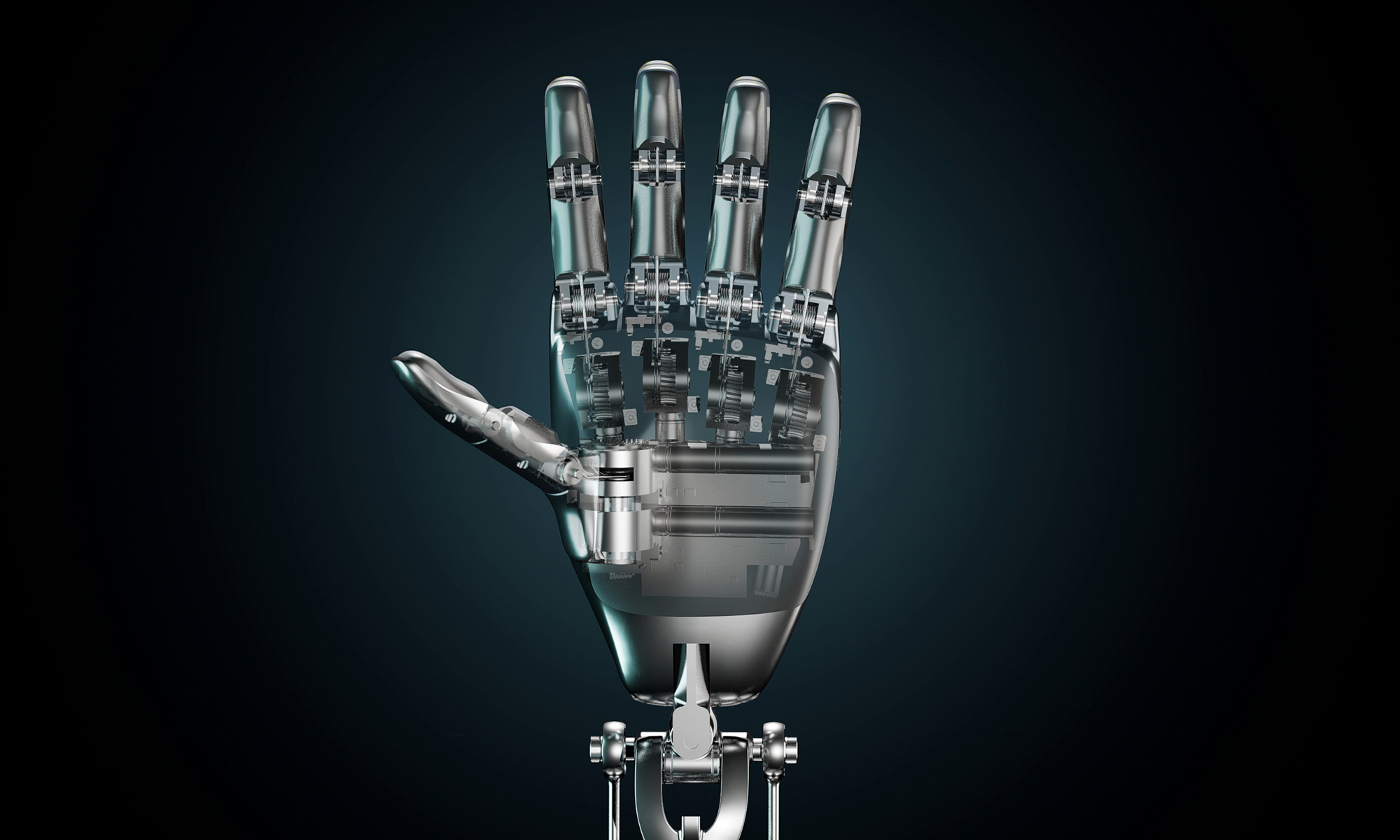
I always think people sort of outside of China kind of underestimate China. China's next level. We think Optimus will be much more capable than any robot that we are aware of under development in China. We think we'll be ahead in terms of the real-world intelligence, the electromechanical dexterity, especially the hand design, which is by far the hardest thing in the robot. In fact, I'd say there's really three hard things about humanoid robots. Building an incredible hand that has the same degrees of freedom and dexterity as a human hand is an incredibly difficult engineering challenge. Then there's the real-world AI and scaling production. Those are the three hardest problems by far for humanoid robots.
I think Tesla, Inc. is the only company that actually has all three of those components.
Vaibhav Taneja: Great.
Travis Axelrod: Our last question is going to come from Colin at Oppenheimer. Colin, please feel free to unmute yourself.
Colin Langan: Thanks so much. You talked a lot about the CapEx spend, but this is an incredibly ambitious technology development program that you're talking about. Can you talk a little bit about the R&D spend and how you're thinking about the synergies of the different components, particularly on the hardware side? If you think about batteries into and the memory and the efficiency of the system, and what sort of advantages you think you'll end up getting out of some of these purpose-built devices that you'll end up integrating into multiple end markets?
Elon Musk: Well, really, all we're trying to do is make sure that we can scale to a very high volume with autonomous vehicles, with humanoid robots. That we address geopolitical risk. There are so many companies out there that are asleep with the switch with regard to geopolitical risk. Or they just have their head in the sand and hope nothing bad will happen. I'm way more paranoid than that. Always think of Andy Grove's famous statement, only the paranoid survive. Why did he come up with that statement at Intel? Let's think. I think there's a lot of wisdom in that statement. We're going to be paranoid.
Make sure that we can continue to build batteries and robots and AI chips no matter what happens. Companies that don't do that, a bunch of them will cease to exist.
Vaibhav Taneja: Yeah. Remember, all this comes out of necessity. It's not that we want to do it. It's just we have no choice.
Elon Musk: Yeah. We're building the most advanced lithium refinery in the world, by the way. It's not just like, our lithium refinery in Corpus Christi is not just a copy of what others have done. It's an entirely new process that is fundamentally more efficient and more advanced than anything else in the world. The same is true of our cathode refinery here in Austin. We wish others would build this. Can other people please, for the love of God, help? In the name of all that is holy, can others please build this stuff? It's not the first time you host. Exactly.
Vaibhav Taneja: This is not the first time you've said something like this.
Elon Musk: Why do we have to build these things? Why can others not also please build these things? It's very hard to build these things. We build them out of desperation. Not because nobody else is building lithium refineries and cathode refineries. We're pretty much the not just the largest, but also the only lithium refinery and cathode refinery in America. We're making moves to make sure that no matter what happens, Tesla, Inc. will prosper.
Travis Axelrod: Great. Unfortunately, that's all the time we have for Q&A today. We really appreciate everyone's questions, and we look forward to talking to you next quarter. Thank you very much, and goodbye.
Vaibhav Taneja: Alright. Cool.