Image source: The Motley Fool.
Date
Feb. 3, 2026 at 5 p.m. ET
Call participants
- Chairman, President, and Chief Executive Officer — Chris Koch
- Chief Financial Officer — Kevin Zdimal
- Vice President, Investor Relations — Mehul Patel
- Conference Moderator — Joelle
Need a quote from a Motley Fool analyst? Email [email protected]
Takeaways
- Revenue -- $1.1 billion in fiscal Q4 (period ended Dec. 31, 2025), up 0.4%; full-year revenue was $5 billion.
- Adjusted EPS -- $3.90 in fiscal Q4, representing a 13% decrease; full-year adjusted EPS was $19.40.
- Adjusted EBITDA margin -- 22.1% for fiscal Q4, down 300 basis points; full-year margin was 24.4%.
- Operating cash flow -- Exceeded $1 billion for the fourth consecutive year.
- Free cash flow -- $972 million for the year, with a 19.4% margin, ahead of internal 15% target.
- Share repurchases -- $1.3 billion returned to shareholders in 2025.
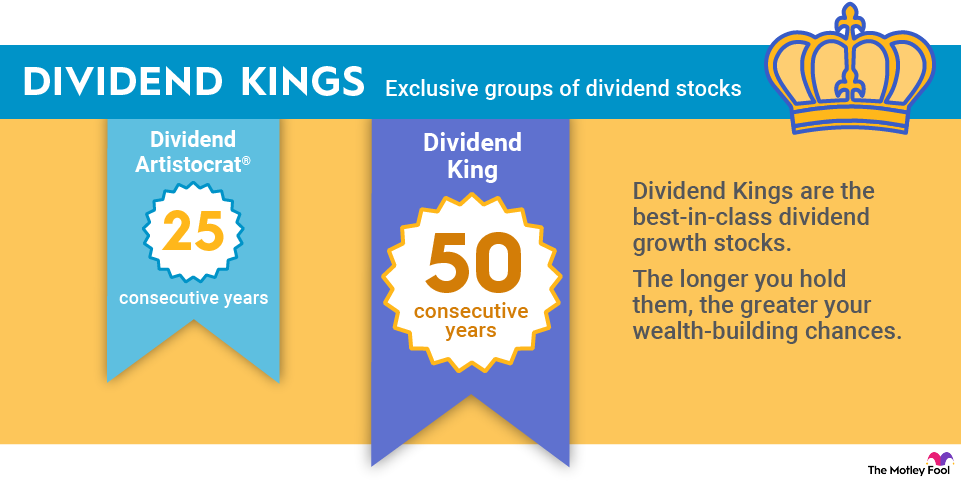
- Dividend -- $181 million distributed and a 10% annual increase, marking the forty-ninth consecutive yearly raise.
- CCM segment performance -- Fiscal Q4 revenue of $827 million, down 0.8%; adjusted EBITDA was $222 million, 10% lower; margin dropped 260 basis points to 26.8%, mainly due to investments in innovation and service capabilities.
- CWT segment performance -- Fiscal Q4 revenue of $301 million, up 4%, aided by recent acquisitions; organic revenue declined 7%; adjusted EBITDA was $48 million, down 10%; EBITDA margin decreased 240 basis points to 15.9%, due to higher unit cost absorption on lower volumes.
- Acquisition contribution -- PlastiFab, ThermoFoam, and Bonded Logic added $30 million in fiscal Q4 revenue; these acquisitions and integration efforts were cited as strategic capital allocation with focus on synergy realization.
- Cash and liquidity -- $1.1 billion in cash and equivalents plus $1 billion available under a revolving credit facility as of year-end.
- 2026 outlook -- Consolidated revenue expected to grow low single digits with about 50 basis points of adjusted EBITDA margin expansion.
- Capital expenditures and investment -- $241 million invested in 2025; capital expenditures were $131 million, acquisitions $110 million.
- CCM revenue mix -- Reroofing comprised approximately 70% of CCM business, with reroofing permits growing low single digits and content per square foot rising 150–200 basis points annually.
- Pricing environment -- CCM and CWT pricing projected to be flat or down up to 1% for 2026; raw material costs show net deflation but with some segment-specific carryover headwinds in fiscal Q1.
- Vision 2030 targets reaffirmed -- $40 adjusted EPS and over 25% ROIC, with EBITDA margins of at least 25% overall, 30%+ targeted at CCM, 25%+ at CWT.
- Innovation milestones -- Notable product launches include ThermaFin Seven insulation and an advanced temperature-sensing adhesive gun, with customer feedback and adoption described as strong.
- Shareholder returns -- Nearly $1.5 billion returned in 2025, comprising share repurchases and dividends, reinforcing a stated focus as a leading cash-return enterprise in its sector.
- Fiscal Q1 2026 guidance -- Revenue expected to be down low single digits, with full-year growth driven by a stronger second half upon seasonal and market improvements.
Summary
Carlisle Companies (CSL +0.21%) reported marginal topline growth for both fiscal Q4 and the full year, supported by continued resilience in reroofing demand, disciplined cost management, and strategic use of capital for share repurchases. Management maintained a conservative revenue and earnings outlook for 2026, reflecting macroeconomic headwinds in new construction, yet reaffirmed the company's Vision 2030 financial targets and operational priorities. The cash position and liquidity remained robust, underpinning near-term investments in automation, digital tools, and innovation within both CCM and CWT, and supporting a notable scale of capital return to shareholders. Areas of margin compression and organic revenue decline were directly attributed to intentional investment and volume softness, not structural erosion, and leadership flagged ongoing efficiency efforts and potential for M&A acceleration should market conditions permit.
- Carlisle intends to launch approximately ten new products in the upcoming year, as stated by Chris Koch, potentially boosting innovation-driven revenue and margin contributions.
- Chris Koch said, "M&A was always going to be a part of that. We think that it continues to remain a key part of it," clearly signaling ongoing reliance on acquisition for value creation.
- Management confirmed that nearly half of all sales are specification-driven, reflecting deep integration with specification and contracting channels.
- Strategic direction emphasizes accelerated investment in R&D, aiming for 3% of sales and for 25% of total revenue to come from products younger than five years by 2030.
Industry glossary
- CCM: Carlisle Construction Materials, the segment focused on building envelope products, including commercial roofing and insulation.
- CWT: Carlisle Weatherproofing Technologies, segment covering liquid, powder, and adhesive solutions for weatherproofing and finishing.
- EBITDA margin: Ratio of earnings before interest, taxes, depreciation, and amortization to revenue, used as a proxy for operating profitability.
- Content per square foot: The value of company products installed per square foot on a project, an internal metric used to track product portfolio penetration and cross-sell growth.
- Vision 2030: Carlisle's long-term strategic framework targeting $40 adjusted EPS, 25%+ ROIC, and substantial EBITDA margin expansion by 2030.
- Polyiso: Polyisocyanurate insulation material, used for high thermal performance in building envelopes.
- ThermaFin Seven: A proprietary high R-value polyiso insulation product recently launched by Carlisle.
Full Conference Call Transcript
Chris providing key highlights for the full year and the fourth quarter. Kevin will follow Chris and provide an overview of our Q4 financial performance and our outlook for the full year of 2026. Following our prepared remarks, we will open up the line for questions. But before we begin, please refer to Slide two of our presentation where we note that comments today will include forward-looking statements based on current expectations. Actual results could differ materially from these statements due to a number of risks and uncertainties which are discussed in our press release and SEC filings.
As Carlisle provides non-GAAP financial information, we provided reconciliations between GAAP and non-GAAP measures in our press release, and in the appendix of our presentation materials, which are available on our website. With that, I will turn the call over to Chris on Slide three.
Chris Koch: Thank you, Mehul, and welcome to our fourth quarter 2025 earnings call. I want to thank everyone for joining us today as we close out 2025 and look ahead to 2026. One note: This call will be slightly longer than our normal calls as it is our year-end, and we'd like to provide additional transparency and clarity, especially with the elevated levels of uncertainty we see in our markets today. The full year 2025, Carlisle delivered solid results in a very challenging environment. We generated $5 billion in revenue. Adjusted EPS was $19.40. Adjusted EBITDA margins were 24.4%, and ROIC was approximately 25%, which is not only well above our cost of capital but is also considered best in class.
We take a great deal of pride in consistently operating at this level. Looking ahead, we remain convinced that driving adjusted EPS to $40 per share and maintaining ROIC above 25% as contemplated under Vision 2030 are the right long-term goals to maximize value creation for our shareholders. We were extremely pleased with our cash flow performance in 2025, which was our fourth consecutive year of generating more than $1 billion of operating cash flow. Free cash flow was $972 million, representing free cash flow margins of 19.4%. Well ahead of our Vision 2030 target of 15% and again, best in class.
The M&A environment in 2025, while active overall, presented challenges in our target markets as sellers expected elevated valuations for quality assets, and we remain disciplined with limited appetite to deploy capital into premium-priced acquisition targets that exhibited less than premium results in the recent past. With M&A activity more muted, we continue to lean into share repurchases as an attractive use of capital, especially given our expected returns on those share repurchases. Ultimately, we repurchased $1.3 billion of Carlisle shares in 2025. In addition to share repurchases and consistent with our past practices, we returned $181 million to shareholders through dividends in 2025.
August marked our forty-ninth consecutive annual dividend increase, up 10% year over year, and we are excited for the prospect of reaching the half-century mark this coming summer. Our 2025 performance clearly positions Carlisle as a leading cash return story in the building product sector. We are pleased with our ability to maintain a strong balance sheet and ample financial flexibility to consistently invest in our business, especially in the areas of customer experience, operational excellence, and innovation while simultaneously pursuing disciplined value-creating acquisitions when opportunities meet our return thresholds. Turning to Slide four, for the fourth quarter, we generated revenue of approximately $1.1 billion. Adjusted EPS was $3.90, and adjusted EBITDA margin was 22.1%.
During the quarter, we also returned $346 million to shareholders through share repurchases and dividends. More importantly, in 2025, we stayed disciplined in our activities and focused on things we could control. Guided by Vision 2030, we advanced our innovation agenda, continued to automate our operations, strengthened our leadership team, and further enhanced the Carlisle experience for our customers. Those same priorities are part of the core pillars that will drive our performance in 2026 and beyond, regardless of broader market conditions. Speaking of core pillars, let me now turn to the core of Carlisle's strengths.
Since the 1970s, our commercial roofing and broader building envelope business at CCM, the largest part of our continuing performance story at CCM, has been the reroofing market. Reroofing is a significant part of Carlisle's ability to deliver consistent sales and earnings growth. Reroofing is driven by the nondiscretionary need to maintain, upgrade, or repurpose North America's vast and aging nonresidential building stock. Looking at our reroofing business, it is important to note that at CCM, reroofing represents roughly 70% of the business.
When one couples this with the fact that over 70% of the US nonresidential footprint is older than 25 years, and roofs typically need to be replaced every 20 to 30 years, it is apparent that this market provides consistency and resiliency to our overall business. Looking at the reroofing market, reroofing permits have grown at a low single-digit rate over the past years, and when you layer on 150 to 200 basis points of content per square foot growth per year, you get the mid-single-digit growth in reroofing demand we are forecasting for the foreseeable future. Reroofing is not optional for building owners. It is an imperative investment to keep assets operational, safe, code compliant, and increasingly energy efficient.
North America is the most roofing and building envelope market in the world, given an enlarged and aging building base of low slope roofs, increasing energy efficiency regulation, and pressure from rising utility rates, especially now with the outsized impact of AI and data centers consuming unprecedented levels of electricity, structurally high labor costs, and a decreasing labor pool that increases contractors' desire for easy-to-install, labor-saving solutions and products that get them off the roof quicker. In most areas we operate in, there is a growing awareness of total cost of ownership and the life cycle performance with building owners, architects, and specifiers.
Within this market, Carlisle is a recognized leader and a differentiated provider of integrated building envelope solutions and systems comprised of roofs, walls, foundations, waterproofing, and insulation. Our systems approach, long-term warranties, and specification strength give Carlisle a meaningful and sustainable competitive edge and it positions us to take advantage of a robust North American building products market for years to come. Looking ahead, our operating narrative remains clear, well understood by our investors, and consistent with what we saw drive our 2025 results. Steady reroofing demand, accompanied by a weaker new construction market. In CCM, reroofing is expected to grow low to mid-single digits in 2026, broadly consistent with its long-term trajectory and our past experience.
New commercial construction at CCM remains soft and saw continued declines in 2025. Based on our current indicators, including our Carlisle market survey, we are not projecting a sharp recovery in our 2026 plans. But we are assuming a gradual bottoming out midyear and an upward inflection in the second half of the year. In CWT, we continue to see pressure from softer residential and nonresidential new construction. But we are seeing growth from our recent acquisitions of PlastiFab, ThermoFoam, and Bonded Logic, from our change in our selling approach in spray foam, and from increased demand for energy-efficient and weatherproofing solutions.
Kevin will provide more detail on our 2026 outlook, but at the consolidated level, we expect approximately low single-digit revenue growth and approximately 50 basis points of adjusted EBITDA margin expansion versus 2025. Importantly, while we are setting conservative targets for 2026 given the end market uncertainties we face, our intent is anything but conservative. Over the next several years, we are very focused on sales faster than our end markets and expanding our EBITDA margins. Our Vision 2030 ambition continues to be to achieve adjusted EPS of $40 per share, EBITDA margins for Carlisle of at least 25%, and ROIC of 25% plus.
Accompanying these targets are our goals of 30% plus EBITDA margins at CCM, and 25% plus EBITDA margins at CWT. While we are not issuing a specific year for those levels today, we want to be clear about the direction of travel. We will get there by executing consistently on the key pillars of Vision 2030, which I'll touch on now. Moving to slide six, Carlisle's performance and strategy are built around five core pillars. One, operational excellence rooted in the Carlisle operating system or COS. Two, the Carlisle experience. Three, innovation. Four, acquisitions. And five, talent management.
When we talk about operational excellence, we need to focus on the Carlisle operating system because as we approach our second full decade of COS, it really has become our core continuous improvement methodology and permeates our culture. Introduced in 2008, the Carlisle operating system is how we run the company every day. It drives lean principles, standard work, and continuous improvement across our plants, supply chain, and offices. COS is also the framework that led us to top industry safety metrics. In 2025, we expanded automation and AI into our COS programs across key manufacturing sites, seeking improved changeover times, reduced scrap, and enhanced safety and quality metrics.
COS is a major reason we have maintained strong margins through a multiyear period of volatile volumes, inflation, and supply chain disruption. It will continue to be the engine behind our margin expansion objectives in both CCM and CWT. Moving to our next core pillar, the Carlisle experience. The Carlisle experience is our promise to our customers. And that promise is the right product to the right place at the right time. Supported by people who understand the jobs, the challenges, and have many years of experience in dealing with customers in our markets. The Carlisle experience touches many of our key stakeholders, contractors, distributors, architects, and building owners.
For contractors operating in a tight labor market, our ability to ship complete on-time orders directly to the job site is a real advantage. Our field technical teams and in-house roof designers work alongside distributors, contractors, architects, and building owners to ensure systems are specified correctly and installed correctly. Our long-dated warranties, many over twenty years, are backed not just by a document, but by knowledgeable and well-trained employees who drive excellent service and support across the life cycle of the roof. This reliability helps our contractor partners work more efficiently and win more projects, and it supports our ability to price the value by delivering that superior value at every touchpoint. It also underpins our strong specification history.
Roughly half of Carlisle sales are tied to project specifications where Carlisle is the preferred system of record. Innovation remains one of the most important drivers of our future growth and competitive differentiation. To that end, we will increase our investments in R&D and product development to 3% of sales under Vision 2030 with a clear objective. By 2030, 25% of Carlisle's revenue will come from products that are five years old or younger. To achieve this, we have made substantial structural enhancements to our innovation engine. We implemented a robust voice of customer process to identify the most pressing contractor and building owner pain points.
We refined and drove further discipline in our stage gate governance model for new product development to allocate resources to the products with the highest expected returns. Lastly, we strengthened our innovation leadership and cross-functional collaboration between R&D, manufacturing, and our commercial teams. You can already see the results in the marketplace. ThermaFin seven polyiso insulation, an industry first, delivers high R-value per inch. This means building owners get superior thermal performance and contractors can use fewer boards to meet code, reducing trucks, fasteners, material handling, and labor. Early feedback from this market launch has been outstanding.
Our newly launched temperature sensing gun for flexible fast adhesive, this new application device transforms adhesive application from a manual error-prone process to a controlled data-driven system. With real-time temperature sensing and visual indicators, it reduces installation errors, material waste, and callbacks. It is included with every flexible fast dual tank system we sell. Products like RapidLock, SameShield, Appeal, and VP Tech continue to gain traction by addressing real contractor needs around installation speed, energy performance, and long-term durability. Importantly, these are not science projects. They are commercial products generating revenue today, helping contractors work faster and safer, and allowing building owners to meet increasingly stringent energy and performance standards.
They also support our desire to grow content per square foot 150 to 200 basis points per year. A key component of our Vision 2030 expectations. The fourth pillar is acquisitions and importantly, acquisitions executed within a disciplined capital allocation framework. Over the past several years, we have strategically pivoted Carlisle to a pure-play building products portfolio focused on the building envelope. Roof, wall, and waterproofing. We estimate our broader building envelope addressable market at approximately $70 billion and today, we have direct exposure to just under half of that. Our M&A strategy is straightforward. Focus on bolt-on and adjacent acquisitions in the building envelope that enhance systems offering and increase our content per square foot.
Target businesses where we can apply the Carlisle operating system and the Carlisle experience to improve operations, grow sales, and expand margins. Maintain strict ROIC and return thresholds ensuring deals are accretive to growth and returns over time. Recent acquisitions such as MTL, PlastiFab, ThermoFoam, and Bonded Logic are good examples. MTL strengthens our position in prefabricated metal edge systems, allowing us to sell more content per roof and offer more complete warranty-backed systems. PlastiFab and ThermoFoam expand our capabilities in EPS insulation. Our scale gives us material cost advantages and broader geographic reach. Bonded Logic, through ultra-touch denim recycled insulation, opens an attractive opportunity in sustainable insulation addressing customer demand for both performance and environmental attributes.
We do not pursue acquisitions for headlines. We integrate, optimize, and capture synergies. Commercial, operational, and supply chain-related. That track record reinforces Carlisle's reputation as a superior capital allocator in our space. Last but not least is our fifth pillar, talent management. Nothing we have discussed today would be possible without Carlisle's team of over 5,000 dedicated employees. We focus on attracting, developing, and retaining people who want to win in the marketplace and grow their careers. At CCM, I'm excited about the recent leadership appointment that exemplifies this. In November, Jason Taylor joined us as president of CCM, bringing deep distributor and contractor relationships from his extensive industry experience.
His fresh perspective, combined with his strong familiarity with our business, positions CCM exceptionally well as we execute our growth strategy. Let me now turn to our Vision 2030 financial targets on slide seven. We are reaffirming our Vision 2030 targets of $40 of adjusted EPS and more than 25% ROIC. We believe these targets are credible and achievable, driven by low to mid-single-digit organic revenue growth, led by reroofing volumes and content per square foot gains. EBITDA margin expansion at both CCM and CWT as COS, automation, AI, and self-help initiatives compound. Disciplined, synergistic M&A focused on the building envelope, and significant capital return through dividends and share repurchases. It is important to remember our history.
Under Vision 2025, we achieved our EPS target three years early, and that journey was not a straight line. We managed through COVID, supply chain shocks, raw material inflation, and shifts in construction activity. Expect a similar pattern as we execute Vision 2030. There will be quarters where new construction is soft, where raw material costs move against us, or where competition intensifies. But our track record shows that Carlisle can adapt quickly, adjusting price, mix, cost structure, and capital deployment while staying true to our long-term strategy. Vision 2030 is not simply a set of aspirational numbers. It is anchored in clear priorities and measurable actions across our five pillars.
Operational excellence through COS, exceptional customer service through the Carlisle experience, product and systems innovation, targeted synergistic acquisitions, and talent management and leadership development across the enterprise. With that, I'll turn it over to Kevin to go through the fourth quarter results in more detail. Kevin?
Kevin Zdimal: Thank you, Chris, and good afternoon, everyone. I will review our fourth quarter financial results and provide additional details on our full year 2026 outlook. Moving to Slide eight. We generated fourth quarter consolidated revenues of $1.1 billion, an increase of 0.4% compared to the prior year. Our recent acquisitions of PlastiFab, ThermoFoam, and Bonded Logic contributed incremental revenue of $30 million in the quarter. Organic revenue declined 3% due to the continuation of soft new construction activity in commercial and residential end markets, partially offset by solid commercial reroofing demand. Adjusted EBITDA for the quarter was $249 million, resulting in an adjusted EBITDA margin of 22.1%. A decrease of 300 basis points compared to last year.
This decrease was primarily due to strategic investments in the business to support our long-term growth as well as lower volumes at CWT. Adjusted EPS was $3.90, down 13% year over year. This decline was driven by lower organic earnings and higher interest expense, partially offset by the benefit of share repurchases and contributions from our strategic acquisitions. Our segment performance starts on Slide nine. CCM delivered fourth quarter revenue of $827 million, a decline of 0.8% year over year. The macroeconomic uncertainty we discussed on our third quarter call continued to pressure new construction activity in the fourth quarter, which was mostly offset by the continuation of solid demand for commercial reroofing.
Fourth quarter adjusted EBITDA for CCM was $222 million, a 10% decline from the prior year. Adjusted EBITDA margin of 26.8% decreased 260 basis points primarily due to our continued investments in innovation and other strategic initiatives to enhance the Carlisle experience, including investments in our customer service capabilities and digital tools that improve order visibility and make contractors' jobs easier. Moving to CWT on slide 10. CWT reported fourth quarter revenues of $301 million, up 4% year over year, supported by revenues from PlastiFab, ThermoFoam, and Bonded Logic. Organic revenue declined 7% due to continued softness in residential and nonresidential new construction markets resulting in lower volumes. CWT's adjusted EBITDA was $48 million, down 10% from last year.
CWT's adjusted EBITDA margin of 15.9% decreased 240 basis points year over year primarily due to increased unit cost resulting from higher absorption of fixed costs on lower volumes. For your reference, slides eleven and twelve provide our fourth quarter and full year adjusted EPS bridges, respectively. Turning to slide 13. Carlisle's financial position remains strong. As of December 31, we had $1.1 billion of cash and cash equivalents and $1 billion available under a revolving credit facility. This financial strength provides us with significant flexibility to execute our superior capital allocation strategy, including investing in innovation and capital expenditures, pursuing strategic M&A, and consistently returning cash to our shareholders through share buybacks and dividends. Moving to Slide 14.
As Chris mentioned earlier, in 2025, we generated operating cash flow of over $1 billion for the fourth consecutive year. Free cash flow from continuing operations was a record $972 million, resulting in a free cash flow margin of 19.4%. Well above our Vision 2030 target of 15%. During 2025, we invested $241 million in the business, with $131 million in capital expenditures and $110 million in acquisitions. We also returned nearly $1.5 billion to shareholders through $1.3 billion of share repurchases and $181 million of dividends. Now turning to our 2026 outlook on slide 15. We expect consolidated revenue growth in the low single-digit range for the full year of 2026.
This reflects CCM revenue growth in the low single digits driven by continued strength in reroofing offsetting slower new construction, and CWT revenue also up low single digits as contributions from share gain initiatives offset continued end market softness. I also want to provide some color on the quarterly cadence for revenue. With the recent harsh weather throughout most of the country, combined with a tariff pull forward in 2025 that we discussed on the Q2 earnings call, we expect first quarter 2026 revenue will be down low single digits versus last year. On a positive note, harsh weather in the first quarter often leads to a strong construction season.
Our full-year guide assumes Q2 revenue will be flat year over year with a strong second half of the year leading to full-year sales growth of low single digits. We expect consolidated adjusted EBITDA margins to expand by approximately 50 basis points supported by our focus on operational excellence, cost-saving initiatives in both segments, and volume leverage. We also plan to repurchase $1 billion of shares and maintain our industry-leading financial performance, including return on invested capital of approximately 25%, and free cash flow margin over 15%. Consistent with our Vision 2030 targets. I will now hand it back to Chris for his concluding remarks.
Chris Koch: Thank you, Kevin. In summary, Carlisle today is focused, strong, and disciplined. We are generating substantial cash flow and returning significant capital to our shareholders while preserving balance sheet strength for future opportunities. Our operating narrative is clear. Steady reroof demand offsetting weaker new construction, particularly in CCM, with CWT positioned to benefit as residential and commercial construction recovers, and as energy efficiency requirements tighten. We are accelerating innovation tied directly to customer needs, with tangible products and solutions in the market today and a robust pipeline aligned to Vision 2030.
We continue to integrate acquisitions with discipline, capturing synergies and strengthening our competitive position in key categories like prefabricated metal edge systems, EPS insulation, and sustainable insulation solutions such as UltraTouch, sold through Home Depot. We are investing in our people, ensuring that Carlisle remains a place where talented individuals can build careers while helping us deliver outstanding performance. Carlisle operates in an imperative business in what we believe is the most attractive building products market globally. The long-term trends of energy efficiency, labor savings, and growing reroofing demand are firmly in our favor. Coupled with our five pillars, the Carlisle operating system, the Carlisle experience, innovation, acquisitions, and talent management.
Guided by Vision 2030, we're confident in our path to $40 of adjusted EPS and beyond. I'd like to thank all of our employees for their perseverance in 2025.
Joelle: For the sake of time, we kindly request each person limit themselves to one question to give everyone the opportunity to participate in the question and answer session. Should you have a question, please press star followed by the one on your touch-tone phone. You will hear a prompt that your hand has been raised. Should you wish to decline from the polling process, please press star followed by the two. If you are using a speakerphone, please lift the handset before pressing any keys. One moment, please, for your first question. Your first question comes from Susan Maklari with Goldman Sachs. Your line is now open.
Susan Maklari: Good evening, everyone. This is Charles Perron in for Susan. Thanks for taking my question. Hey, Charles. Maybe hey, Chris. Maybe first, I would like to discuss a little bit about Vision 2030 and get an update on where we are today. As you consider the progress you've made since 2023 along with the changing macro environment, including a softer housing backdrop than you probably expected back then, which of the key pillars you highlighted earlier in this call do you think provide the greatest lever to reach your $40 objective? Can you still reach this objective organically, or is M&A increasingly important to reach that $40 target given the progress today?
Chris Koch: Well, the two pillars for me that are most important, I think, are the margin expansions at CWT, obviously, and that's going to come with a return to what I'll call a market recovery. We had CWT making progress on margins, you know, right now up to 25% and obviously with the resi housing market. We went in the opposite direction. So that recovery is going to be an important part. The second one is technology. We're very excited at IRE. This year, we launched a couple of signature products, ThermaThin for sure, and then our new higher technology gun that has a lot of embedded controls in it.
The second thing I would say about that is there I think we've got another 10 products we're going to launch this year. New products across the board. So a big emphasis on new technology, and as we said, new technology brings sales, but it's also going to bring a higher content per square foot. Hopefully increase margins as we do that. You asked if we'd still think $40 of EPS is in play. We still do. M&A was always going to be a part of that. We think that it continues to remain a key part of it. As you've seen this year, we did some acquisitions in 2025.
But I think we would like to have done more and maybe a little bit bigger. So we'll see if this disparity between buyers and sellers can get resolved, then we can have a productive 26 on the M&A front, which will obviously help us a lot getting towards that $40 of EPS.
Charles Perron: Alright. That's my one. Thank you so much for your time, guys. Good luck.
Chris Koch: Alright. Thanks, Charles. Yep.
Joelle: Your next question comes from Tomohiko Sano with JPMorgan. Your line is now open.
Tomohiko Sano: Hi, everyone. Thanks, Hugo. Hello? Hi. And congrats on the tenth anniversary for Chris on his as a CEO. Cool. My first question is CCM demand trends and your strategies based on the recent customer surveys and distributor contract feedback and upcoming new entrants of the capacities? How do you see the sustainability of the reroofing demand and any signs of the recovery in new and pricing and strategies wise could you talk about that please?
Chris Koch: Well, first of all, thank you for my tenth anniversary. I appreciate that. It's nice of you to do that. It's been an excellent time with Carlisle for me. As far as CCM, I think we see CCM in a very good position. You know, we said in this call in greater detail that, you know, 30% plus EBITDA margins are what we're driving towards. We've always had good ROI and CCM. If we touch on the market, obviously, the new construction market is not as vibrant as we'd like it to be, but we do see that coming back.
Especially under things like the big beautiful bill and more investment in the United States and perhaps some interest from overseas players building. That's all good for us. Right? So we see that happening. We also see Resi plays a role in nonresi construction, commercial construction. So we know that as residential housing demand increases and we have more people investing in their homes, we know that means more traffic at the Home Depot. We know that means more traffic at the Walmarts and the CVSs, and we also know that those companies will build as well.
So I think when the economy returns, we're going to see both nice play I should say when the economy returns, when resi returns, we're going to see a nice play that overlaps into some of the non-resi as well. Pricing has been relatively good for us. I think that'll be a positive for us as we start to build pricing in the new technology. We continue to invest actually at higher rates to make go in the new technology that's coming out of CCMS, CWT, and in the physical plant and in the PhDs and in the people that are bringing this out.
So we really are putting a lot of emphasis on new technology, and that'll bring a lot of good things for CCM. So I think the outlook's good this year, of course. The first quarter is going to probably look similar to the fourth quarter. It is our lightest quarter of the year. And just because we moved from December to January doesn't mean that trends change all that much. But as we get into the reroof or the roofing season, we think we should see some pickup and bottoming out, and then, hopefully, new construction comes back. So I don't know if Kevin wants to add anything to that.
Kevin Zdimal: Yeah. I would say exactly that first quarter. We do think that we could be down, as Chris said, around 3% in the quarter, but then flat in the second quarter, and then it picks up in the second half of the year. And for the full year, we do expect revenue to be up low single digits for the year.
Tomohiko Sano: Thank you very much. That's all from me.
Kevin Zdimal: Thank you.
Joelle: Your next question comes from Garik Shmois with Loop Capital Markets. Your line is now open.
Garik Shmois: Hi. Thank you. I was wondering if you could speak to in your volume assumption for 2026, are you anticipating any distributor restocking activity? Maybe if you can address some of the impacts of the disruption and distribution that you had called out. In the prior quarter, has that since resolved?
Chris Koch: Well, first of all, on that one, we definitely said there was an impact. What I would say is we also said that it would get resolved and they would make progress. I'm pleased to say that I think progress has been made as we went into the fourth quarter, and that's a difficult time when you think about volumes because in most cases, there is a desire to hold less inventory as you move into the fourth and first quarter. General seasonal destocking. So the fact that we saw progress with some of our channel that had issues earlier in the year, I think that's a real positive sign.
Obviously, they're going to work hard to continue to make progress moving to '26, and we should be the beneficiary of that. Also, when you think, Garik, about volume, even though there was a seasonal effect and we see it go down, I think higher interest rates caused people to want to have less working capital in inventory. We think we're seeing less inventory. Our Carlisle market survey said that inventory levels were lower than in the historical average in the respondents that we talked to. I think as we move in, if we can get a positive start to the summer construction season, we should see some nice volume improvements as we move into Q2.
Garik Shmois: Okay. Thank you. Best of luck on the year.
Kevin Zdimal: Thanks, Garik. Thank you.
Joelle: Your next question comes from David MacGregor with Longbow Research. Your line is now open.
David MacGregor: Yeah. Good afternoon, and thank you for taking my questions. I guess, I was to ask you about the 2026 price outlook for single ply. It seems right now, there's very little, if any, pricing in the market. Do you expect fundamentals may tighten the season's underway and support a second half? Price increase or how much forward visibility do you have right now in CCM and are you thinking about that pricing in?
Chris Koch: Yeah. I think that's a good question. The market survey we had and pretty much like our results, it's been relatively flat. We've seen a little bit, but I'll say relatively flat because it hasn't been a big move in either direction. Do we see the opportunity to see some pricing come back? We've said in the past that we had four keys kind of making price move. Obviously, it was reroofing demand being there. Continued labor shortage. Rational capacity expansion, and then even a slightly positive new construction market. So I think if we think about new construction rebounding, that's the one to me that everything else is kind of in play.
I know we're seeing some additional capacity added, but I think on the commercial roofing side, it's rational. The labor shortages are still there. The reroofing market is still good. So if we can get that new construction to see a more positive '26 than 25, then I do think it helps put some upward pressure on pricing. Obviously, that's kind of the traditional price increases that would happen maybe in that mid-year time frame. I think the other one that you're going to it's going to be a little bit masked is this R7, for example, or other new technologies where that price increase gets kind of embedded in the product.
We elevate the price, but we're elevating the price because we're providing more value in that product. As we begin to replace old polyiso technology with R7, then there's an implied price increase. So it doesn't come out in a price line. But you do end up seeing it on the P&L.
David MacGregor: Got it. You characterized labor shortages as a constant. But that's not getting worse? At the job site labor?
Chris Koch: Oh, I should say the concept of labor continuing to be in a shortage position and potentially, I think it could be getting a little worse. Yes. So, a little bit of a correct. You're absolutely right.
David MacGregor: Okay. Thanks very much, and good luck.
Kevin Zdimal: You bet, David. Thank you.
Joelle: Your next question comes from Adam Baumgarten with Vertical Research Partners. Your line is now open.
Adam Baumgarten: Hey, good afternoon. Just a couple of questions. How are you thinking about price-cost for the year? Then also within your assumption for low single-digit revenue growth in CCM, does that build in that flattish pricing outlook?
Kevin Zdimal: Yes. So as we're looking at that, we do have a little bit of tailwinds on the raw materials entering the year. We have one, overall, it's been a deflationary environment in those key buckets. That we have from polyols, PPO resins, that's MDI, it's all been a positive trend where that's going. It's obviously steel. That's negative. From the steel side of it. So we do have a little bit of a mixed bag. We still have some of the ATO, TCPP that we talked about. Little carryover on that. On a negative in the first quarter. So I don't see any benefit of raws in Q1. But starting in Q2, we should start to see that.
The positive draws come through. Then, yeah, pricing in that flattish range, flat. Down 1%, something like that for the full year is what we're looking at.
Adam Baumgarten: Great. Thanks so much.
Kevin Zdimal: You're welcome.
Joelle: Ladies and gentlemen, as a reminder, if you'd like to ask a question, please press 1. Your next question comes from Keith Hughes with Truist. Your line is now open.
Keith Hughes: Thank you. Kind of building on the last question. Pricing in CWT, could you talk about what it was in the quarter and what kind of your expectation within this guidance spend market will be for 2026?
Kevin Zdimal: Yeah. It's really in the quarter. It was down less than 1% in Q4. Then as we get into next year on the CWT side, it's pretty flat is what we're looking at throughout the year. Obviously, it could be up a little bit or down a little bit, but we're looking at flat for the most part for CWT pricing in 2026.
Keith Hughes: Okay. Thank you.
Joelle: There are no further questions at this time. I'll hand the call over to Chris Koch for closing remarks. Please go ahead.
Chris Koch: Well, thanks, Joelle. This concludes our fourth quarter earnings call. I want to thank everyone for your participation, your patience, and allowing us the opportunity to share our results with you for the fourth quarter and full year of 2025. Look forward to speaking with everyone on the next earnings call.
Joelle: Ladies and gentlemen, this concludes today's conference call. Thank you for your participation. You may now disconnect.