Image source: The Motley Fool.
DATE
Thursday, May 21, 2026 at 8 a.m. ET
CALL PARTICIPANTS
- Chief Executive Officer — Bin Li
- Chief Financial Officer — Stanley Qu
TAKEAWAYS
- Vehicle Deliveries -- 83,465 units, up 98.3%; NIO brand contributed 58,543 deliveries, ONVO 13,339, and FIREFLY 11,583, each cited as market leaders in their segments.
- Q2 Delivery Guidance -- Expected 111,000 to 115,000 units, indicating 52.7%-59.6% year-over-year growth and the start of an intensive new product cycle.
- Total Revenue -- RMB 25.5 billion, up 112.2%; vehicle sales RMB 22.8 billion, up 129.2%; both declined sequentially from Q4 2025 due to lower quarterly deliveries.
- Gross Margin -- 19%, up from 17.5% in the prior quarter and 7.6% a year ago, driven by higher-margin products.
- Vehicle Margin -- 18.8%, compared to 10.2% a year ago and 18.1% in the prior quarter; ES8 contributed over 20% vehicle margin and 50% of segment margin.
- Other Sales Margin -- 20.6%, a four-year high, as services and community-related businesses scaled profitably with no one-off effects.
- Research & Development Expenses -- RMB 1.9 billion, down 40.7%; attributed to organizational optimization and improved efficiency.
- SG&A Expenses -- RMB 3.5 billion, down 20.5%; largely from reduced headcount and lower marketing spend.
- Operating Profit (Non-GAAP) -- Maintained positive territory; adjusted operating profit reached RMB 66.8 million.
- Operating Cash Flow -- Reported as positive; cash and equivalents increased to RMB 48.2 billion.
- Future Vehicle Margin Target -- Management projects 17%-18% for Q2 and full year, with commentary for actions to offset>RMB 10,000/unit cost increases.
- ES8 and ES9 Order Dynamics -- After ES9 prelaunch and test drives, ES8 order intake rose 30% week over week, achieving a new high since October 2025.
- AD/ADAS Strategic Deployment -- In-house 5-nm X1931 smart driving chip now shipping in over 250,000 vehicles; over 80%-85% of future vehicles to be equipped in 2H 2026.
- Subscription Revenue Model -- ADAS services are handled via paid subscription for used vehicles and select new models; “a very important revenue driver.”
- Service Network Scale -- Company operates 168 NIO Houses, 389 NIO Spaces, 430 ONVO stores, 408 service centers, and 90 delivery centers, supporting broader channel reach.
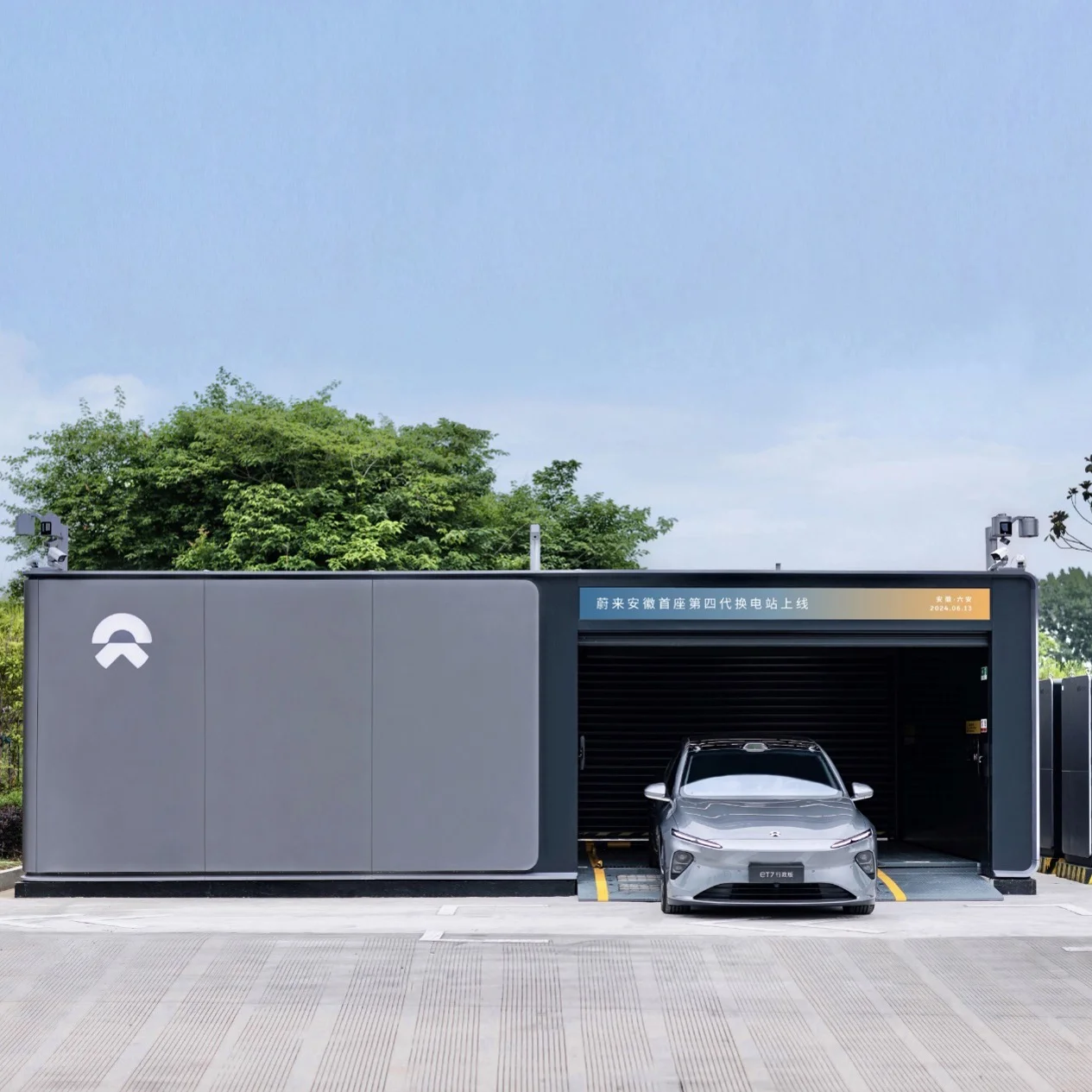
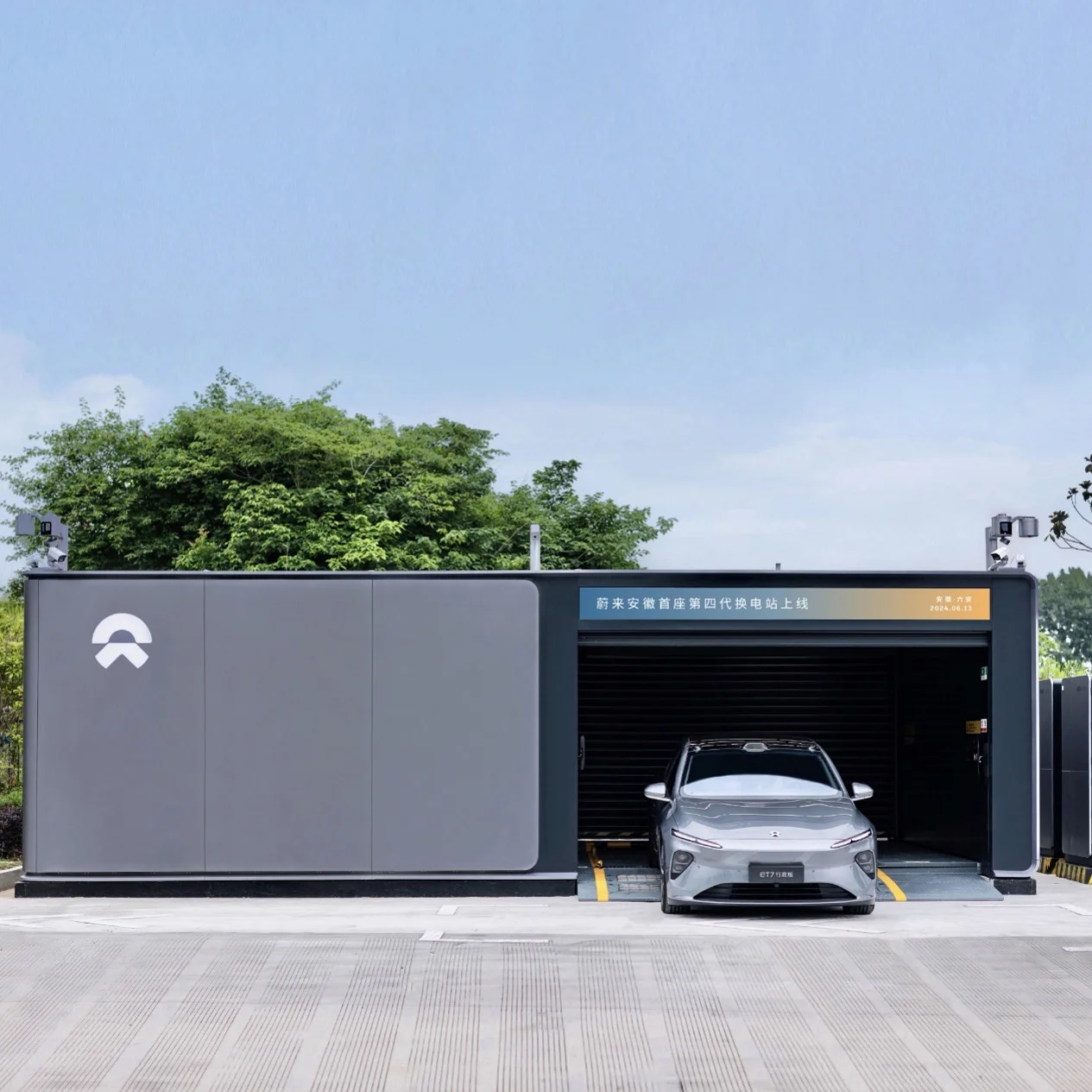
- Power Infrastructure Growth -- 3,916 power swap stations globally;>28,000 chargers deployed; over 1,000 new swap stations targeted for 2026 with 5th-generation rollout in Q3.
- Brand Positioning -- Average selling price of mainline NIO vehicles at RMB 390,000; ONVO at RMB 240,000; FIREFLY sells at a 50% premium to other small car competitors, claimed as evidence of premium positioning.
Need a quote from a Motley Fool analyst? Email [email protected]
RISKS
- Stanley Qu said, "starting Q2 and beyond, on average, the cost impact per unit is around RMB 10,000 -- or more than RMB 10,000" due to material inflation in chips, lithium, NCM, copper, and aluminum.
- Management cited, "for the short term, the profitability of the power swap network is not our primary focus" as upfront investment and deployment costs remain high.
- Bin Li stated, "right now for the ONVO brand, the major challenges still because of its overall brand awareness, things after all, ONVO has just started its delivery for around 20 months," noting market education and conversion is still in progress.
SUMMARY
NIO (NIO -3.14%) reported triple-digit year-over-year revenue and delivery growth, with segment leaders across its three core brands amid sequential declines due to seasonal effects. Management confirmed disciplined R&D and SG&A spending reductions, positive non-GAAP operating profit continuation, and robust liquidity. Initiative detail was provided on ADAS chip deployment, network expansion, and new product pipeline, with expectations for further operating leverage as new models and updated platforms are brought to market.
- The in-house X1931 chip subsidiary raised RMB 2 billion, adding flexibility for future chip development and ADAS capability enhancements.
- Power swap utilization averaged 30-45 swaps per station per day at peak, with further network expansion expected to drive usage.
- Leaders expressed that aftersales services, accessories, power solutions, and subscription models are gaining importance as drivers of high-margin recurring revenues beyond vehicle sales.
- Management disclosed the environmental goal to reduce per-vehicle carbon footprint by 43% by 2035, reflecting alignment with ESG priorities.
INDUSTRY GLOSSARY
- NWM (New Word Model): Advanced autonomous driving (AD) software architecture utilizing reinforcement learning for continuous improvement in navigation and safety capability.
- NCM: Nickel Cobalt Manganese chemistry, a battery cathode material commonly found in electric vehicle (EV) batteries.
- NOP (Navigate on Pilot): Automated navigation system designed to handle full scenario driving assistance for NIO EVs.
- ONVO: Mid-range sub-brand, targeting large SUV buyers in the RMB 200,000–300,000 segment with advanced smart vehicle features and technology.
- FIREFLY: High-end small car sub-brand, offering compact EVs with premium positioning above smaller rivals.
Full Conference Call Transcript
Bin Li: [Interpreted] Hello, everyone, and thank you for joining NIO Inc.'s 2026 Q1 earnings call. In Q1 2026, the company delivered a total of 83,465 smart EVs, representing a year-over-year increase of 98.3%. Breaking it down by brand, NIO brand delivered 58,543 vehicles, maintaining its leadership in China's BEV segment priced above RMB 300,000. The ONVO brand delivered 13,339 vehicles, continuing to unlock its growth potential. The FIREFLY brand delivered 11,583 vehicles, ranking #1 in China's high-end small car segment. In April, the company delivered 29,356 vehicles, up 22.8% year-over-year. Starting Q2, the 3 brands have entered an intensive product launch and delivery cycle, which is expected to support continued rapid delivery growth.
We expect the total deliveries in Q2 to range between 11,000 and 11,500 units, representing year-over-year growth of 52.7% to 59.6%. On the financial side, the company's gross margin was 19% in Q1, driven by a higher contribution from higher-margin products, Vehicle margin came in at 18.8%, improving quarter-over-quarter for the fourth consecutive quarter. Margin for other sales, mainly services and community-related businesses reached 20.6%, the highest level in the past 4 years, with both business scale and profitability achieving improvement. In Q1, the company maintained positive non-GAAP operating profit and positive operating cash flow where cash reserves would increase to RMB 48.2 billion. NIO has remained committed to the BEV road map while continuously strengthening its systemic innovation capabilities.
Over the years, the company has built distinctive competitiveness across technology, products, services and user community operations. Supported by these capabilities, the product and overall experience of NIO, ONVO and FIREFLY have gained broad exclamation among their respective target users. For the NIO brand, since delivery began in late September 2025, the all-new ES8 reached 100,000 delivery milestones in just 215 days, setting a new delivery record among passenger vehicles priced above RMB 400,000 in China. As of April this year, the ONVO ES8 had remained #1 in both the large SUV segment and the passenger vehicle segment priced above RMB 400,000 for 5 consecutive months, regardless of powertrain types.
In early April, the 2026 ES6, EC6, ET5 and ET5T were launched and delivered, further addressing evolving user needs through enhanced product offerings. On April 9, we officially on-road the new ES9, our flagship executive SUV. The ES9 integrates multiple industry-first technologies and class-leading features, redefining the standards of executive flagship SUVs and leading segment into the BEV era. The ES9 will officially launch and begin deliveries on May 27, and we are confident that the ES9 will set a new benchmark in the flagship executive SUV market priced above RMB 500,000. For the ONVO brand, the L90 continued its strong market momentum in Q1 2026, ranking #1 in the large SUV segment priced between RMB 200,000 and RMB 300,000.
This year, ONVO achieved comprehensive upgrades in both products as well as core technologies. The 2026 L90 has already been officially launched and delivered. The upgraded L90 now features new in-house developed ES931 smart driving chip, new award model and the SOS booming vehicle operating system. On May 15, the ONVO L80, flagship large SUV with an innovative front and trunk layout was officially launched and delivered. The L80 is a breakthrough product in the large 5-seat SUV market and currently offers the largest cargo capacity among 5-seat SUVs in China. Through innovative space and the scenario-based lifestyle solutions, the L80 supports a wide range of scenarios for large 5-seat SUV users.
In addition, the NIO L60 will make its debut in late May. The updated model will feature upgrades in exterior design and smart features, further enhancing its competitiveness. For the FIREFLY brand, the refreshed model has already started the deliveries in Q2, bringing comprehensive upgrades in powertrain performance and smart experiences. Going forward, FIREFLY will continue to introduce limited additional models to further strengthen its distinctive brand identity. On smart driving, earlier this year, we officially rolled out a major new version of new word model, NWM powered by the advanced architecture featuring the work model and both look reinforcement learning. The new version significantly enhanced the full scenario navigate on pilot experience.
Within 1 quarter of the rollout, Urban NOP milage increased by 92% quarter-over-quarter, while the proportion of smart driving usage time increased by 116%. So far, the smart driving system powered by NWM has been introduced across ONVO's new products. In June, both nio and ONVO users will receive the next major NWM upgrade, bringing noticeable improvements across driving, parking and active safety scenarios. In terms of sales and service networks, the company now operates 168 new houses, 389 new spaces, 430 ONVO stores as well as 408 service centers and 90 delivery centers.
We continue to optimize our sales and service network layout through the highly coordinated Sky Store model, expanding market coverage while strengthening local presence and increasing network density. As of now, the company has 3,916 power swap stations worldwide, along with more than 28,000 power chargers and destination chargers. On May 10, the new ES9 successfully completed the 10,000 kilometer challenge in just 94 hours 19 minutes and 11 seconds, setting a new record among BEVs in China. This further demonstrated the reliability, efficiency and convenience of battery swap.
On May 20, the company released its 2025 environmental, social and governance report and announced its greenhouse gas emissions reduction target, aiming to reduce the carbon footprint per vehicle by 43% by 2035 from the 2023 baseline. By delivering the high-performance smart EVs and exceptional user experiences, we aim to build a sustainable and brighter future together with our users and partners. After 11 years of long-term investment and persistence, the company has built a full stack technology capabilities around the core technologies of smart EVs. At the same time, we have gradually established a systemic innovation capability, spanning R&D, supply chain, manufacturing, quality, power services and user services.
These capabilities not only enable us to continuously launch innovative products and lead industry development, but also serve as the core foundation for our continued brand development and long-term competitiveness. Today, NIO, ONVO and FIREFLY have each established clear market position with their core products steadily increasing market share in the respective segments. We are confident in achieving our business targets for the year and delivering sustainable growth beyond 2026. Thank you for your support. With that, I will now turn the call over to Stanley for Q1 financial details. Over to you, Stanley.
Stanley Qu: Thank you, William. Let's now review our key financial results for the first quarter of 2026. Our total revenues reached RMB 25.5 billion, up 112.2% year-over-year and down 26.3% quarter-over-quarter. Vehicle sales were RMB 22.8 billion, up 129.2% year-over-year and down 27.9% quarter-over-quarter. The year-over-year growth was mainly due to increased deliveries and a higher average selling price, driven by positive product mix effects. The quarter-over-quarter decrease was mainly due to fewer deliveries. Other sales were RMB 2.7 billion, up 31.2% year-over-year and down 9.7% quarter-over-quarter. The year-over-year growth was driven by increased sales of parts, accessories and aftersales vehicle services and provision of power solutions, along with a rise in sales of auto financing services.
The quarter-over-quarter decrease was due to a decrease in revenues from technical R&D services and used car sales. Looking at margins. Vehicle margin was 18.8% compared with 10.2% in Q1 last year and 18.1% last quarter. The year-over-year and quarter-over-quarter improvements were driven by a more favorable product mix. Other sales margin reached a record high of 20.6% in recent 4 years, reflecting the continuing profitability improvement in our user base-driven service and community-related businesses. With the improvements in both vehicle and other sales margin, vehicle overall gross margin increased to 19% compared with 7.6% in Q1 last year and 17.5% last quarter. Turning to OpEx. R&D expenses were RMB 1.9 billion, decreased 40.7% year-over-year and 7% quarter-over-quarter.
The year-over-year decrease was mainly driven by lower personnel costs in R&D functions due to organizational optimization, reduced the design and development costs from different development stages and improved operational efficiency. The quarter-over-quarter decrease was also mainly due to lower design and development costs from different development stages and improved operational efficiencies. SG&A expenses were RMB 3.5 billion, decreased 20.5% year-over-year and 1.1% quarter-over-quarter. The year-over-year decrease was mainly driven by lower personnel costs and related expenses in marketing and other supporting functions due to organizational optimization as well as reduced sales and marketing activities. The quarter-over-quarter SG&A expenses stayed stable.
Loss from operations was RMB 0.3 billion compared with loss from operations of RMB 6.4 billion in Q1 last year and profit from operations of RMB 0.8 billion last quarter. Excluding share-based compensation expenses, adjusted profit from operations was RMB 66.8 million. Net loss was RMB 0.3 billion compared with net loss of RMB 6.8 billion in Q1 last year and net profit of RMB 0.3 billion last quarter. Excluding share-based compensation expenses, adjusted net profit was RMB 43.5 million. Furthermore, we generated positive operating cash flow this quarter and ended the quarter with RMB 48.2 billion in total cash and cash equivalents, restricted cash, short-term investments and long-term time deposits. That wraps up our prepared remarks.
For more information and the details of our unaudited first quarter financial results, please refer to our earnings press release. Now I will turn the call over to the operator to start our Q&A session. Operator, please.
Operator: [Operator Instructions] The first question today comes from Bin Wang with Deutsche Bank.
Bin Wang: Congrats for the great result. I've got 2 questions. The first 1 is about ES9. [indiscernible] launched next week. Do you share with the core for order flow during the presale period? And do you think ES9 monthly volume in the next several months with the of monthly volume guidance, and can ES9 order impact ES8 order book? That's my first question. And second question is about gross margin. Can you provide a second quarter gross margin guidance given you have a better volume and also based on of the cost increase, such as memory. So basically, what's your outlook for the gross margin in the next several quarters?
Bin Li: [Interpreted] Thank you for the question. Regarding your question on the ES9, we will officially launch and deliver the new ES9 on May 27. And since the prelaunch of the ES9, its technology as well as its exterior and interior design are well recognized and well received by the market and our users, we started the test drive of ES9 from May 11. And after the test drive, we also witnessed the growing momentum of the order intake on the model. Of course, for us, we seldom disclose the specific order momentum or order intake for the new models. However, we do have confidence in its overall performance in the executive flagship SUV segment above RMB 500,000 in China.
And we also believe that it is going to change the landscape of the battery electric vehicle segment above RMB 500,000. We're confident in its competitiveness. And also since the prelaunch of Es9, we actually didn't see that the launch of the ES9 diluting we're cannibalizing the circus or even your attention to the ES8. Instead, it is generating positive impact on the impact on the attention and the order intake of the ES8. Especially after we had the prelaunch and also test drive started for the ES9, we have welcomed a lot of in-store visits and traffic.
Many of them maybe didn't know about the new brand or our product and after they were in the store by experiencing and comparing between the ES9 and the ES8, some of them point that, as I mentioned and also the use cases of the ES9 maybe a better much. For the ES8, we have actually witnessed an increase in the order intake of the ES8 after the prelaunch of the ES9. One week after the ES9 launch, actually, the order intake for the ES8 increased by 30%. And the starting -- since the test started from May 1, within 1 week of the quarter -- the week-over-week, ES8 order intake increased by 30%.
And in the first 20 days of May, actually, the order intake on the ES8 has created a new history high since October, which is the ES9 launch. Last year, we actually after -- as we have been digesting the order backlog on the ES8, we have also maintained a pretty stable and a strong order intake on the ES8 without compromising the strong order intake for the ES9. So by having the strong order performance for both models, we can see the positioning of these 2 products are quite distinguished or differentiated from each other.
ES9 is more of a flagship executive SUV where it is more competing with the conventional combustion engine executive flagship SUV like BMW X7 or Mercedes GLS, where for the ES8, it is more of an all-around SUV that is catering both business scenarios as well as family purposes. So these 2 products are complementing each other well, price-wise, they are well differentiated. So we are happy to see that those products are well received in their respective segment.
Stanley Qu: [Interpreted] Thank you For the question. Regarding your question on the gross margin. In Q1, we have achieved a vehicle margin of 18.8%, achieving quite good increments from both year-over-year as well as quarter over quarter. And in Q1, the increase in the vehicle margin is mainly because of the higher contribution by the higher-margin models, especially the ES8 contributing 50% of the margin where ES8 itself has over 20% vehicle margin in Q1. And also, in the meantime, although there are rising cost pressure because of the rising material costs, however, our advanced inventories on such [indiscernible] components have partially offset such pressure in Q1.
And in terms of the Q2 and the full year, as you may have noticed that there is the rising material cost pressure faced by the entire industry, including the memory chips, battery materials like lithium carbonate as well as NCM and also copper and aluminum raw materials. So starting Q2 and beyond, on average, the cost impact per unit is around RMB 10,000 -- or more than RMB 10,000. But for the full year, the company still aims to achieve a vehicle margin of around 17% to 18%. And to achieve a Q2 and full year vehicle margin of 17% to 18%, we will be taking these several actions.
The first is to further increase the product mix of products with higher prices and also higher margin contributions like the ES8 and ES9. And for other products with moderate margin, we will also maintain a stable pricing and also promotional policies. We will not compromise on the margin performance of such cars for the sake of volume contribution. And second -- and thirdly, we will also work closely with our supply chain partners to promote on the engineering improvement, efficiency improvement as far as commercial negotiations to together mitigate the cost pressure. With that, we will target for a Q2 and full year vehicle margin of around 17% to 18%.
Operator: The next question comes from Tim Hsiao with Morgan Stanley.
Tim Hsiao: This is Tim Hsiao from Morgan Stanley. Congratulations on another solid quarter. I have 2 questions. The first question is about the eco sales because we noticed ourselves of the 8 and 9 series large SUV are expected to likely more than triple year-over-year this year while the rest of the lineup is likely to see a roughly 20% year-over-year decline on your 40% to 50% full year volume guidance.
So once the growth of the 8 and 9 series is fully unfolded and the group's total volume my approach like 500,000 unit target, how does NIO plan to reboost the growth of the subsequent models, for example, like a 5, 6, 7 Series, which are likely to face greater competition in the market? That's my first question.
Bin Li: [Interpreted] Thank you for the question. As you can see, the overall volume growth this year is mainly driven by the models with high price and also high margin. They are playing an important role in supporting both our volume growth as well as our vehicle margin improvement. For the ES8, we will maintain a stable and strong market performance. While very soon, we are going to start to deliver the ES9, and later, we will also introduce a 5-seater of the ES8 as they were all play in such a role. And for the ONVO brand, we have L90 and L80 continue to lead the market share and sell in the price segment between RMB 20,000 to RMB 300,000.
So -- and also starting next year, our entire product portfolio will enter into a new phase of development where we are going to upgrade our ET5, ET5T, ES6 and EC6 also to the latest technology platform and digital architecture, where the ONVO brand next year will also have new products. So in general, we are going to maintain a pace of around 7 to 5 new or relatively new products every year. Of course, with the launch of such new products, we don't pursue absolute increase in the volume of the cars, instead we would like to achieve a leading market share in each of their respective segments.
And we also believe that our existing product portfolio and offering can support and sustain our competition and competitiveness in the market. In the first 4 months, the total sales of the company actually topped the passenger vehicle market in Shanghai. We've achieved 8% of the market share among Shanghai's passenger vehicle market.
And as we continue to expand our channels and the network coverage, as we continue to deploy power swap sortations and facilities, as the users in the lower-tier cities open up their mind for the battery electric vehicle products, we believe that our existing product lines as well as our upcoming products will help us to achieve a reasonable market share within the passenger vehicle market in China.
Tim Hsiao: My second question is about the profit and OpEx because NIO has posted 2 consecutive non-GAAP profitable quarters. So do you anticipate maintaining the quarterly non-GAAP profit target throughout 2026? In the meantime, can the current OpEx parameters, i.e., SG&A ratio below 10%. And the quarterly R&D spend gains at RMB 2 billion to RMB 2.5 billion, be adequate to support robust business growth moving forward? And when is the next R&D investment up cycle expected to begin? That's my second question.
Stanley Qu: [Interpreted] Thank you for the question. For the full year 2026, our financial target is due to achieve positive non-GAAP operating profit. In terms of the OpEx guidance, for the R&D expenses, we target to maintain our non-GAAP R&D investments or expenses to be around RMB 2 billion to RMB 2.5 billion per quarter. For this level of spending, we believe that it will be enough to sustain and support our investments into the key technologies such as chips, operating systems and et cetera, to make sure that we have strong competitiveness and also technical leadership. And secondly, such investment scale will also support the launch and the rollout also of new models every year as introduced by William.
And in the meantime, as we keep the expenses flat, we are also putting efforts in improving the overall efficiency and utilization of such resources. Last year, we rolled out the CBU mechanism, where under that mechanism, we are now using less money to yield more R&D results. As mentioned, the productivity or the yield of RMB 2 billion investment as of today is equivalent to maybe the result of RMB 3.5 billion R&D investment in the past years. And also for the entire company, we've been staying with the battery electric vehicle road map, which can make us more focused than spreading our efforts were range-extended vehicles were [indiscernible].
In that case, we can be more efficient in making our investments, which is different from some of our peers, where they have to split their efforts for different powertrain systems. [Interpreted] And regarding the SG&A expenses, in general, we hope that the SG&A as a percentage of the revenue is around 10%, but it can be different from quarter-to-quarter. For example, in Q2, we have a quite intensive product launch and the delivery cycle, where the corresponding marketing and the launch expenses are actually higher than the previous quarter. So the absolute amount in Q2 had a surge, especially the selling expenses in Q2 surged a lot from the Q1 baseline.
But in Q3 and Q4, as most of the new products will be already in the market by then than the absolute amount in the second half will also be relatively lower. So there will be also differences from quarter-to-quarter.
Operator: The next question comes from Paul Gong with UBS.
Paul Gong: Congrats on this quarter. I have 2 questions. The first question is regarding the competition in the 9 series or largest SUV segment. I think the success of the year site since late last year has attracted competitors launching the largest EV as we see in Beijing auto show and quite of them are even price with very aggressive pricing. How do you think about the competition in this segment? And what is the moat for NIO? And how can NIO stay ahead in this segment as a sales lead champion in this high-end large SUV segment? That is my first question.
Bin Li: [Interpreted] Thank you for the question. It's true that the ONVO ES8 has created many records. It has achieved 100,000 delivery milestone in just 215 days, which is the fastest among all the cars priced above RMB 400,000 in China. And for 5 consecutive months, it has been the sole champion in the price segment above RMB 400,000 as well as in the large SUV segment regardless of the powertrain types. And looking at the sales of the large SUV priced above RMB 400,000, yes, it has achieved 49.7% market share. The reason for success is because itself is an embodiment of our 11 years of systematic capability and innovation development.
In terms of such systemic capabilities and innovation, it includes our in-house capabilities for full stack technologies as well as our capabilities for the innovative supply chain. The reason I would like to highlight the innovative supply chain is that on the ES9, we have applied a lot of industry-first technologies where we needed to work partly with our supply chain partners to mass produce and make this advanced technologies happen. We also have leading capabilities for the advanced manufacturing life cycle quality, which is well recognized by many authorities in the automotive industry.
We also have our smart power systems, our charging and the swapping network, and also, we have established a nationwide premium and holistic car user scenarios and also holistic experience for our users. With the 6 system capabilities established in the past 11 years, we now are establishing ourselves as a premium brand and also is leading in the premium segment. And in addition to this systemic capabilities, we also have spotted 2 findings among new users who have chosen our products.
The first is that the competition landscape of the China's new energy vehicle market is now transitioning from a chaotic brand competition with a more clarified competition where the clarity has been introduced to the overall brand and the competition landscape for the new energy vehicle market in China, where among all these competitors, NIO is widely recognized as a premium brand and also well accepted by the public as a premium brand. Among many users, they have already established a consensus where NIO will be the next car Mercedes, BMW and Audi. And in Q1, the new brand has an average selling price of RMB 390,000.
That is around RMB 50,000 higher than that of BMW and 50% higher than that of Audi. So these are lively examples. And in cities like Shanghai, we're around the [indiscernible] area, where in the first tier cities in China, actually, our market share has already surpassed the market share of the ICE models from all those traditional luxury brands. So in general, in the Chinese market, NIO has already established or starting to establish results as a well-recognized premium brand. And for the ONVO brand it's average selling price is around RMB 240,000, which is also comparable with many Tier 2 luxury brands.
And now ONVO is also the go-to option for many families pursuing high-quality and also premium car usage experience. And for FIREFLY, it has achieved 2/3 of the market share in the high end small car market. Its average selling price is around 50% higher than other small car competitors. But in terms of its design, safety and also build quality, it is providing our users with sufficient value and also creating sufficient user value for them. So for the entire company, the NIO brand or ONVO brand or the FIREFLY brand, we are positioning ourselves as premium in general, and this is also a consensus among the users.
And also, in addition, for the new ONVO and FIREFLY brand, we have been insisting on the original design. We have been making long-term dedication and commitment to our products, and we also have corporate missions and values where our users find themselves can really identified with [indiscernible] with all this mindset and mentality. Many users actually pursue beyond simple functions or configurations. They are more seeking for the emotion, connection and resides, whereas we also have the community to create the such emotion experience. So when it comes to competition, such emotion touch point can really create a unique competitive edge where we don't need to be overaggressive with the prices.
Not to mention that when the entire industry is under heavy cost pressure, a low price point may not generate you scale effect or economies of scale. In that case, a low price may not necessarily translate into an advantage, especially for the rising raw material costs on the memory chips, batteries, copper, aluminum, there is no economy of scales for such components, which means that a higher volume does not translate into a good margin performance of the car. In that case, for us, we will insist on our premium brand positioning and insist on providing our users with emotion experience.
Paul Gong: Well understood. My second question is regarding the potential indirect price risk under the challenge of the raw material cost inflation. Just now Stanley mentioned the cost inflate by about RMB 10,000 or more than RMB 10,000. I think it's not only your challenge, but if you want a bigger challenge for your competitors who price the products at such a cheaper price level. Under this competition and the cost inflation challenge, do you think there is an opportunity to cut some of the incentives and the indirect [indiscernible] better pricing for the industry and for yourself?
Bin Li: [Interpreted] Thank you for the question. It's true that the entire industry is facing the cost of pressure, mainly driven by the raw material costs as well as the prices of the semiconductors, especially the memory chips. As mentioned by Stanley, the cost impact is over RMB 10,000 per car for our company. But our overall strategy is still to stabilize our prices while, in the meantime, we are also dialing back on some discounts and promotions. Facing the same pressure, different companies may have different coping mechanisms. And for us, it's about stabilizing the prices, while maintaining and improving our overall competitiveness on the products and services than just sacrificing on the margin for the sake of the volume.
Our strategy is to maintain a reasonable volume increase while keep improving our margins and the EBIT performance as those are our key business targets. So overall speaking, different companies have different co-mechanism and strategies. And for us, we will be insisting on our philosophy and to mitigate the impact. And in the meantime, on the supply chain, since last year, we've been promoting some new models working with our partners. One is transparent supply chain and another is a mechanism or a principle called primary and preferred partners.
In general, we work closely with our partners to identify costs and processes that are not creating user value, and we work with them to lower such costs or optimized such processes. In general, we believe that on the supply side, there should be around 5% to 10% opportunities driven by such optimization. So for this year, on the supply chain, we will be focusing on doing meticulous operations and management together with our partners to identify opportunities that can offset or mitigate the impact on the rising raw material costs.
Operator: The next question comes from Nick Lai with JPMorgan.
Y.C. Lai: Okay. This is Nick from JPMorgan. Two simple questions. The first question is, can you give us a quick recap and quick update of our ADAS strategy. And you mentioned earlier at the call that our own in-house chip engine has started to be put in our car selective model for now. And I wonder how fast will our in-house chip be deployed to the rest of the model, and how this ADAS strategy is going to be make our product much more competitive compared with our competitors? And at the same time, I'm aware that our in-house chip subsidiary has raised RMB 2 billion through fundraising in the first quarter. How would that help our financing and R&D?
That's the first question.
Bin Li: [Interpreted] Thank you for the question. For NIO's in-house developed smart driving trip X1931, it is the world's first automotive grade chip of 5-nanometer process, and it comes with the industry-leading capabilities in inference, data bandwidth, ISP performance as well as the inter-chip communications. And it was firstly mass produced on the new ET9 last March. And to date, we have already shipped more than 250 pieces -- more than 250,000 pieces of the chips to our product. So the chip solution itself is already pretty mature.
And earlier, we have also introduced this chip to the ONVO's new products starting with L90, as by introducing this to the ONVO brand, we can also merge the autonomous driving or ADAS software baseline, improving the overall R&D efficiency as well as enhance their data close-loop capabilities. And in the second half of this year, we believe that more than 80% or 85% of our cars will be equipped with our in-house developed smart driving chips.
And in terms of our AD solution and AD road map, as you see that starting this year, we are moving to the architecture featuring our new road model plus the closed-loop reinforcement learning, and it has great potential for the continuous development and integrations as well as good efficiency. Because we are only using 20% of the car computing power in comparison to our competitors or our peers to achieve the same level where even better smart driving experience and performance. With this major version and upgrade, our users actually all speak highly of the smart driving experience. And later this year, we will have another 2 major upgrade.
So we are quite confident with the overall AD performance as well as its growth potential. And in terms of the business model for the ADAS, we will continue our subscription services and the business model on the ADAS as it will also become a very important revenue driver among our other sales revenue mainly based on the services and also community-related businesses. Although right now, we are offering free subscriptions to some early users or new users, but for the use of cars, they will have to pay for the ADAS subscription. So for the long term, we see the potential in that.
So in terms of our AD solution, we have already completed the entire chain from the chip to the model and architecture to the closed-loop data as well as the business model. And in terms of the [indiscernible] and the resin financing, of course, a smooth financing driven by the [indiscernible] chip business can also give us more resources and the flexibility in developing our upcoming chip products, especially chips that are more affordable.
Operator: Next question comes from Jing Chang with CICC.
Jing Chang: Congratulations on our robust profit in the first quarter. So my first question is about ONVO. We see that L80 has opportunity launched is this month. So how do you see from the market feedback on the orders? And also, we see competition currently -- so how will the L80 overcome the new vehicle effect, which means we see some new model have quite large orders in the beginning, but later they will encounter the shop decrease. So was exact on the L80 sustainable monthly sales performance and also for the overall ONVO brand, what's our strategy to be implied to enhance the brand awareness for ONVO in total?
Bin Li: [Interpreted] Thank you for the question. For the ONVO L80, we believe it's a defining and also revolutionary product in the large 5-seater SUV segment. In general, the market size for the 5-seat SUV is 3x of that for the 3-row SUV segment, which means that for the L80, it is being able to tap into a greater and broader market than the L90. And since the official launch of ONVO L80 on April 29, we actually have received a positive feedback both from the media as well as from the users who test drove the vehicles and its order intake is also meeting our expectations.
Regarding the target users of the ONVO L80 actually, the car can cater to a pretty wide range of user groups, including young couples, couples with [indiscernible], families with pet where families with kids that are already going up. So for the ONVO L80, we believe that it core competitiveness is still is powered by the technology as well as its overall product performance, including how it has reimagined the space as well as all this lifestyle and scenario-based solutions. So we believe that the ONVO L80 will drive the entire large 5-seater SUV segment into the BEV era, just like how L90 and the ES8 did with the large payroll SUV segment.
And right now for the ONVO brand, the major challenges still because of its overall brand awareness, things after all, ONVO has just started its delivery for around 20 months. And we've also found done the study on the ONVO awareness. It's current awareness is basically on par with the awareness of the NIO brand in the year of 2020. To list its brand awareness, we are also taking different approaches so that more people will be able to know about the brand. For example, we have collaborated and invited some celebrities to promote our products and brands where many of these celebrities have good reach among the target users of ONVO.
And we are also asking our front-line colleagues and teams to really go into the field to go door-to-door to promote our products and invite users for the test drive. It takes a lot of effort, but it is also taking effect. So overall it takes time to really establish and build the brand awareness on the ONVO. But the good thing is that once the public for the users know about the brands, we have a pretty efficient conversion from knowing about the brand all the way to the order placement.
Jing Chang: My second question is regarding to the other sales. We have seen the gross profit margin of other sales has been -- have a significant improvement in the first quarter to above 20%, which I think is a historical high. Could you quantify the main drivers behind this margin growth? And also, is there any one-off effect and also provide us maybe some outlook on the trend this year.
Stanley Qu: [Interpreted] Thank you for the questions. Regarding other sources, mainly includes aftersales services service and maintenance, accessory e-shop, power services and also new life merchandise. And we've been witnessing significant improvement in the aftersales performance and also financial last year. And in Q1 this year, we have achieved over 20% other sales margin. And with this result, there was no one-off impact, and the key drivers of the improvement in other sales margins, mainly because, first of all, NIO, the entire company, has been committed to establishing this brand connections with our users and to deliver experience -- holistic experiences throughout the life cycle of the product that can go beyond their expectations.
With that, we have a very strong user stickiness and also a strong willingness to pay for these premium services. For example, aftersales services, the accessory e-shop and the new life products have actually are popular among our users, and they also generate a good result. And secondly, we've been improving the overall efficiency of such services, especially power services for the operating CapEx where operating costs per station we've actually achieved quite significant improvement. And thirdly, we are also leveraging our energy and power services by doing off-peak and offtick charging and also great interactions and also electricity trading to be able to also generate good results.
And with that, we believe that our other sales, mainly our services and community-related businesses are also embracing an inflection point and entering into a new phase of development. And for the full year 2026, we have the target for a 20% other sales margin. And going into a longer term, as we continue to increase our user base and also the efficiency of such services, we believe that the profitability of other sales, as mentioned, services and community-related businesses, will also continue to improve. So in the long run, in addition to the new car sales, other sales will also become a very important and a key driver for our sustainable growth.
Operator: The next question comes from Yuqian Ding with HSBC.
Yuqian Ding: I just got 1 question. So regarding the second half, could you talk a bit more about the new comp plan? Other than the current new models ramp up into second half, what's the biggest expectation in segment half? Could you share the ES7's time line and position among the current big size of premium SUV pack you have?
Bin Li: [Interpreted] Thank you for the question. In the second half of this year, the major new product we're going to launch will be the 5-seater version of the all-new ES8. So in addition to that, our primary focus in the second half will be dedicated to selling cars and also serving our use as well.
Operator: The next question comes from Joe Yang with Bank of America.
Joel Ying: I also have 1 question on your battery. Can you talk about what are the target number of your battery of stations and also the targeted utilization rate by end of this year? And when will the battery swap business achieve probability on a stand-alone basis?
Bin Li: [Interpreted] Thank you for the question. Well, our power swap stations at its peak, mainly during the holidays were busy hours on average, each station can deliver around 45 swaps per day. And on the average days, it's around 30 swaps per day. And for the short term, our focus will still be on rolling out and expanding our power swap network. And this year, our target is to build a total of more than 1,000 power swap stations. Especially starting in Q3, we will be able to roll out our fifth generation power swap substation at the scale. In the meantime, we are continuously improving the operational efficiency of our swap stations.
But for the short term, we will still need to make upfront investment and early deployment of stations. So for the short term, the profitability of the power swap network is not our primary focus. But I would like to mention that for the services and the community-related businesses, basically other sales, it has already achieved profit. And in that case, we -- and the power swap business is also included in that part of the profit, which means that we will have resources to sustain the continuous expansion of our swap station network.
Operator: There are no further questions. I'd like to turn the call back over to the company for closing remarks.
Paul Gong: Thank you again for joining us today. If you have further questions, please feel free to contact News IR team through the contact information on the website. This concludes the conference call. You may now disconnect your line. Thank you.
Operator: That does conclude our conference for today. Thank you for participating. You may now disconnect. [Portions of this transcript that are marked [Interpreted] were spoken by an interpreter present on the live call.]