If a stock can raise its dividend by 9,300% in 24 years, it has my attention. If it currently pays a yield more than quadruple that of the average S&P 500 company, I'm interested. If it's raised its dividend by an average of 21% a year this century, sometimes ramping up payouts multiple times a year, I'm very interested. And if it's got a price-to-earnings ratio of just 15, making it half as expensive as the broader market, I'm wondering what the catch is.
The stock I've described is Canadian Natural Resources (CNQ +2.60%), an oil and natural gas producer based in Calgary, Canada. And although I'm itching to buy shares, there is unfortunately a catch. Through no fault of its own, this company may soon hit a rough patch as the oil and gas sector could be heading toward a shock not seen since a decade ago, when oil prices crashed 70% from their peak.

NYSE: CNQ
Key Data Points
Of course, back then, not only did Canadian Natural Resources increase its dividend, but it also emerged from the crisis stronger than before thanks to capable management and a series of savvy acquisitions. I believe that collapsing oil prices will be a blessing in disguise for this company--but the blessing will be very well disguised.
For the first few months of 2026, I expect shares to trend substantially lower. Here's why.
Why oil prices will crash in 2026
The price of West Texas Intermediate (WTI) crude oil has slipped 10% over the past three months, despite a host of factors that would ordinarily boost prices, from President Trump announcing a naval blockade on sanctioned Venezuelan oil tankers, to President Vladimir Putin rejecting a peace deal in his war with Ukraine, to news that the U.S. economy is expanding at its fastest pace in two years.
These developments would usually push prices higher by restricting supply or boosting demand. But not in the Age of AI. The artificial intelligence (AI) revolution is taking oil production to unheard-of levels by allowing oil companies to streamline operations and cut costs at almost every stage of the production lifecycle.
It's improving the predictability of equipment failures, therefore reducing downtime and expediting the planting of new wells by as much as 90%. AI analysis is leading to huge discoveries for improved well placements, and it's even helping to reduce time needed for seismic operations, which are like geophysical "CAT scans" that firms conduct to find oil and gas under rock layers.
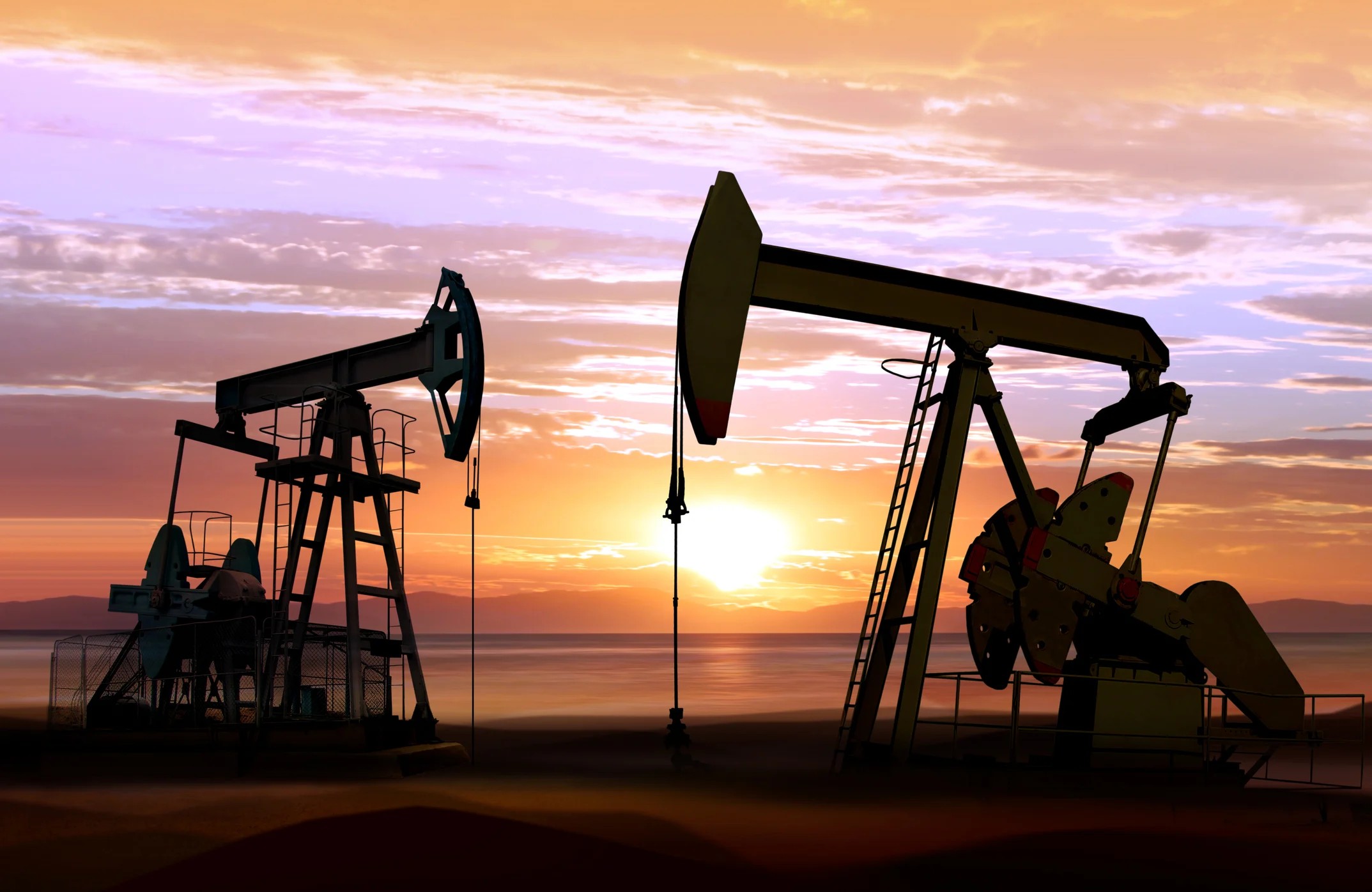
Image source: Getty Images.
At an OPEC seminar held last July, the CEO of Aramco, the world's biggest oil producer, said that AI technologies have saved the firm $4 billion in 2024 alone. According to Trey Lowe, chief technology officer at Devon Energy, his company's oil and gas wells' productive lifecycles are up 25% thanks to machine learning models. And Darren Woods, CEO of ExxonMobil, called AI "the next chapter" for the energy industry.
Until recently, the cure for low oil prices was low oil prices. As companies pared back production, supply fell, boosting prices. But rig counts in America have already plummeted, from 750 rigs in December 2022 to 517 in October 2025. Yet in 2025, the U.S. smashed its own monthly production records four different times, producing 13.84 million barrels per day by September, a 407,000 barrel per day increase from January's levels.
If plummeting rig counts can't stop production from surging, what could save prices in 2026? OPEC may cut production in a bid to stabilize prices, but the cartel doesn't pack the punch it used to, with the U.S. surpassing Saudi Arabia in oil production in 2018 and never looking back.
Geopolitical shocks might raise prices, but the biggest geopolitical wild card, a possible end to the Russia/Ukraine war, would ease prices by bringing millions of barrels of Russian oil to the market as sanctions lifted.
What crashing oil prices mean for Canadian Natural Resources
In the 2014 and 2015 supply glut, oil crashed by 70%, to $39 per barrel. Yet Canadian Natural Resources boosted its dividend by 11.5% in those two years, while making bold acquisitions like buying Devon Energy's Canadian conventional assets for C$3.125 billion.
At the time, Wall Street didn't cheer these prudent moves, with the stock dropping by over 50%. Yet the sell-off proved to be an opportunity, as shares rebounded strongly from the 2015 nadir. This time around, I think the company is even better-positioned. Canadian Natural Resource's operating costs of $21 per barrel mean it can survive an even worse slump, and its $4.3 billion in liquidity will allow it to add to its empire at fire sale prices, as in 2015.
While there's short-term pain in store for shares, I think a fantastic buying opportunity is a few months away.