The State Street SPDR Dow Jones REIT ETF (RWR 0.02%) aims to track the performance of real estate investment trusts (REITs). The exchange-traded fund (ETF) holds 100 REITs, providing investors with broad exposure to the entire sector. That makes it a potentially great way to play a rebound in the commercial real estate sector.
Here's a look at two catalysts that could send shares of this top REIT ETF soaring.

Image source: Getty Images.
Long-term interest rates start to fall
REITs are highly sensitive to changes in interest rates. Higher rates increase borrowing costs, making it more expensive for REITs to refinance maturing debt and fund growth initiatives such as acquisitions and development projects. In addition to this growth headwind, higher rates make lower-risk fixed-income investments more attractive to income-seeking investors. That weighs on the value of commercial real estate.
However, while higher rates are a headwind for REITs, falling rates are a tailwind, as they reduce borrowing costs and boost commercial property values. Given this dynamic, falling rates could cause REITs and REIT ETFs like RWR to soar.

NYSEMKT: RWR
Key Data Points
While the Federal Reserve has been cutting the Federal Funds Rate (a short-term interest rate) over the past couple of years, that hasn't yet had much impact on longer-term rates like the 10-year treasury yield, which has a greater impact on REITs:
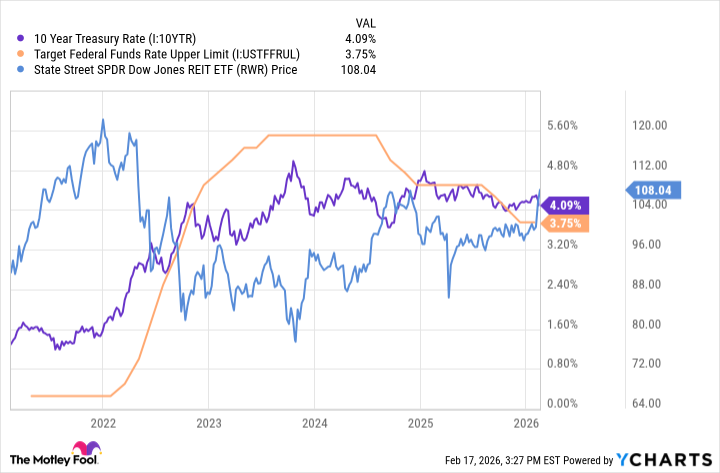
10 Year Treasury Rate data by YCharts
As that chart shows, RWR's value tends to move in the opposite direction to the 10-year. If that key interest rate benchmark falls below 4%, RWR's value should soar.
This catalyst could cause the 10-year to drop
Several factors can influence the 10-year Treasury rate, including the Federal Reserve, geopolitical risks, economic trends, and inflation. Of all these factors, I'm watching inflation the closest. It's a key gauge the Federal Reserve uses to set policy and tends to have the greatest impact on long-term rates.
The annual inflation rate in the U.S. rose 2.4% over the 12 months ending in January, less than economists expected. It was also down from 2.7% in 2025 and well below the 7% peak following the pandemic. This growth rate is edging closer to the Federal Reserve's 2% target.
After remaining elevated for the past few years, the inflation rate could finally come down within the target range this year. The impact of tariffs is starting to wear off as a year passes since the U.S. raised tariff rates. Additionally, oil prices are lower (causing gas prices to decline), and the U.S. didn't experience a major natural disaster last year (which should help limit insurance premium growth). If inflation continues to fall, REIT share prices should rise as long-term rates decline.
This ETF could soar if REITs rally
The State Street SPDR Dow Jones REIT ETF enables you to invest broadly in the REIT sector. It could soar this year if the 10-year Treasury rate declines, which would likely happen if inflation falls into the Federal Reserve's 2% target range.