Nvidia's (NVDA -0.52%) GPU Technology Conference (GTC) Taipei kicked off this week. As a major regional edition of the company's flagship GTC event, it promised to provide a view into recent developments in artificial intelligence (AI), gathering developers from around the world who will shape the future of AI. It is one of several annual events that showcase Nvidia's latest products, highlight important collaborations, and serve as a roadmap for what's to come.
CEO Jensen Huang gave the keynote address, offering investors keen insight into where Nvidia will go from here. The event is viewed by many as a "can't miss," and it did not disappoint. Indeed, the company showed why it's the undisputed king of AI, with several developments that could propel Nvidia stock even higher.
Image source: Nvidia.
AI pushes into the PC
Nvidia staked its claim in the AI revolution by developing semiconductors designed for the rigors of AI. These graphics processing units (GPUs) became the gold standard in data centers, where most AI workloads reside.
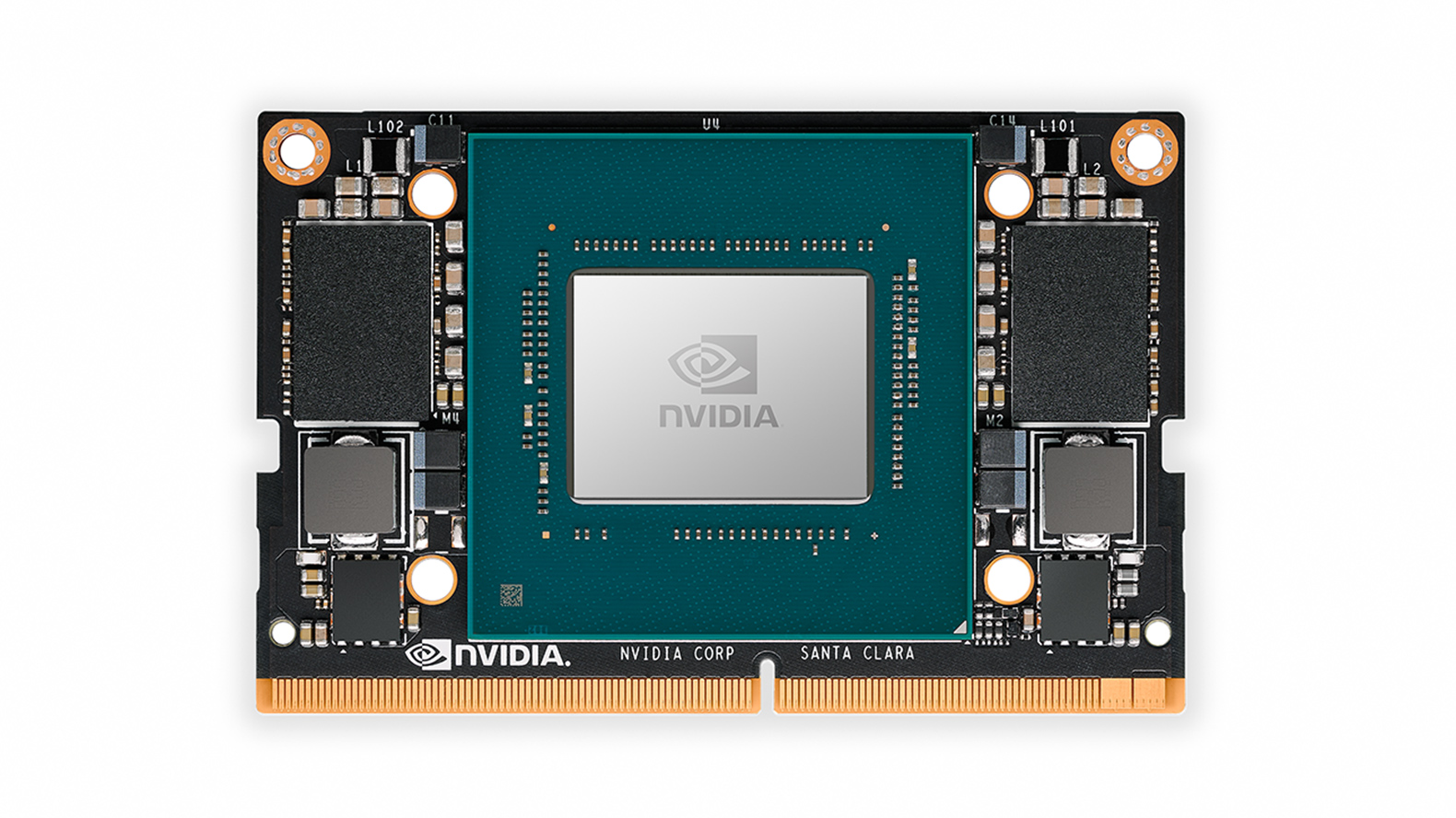
Now, the company is the forerunner in the age of agentic AI, or AI agents, many of which will run on personal computers (PCs). During the keynote address on Monday, Huang unveiled the RTX Spark, an AI superchip designed for PCs. The processor, designed in collaboration with Microsoft, leverages the Arm-based Grace CPU and Nvidia's Blackwell GPU to "deliver a native Windows experience for personal agents." Huang went on to call this a "reinvention of the computer."
The new processor will debut later this year in PCs from Microsoft, Dell, and HP, among others.
Not your grandfather's CPU
Huang also announced the launch of the Vera CPU. These high-performance, high-efficiency processors were designed for the era of agentic AI and are up to 1.8 times faster than legacy x86 processors. Huang said that as the adoption of AI agents picks up steam, they will quickly become "the largest users of computing."
Nvidia's Vera CPU is entering a crowded field, competing with Intel, Advanced Micro Devices, and others.
Huang also noted that these next-generation chips are now in full production -- and the customer list is eye-opening. Anthropic, OpenAI, and SpaceX have all signed up to use the chip, as have Oracle, CoreWeave, and Nebius, among others.

NASDAQ: NVDA
Key Data Points
What it means for investors
Demand for AI-capable PCs has skyrocketed in recent years and is expected to keep rising. This represents a sizable opportunity for Nvidia. The global AI PC market is expected to grow from $58 billion in 2025 to $321 billion by 2035, according to market research firm Precedence Research.
During the Q1 earnings call, CFO Colette Kress laid out the opportunity in the CPU market:
Vera CPU opens a brand-new $200 billion TAM [total addressable market] for Nvidia, a market we have never addressed before. And every major hyperscale and system maker is partnering with us to get it deployed. We have visibility to nearly $20 billion in total CPU revenue this year, setting us up to become the world's leading CPU supplier.
Taken together, this suggests that these two relatively new market opportunities could be worth hundreds of billions of dollars to Nvidia -- in addition to its industry-leading GPUs -- and a further windfall for shareholders.
Despite the vast and growing opportunity ahead, Nvidia stock is surprisingly affordable, selling for 34 times earnings and 25 times forward earnings. If you think that's expensive, consider this: For Nvidia's fiscal 2027 first quarter (ended April 26), the company delivered record revenue of $81.6 billion, up 85% year over year, driven by record data center revenue of $75 billion, up 92%. If that wasn't enough, management is guiding for Q2 revenue growth of 95%.
This helps to illustrate why Nvidia stock is an unqualified buy.