It's not often that investors have the opportunity to think about where a stock will be one century from now. But in the case of NuScale Power (SMR -1.64%), it's a worthwhile exercise.
You don't have to hold onto shares that long to benefit from this type of thinking. That's because NuScale -- a nuclear energy stock valued at just $3.9 billion -- isn't benefiting from growth tailwinds that will last for a few years, let alone a few decades. NuScale's biggest growth catalyst could easily last another 100 years.
Here's how to think about NuScale as an ultra-long-term stock holding.
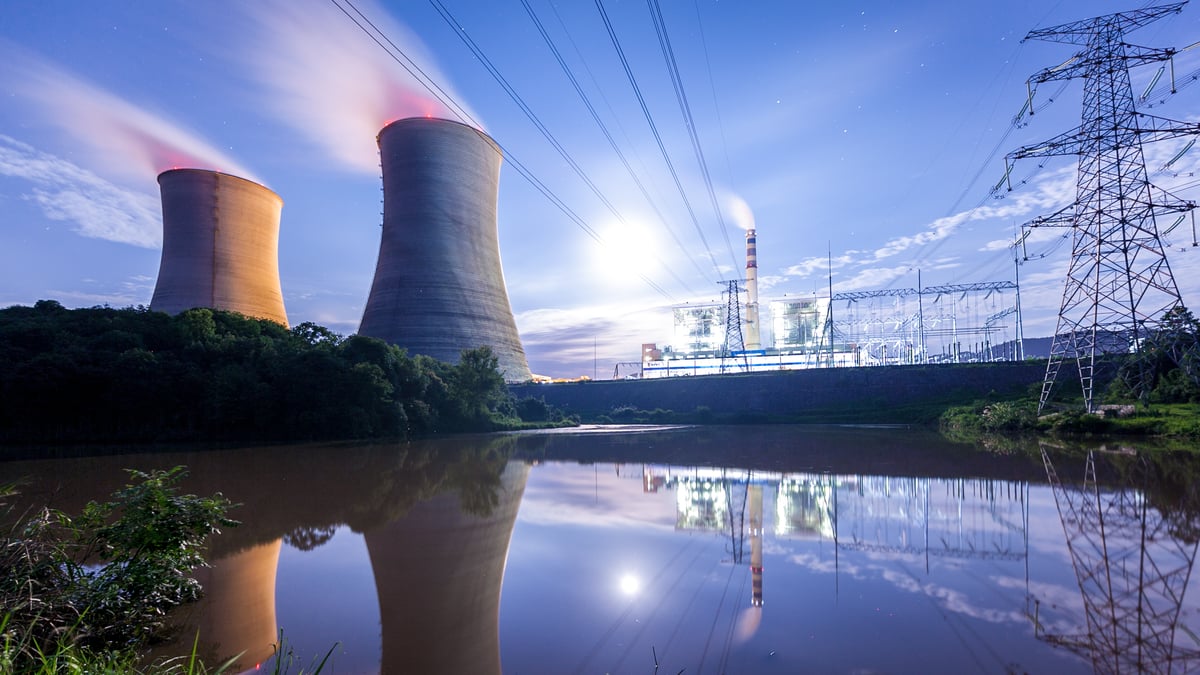
Image source: Getty Images.
NuScale Power has a tremendous opportunity this century
Nuclear energy is experiencing a sudden renaissance. "[N]uclear energy has, in many ways, been recently 'rediscovered' amid surging electricity demand," concludes a recent research report from Bank of America.
The rapid global adoption of artificial intelligence (AI) has spurred the new construction of data centers. Data centers are energy-intensive, and the current grid isn't sized for continued AI growth. Thus, new forms of clean, reliable energy will be needed. Nuclear looks like a promising fit, so much so that Bank of America values the long-term opportunity at $10 trillion worldwide.
The $10 trillion nuclear opportunity won't play out over just a few years. It will be decades or even more. Bank of America, for example, sees nuclear adoption growing every year through at least 2050 -- the last year in its forecast. While forecasts through 2100 and beyond are scarce, experts are nearly unified in their belief that AI will continue to be rapidly integrated into nearly every facet of society. The adoption curve and long-term growth potential of AI should dwarf the previous innovation it was built on: the internet.

NYSE: SMR
Key Data Points
Conditional on regulatory shifts and societal opinion, nuclear will play a major role in powering this long-term AI revolution. The only question left is whether NuScale itself will benefit. NuScale is specifically focused on small modular reactors, or SMRs. At least in theory, they can be faster and cheaper to build than conventionally sized nuclear power plants. They can also be expanded with additional nuclear modules down the line, allowing these systems to grow alongside the AI industry.
SMRs are intriguing. But as of now, only two SMR systems are operational globally. Many more, however, are currently in some form of development. That has drawn the interest of many competitors, including both pure-play SMR developers and diversified industrial companies with deeper budgets.
The next 100 years are fairly clear for nuclear. For NuScale, it will come down to real-world adoption of SMRs and its ability to execute on its project pipeline in ways that advance its attractiveness to future customers.