Although earnings season typically garners all the glory on Wall Street, monthly inflation reports have been outshining corporate earnings in recent months. In May, U.S. trailing 12-month (TTM) inflation jumped to a three-year high of 4.2%.
Despite this rapid jump in inflation, the ageless Dow Jones Industrial Average (^DJI +0.83%), benchmark S&P 500 (^GSPC +0.59%), and technology-inspired Nasdaq Composite (^IXIC +0.64%) have all recently catapulted to all-time highs. But sweeping inflationary concerns under the rug can be a potentially dangerous maneuver for Wall Street and investors.
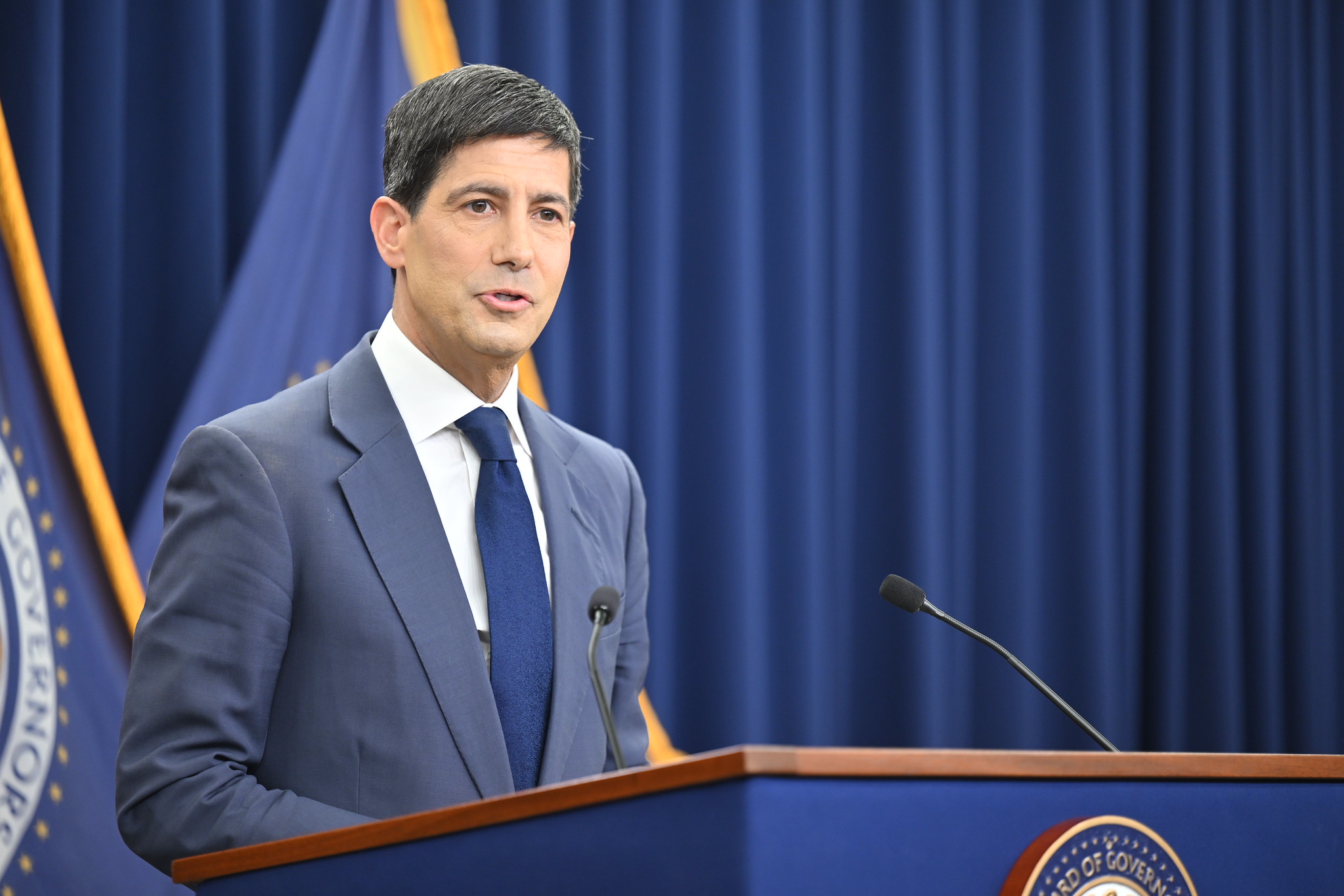
Fed Chair Kevin Warsh delivering remarks. Image source: Official Federal Reserve Photo.
While the June inflation report offered a silver lining for consumers, Fed Chair Kevin Warsh's testimony before Congress on July 14 may have dashed Wall Street's hopes of putting this inflationary surge in the rearview mirror.
Headline inflation eased considerably in June -- but this doesn't tell the complete story
Shortly after President Donald Trump gave the order for the U.S. military to attack Iran on Feb. 28, the latter closed the Strait of Hormuz to virtually all maritime traffic. This action halted the transport of a fifth of the world's crude oil supply and sent fuel prices soaring. Between February and May, U.S. TTM inflation soared from 2.4% to 4.2%.
However, advanced peace talks (which have since broken down, as of this writing) allowed crude oil prices to tumble from their Iran war highs. While fuel prices are known to rise like a rocket during supply shocks and fall like a feather once resolved, a notable drop in gasoline and diesel prices dragged TTM inflation down to 3.5% in June.
BREAKING: June CPI inflation falls to 3.5%, below expectations of 3.8%
-- The Kobeissi Letter (@KobeissiLetter) July 14, 2026
Core CPI inflation falls to 2.6%, below expectations of 2.8%.
Month-over-month CPI inflation fell -0.4%, the biggest monthly drop since May 2020.
US stock market futures are surging on the news.
Though headline inflation offers the impression that the worst of the Iran-war-driven inflation is behind us, Core Personal Consumption Expenditures (PCE) tell a different story. Core PCE, which excludes volatile food and energy costs, is one of the Federal Reserve's favorite measures of inflation, and it's been steadily rising (through May).
In other words, inflation remains problematic, which is something Fed Chair Kevin Warsh homed in on this week.

Image source: Getty Images.
Kevin Warsh just dropped a bombshell on Wall Street
Twice a year, following the semiannual release of the Monetary Policy Report from the Federal Reserve, the Fed chair testifies before the House Financial Services Committee. In Warsh's first congressional testimony since being sworn in as Fed chair, he took a hardline stance on inflation.
Despite fuel prices meaningfully weighing down headline inflation in June from the previous month, Warsh remarked:
The longer prices have been above the inflation target, it's usually a bit harder to dislodge them and get them lower. Our job, my commitment to you, is to take sticky prices and to unstick them.
These final 15 words emphasize Warsh's historical stance as a monetary hawk and strongly signal that interest rate hikes remain firmly on the table. Warsh himself referred to the June inflation data as "one data point" and cautioned against cherry-picking it as evidence that the battle against inflation is over.
A few takeaways from Warsh's first appearance before the House Financial Services Committee:
-- Nick Timiraos (@NickTimiraos) July 14, 2026
1. Warsh repeatedly defended his agenda by pointing to how the Fed had failed to restore price stability after 2022-23. He delivered a particularly pointed critique of the 2020 framework...
Rate hikes could prove disastrous for the second-priciest stock market in history. Making borrowing costlier threatens to slow the artificial intelligence (AI) data center build-out -- i.e., the top catalyst that's lifted the Dow, S&P 500, and Nasdaq Composite to new heights. If this infrastructure build-out slows, a rerating of growth rates and premium valuations for AI stocks may follow.